The real cost driver here is getting the iron in and the dirt out
Most Asheville-area yards were carved out of a slope, and that single fact governs the whole job. A mini excavator and a skid steer have to fit between the house and the property line, through a gate, or down a driveway with a switchback that a dump truck cannot negotiate. When they can't, the work shifts to conveyors, wheelbarrows, or a tracked dumpster and the labor hours roughly double. Then there's the spoil: dirt dug off a Weaverville hillside has to go somewhere, and "somewhere" is usually a permitted fill site across the county, not the neighbor's back forty. Every loaded truck mile is billable.
Gravel is the same story from the other direction, since crushed stone has to be trucked up from quarries on the valley floor to hillside addresses in Haw Creek or Reynolds, and that haul shows up in the per-ton price before a single shovel moves. This is why two yards with identical square footage can price a thousand dollars apart.
Zoom out and the geography explains itself. Buncombe County sits in a bowl ringed by the Blue Ridge and the Pisgah range, with the French Broad and Swannanoa rivers threading the valley floor. The flat ground is mostly along those rivers and the old rail corridors, which is why quarries, asphalt plants, and the big supply yards cluster down there. Residential Asheville, by contrast, climbs the ridges: however steep your street is, odds are good it is steeper than whatever the builder leveled for the original house pad. That original cut is almost always the starting point, and regrading means renegotiating a deal the builder struck with the slope decades earlier.
Practical consequences: driveways off Town Mountain, Beaucatcher, or the ridges above West Asheville often cannot take a loaded tandem-axle dump truck without cracking the pavement or failing the turn. Contractors work around that with smaller machines doing more trips, which is slower and more expensive per cubic yard. And when a gate is narrower than about three feet, even a walk-behind machine may not fit, and the job goes to conveyors or hand labor. Ask early in the estimate conversation which of these applies to your lot, because it changes the price more than the square footage does.
North Carolina hillside grading rules you should know before signing
Buncombe County and the City of Asheville both enforce stormwater and grading provisions on lots above certain disturbance thresholds, and hillside development has its own set of requirements aimed at keeping fill from sliding downhill in a wet year. The practical upshot is that a regrade which changes how water leaves your property may need a permit or an engineered plan, and a contractor who doesn't mention that is either unfamiliar with the county or hoping you won't ask. The NC Department of Insurance Engineering Division maintains the state building code, and grading that alters drainage patterns falls under its scope in most cases.
There's also a plumbing-adjacent angle worth knowing on older Asheville lots. Many homes inside the city and in the older mill villages around Swannanoa and Black Mountain have clay sewer laterals or failing septic fields, and a regrade that changes surface flow can push water toward those systems. The NC State Board of Examiners of Plumbing, Heating and Fire Sprinkler Contractors licenses the contractors who work on those systems, and if your leveling project touches a sewer cleanout, a septic drain field, or a storm connection, that licensing matters to whoever signs off.
For anything beyond a shallow surface re-grade, ask who is pulling the permit and who signs the plan. In a county with 19 federal disaster declarations across 1973-2026, saturated hillsides are not a hypothetical concern. The U.S. EPA's stormwater program materials at epa.gov spell out the general principle that disturbed ground must drain somewhere engineered, and Buncombe's local rules apply that principle to steep lots with real teeth. The International Code Council publishes the model codes that North Carolina has adopted in modified form, if you want to see how the statewide rules were drafted before the county layered its own amendments on top.
What actually gets done, and what it costs
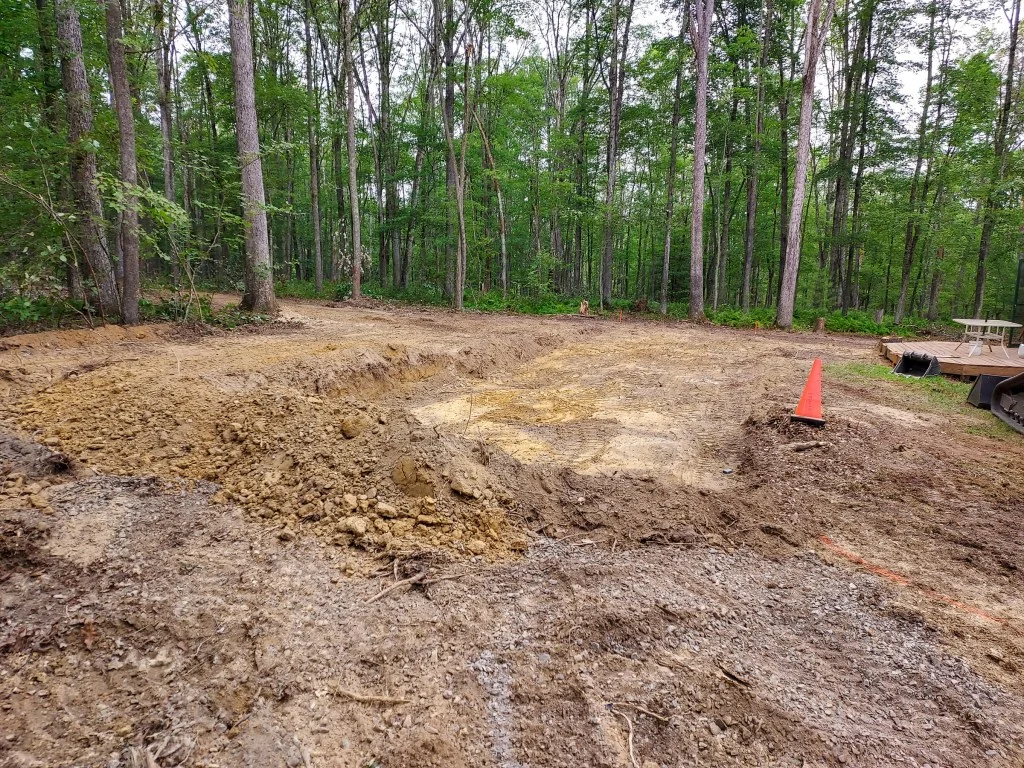
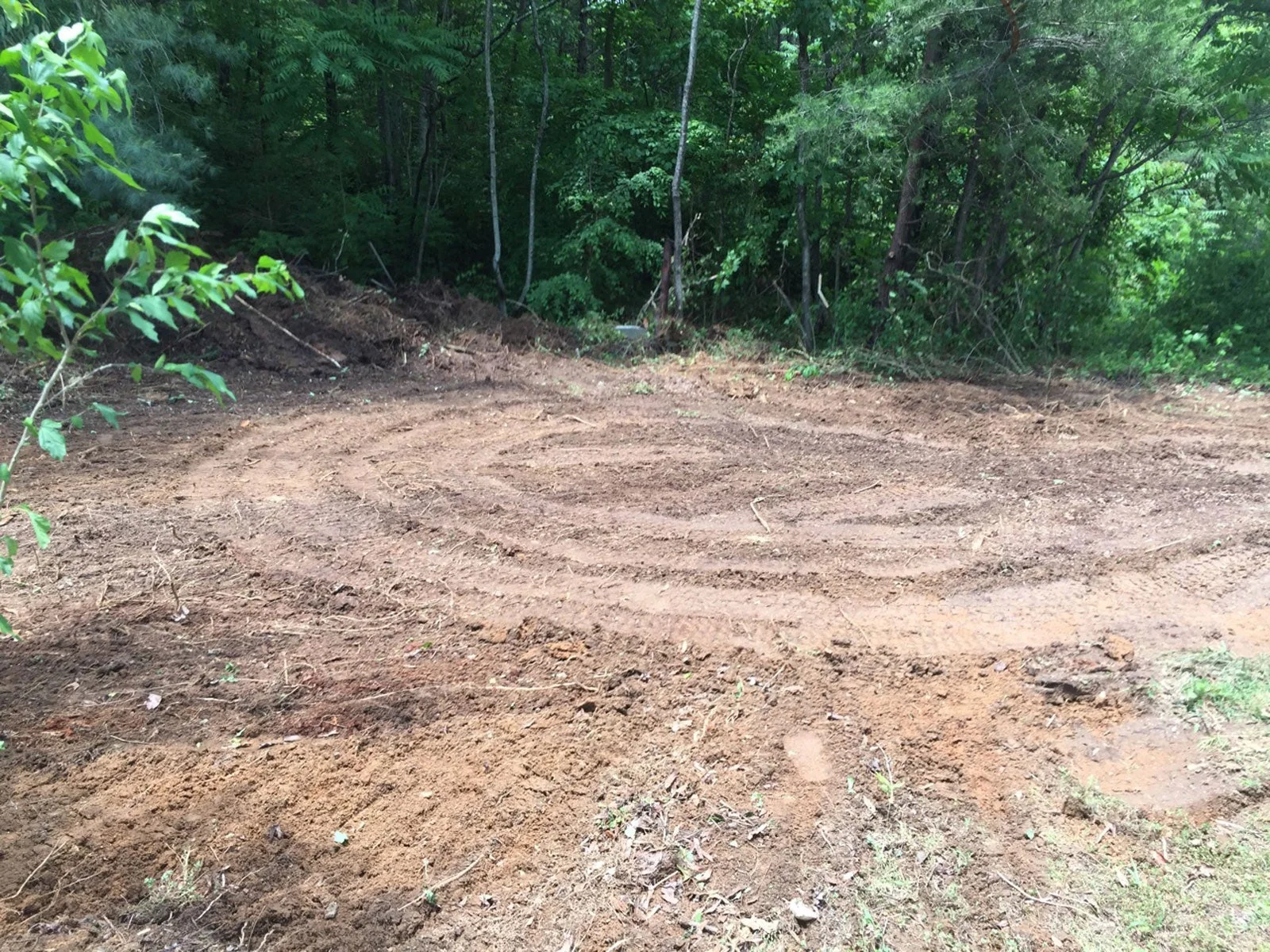
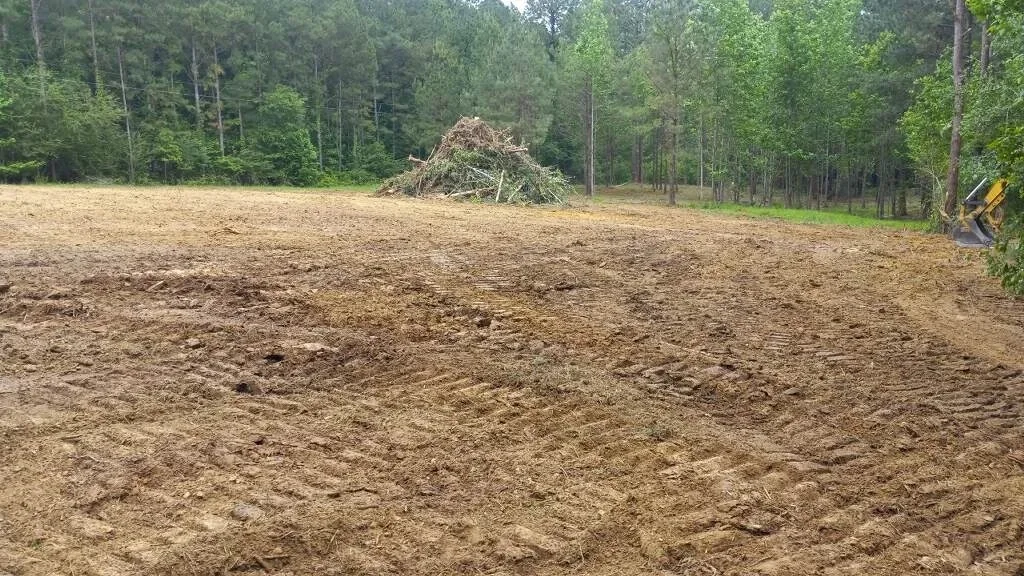
"Leveling" is shorthand for a few different scopes. The cheapest is re-grading the surface to shed water. The most expensive is importing fill to raise a low corner above the surrounding grade. The table below reflects regional ranges for the work, not flat rates, because the access and haul variables above move every line.
| Scope of work | Typical installed range |
|---|---|
| Hand re-grade with rake and tamper, small yard, no machine access needed | $600 - $2,000 |
| Machine re-grade to correct slope and ponding, accessible lot | $1,800 - $4,500 |
| Cut-and-fill regrade with some imported topsoil, moderate slope | $3,500 - $7,000 |
| Full regrade with imported structural fill and new topsoil, steep or tight access | $6,500 - $14,000+ |
| Gravel or drainage-stone cap add-on (per ton, delivered) | $65 - $110 per ton |
| Spoil haul-off (per load, dependent on disposal site distance) | $350 - $750 per load |
These numbers assume the yard drains somewhere after it's leveled. If it doesn't, you're paying to make the water problem worse, and the fix belongs in the same project. The cost page breaks the ranges down by scope more granularly.
Where the money actually lands depends on details worth pricing out separately. Imported fill on a steep Arden or Fairview lot, for example, may need to be engineered structural fill rather than clean dirt, because the county treats anything holding up a slope differently from something simply topping off a low spot. A small load of structural fill trucked up from the valley can dwarf the labor line on a job that size. Topsoil is cheaper but only stable at shallow lifts, which is fine for a lawn regrade and useless for supporting a retaining edge.
Why grading without drainage planning is a waste of money
Water is the reason most Asheville yards need leveling in the first place. A yard that slopes toward the foundation, or a low corner that ponds after every storm, isn't just ugly: it's driving soil saturation against the footing and under the slab. Leveling the surface without addressing where the water goes simply relocates the puddle and restarts the clock on the same damage.
The fix is usually cheap relative to the regrade: a swale, a French drain, a dry creek bed, or a simple grade change that pushes flow to daylight. If your yard slopes toward the house, that condition needs to be part of the plan before the machines arrive, not after. The drainage page walks through how that's diagnosed. For larger excavation and site work beyond a residential yard, the grading and excavation hub covers the full scope.
Two local conditions make drainage planning non-optional here. First, western North Carolina's soils are often clay-heavy, so water does not soak away the way it does in sandier parts of the state — it sits, it swells, and it presses on whatever is downhill. Second, the region's rainfall is not gentle. Summer thunderstorms drop intense bursts, and the remnants of tropical systems have parked over the mountains for days, which is exactly the scenario that turns a shallow cut into a slope failure. The National Weather Service at weather.gov tracks the flood and heavy-rain outlook for the Asheville area, and it is worth a look before scheduling work in spring or early fall, when the ground is already saturated and every yard on the ridge is holding water.
None of this means a regrade is pointless. It means the regrade and the drainage plan are the same project, and pricing them separately almost always costs more in the end. The cheapest version of this work is when the crew already has the machine on site for the grade change and rolls the swale or drain into the same mobilization.
Choosing a crew in mountain terrain
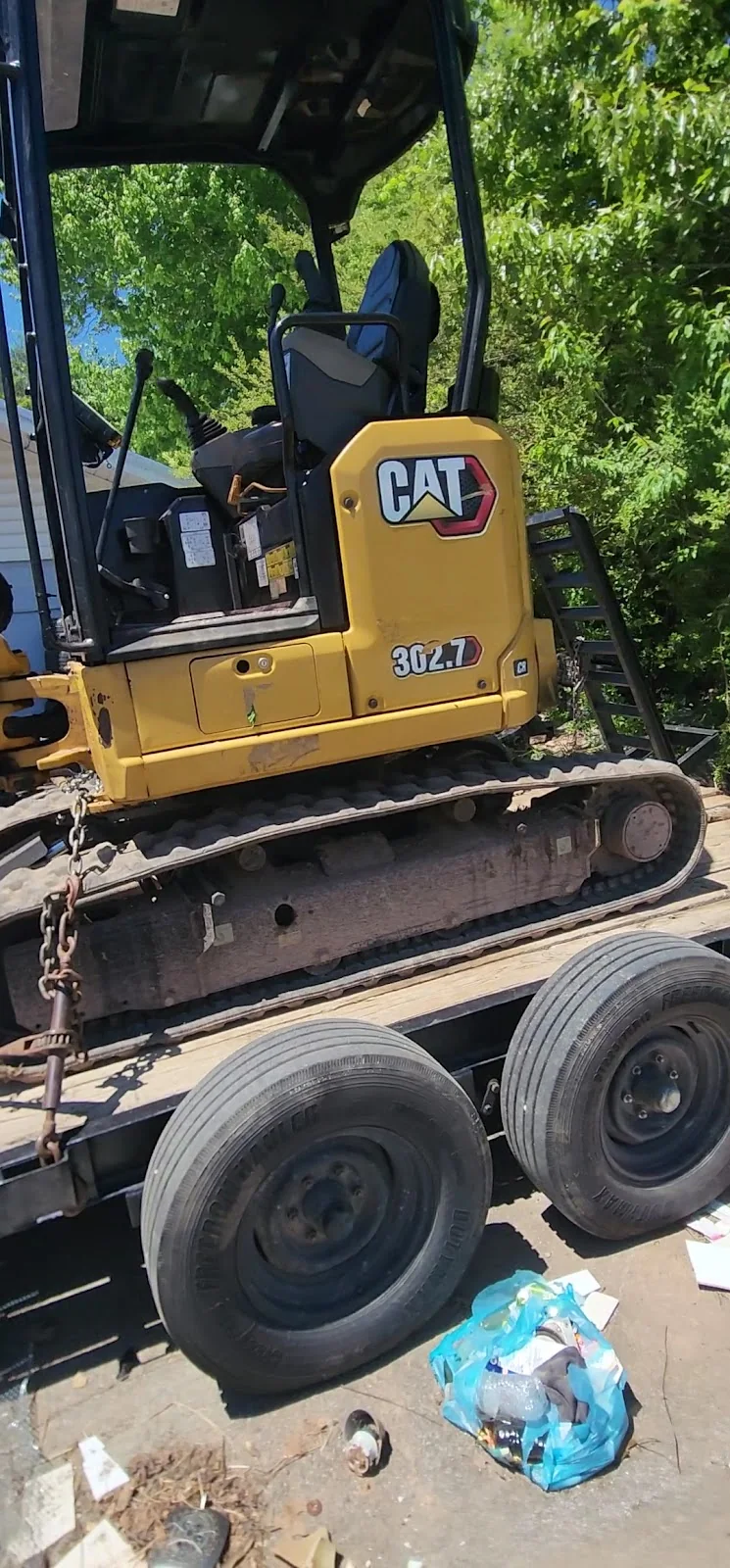
The equipment list tells you more than the pitch. A contractor who owns a mini excavator, a laser level, and a plate compactor is set up for tight-access hillside work. One who shows up in a full-size backhoe is set up for flat commercial lots and will either damage your driveway or subcontract the job.
Ask what machine they plan to bring, how they'll get spoil off site, and whether the price includes topsoil and seed or just bare graded dirt. North Carolina requires a general contractor's license above a statutory project threshold, and you can verify any contractor's status through the NC Licensing Board for General Contractors. A grading contractor working below that threshold may not be licensed, which is fine, but insurance and a written scope are still non-negotiable. Get the scope in writing, including where the spoil goes.
A few practical questions worth asking any crew on a Buncombe County lot: do they carry a copy of their certificate of insurance showing general liability and workers' compensation, and can they name the permitted fill site where the spoil is going? The last one is unusually important here, because the county does not allow clean fill to be dumped on just any neighbor's slope, and an unlicensed operator who "knows a guy" with a hollow out past Leicester is not the same as a permitted disposal site. Your name stays on the lot if the fill later moves and someone downhill has a problem.
Finally, look at how the crew talks about access. A good mountain-terrain grader will walk your driveway, look at the gate, ask about the water shutoff and gas meter location, and want to know if there's a septic tank in the path. A crew that quotes from the curb without measuring anything is a crew that will find a surprise in the ground and bill you for it later.