Read the grade you already own before you pay to move it
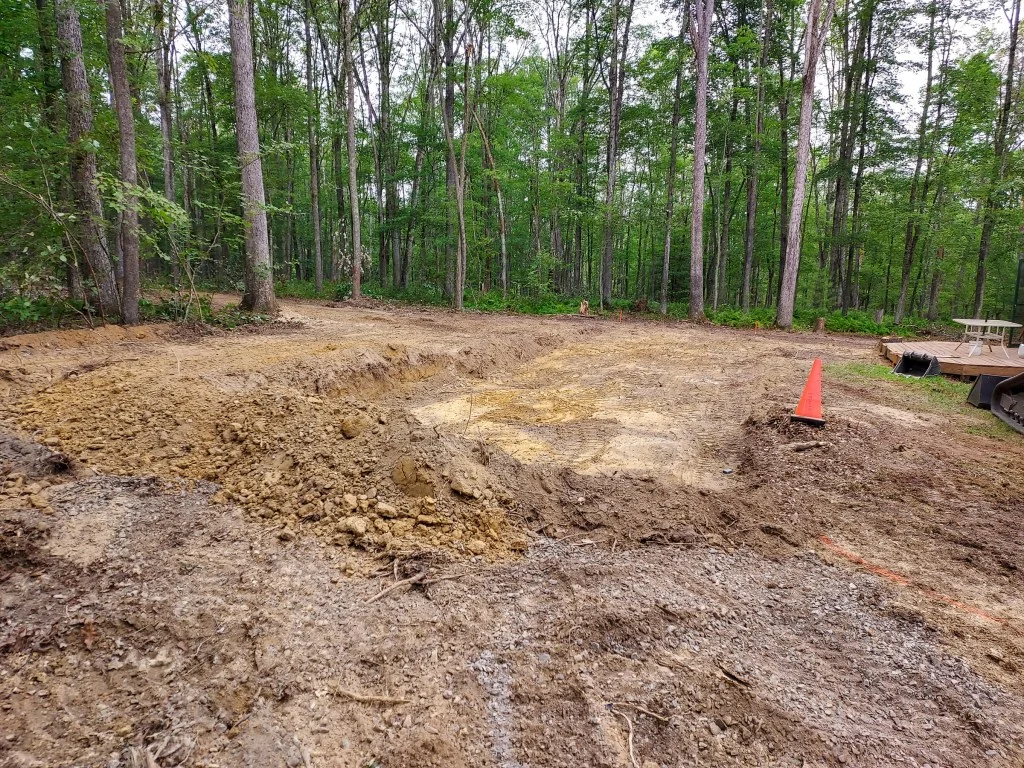
Stand at the top of a Weaverville driveway that was pushed in six or seven years ago and you can usually see the problem before anyone starts a machine. The gravel crowns toward the house instead of away. The culvert at the road is half plugged with leaf litter and red clay. A shallow swale that was supposed to catch hillside runoff now runs straight at the future foundation wall. On ground like this, half of what gets quoted as new excavation is really rework of old grade that was never tied to drainage in the first place.
The same read applies to building pads and old foundation drains. A pad cut into the north side of a Leicester ridge holds moisture longer than a south-facing bench, and a crowned pad traps it at the low corner. A footing drain that daylights uphill of its own trench is doing the opposite of its job. None of this shows up in square footage, but all of it shows up in the bid.
The practical rule we use: if the existing driveway, pad and drain are still controlling water, your new foundation excavation can be budgeted as a clean dig. If they are not, the same hole costs more, because the crew is fixing the old grade before they cut the new one. That single read is the difference between a middle-range job and a top-of-range job in Buncombe County. If you are weighing the correction as its own scope, see the building pad cost guide for how that work is priced separate from the foundation cut.
What the work costs around Asheville
Ranges below assume residential foundation work in Buncombe County, with machine access and a place to put the spoils. They are not quotes. Depth to rock, brush to clear and haul distance swing numbers more here than the square footage does.
| Scope of excavation | Typical Buncombe range | What moves the number |
|---|---|---|
| Footing trench only, shallow cut | $1,800 – $4,500 | linear feet, hand work near existing walls |
| Crawl-space perimeter dig and grade | $2,800 – $7,500 | slope, access, how much old grade must come out |
| Full basement or stem-wall cut | $6,500 – $16,000+ | depth, rock, spoils haul, dewatering |
| Redo an existing pad, driveway or drain first | Adds $900 – $4,000 | whether the old work can be read and reused |
Shallow footing trenches on flat Leicester ground are the low end. A basement cut on a steep ridge lot above Haw Creek is the top end, and a lot of that spread is not labor. It is hauling. Mountain sites rarely have room to stockpile, so spoils leave the property by truck, and the grade of the driveway decides how big that truck can be. A narrow switchback off a county road in Fairview caps you at a smaller dump truck, which means more loads, which means more money.
Two other local patterns push bids up. Brush and invasive growth on lots that have sat fallow for a decade add clearing time that never appears in a flat-lot template. And old septic fields, abandoned footings, or a burned-out outbuilding can hide below the surface, turning a clean cut into a dig-and-haul job. Bidders who walk the property with you will name those risks. Bidders who bid from a satellite image will not.
For the wider picture on what dirt work costs in the region, see the excavation cost guide before you sign anything.
The permits and licensing behind the quote
Excavation tied to a foundation is not a standalone permit item in North Carolina. It rides with the structural work, and the county enforces the residential code's footing, drainage and backfill provisions under the NC State Building Code. Two thresholds matter when you are comparing bids. First, general contracting falls under the state licensing board (NC Licensing Board for General Contractors) once a project crosses the statutory dollar threshold, so a foundation-plus-grading package can legally pull a licensed GC into the job. Second, if the scope includes plumbing for a basement bath or a sump discharge tie-in, the plumbing contractor has to hold a separate state license from the NC Board of Examiners of Plumbing, Heating and Fire Sprinkler Contractors.
None of that is paperwork theater. The scope of an excavation, how deep, how wide, where the spoils go, is often what decides which licensed trade is responsible for the hole. If a bidder cannot tell you who is pulling the permit and under what license, the number is not comparable to the next one.
Silt fence, inlet protection and stabilization of any exposed slope are part of the erosion-control plan the county expects to see before ground is broken. On a steep Asheville lot, that plan is not a formality. It is the difference between a cleared site that drains during the next rain and a driveway that washes out two weeks into the dig.
Water, rock and the Blue Ridge tax
Two regional realities raise the price. First, rock. Depth to competent strata varies lot to lot, and a cut that needs a breaker instead of a bucket changes the day's math. Second, the ground itself. Much of the terrain around Asheville holds heavy clay over saprolite and weathered schist, which drains poorly and stays slick. Dewatering, sump pumping and a stabilized ramp are routine line items here and near zero on Piedmont jobs.
This is also where the fix-or-redo call comes back. If an old building pad or driveway is already shedding water away from the house, you keep that and dig clean. If it is collecting it, no amount of new footing detail will save the basement, and the honest bid includes correcting the old grade as part of the new hole. Our building pad cost guide walks through what that correction adds when it is priced on its own.
Local crews also track the seasonal swing. Late-winter and early-spring ground in this county stays saturated weeks longer than the same elevation in the Piedmont, and a cut that opens in February can sit under a tarp into March. Summer thunderstorms arrive fast and drop hard, so a site that was dry at lunch can be a mud pit by three. Scheduling the dig around that reality is not marketing talk, it is a real cost factor every honest bidder accounts for.
Comparing bids without getting burned
Four moves keep an excavation number honest in this market:
- Make them read the existing grade. Ask every bidder what your current driveway, pad and drainage are doing before they talk depth. The ones who walk it give you a real number.
- Separate the dig from the fix. Have the bid break out new excavation versus correcting old grade. Mixing the two hides which line is inflating.
- Price the spoils. Haul-off is often a third of a mountain-lot excavation cost. Get it as its own line so you can see whether on-site stockpiling is cheaper for your lot.
- Check the depth against the range. If a bid lands far outside the table above, make them show you why. Rock, access or dewatering can justify it, and how they explain it tells you plenty.
Ask each bidder to walk the property with you, not just text a number. On a Buncombe slope, five minutes on the ground reveals the switchback access, the mature hardwoods that must come out, the old culvert that fails every spring, and the neighbor's runoff that crosses the corner. Bidders who see those things price them. Bidders who do not, come back with change orders.
One more habit: get the scope in writing, including who hauls spoils, where they go, and how the site is stabilized at the end. The foundation excavation scope here is not just a hole. It is site access, water control, spoils management, and the final grade that will protect the new footing. See the foundation excavation service page for how that scope is put together, and the excavation cost guide for the wider regional picture before you sign anything.