The first dig in Canton is usually a re-read, not a new hole
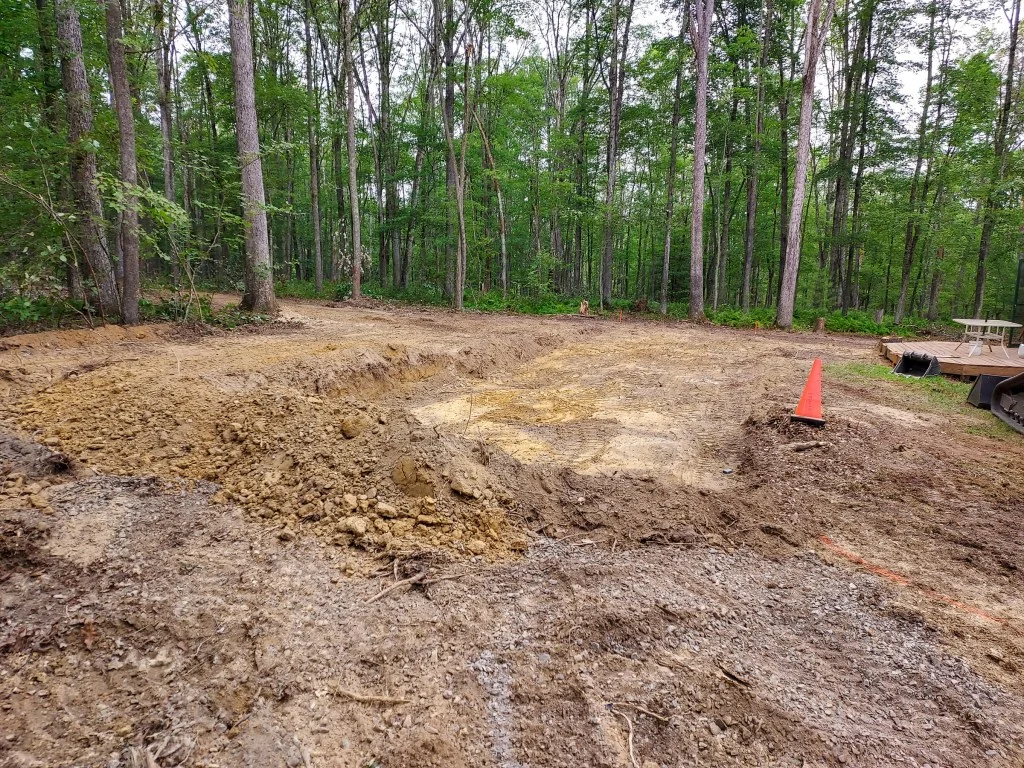
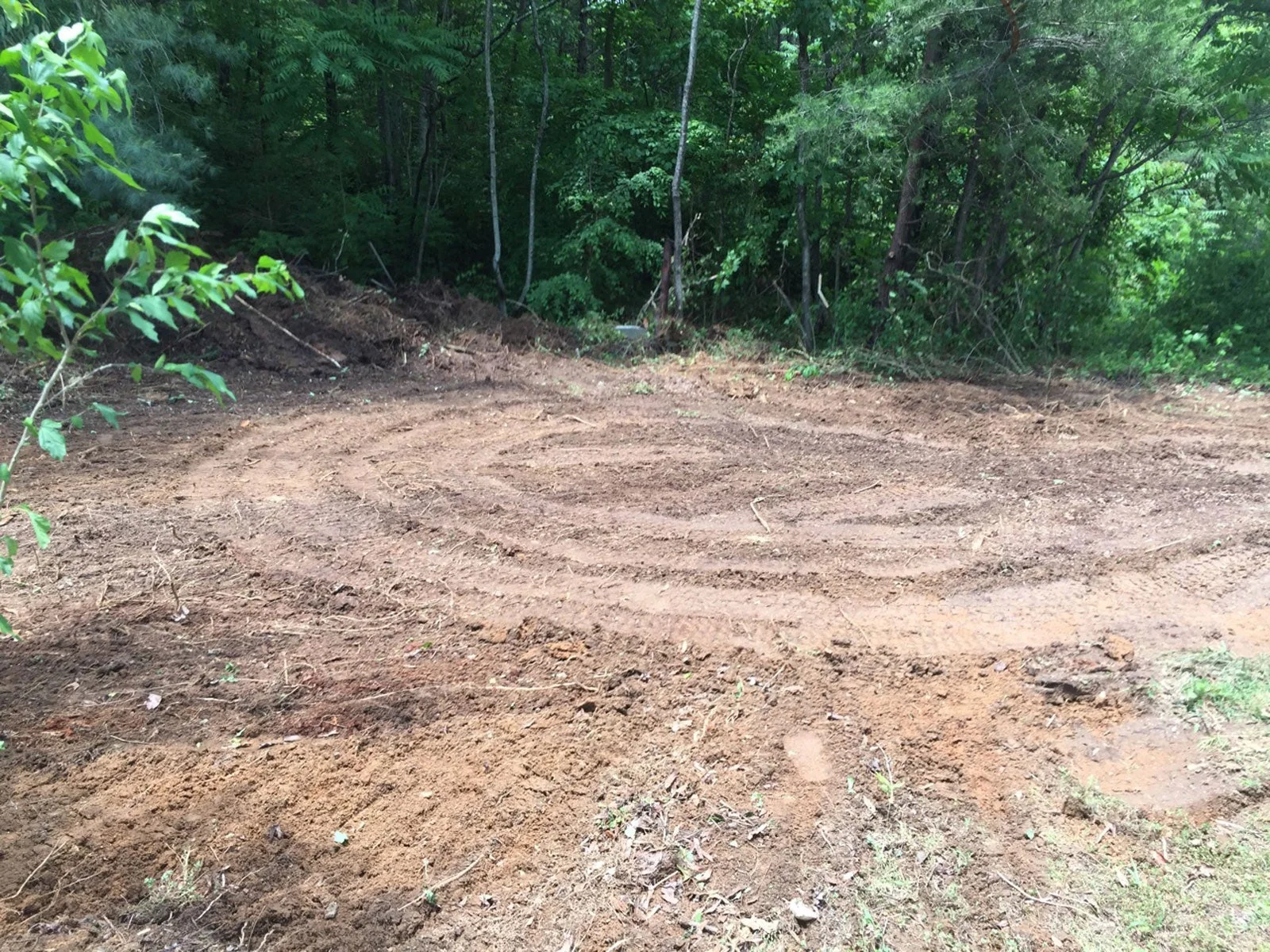
Most excavation calls in Canton do not start with virgin ground. They start with something already in place: a gravel driveway that has washed out twice since spring, a shop pad poured slightly proud of the uphill grade, a curtain drain that quit draining, a building pad that has begun to hold water against a foundation. The cheapest fix on a lot like that is not a bigger machine. It is two hours of reading what is already there — where the water enters, where it pools, and whether the existing pad was ever cut at the right elevation to begin with.
That matters here because Canton sits in a river town. The Pigeon River bottoms, the graded slopes up toward the ridges, and the older mill-era lots in between all handle water differently. A driveway that pitches toward the house is a drainage problem wearing an excavation costume. A pad built on fill that never got compacted is a settling problem, not a re-grading problem. If you spend on a re-dig before answering those questions, you pay twice.
Consider a typical lot off a side street climbing away from the Pigeon River bottom: the driveway was cut years ago to reach a house pad, but the ditch on the uphill side has silted in, and now runoff sheets across the gravel instead of running beside it. The homeowner calls about re-graveling. The real fix is re-cutting the ditch and restoring the pitch, not hauling in three more loads of stone. That distinction — drainage versus volume — is the single most common misdiagnosis on Canton lots.
Mill-era lots add their own wrinkle. Some were graded when the mill was running, and the fill under them is older and less documented than anything a modern permit would require. When water starts showing up against a foundation on one of those lots, the question is not just where the water comes from but what it is sitting on. Answer that before quoting a machine, or the quote is fiction.
What the terrain does to the work and the price
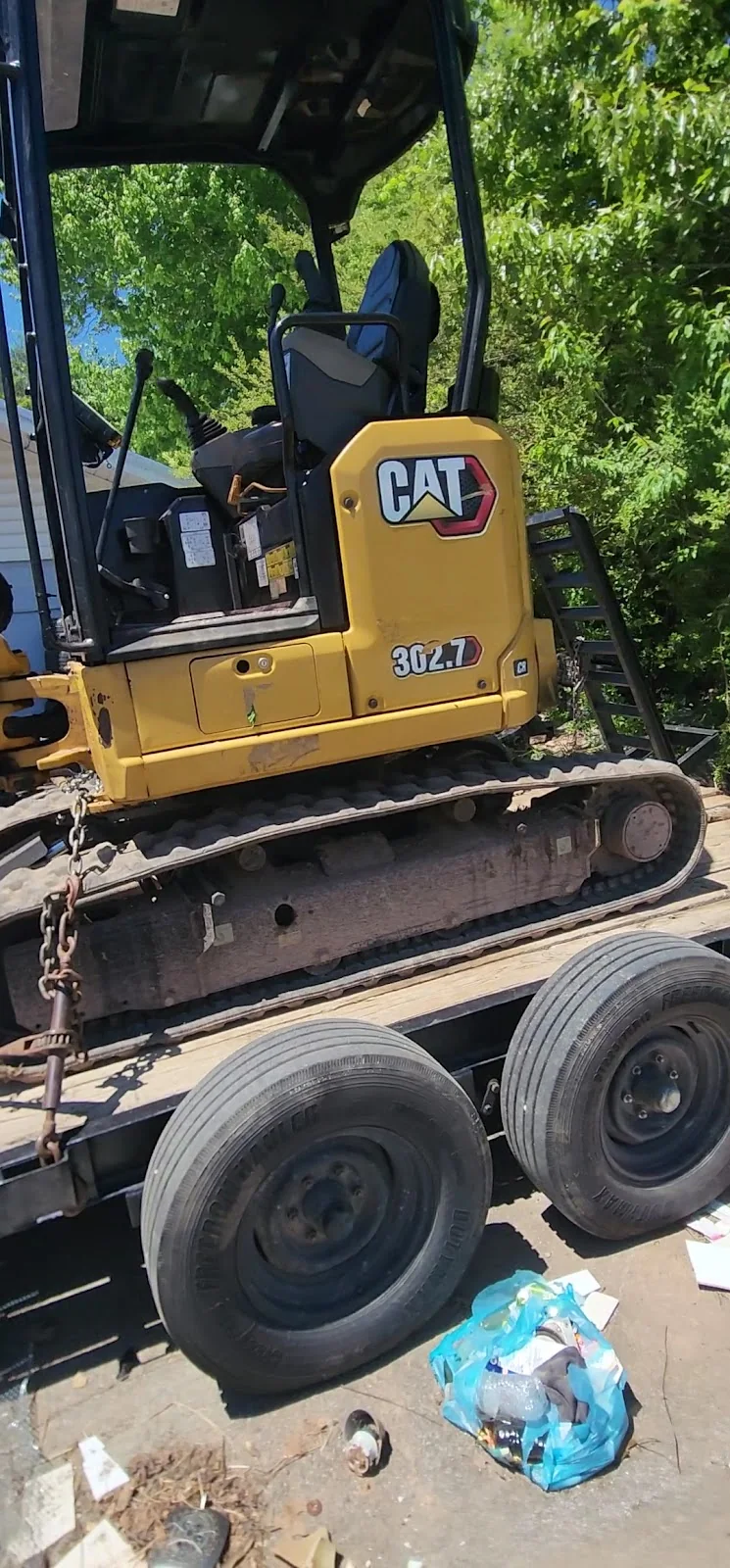
Haywood County ground is not flat ground. Cut-and-fill is the rule on the slopes, which means a lot of Canton properties have a downhill side that is engineered and an uphill side that is native — and those two halves behave differently under a machine. Access is the other mover: a machine that can reach a back pad in one pass costs less than one that needs a trackhoe staged off the road with mats and a spotter.
Before anyone quotes, the questions worth asking are: how did the machine get in, where does the spoils go, and is there rock. Rock in this county is real, and rock changes a bid. A quote that does not ask about it is guessing. For local line items, the Haywood County grading cost breakdown shows how those variables land in dollars.
Slope direction matters as much as slope steepness. A lot facing north off a ridge holds moisture longer and drains slower than a south-facing lot a mile away, and that changes how much ditch and culvert a driveway needs. Creek-bottom lots near the Pigeon River have the opposite problem: the water table sits high, and a footing or pad dug too deep can turn into a pump-and-hold situation. Neither condition shows up in a generic quote template. Both show up on the invoice.
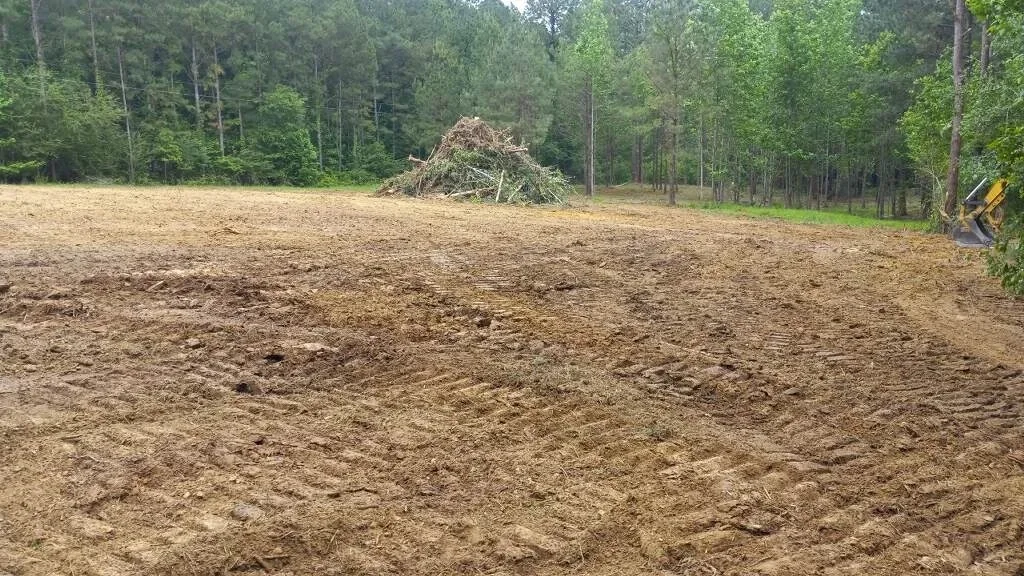
Haul-off distance is the quiet variable. On a tight in-town lot, spoils might have to leave the site entirely, and every load is a line item. On a larger parcel out toward the county line, spoils can often be spread on site, which keeps the number down. Two Canton jobs of identical square footage can price thousands apart for that reason alone. Ask which one yours is.
Typical scope and price ranges in Canton
These are working residential ranges. Creek-bottom and steep-lot jobs with rock, haul-off or engineered fill tend toward the top of the band; a straightforward trench on accessible ground lands low. Full site excavation covers house pad plus driveway plus drainage in one mobilization, which is why it prices below the sum of its parts.
| Scope | Typical range | What moves the number |
|---|---|---|
| Single footing, utility trench or small pad | $1,800–$4,500 | Access, depth, rock, spoils disposal |
| Driveway cut or re-cut, including drainage | $1,800–$4,500 | Length, pitch correction, ditch and culvert work |
| Building pad (shop, garage, addition) | $2,500–$4,500 | Cut-and-fill volume, compaction, retaining edge |
| Full site excavation (pad + drive + drainage) | $6,000–$15,000 | Slope, rock, engineered fill, haul-off distance |
If a bid comes in far under these numbers on sloped Canton ground, the missing line is usually spoils, drainage or rock — not labor.
A single utility trench is the simplest Canton job and the easiest to price honestly: the depth is known, the spoils stay on site, and the only wildcard is whether the trench hits rock before it hits the connection point. A building pad on a graded lot is the opposite — the cut-and-fill balance decides whether you import fill or export it, and that single swing moves the number more than the machine hours do. Full site excavation bundles all of it, which is why one mobilization is cheaper than three separate calls.
One honest note on the low end: a $1,800 job is a small, accessible, rock-free dig with on-site spoils. If your lot is steep, tight, or likely to hit rock, the realistic starting point is higher, and a contractor who tells you otherwise is either not seeing the site or not planning to finish it at that price.
Water, permits and the rules that shape a dig
The federal disaster record is the honest backdrop for a lot of excavation work in this county: 19 declared events touch Haywood County across 1973-2026, overwhelmingly storm and flood family. Those events re-arranged streambanks and pushed water across pads and driveways that were built for a drier assumption. That history is why drainage is not an add-on here; it is half the job. Grading that sends water around a structure instead of under it is the difference between a pad that lasts and a pad that gets re-cut in five years.
Two authority checks worth knowing. Sediment and stormwater from a disturbed site are regulated at the federal level — the EPA sets the frame for construction stormwater and erosion control. And once a project crosses the state's cost threshold, the contractor handling it falls under the NC Licensing Board for General Contractors. Neither replaces a county permit conversation, but both tell you what a serious crew already has in hand. Anyone moving dirt without an erosion plan on a slope is a risk you inherit.
The weather angle is not abstract here. The National Weather Service issues the flood and flash-flood warnings that decide when a slope is safe to work and when freshly disturbed ground is most vulnerable. Scheduling a cut on a graded Canton lot right before a heavy rain window is how erosion control fails, silt reaches the creek, and a clean job turns into a problem. Good crews watch that forecast the same way they watch the grade.
For structural work tied to the excavation — foundations, retaining walls, anything the code governs — the International Code Council publishes the model codes that local review adopts, and HUD sets standards relevant to residential siting and floodplain considerations. You do not need to read them, but you should know that a contractor who has never heard of them is telling you something.
How to hire an excavation contractor around Canton
Three checks specific to this terrain. First, ask them to walk the water before they quote the dig — how the uphill neighbor's runoff, the driveway pitch and the existing drainage interact. If the answer is only about yardage, keep calling. Second, ask where the spoils go and whether haul-off is in the number; on tight Canton lots that line item is often the whole difference between two bids. Third, ask about rock contingency in writing, because a verbal 'we'll deal with it' is how a project stops mid-dig.
When you are ready to compare crews, the excavation contractor guide covers what a proper first visit and scope should include, and the Canton grading contractors page narrows it to grading-specific work. The pattern that works here is simple: read the existing ground first, price the water, then move the dirt.
Two more questions worth asking on any Canton slope job. Where does the machine enter and exit, and does that path cross anything that cannot be repaired? A trackhoe chewing a new route across a septic field or a finished lawn is a cost nobody quoted. And: what happens to the pad after the dirt moves — does the crew compact in lifts, or dump and leave it? On fill ground near the river bottoms, uncompacted fill is a future settling call, not a finished pad.
Finally, ask for the scope in writing with the water plan attached. A one-paragraph estimate that lists yardage but not ditch, culvert, compaction or spoils is not a scope, it is a starting number. The Canton jobs that go smoothly are the ones where the ground was read before the machine showed up.