Read the ground before you order a single load
Drive most Buncombe County roads and you'll pass the same mistake in different stages: a fresh gravel pad poured onto a graded slope, then ruts by the first wet spring, then a truck stuck in its own driveway by year three. The material failed because nobody read the water first. This county sits in a bowl of weathered clay and saprolite, where a cut bank on a north-facing slope near Weaverville holds moisture completely differently than a graded flat in Arden. Fill dirt delivery in Asheville is easy to buy and hard to undo, so the honest first step isn't a quote for a load, it's a walk of the grade you already have.
Three things decide whether your project needs fill at all: where stormwater currently goes, how steep the existing slope is, and what's under the grass. If the answer to the first is "toward the house" or "nowhere," more dirt will make the problem heavier, not better. Fix the drainage first, then spend on material. That order saves more money than any discount on a load.
Fix or redo: when existing gravel is salvageable
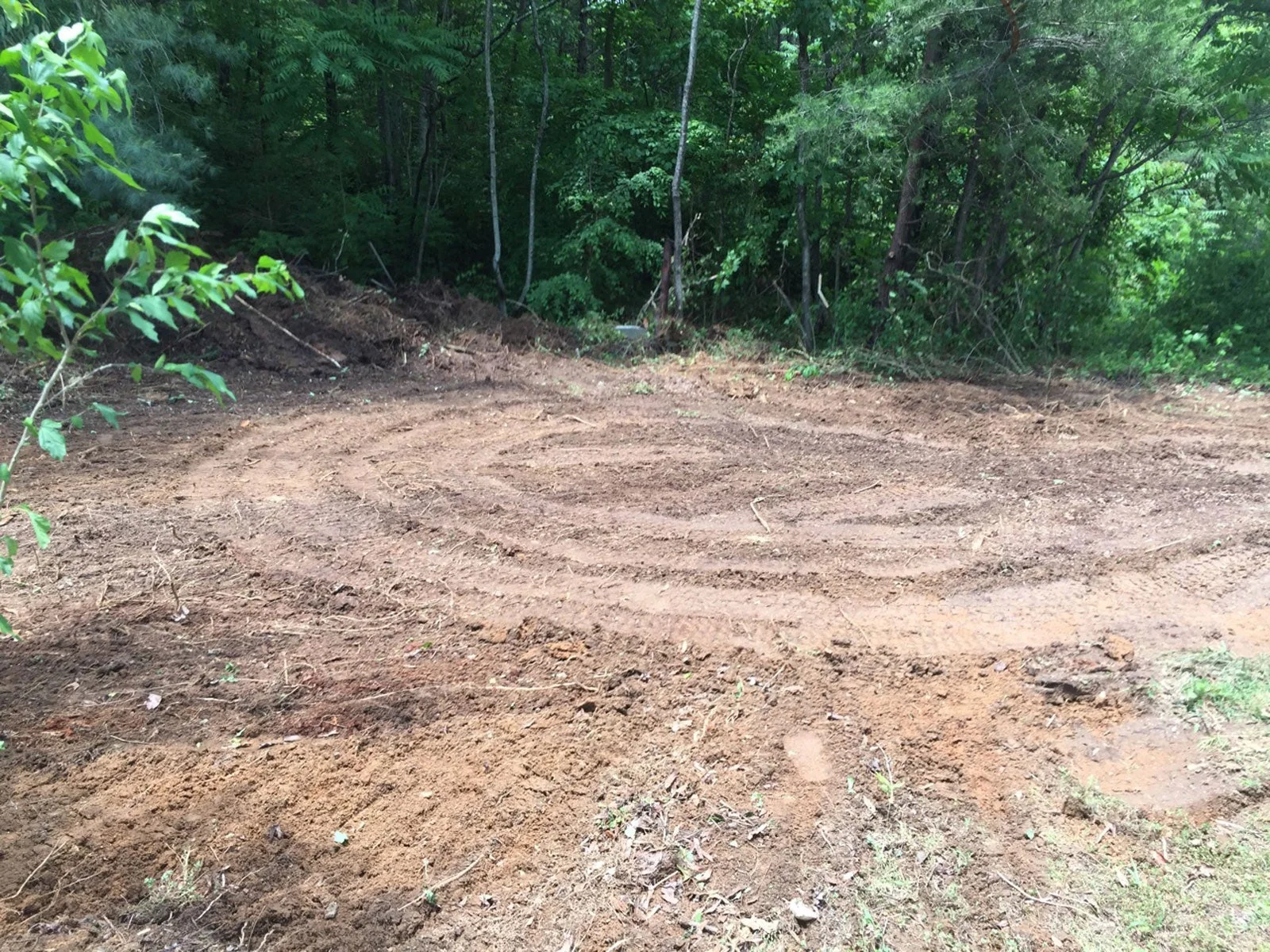
Plenty of driveways that look finished are one compaction pass and a fresh crown away from another decade. If the base is sound and potholes are shallow and localized, the fix is regrading, adding a thin lift of crush-and-run, and re-establishing drainage away from the road. That's the same work as new construction minus the hauling, and it usually costs half. Our driveway grading and gravel page walks through that decision in detail.
If the ruts go to the subgrade, if the driveway ponds in the middle, or if it climbs a slope steep enough that trucks spin, you're past repair. That's when full redo with proper base, compaction, and drainage is cheaper over ten years than three consecutive patches. The honest test: dig a hole a foot deep in the worst spot. If you hit soft, saturated clay instead of compacted stone, regrading won't hold it.
What fill dirt, gravel, and hauling actually cost here
Prices in this region depend on three things: what the material is, how far it travels, and how hard your access is. A flat lot off a state road in Fletcher prices very differently than a steep gravel lane in Leicester where the truck can't back to the dump point. Bands below reflect delivered and spread, not just the load at the pit.
| Scope | Typical Range |
|---|---|
| Fill dirt, delivered (per 20-yard load) | $300–$700 |
| Crush-and-run / ABC stone, delivered (per 20-yard load) | $450–$900 |
| #57 or #67 washed gravel, delivered (per 20-yard load) | $550–$1,100 |
| Trucking / hourly hauling, difficult access | $95–$150/hour |
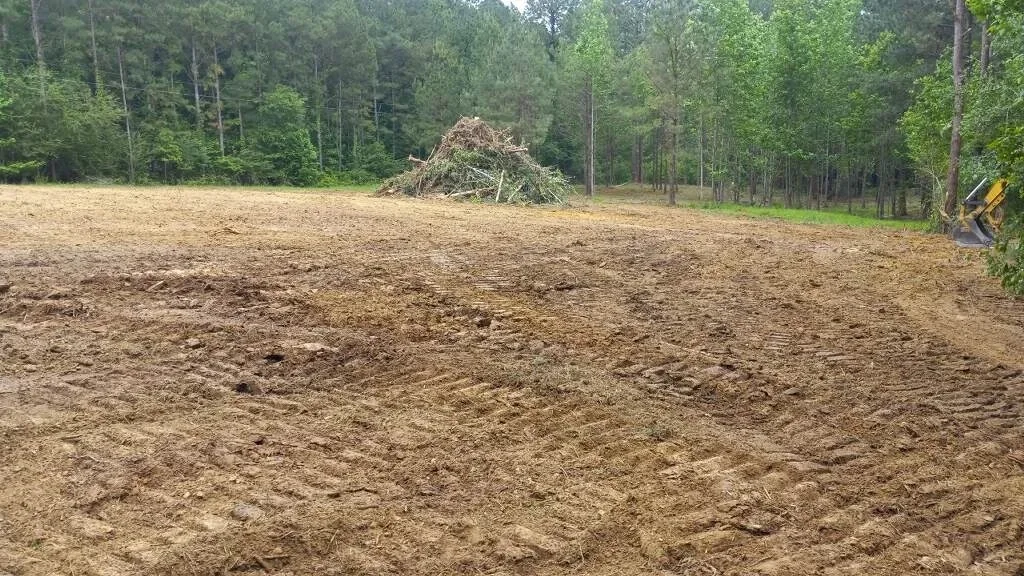
| Grading and spreading, small lot | $600–$1,800 |
| Full driveway redo, 100–300 feet with new base | $3,500–$9,500 |
For a tighter breakdown on stone alone, our gravel driveway cost page separates material from labor. Fill dirt is the cheapest line on that table and the one most likely to be bought badly — unscreened fill with organic matter will settle for years. Ask what pit the load came from and whether it's been screened. If a hauler can't answer, that's the answer.
Building pads and site prep on mountain terrain
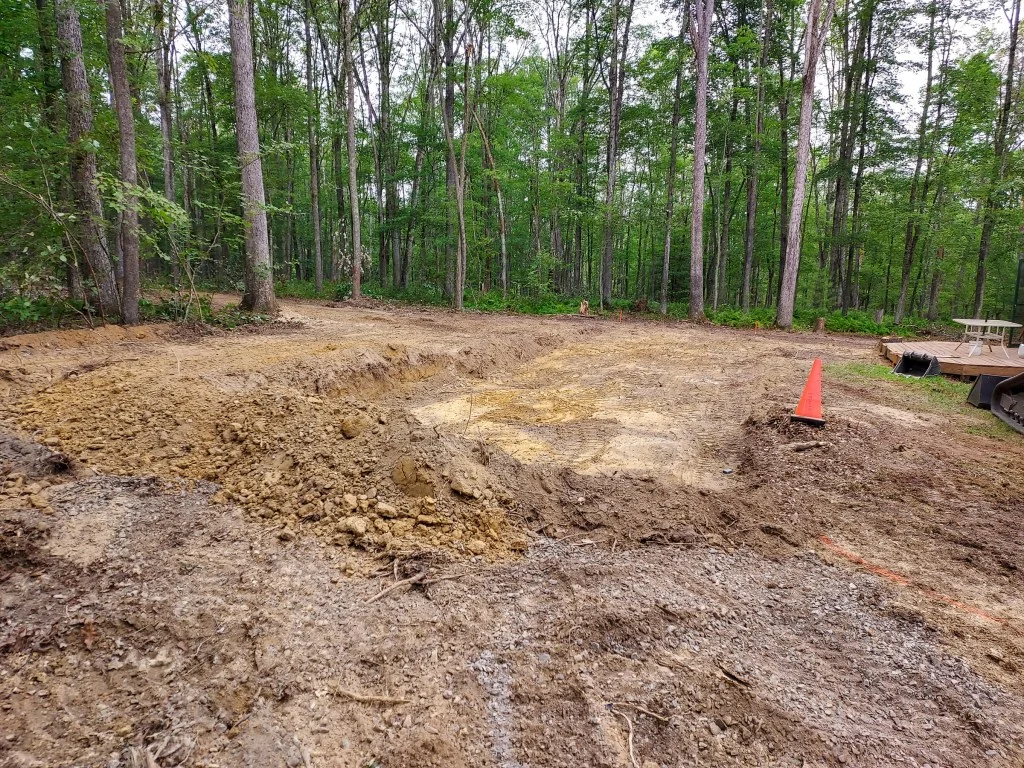
A building pad is the one place in this trade where the stakes are structural. A pad for a shop, garage, or home site has to be benched into the slope, compacted in lifts, and drained so the uphill side doesn't feed water into the fill. Throw down a foot of dirt on a sloped pad and the first hard rain will move it. Benching means cutting a level shelf into the hillside and using that cut material as fill behind a proper retaining transition — site-specific engineering, not a truck dropping material where the GPS pin lands.
Our site prep and building pads page covers that process end to end. The rule of thumb: on slopes above roughly 15 percent, plan on benching and a drainage design, and budget for more machine time than a flat-lot job of the same square footage. The NC Licensing Board for General Contractors sets the threshold where this work needs a licensed general contractor — worth checking before you hire, because a pad that later fails an inspection costs multiples of what proper prep would have.
Where the water goes decides how long the work lasts
Every material decision in this trade is downstream of drainage. Culverts that undersize, ditches that stop short, and pads that shed water toward the foundation are the three calls we see most often on Buncombe jobs. A correctly crowned driveway carries water to a defined outlet, not to the low corner of your pad. A cut bank needs a ditch above it and an outlet below it, or the fill is a sponge by February. The EPA's stormwater guidance is written for construction sites, but the same principles govern a residential driveway: slow the water, direct it, and don't let sediment leave.
Storm history here reinforces the point. This county records 19 federal disaster declarations across 1973-2026, and the pattern in the mountains is saturated soil followed by slope failures, washed driveways, and blocked culverts. If your existing grade already has a weak spot, a wet season will find it. Building the drainage in now is cheaper than rebuilding the driveway after one of those seasons. The National Weather Service maintains local outlooks worth checking before scheduling a haul, since frozen or saturated ground won't compact properly.
Hiring the truck and getting the grade you paid for
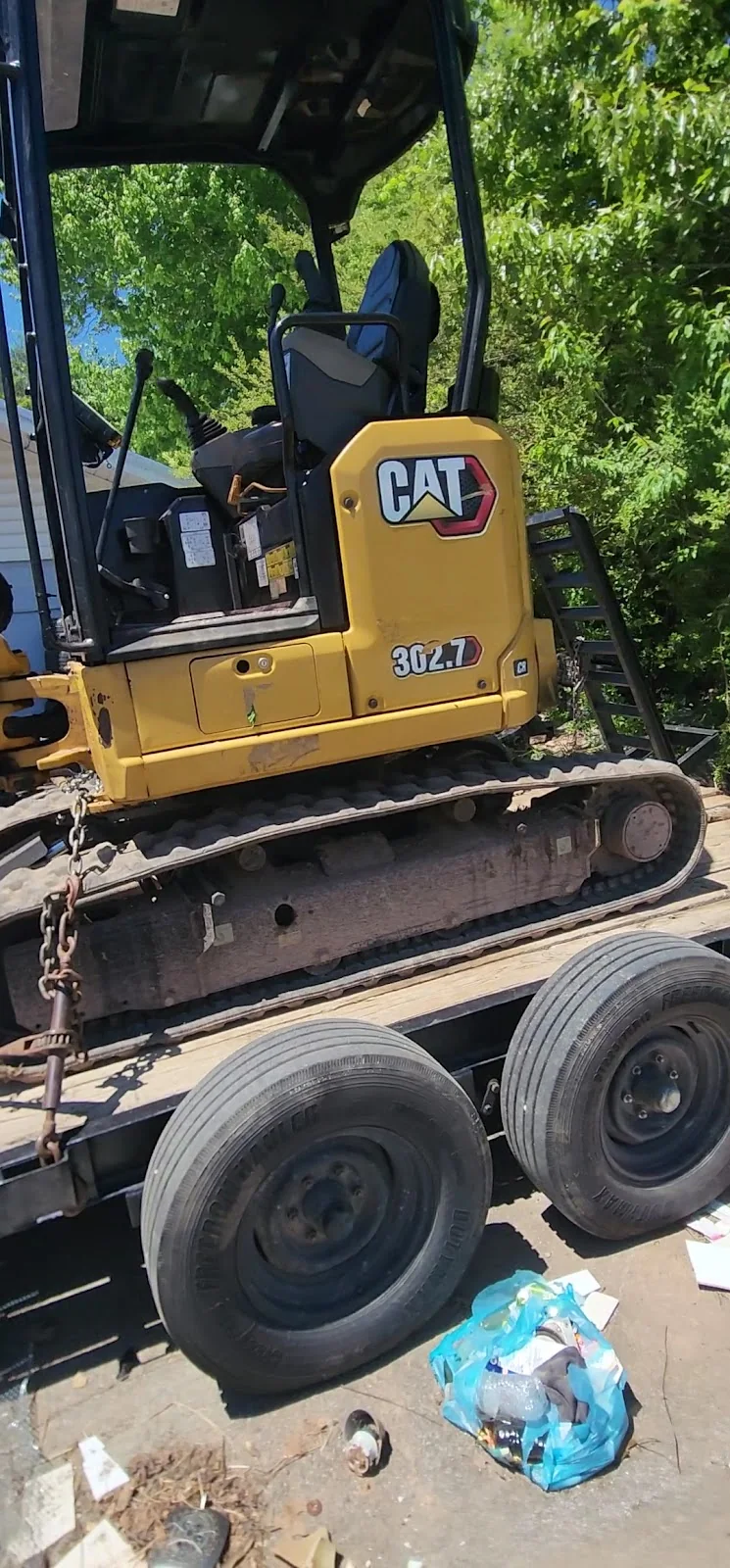
Fill dirt delivery in Asheville usually means an owner-operator with a dump truck and an excavator, or a small grading contractor who runs their own material. Both are fine; the difference shows up in coordination. A pure hauler drops material where you point. A grading contractor reads the site, decides the material, spreads it, and compacts it. For anything beyond a flower bed or a pothole patch, the second is what you want.
Three things to confirm before the first load: where the material comes from (screened or not), how the truck will access the dump point without tearing up what you've already built, and how spreading and compaction are handled. If the plan is "we'll just push it around with the bucket," expect settlement. Compaction in lifts is the difference between a driveway that lasts and one that needs redoing. And confirm the final grade drains — a load of stone spread to a flat or inward-sloping surface is money installed wrong.