Reading the water before anyone digs
Most wet yards around Mars Hill are not rain problems, they are uphill problems. The town sits in a bowl of ridges and creek bottoms, and the typical lot either drops down from a wooded bank above the house or falls fast toward a branch of the French Broad watershed. Roof water and driveway sheet flow arrive at the same low corner, and by the time the ground is spongy in February it has been collecting there since November.
Walk a lot off Paint Fork or up near Mars Hill University and the water story usually reads itself. There is a darker, mossier band running down the hill toward the house. There is a soft spot where the yard flattens just above the foundation. There is a downspout dumping onto a splash block overwhelmed since the first big fall rain. None of that is a mystery once you stand on the grade in the rain, which is why the honest answer to most drainage questions starts with where water crosses the property line, not what kind of pipe to buy.
The grade has one job on a lot like this: intercept water uphill of anything you want dry, then move it along a defined path to a legal outlet. That means a swale or drain at the top of the slope, not a trench at the bottom. Fixing the low spot without cutting off the source is the most common money-waster we see on these hillsides. A collection point at the base of a hill receives everything the hill sends it, and no reasonable pipe size keeps up during a mountain downpour.
The Mars Hill yard drainage price picture
Madison County pricing tracks terrain more than square footage. A flat quarter-acre out near the high school costs far less to dry out than a half-acre falling twenty feet from the road to the creek. The table below reflects working regional bands, and the full county breakdown lives on the Madison County grading cost page.
| Scope | Typical range | What drives it |
|---|---|---|
| Grading and swale correction only | $3,000-$5,500 | Slope, equipment access, spoils |
| French drain, single run | $3,000-$6,500 | Length, depth, stone, outlet |
| French drain with curtain drain uphill | $5,000-$11,000 | Cut depth, daylight point, rock |
| Catch basins and buried downspout lines | $3,000-$6,000 | Count, run length, tie-ins |
| Dry creek bed (surface conveyance) | $3,200-$7,500 | Linear feet, liner, stone size |
| Whole-yard regrading | $15,000 and up | Grade change, haul-off, stabilization |
Two line items surprise people here: rock, and outlet. Ridge lots in Madison County hit saprolite and boulders at shallow depth, and a run that has to daylight fifty feet downhill may need a pipe, a stabilized outlet, or a riprap apron before it can legally discharge. Treat a quote without an outlet detail as an estimate, not a bid.
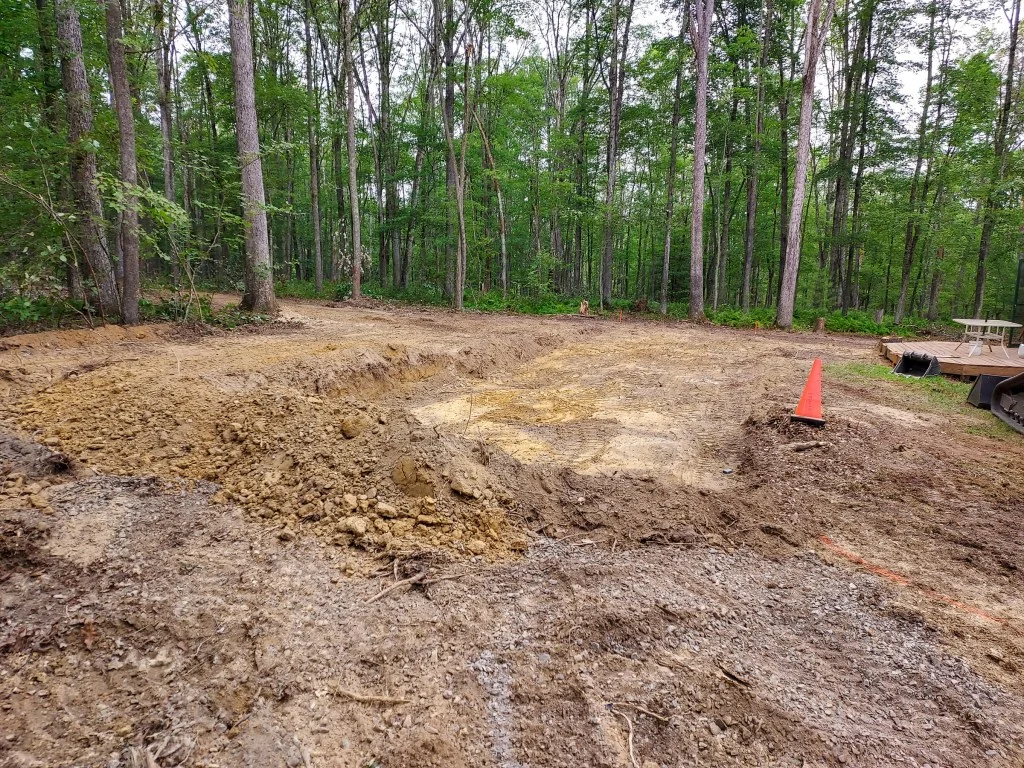
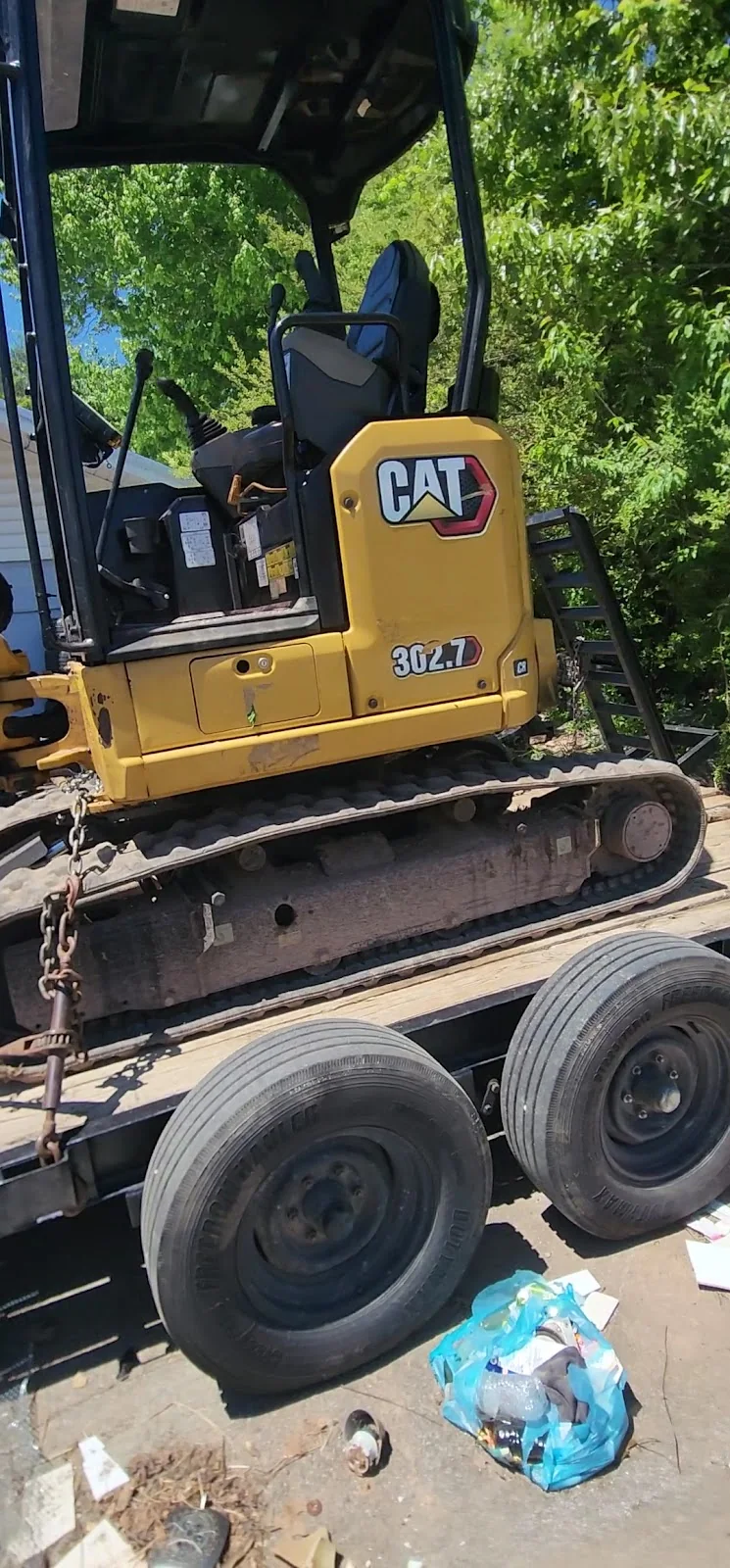
Access is the third mover most homeowners do not think about. A mini excavator that fits between a house and a steep bank costs more per hour than a full-size machine in an open field, and where the only way in is a narrow gravel drive with a switchback, the equipment choice is made for you. That is not upselling; it is the difference between a crew that finishes the run in a day and a crew that tears up your drive getting a bigger machine to the work.
Drainage that doubles as a finished landscape feature also changes the number. A dry creek bed built with liner, washed stone, and a couple of boulder placements reads as a garden element and moves water at the same time. It costs more than a trench and stone, but it solves a visual and a water problem with one excavation, which on a tight Mars Hill lot is often the better use of the same dollar.
Grading, erosion, and where water is allowed to go
Moving water across a slope is a regulated act, not just a landscaping one. Madison County enforces the state sediment and erosion rules on any land-disturbing work over the threshold, and drainage that concentrates flow onto a neighbor or into a creek without treatment is the fastest way to turn a yard project into an enforcement letter. The NC Department of Insurance Office of State Fire Marshal publishes the state building code, which treats site drainage and foundation water management as part of the structure, not an afterthought.
On steeper lots, the practical answer is often surface conveyance first: a graded swale or dry creek that carries flow at a controlled velocity, with buried pipe only where the grade leaves no other choice. Our drainage and erosion control guide walks through how those systems get sized. Once water is managed, the Mars Hill grading crew can reshape the yard without fighting the same puddle every spring.
There is a right way and a wrong way to daylight a pipe on these hills, and the difference shows after one storm. The wrong version dumps water onto bare soil at the toe of a slope, and the first hard rain carves a gully that keeps growing. The right version sets the outlet on a stable, vegetated grade, armors it against scour, and disperses flow so it does not arrive at the neighbor's fence as a concentrated jet. That outlet detail is the part most likely to be skipped in a cheap bid and the reason you call someone back out two years later.
Erosion control fabric, silt fence, and temporary stabilization are not decorative. On a Madison County hillside, exposed soil during construction is a sediment delivery system, and sediment leaving the site is exactly what the state rules exist to prevent. A crew that lays out sediment control before it digs expects the work to be inspected and done right.
Storm history is why this trade exists here
Western North Carolina's federal disaster record is dominated by flood and storm events. 21 declared events touch this region across 1978-2026, and every one of them rearranged somebody's yard. Tropical moisture riding up the Blue Ridge dumps on these ridges in a way flatland drainage assumptions never account for. The National Weather Service precipitation records for the mountains make the case better than any sales pitch: design for the storm, not the average.
That has a real design consequence. A drain sized for a gentle soak will fail in a two-inch-per-hour event, and when it fails it usually backs up and delivers water exactly where you tried to keep it from going. Oversized stone, a clean gradient, and a daylight outlet that can handle a gully-washer matter more here than in the Piedmont.
The other consequence is maintenance, which nobody wants to discuss at the sales stage. French drains in mountain ground collect fine sediment, leaf litter, and grit washing off gravel drives, and a system with no cleanout is one you cannot inspect. Ask where the cleanouts go and how you check them. A five-minute look after the leaves drop beats a backhoe visit after the first big rain of the next season.
Choosing a crew on this terrain
Two checks separate a real drainage contractor from a pipe salesman. First, ask for the outlet plan in writing: where does the water leave your property, and what happens at that point in a big storm? Second, ask how they handle rock. On Mars Hill slopes, a crew without the right machine and the experience to read the cut will either walk off the job or bill you by the hour once they hit a boulder field.
For larger site work, the NC Licensing Board for General Contractors sets the threshold at which a project needs a licensed general contractor, and drainage tied to structural or site work can cross it. Ask about licensure and insurance before anyone puts a bucket in the ground. Where a system discharges toward a waterway, the EPA stormwater resources explain the federal framework the state rules implement.
One more gut check that costs nothing: ask the crew to walk the property with you and tell you, in plain language, where the water goes now. If the answer is vague, the plan will be vague. If they can point at the bank above the house and say the swale goes here and the pipe daylights there, you are talking to someone who reads grade for a living. That is the whole trade on these hills, and it is worth more than any brochure.