Where the water comes from, and where the grade has to send it
A gravel driveway in Buncombe County is really a water-management project that happens to carry cars. On the ridge lots above Haw Creek, the hillside properties in Weaverville, and the hollows between Black Mountain and Leicester, rain arrives at the top of the drive and has to be pushed off the side before it cuts a gully down the middle. Asphalt and concrete can shrug off a marginal grade because they are impermeable and rigid. Gravel cannot. If the crown, the ditch, and the cross-slope are not built into the subgrade, the first heavy storm takes the stone with it.
That is why a driveway quote here should always start with the lot's drainage story, not the stone. A lot that sheds water off the back slope through a cut in the bank needs a different grade than a lot on a plateau in Arden. The federal record shows this is a wet county: 19 federally declared disaster events have touched Buncombe County (1973-2026), most in the storm and flood family. That history is written into the soil, and it is what your excavator is grading against.
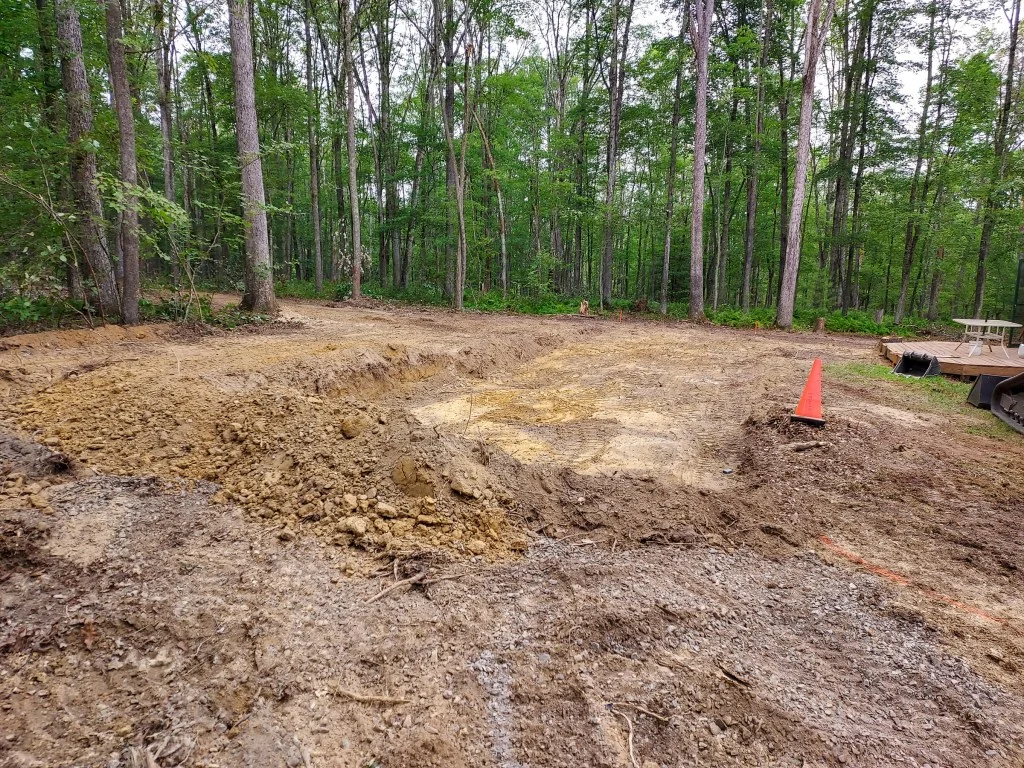
In the Hominy Valley and along the French Broad bottoms, the problem is different from the ridge: the water table sits high after a wet spring, and a drive that looks dry in August will pump mud in March. The grade has to lift the roadbed above the seasonal water or the stone sinks. On the south side in Fairview and however far up however many hollows alongside Cane Creek, the water comes off steep wooded slopes and hits the drive all at once, not gradually. That flashy runoff is why culverts sized for a typical storm still wash out in a cloudburst. Old-timers around here remember the 2004 floods and the 2021 remnants of Fred; the storms do not need a name to rearrange a gravel drive.
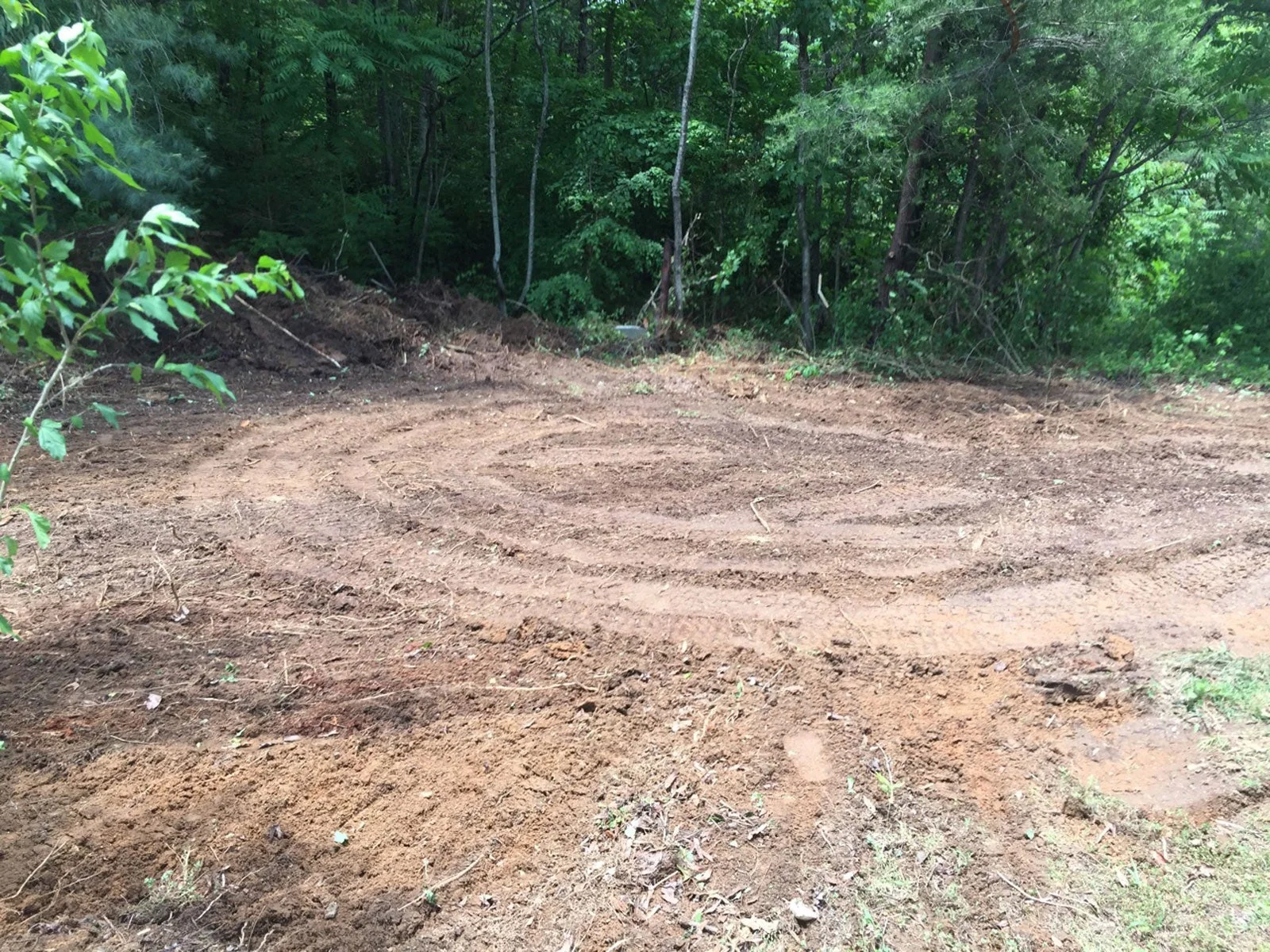
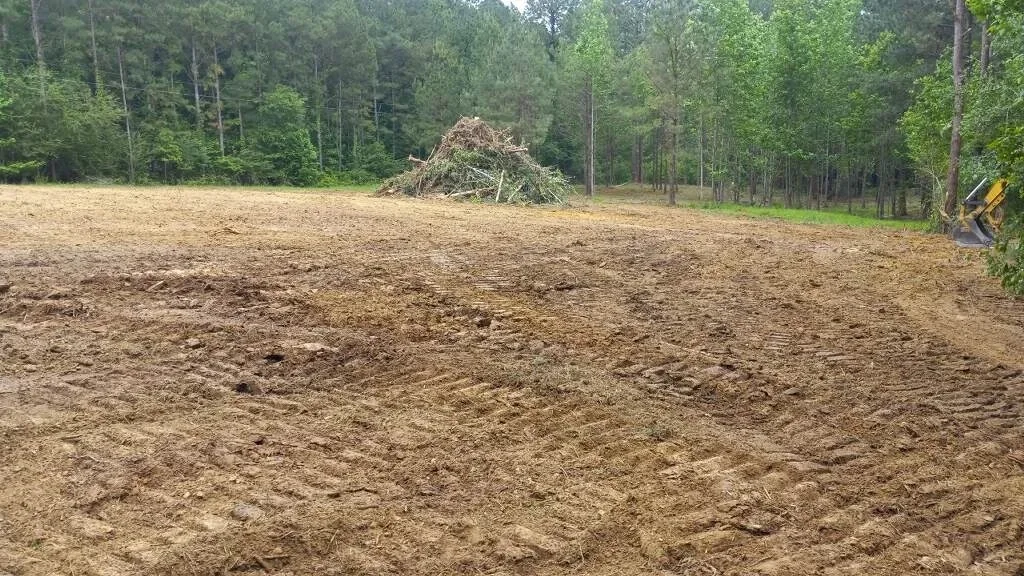
Get the grade right first. Our grading cost guide explains what reshaping the subgrade adds before any stone goes down.
What Buncombe County homeowners actually pay
National gravel averages assume flat, dry, sandy ground. Buncombe does not offer that in most of the county. Between steep ridge access, heavy clay subsoils in the valleys, and the fabric-and-drain work mountain lots require, the honest working range runs higher than the lead-gen sites show. The table below reflects what a real crew in Asheville, Weaverville, or Fairview would ballpark for a typical residential drive.
| Scope of work | Typical Buncombe range | What drives it |
|---|---|---|
| Regrade and top-dress existing drive | $900 - $2,400 | length, existing base condition, stone type |
| New short flat driveway (under 100 ft) | $2,400 - $4,500 | excavation, fabric, 4-6 in. of stone |
| New long or sloped driveway (150-400 ft) | $5,000 - $12,000 | cut/fill volume, culverts, drainage, haul distance |
| Steep-lot drive with drainage and retaining | $12,000 - $30,000+ | engineering, riprap, ditch work, retaining structures |
Those are honest ranges, not bids. A firm number before the excavator sees the subgrade and the uphill water is a guess dressed up as a quote.
Haul distance matters more here than on the coast. A load of crushed granite coming out of a quarry in the eastern part of the state has to cross the Blue Ridge to reach a lot off Elk Mountain Scenic Highway, and that trucking shows up in the ton price. A crew working a drive in Swannanoa or Black Mountain may source stone from a closer pit than one working out toward Canton or Mars Hill, and the difference can be a couple hundred dollars on a long drive. Ask where the stone is coming from; the answer tells you whether the number is padded.
Access is the other hidden line item. A lot off a narrow switchback with a low tree canopy cannot take a full-size dump truck. That means smaller loads, more trips, and more labor, which is real money. A property on a wide, gently sloped road in Fletcher might take a tri-axle without a second thought. The same square footage of driveway costs meaningfully more when the truck cannot get in.
Why slope and stone choice move the number most
Two decisions dominate the final invoice on a mountain drive. The first is slope. A driveway that climbs more than about ten percent needs cross-drainage, water bars, and often a crowned or insloped surface so runoff is managed before it accelerates. On a steep Weaverville or Fairview access, that can mean culverts under the drive, riprap in the ditch, and hauling in far more base stone than a flat lot ever requires. Gradient is the price multiplier here, not length alone.
The second is the stone itself. A crushed granite base with a smaller chip on top sheds water and locks together; river rock rolls and ruts. On clay-heavy valley lots, separation fabric under the stone is not optional, it is what keeps the rock from sinking into the mud the first wet spring. Choosing the cheaper stone often costs more within two seasons. For a full breakdown of stone types and what they run per ton, see our gravel driveway cost guide.
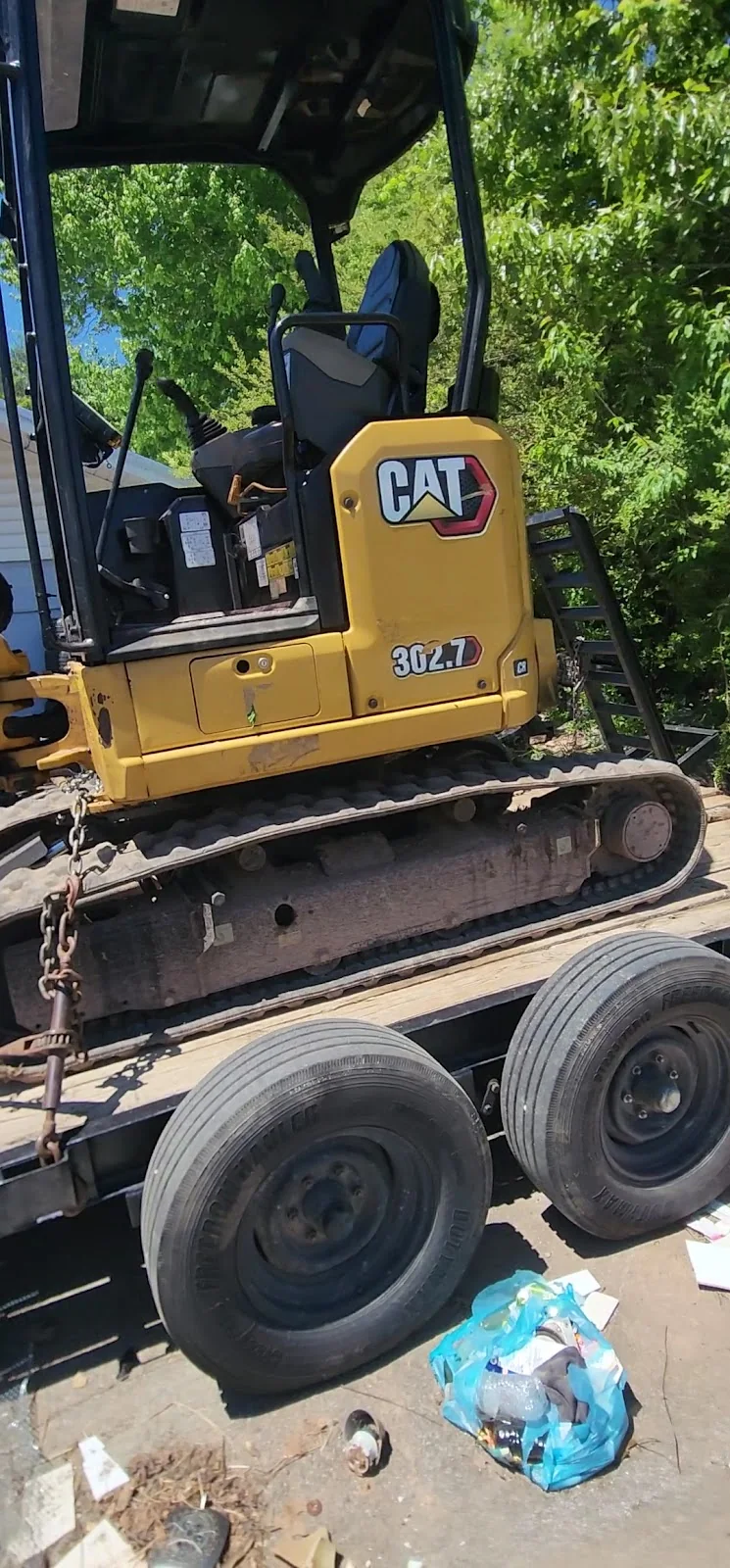
Buncombe sits on a mix of weathered granite, gneiss, and metasedimentary rock in the uplands, and deep alluvial clay in the bottoms. On a steep Weaverville lot the excavator may hit weathered rock within a foot, which sounds like good news until you realize the cut has to be ripped with a machine that costs by the hour. On a Leicester hollow lot the subgrade is clay that transitions from firm to soup with one good rain, and the fix is fabric plus more stone plus proper ditch depth. The stone type that performs well on one of those lots is wrong for the other, which is why the same driveway length can come in thousands apart from one parcel to the next.
The cost of doing nothing is erosion. A rill in a gravel drive becomes a rut in one season, a channel in two, and a repair that runs into the thousands. Erosion control on a graded lot falls under the broad expectations of the U.S. Environmental Protection Agency stormwater framework even though the county handles local enforcement, and the principle is the same: keep the sediment on the site instead of in the creek. A properly built drive is cheaper over its life than a cheap one rebuilt every few years.
Permits, code, and licensing in Buncombe County
Not every gravel driveway needs a permit, but the ones that touch a public road, a stream buffer, or a significant cut into a slope often do. New driveway connections to a state-maintained road require an encroachment agreement, and work near streams falls under state and local sediment rules that follow the NC State Building Code and environmental standards. Grading that disturbs more than a threshold acreage triggers an erosion control plan. If a contractor waves all of that off as paperwork you can skip, that tells you how they handle the rest of the job.
For the structural side, retaining walls and engineered fills fall under the state's licensing threshold rules from the North Carolina Licensing Board for General Contractors. Ask who is signing off on any retaining structure before you approve it.
There is a reason this matters up here. A retaining wall on a sloped lot in Beaverdam or Riceville is holding back tons of soil and rock; a wall built without engineering can fail in a wet winter and take the drive above it with it. The state sets a dollar threshold at which general-contractor licensure kicks in, and a wall that needs design work is not a weekend project. Ask for the plan, ask who stamped it, and do not let a low bid hide the fact that the wall has no design behind it.
Culvert sizing is another place where the county's storm history bites. A culvert that handled normal rainfall may not handle the debris that comes down a burned hillside after a fire, or the volume from a stalled front. State and local rules give minimum requirements; common sense after the last decade says size up. If your lot drains a lot of uphill acreage, spend the extra on a bigger pipe now.
How to keep a driveway quote honest
Three practices protect you in this market:
- Get the water plan in writing. Every bidder should describe where runoff enters the drive and where it exits. If the answer is vague, the drive will rut.
- Price the base separately from the topcoat. Base stone and finish stone are different costs; lumping them hides overruns when the subgrade is worse than expected.
- Measure against the county range. If a bid lands far outside the table above, make them explain why. Sometimes the reason is real (depth to rock varies wildly on slope lots), and how they explain it tells you everything.
A fourth check is worth adding here: ask how the crew handles the spoils. A slope lot that gets cut down to a workable grade generates dirt and rock that has to go somewhere. Some of it can be reused as fill or shoulder; the rest has to be hauled off, and haul-off is a real line item. A bid that never mentions spoils is either planning to dump them somewhere they should not be, or has quietly padded the number to cover it. Either way, ask.
Finally, time the work. Late spring and early fall tend to be the windows when the subgrade is workable without fighting mud in the valley or frozen ground on the ridge. A crew that tells you a February start on a Leicester clay lot will be fine is a crew that has not worked many Leicester clay lots. For the region-wide picture, compare with our grading costs in Buncombe County page.