Read the ground you already own before you dig new
Lake Junaluska sits in a bowl of Haywood County terrain that sheds water off the Blue Ridge toward the Pigeon River, and the housing stock reflects it — lakefront cottages on tight lots, mid-century homes on graded benches above the water, newer builds on cut-and-fill pads off the ridge roads near Waynesville. What most of these properties have in common is an existing driveway, pad, or drainage feature that someone already built, and that feature is usually the real problem.
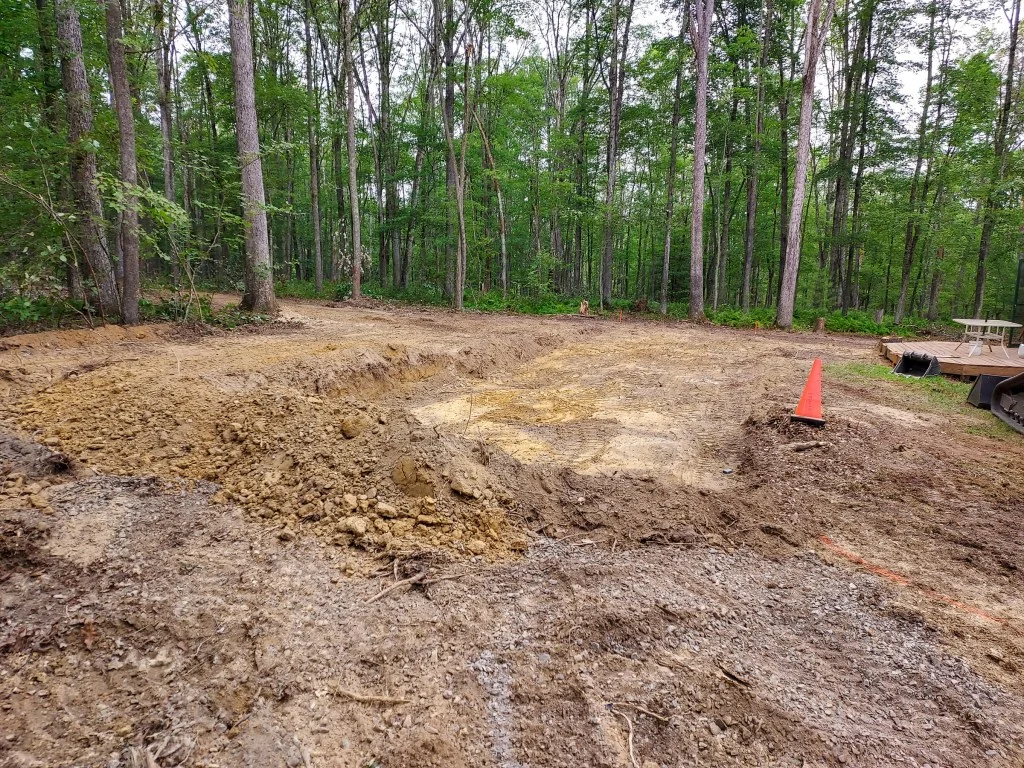
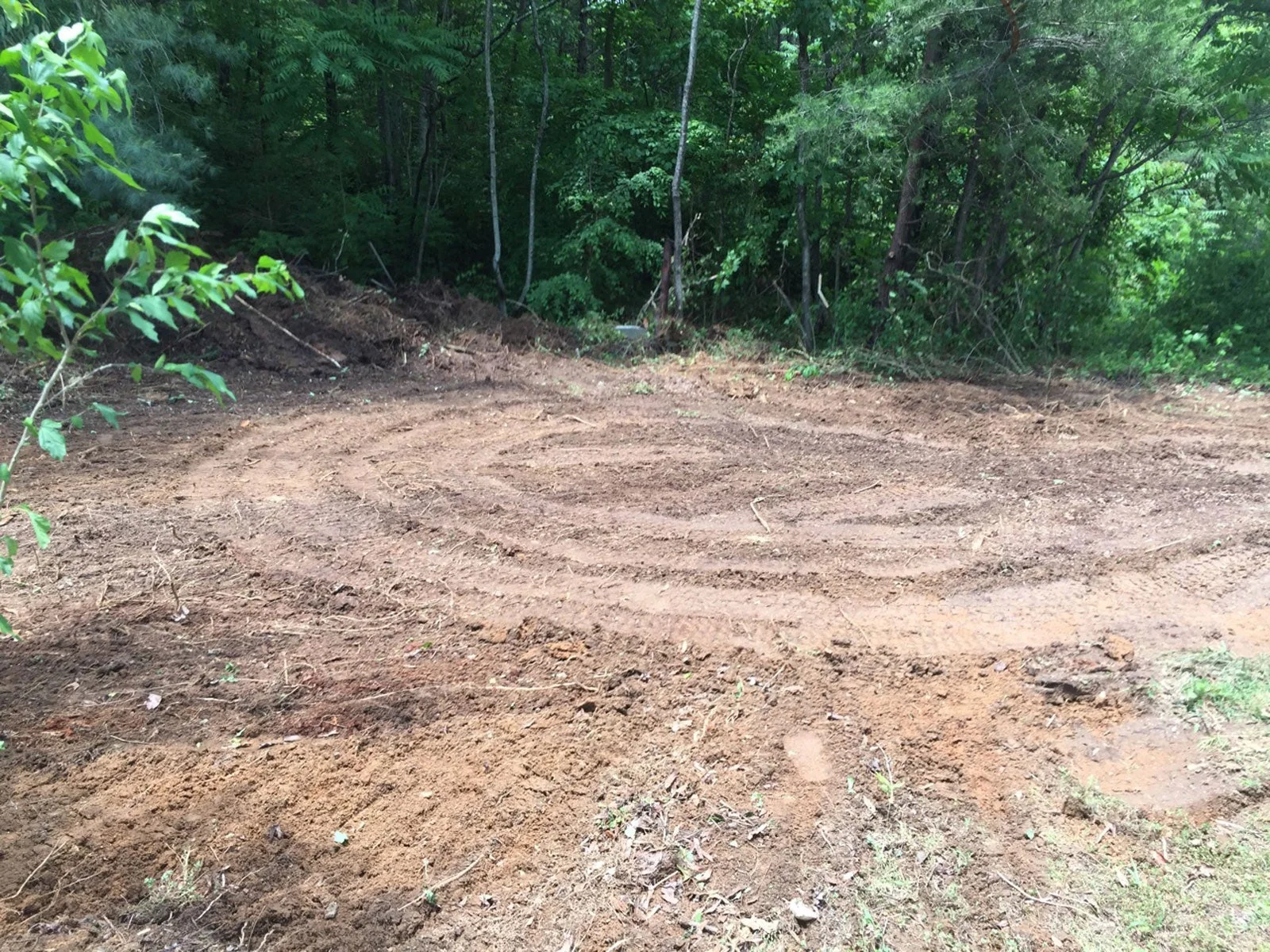
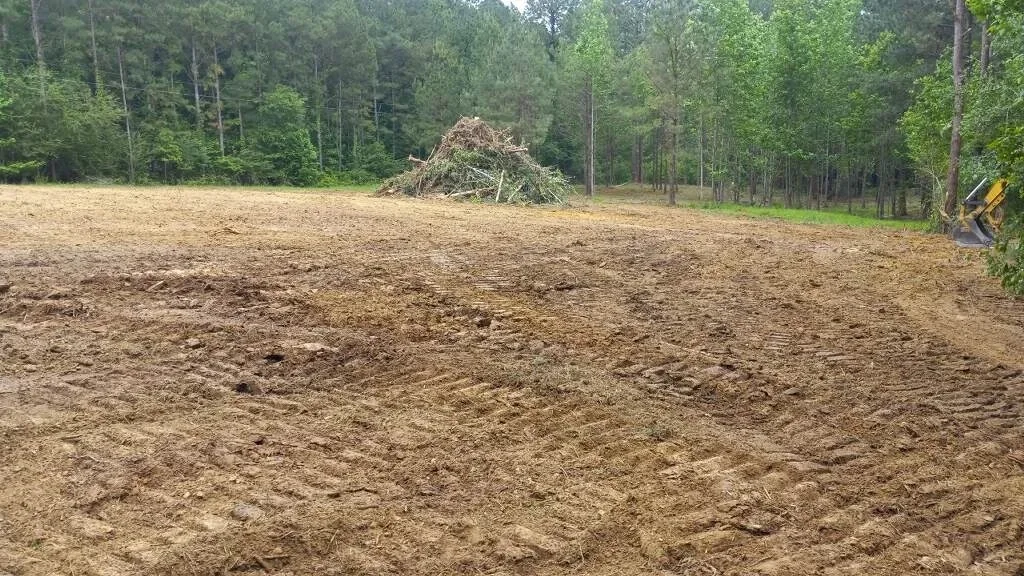
The first job isn't mobilization. It's a walk of the existing grade with a laser level and a shovel. Nine times in ten, the driveway that keeps washing out doesn't need fresh gravel; it needs a re-cut crown and a proper ditch. The soggy pad doesn't need fill hauled in; it needs a swale that actually outfalls somewhere. Paying an excavator to redo what's already there costs far less than paying one to build on top of a mistake.
That read matters more here than in flat country because the lake itself sets the low point. Water on a lot that slopes toward the water has one direction to go, and if the existing grade sends it sideways into a neighbor's yard instead, no amount of new gravel will fix a problem that starts with the shape of the ground. Local operators see this constantly on the benches above the lake and on the older roads that wind up toward the ridge: a driveway cut years ago that made sense for the equipment of the day but now drains straight at a foundation. The re-cut is the job, and the gravel is the finishing touch.
What a site visit in this county actually checks
Haywood County's terrain does the deciding on scope. A lot off US-19 near the lake can drain by gravity in one direction; a lot up a ridge road near Waynesville may only have one legal outfall and it belongs to a neighbor. The differences show up in four checks: where the high side of the property actually is, where water currently goes when it leaves the driveway, whether existing fill is compacted or just dumped, and whether the proposed cut will expose a slope the lot can't hold.
The NC Office of State Fire Marshal code enforcement rules on grading and drainage apply once work crosses certain thresholds, and slopes near the lake and along the county's steeper roads regularly do. A crew that skips the outfall question and starts quoting dirt by the yard is quoting half a job.
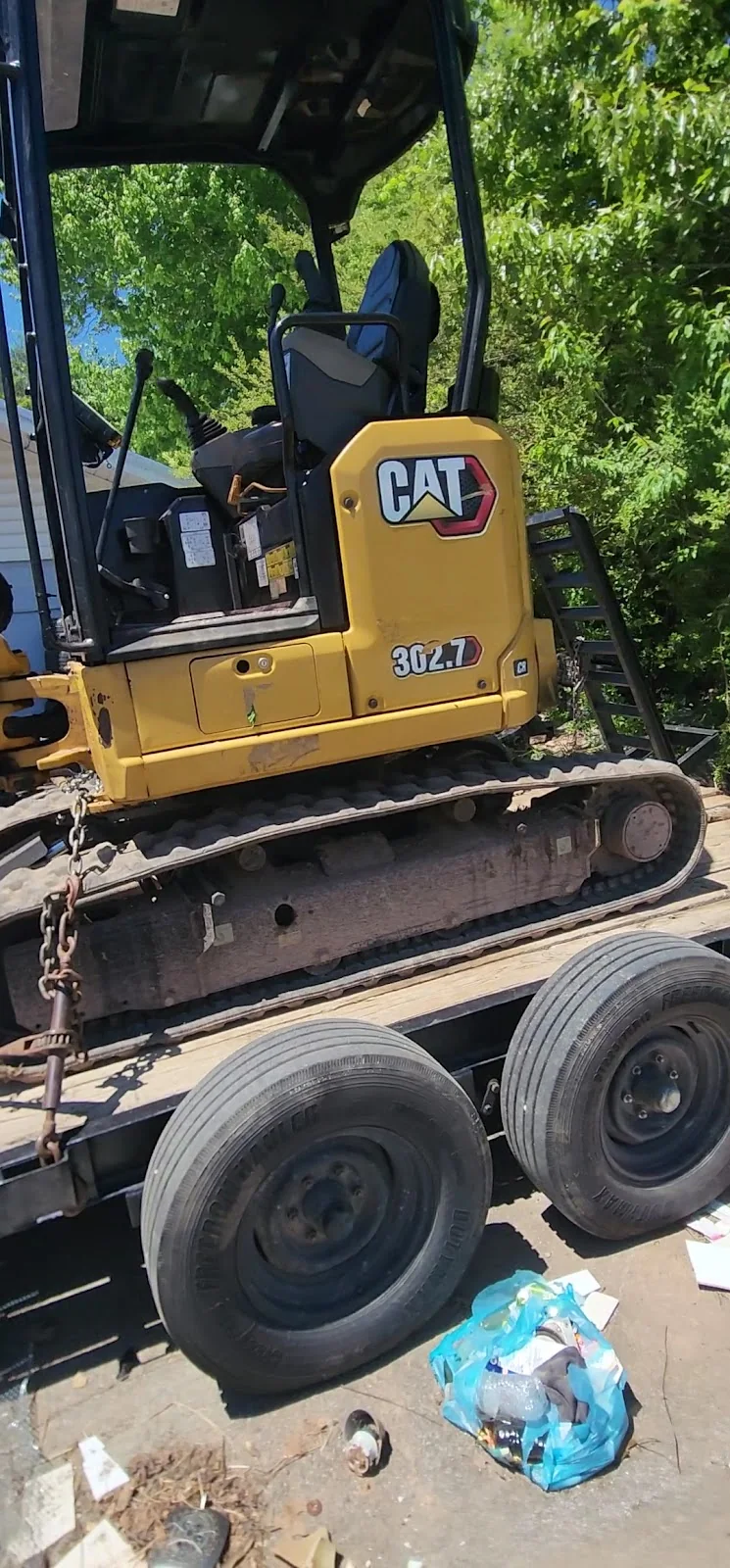
In practice the visit splits into two conversations. The first is about water: where it enters the property, where it leaves, and what happens on the way through. The second is about access: whether a machine can reach the work without tearing up a lawn, whether the driveway can carry a loaded truck, and how far spoils have to travel to a legal dump site. On tight lakefront lots, access alone can change the scope, because the same job on a wide ridge-lot turnaround is a different job on a narrow lane where the only staging area is the road itself. A quote that ignores access and outfall is a quote for a theoretical property, not yours.
Scope vs. price ranges in Haywood County
Local pricing tracks machine hours and haul distance, both of which go up the steeper the lot gets. Ranges below reflect typical residential work in the Lake Junaluska and Waynesville area. See the Haywood County grading cost breakdown for line items, and note that any bid with no line for drainage or erosion control is incomplete, not cheap.
| Scope | Typical Range |
|---|---|
| Re-cut existing driveway, re-crown, and clean ditch | $2,500-$5,500 |
| New gravel driveway, grading and compaction | $4,000-$9,000 |
| Building pad cut and compacted fill | $6,000-$14,000 |
| Foundation or crawl space excavation | $3,000-$8,500 |
| Drainage swale, culvert, and outfall correction | $3,500-$10,000 |
| Small retaining wall base prep | $2,000-$6,500 |
Anything involving a fill slope over 4 feet, a cut into a steep grade, or work near the lake edge should get a compaction plan in writing. The NC Licensing Board for General Contractors sets the dollar threshold where a licensed general contractor must be involved, and lakefront and ridge jobs cross it often.
Two habits separate a fair bid from a padded one. First, whether the number is tied to a measured quantity or a guess: a driveway re-cut priced by the linear foot plus a line for ditch and outfall is checkable, while a single lump sum with no breakdown is not. Second, whether the bid separates machine work from material. Gravel, fill, and riprap are commodities with real delivery costs in this county, and a contractor who itemizes them is usually the one who will also tell you when you do not need as much as you thought. On a re-cut job, the difference between a fair price and an inflated one is often the material line, because the machine time is roughly fixed once the scope is read correctly.
Water, permits, and the paper trail that protects you
Haywood County has absorbed its share of federal disaster activity: 19 declared events touch this county across 1973-2026, heavily weighted toward storm and flood. Every one of those events rewrote how water moves across the county's slopes, and lots that graded fine in 1995 may outfall into a neighbor's problem now. For excavation, that history is practical, not trivia.
Any cut that changes drainage onto another property, any work inside a floodplain, and any earthwork near a stream or the lake can pull in state and local review. The EPA stormwater guidance is the place to start for erosion and sediment control obligations on larger disturbance areas, and the county's own rules apply for anything within its jurisdiction. A contractor who tells you no permits are ever needed for grading is telling you they don't handle the paperwork.
The paper trail is also protection after the fact. Before-and-after photos, a written scope describing where water will outfall, and a documented compaction method are cheap to produce and worth a great deal if a neighbor raises a drainage complaint or a future buyer's inspector asks how the pad was built. Around the lake, where lots sit close together and one property's outfall is often another's headache, that documentation is the difference between a finished job and an argument that outlasts the contractor's warranty.
Choosing a crew that fixes rather than rebuilds
The right excavation contractor in the Lake Junaluska area shows up with a level and a plan, not a bigger machine. Ask what they found when they read the existing grade, ask where water will outfall after the job, and ask what compaction method they'll use and how they'll prove it. If your scope is really a grading problem dressed as a drainage problem, the Lake Junaluska grading page covers what that work actually includes, and the broader excavation contractor guide walks through first-visit expectations. Getting the read right is what keeps your project out of the redo cycle.
One more local habit worth adopting: schedule this kind of work for the season it can survive. Haywood County gets the bulk of its heavy rain outside the driest weeks, and a freshly cut slope seeded in the wrong month will shed soil before the grass knits. A crew that talks about timing and stabilization, not just about how fast they can get a machine on site, is telling you they have done this on these slopes before. That is the crew that fixes the ground you own instead of selling you a rebuild.