On an Asheville slope, water picks the scope before you do
Most lots in and around Asheville slope. Somewhere between 15 and 40 percent is routine on the ridges and hollows off Town Mountain, Beaverdam, and the county's west side, and once a lot tilts, water has already chosen where it wants to run. Before we talk about a pad or a driveway, we walk the lot and find the head of the water: the uphill neighbor's downspout, the spring seam bleeding out of a cut bank, the county ditch that dead-ends at your property line. Where that water ends up after we dig is the whole job. A perfectly flat pad with the grade still aimed at the house is not an excavation; it's a future foundation problem with a fresh coat of gravel on top.
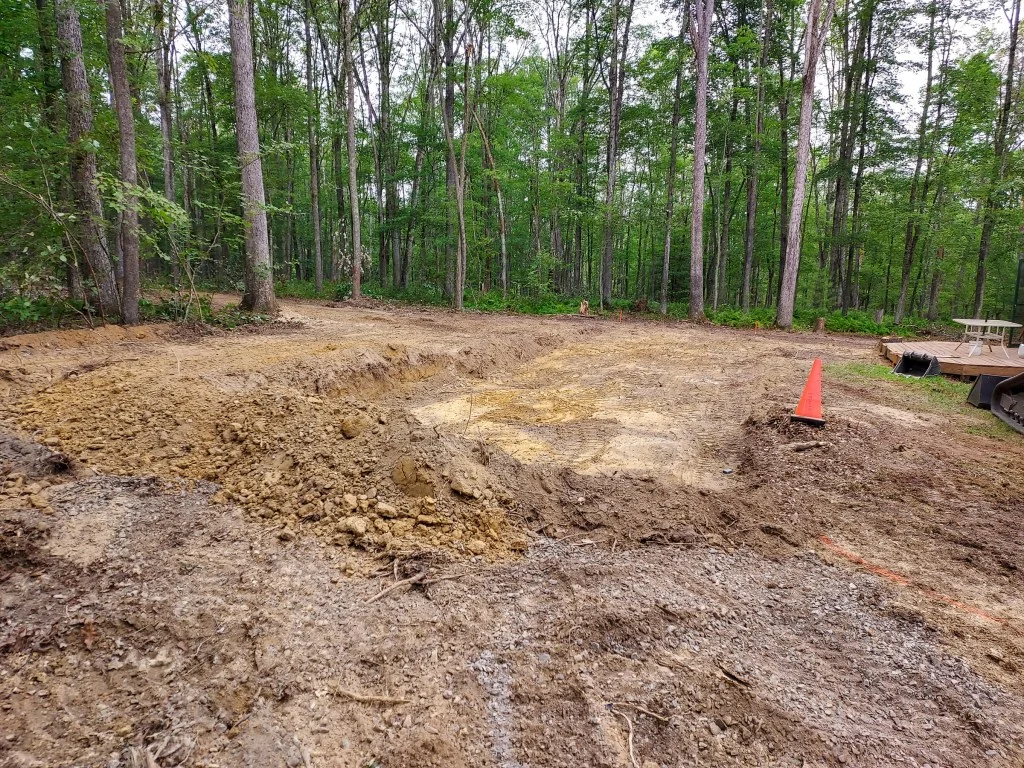
The digging follows from that read. Cut off the uphill water with a swale or a curtain drain above the work area, then shape the pad to shed downhill, away from the foundation, into a daylight point that won't erode your neighbor's slope. On a Buncombe County lot, that daylight point is often the tightest constraint on the whole plan.
What the crew actually does, in order
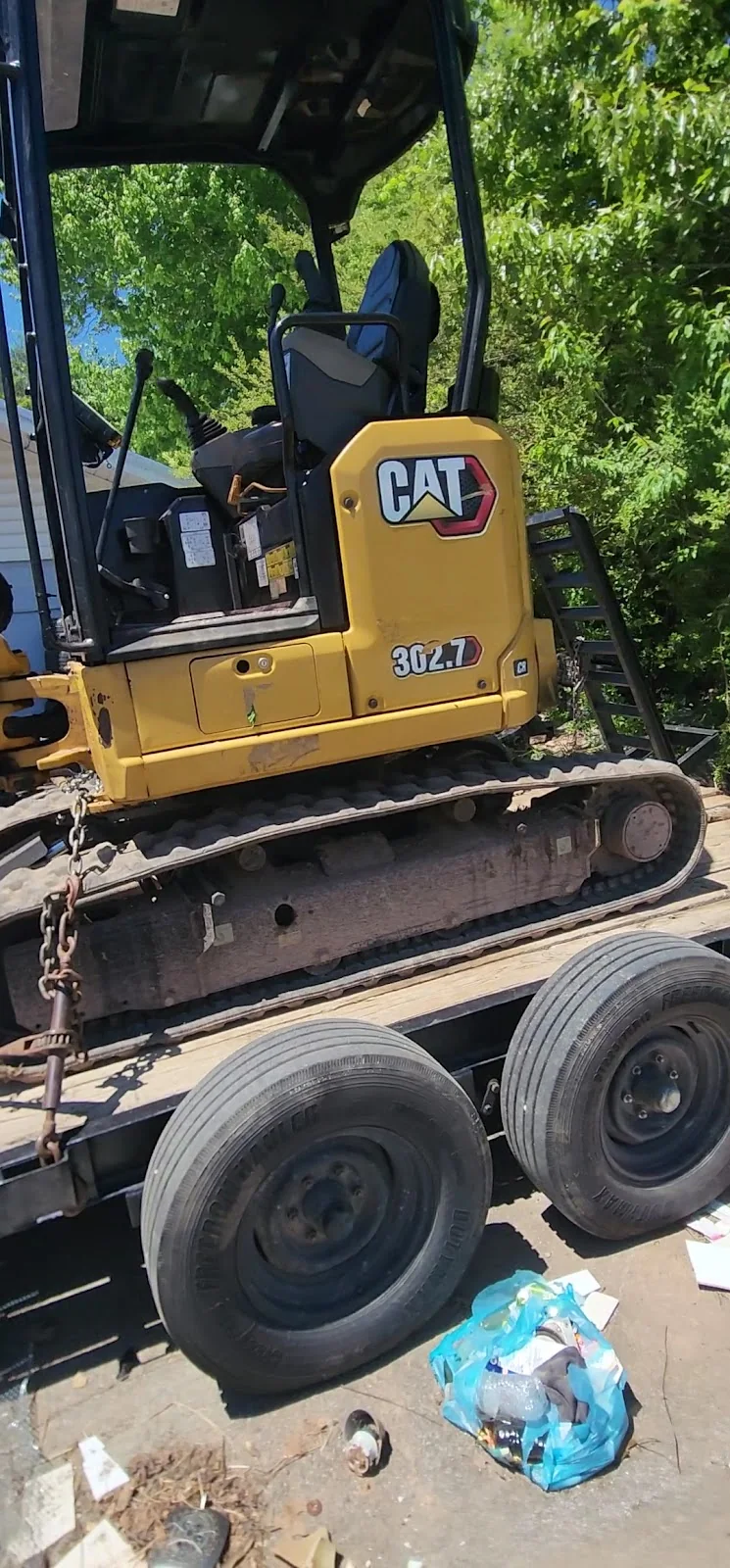
A typical residential excavation for new construction, an addition, or a big retaining-wall project runs two to five days of machine time:
- Site walk and layout. Where the building sits, where the machine gets in, where spoils get stacked, and where the water exits. On steep lots, access is decided here, not discovered later.
- Silt fence and erosion control. Buncombe County enforces the state sediment rules, and the NC building code ties foundation drainage to grading. Erosion control goes up before the first bucket.
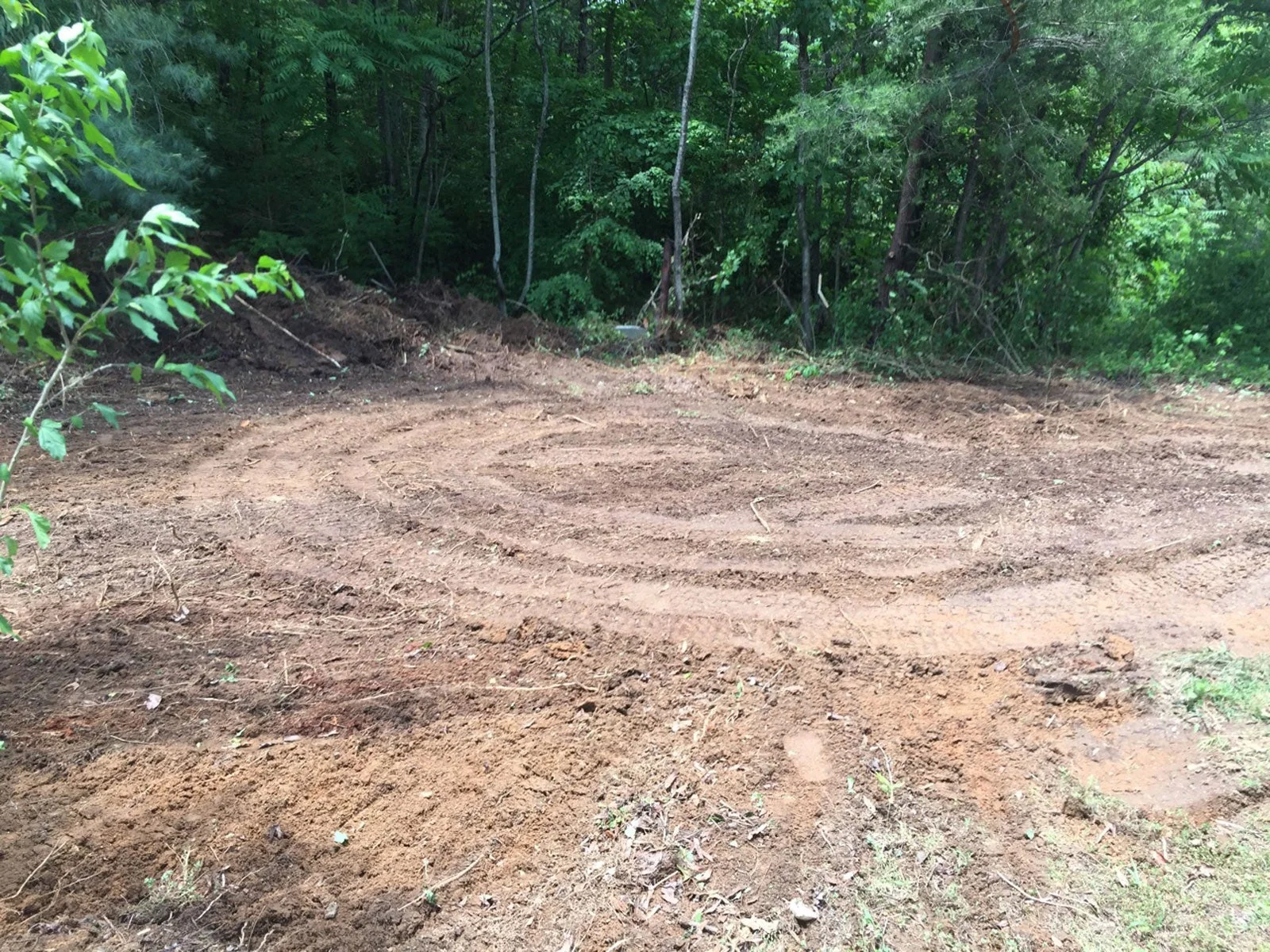
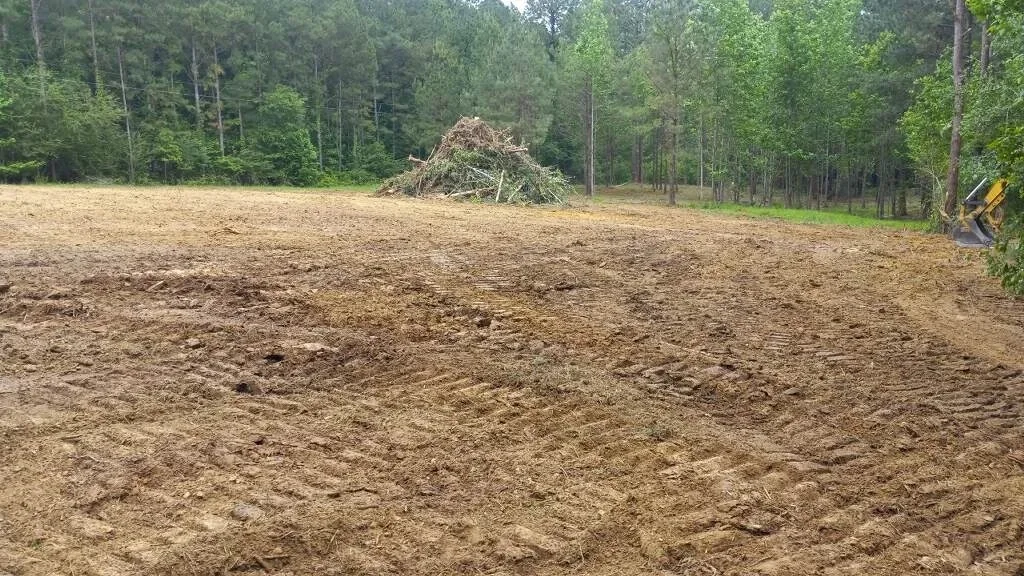
- Clearing and topsoil strip. Vegetation, stumps, and organic topsoil come off and get separated. Topsoil saved for later finish work saves money.
- Cut and fill to subgrade. The pad is cut, pushed, and compacted to the elevation the footing plan calls for. On rock, this is where the day goes sideways and the change order starts.
- Drainage and swale. The uphill cut-off, the footer drain, and the downslope discharge get shaped in the same pass. Doing this after the foundation is poured costs more.
- Final grade and stabilization. Slopes tied to the surrounding ground, seed or matting placed, and the whole surface aimed at the daylight point on purpose, not by accident.
It's the same sequence whether it's a driveway, a footer dig, or a whole-pad build. The grading matters as much as the digging, which is why the grading and excavation page reads as one trade, not two.
Cost drivers, and where the ranges land
Asheville-area excavation prices are quoted two ways: hourly for small work, and lump-sum for defined scope. On a sloped Buncombe County lot with rock and a haul-off, the lump sum is the honest number. Expect:
| Scope | Typical range | What moves it |
|---|---|---|
| Small dig — trench, footer strip, or utility line | $1,800–$4,500 | Length, rock, access width |
| Driveway cut and grade, gravel surface | $3,500–$9,000 | Slope, culvert, base depth, haul-off |
| Building pad for a house or large addition | $6,000–$15,000+ | Square footage, cut depth, rock, retaining |
| Retaining wall excavation and backfill | $2,500–$8,000 | Wall height, drainage, footing depth |
| Haul-off of spoils (per load, local) | $350–$700 | Distance, material, disposal site |
The wildcard on every line is rock. Mountain lots hit decomposed granite, saprolite, and hard rock seams at depths nobody can promise from a walk-around. The other wildcard is haul-off: on a tight lot, every bucket of spoils may have to leave the site, and that shows up as line items on the bid, not as a surprise at invoicing. A realistic regional read on the full picture is on the excavation cost page, broken down by scope rather than as a fantasy flat rate. Storm history matters here too: with 19 federal disaster declarations across 1973-2026 in this county, saturated-soil seasons are exactly when a fresh cut bank or an under-drained pad announces itself, and the National Weather Service keeps the local rainfall record that shows why this ground moves.
Licensing, permits, and the paper trail that matters
North Carolina sets the entry bar on this trade clearly: any project over $40,000 generally requires a licensed general contractor under the NC Licensing Board for General Contractors, and excavation tied to a permitted building falls under that umbrella one way or another. On the permit side, most grading work that disturbs more than a small area triggers an erosion and sediment control plan through the county, and the plan has to match the NC Building Code Council's drainage provisions, which exist because water is almost always the first mover on a failed foundation. For anything touching a septic system or a well, the plumbing contractor licensing rules sit with the NC State Board of Examiners of Plumbing, Heating and Fire Sprinkler Contractors, and the septic field layout often constrains where the excavation can go. For federal lead-safe or wetland rules on older or wet-adjacent lots, the EPA and HUD publish the standards. Ask any contractor for the plan and the license before the machine shows up.
How to read a bid without getting burned
Three questions separate an honest excavation bid from a guess. “Where does the water go?” If the answer isn't a specific daylight point on a plan, the grading isn't designed. “Is rock in the price, and at what rate?” A bid that omits rock on a mountain lot is either padded elsewhere or planning a change order. “What's the haul-off count?” Spoils leaving the site are a real cost and a real disposal decision. And “who's pulling the permit?” On permitted work, the answer should be the licensed contractor, not you. A bid that can't answer those on paper is a bid that will cost more than the number on it.