Where the water comes from on a Buncombe lot, and where the grade has to send it
Walk any Asheville-area lot after a heavy rain and the problem announces itself. On the ridge lots above Haw Creek and the hillside cuts in Weaverville and Black Mountain, stormwater arrives from uphill properties, crosses your yard, and pools against the foundation wall because the original grade was never shaped to carry it away. On the flatter ground in West Asheville and parts of Arden, the issue flips: clay soil holds the water in place, and the yard stays saturated for days. Two different problems, same consequence, and the same fix philosophy, which is that the grade has to move water off the structure and toward a legal discharge point, not just look tidy. That is the whole job. Buncombe County's storm history makes this non-negotiable: 19 federally declared disaster events have touched this county over a span of 1973-2026, most of them storm and flood family, and each one re-carved the same lesson into local lots.
So when you call for a grading quote, the first question a good contractor asks is not how many yards of dirt you need. It is where the water goes now, and where it needs to go. A quote that skips that step is a quote for a lawn, not a solution. See our grading and excavation services for how that gets scoped.
Consider a typical scenario in the Haw Creek valley: a 1960s ranch on a quarter acre, the backyard sloping away from the house toward a neighbor's fence. The neighbor's yard is higher. During a two-inch rain, that fence line becomes a dam, and water backs up across the original patio slab and into the crawl space access. The fix is not to regrade the entire yard at a new angle, which would be expensive and would likely push water onto the next property down. The fix is a shallow swale along the fence line, catching the incoming flow and turning it toward a driveway apron or a pop-up emitter at a legal low point. That is a $2,500 to $4,000 job in this county, and it works. The same problem on a steeper Weaverville lot, where the house sits below the road and the driveway is the only flat surface, often requires a catch basin at the driveway edge and a buried line to daylight. That pushes the range to $4,500 to $6,500, still inside the typical band, because the line has to be deeper, the basin has to be sized for the flow, and the discharge point has to be stable enough to not erode the slope it exits onto.
What Buncombe County homeowners actually pay
Mountain-lot grading does not price like flatland grading. Depth to rock varies lot to lot, access for equipment is often the hidden cost, and cut-and-fill on a slope needs engineering that a simple regrade never touches. Here are honest working ranges, not quotes.
| Scope of work | Typical Buncombe range | What drives it |
|---|---|---|
| Yard regrade / drainage correction | $1,200 – $4,000 | square footage, slope, where the water exits |
| New build pad prep | $2,800 – $6,500 | cut/fill volume, rock, access |
| Cut-and-fill on a slope | $4,500 – $8,000+ | engineered plans, retaining, haul-off |
| Retaining wall (per face foot) | $40 – $95 | height, engineered vs. segmental, backfill drainage |
| French drain / surface drain run | $1,200 – $5,500 | length, depth, discharge point legality |
Any firm number handed to you before someone walks the lot and reads the slope is a guess wearing a hard hat. The ranges above are what actual work in this county tends to cost once the water story is known.
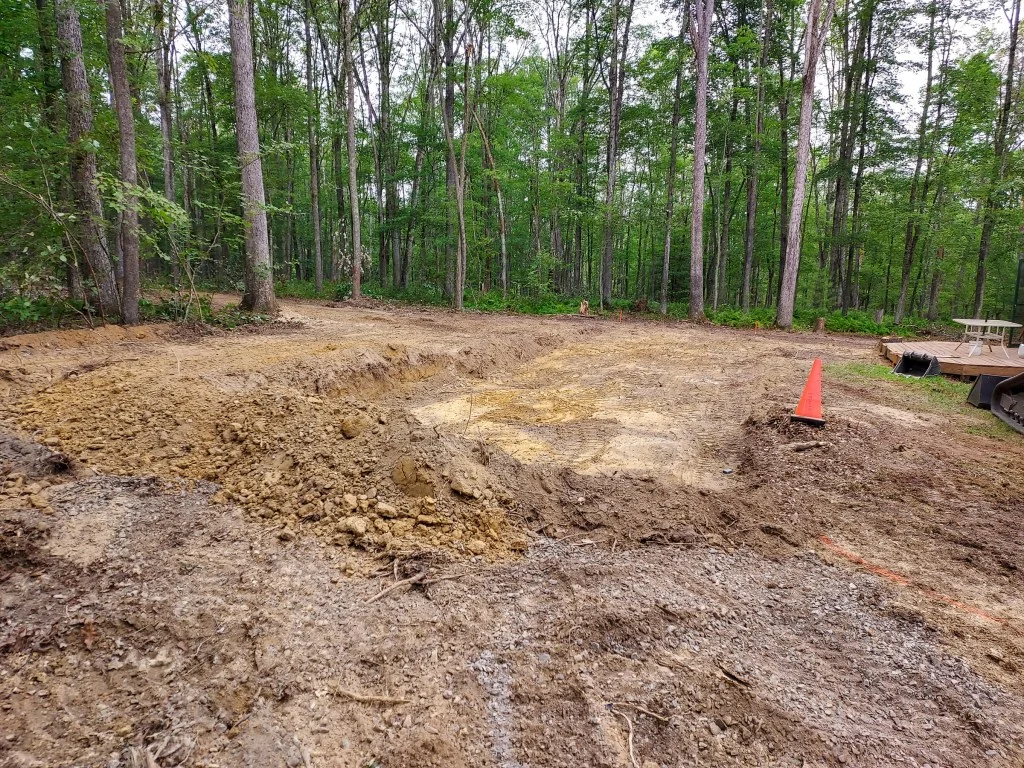
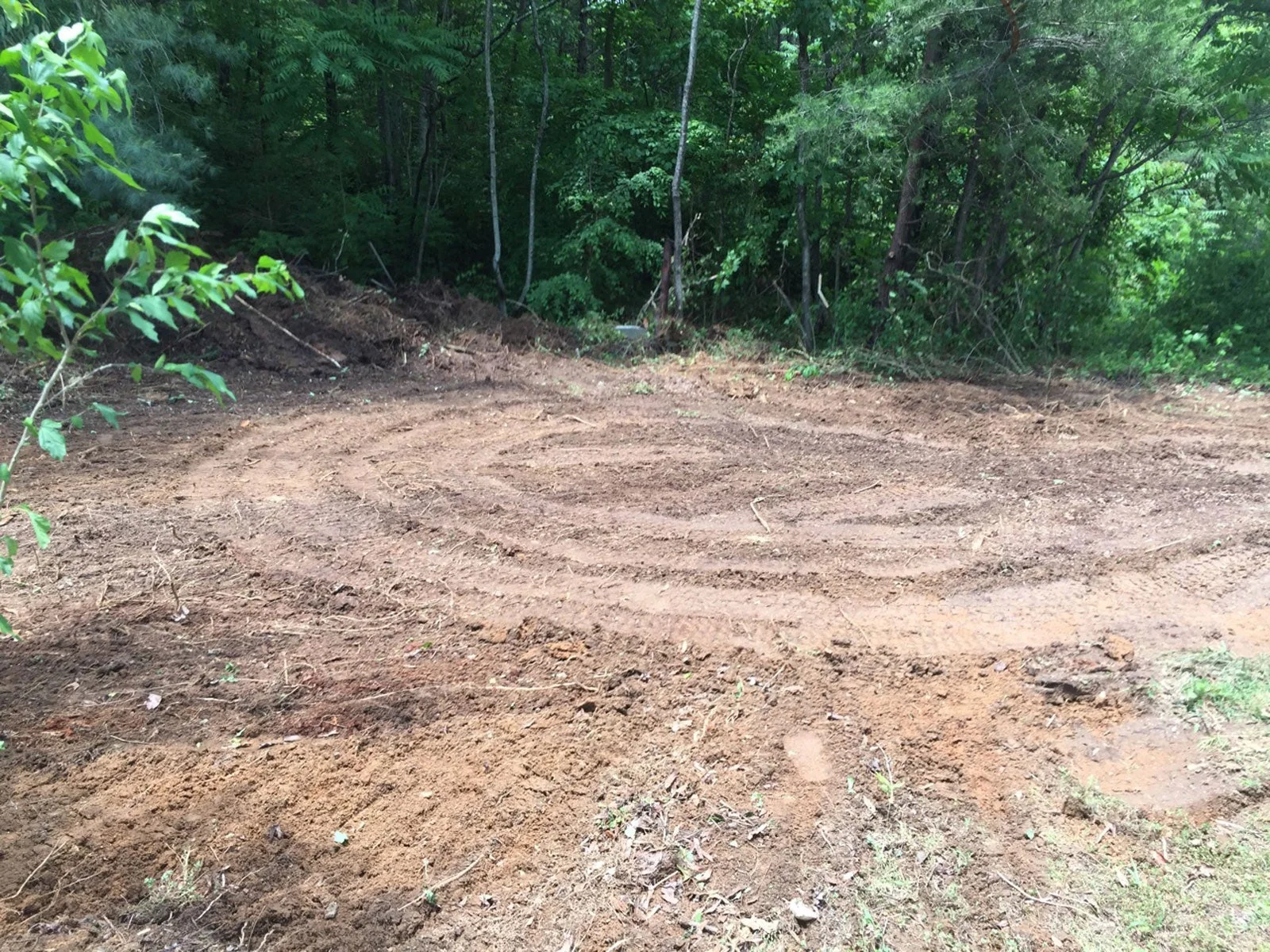
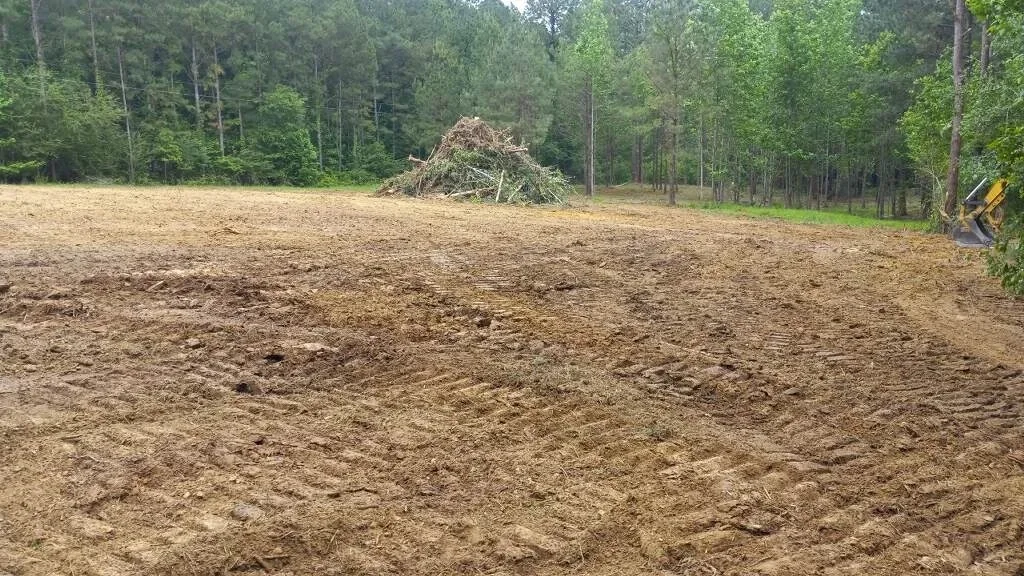
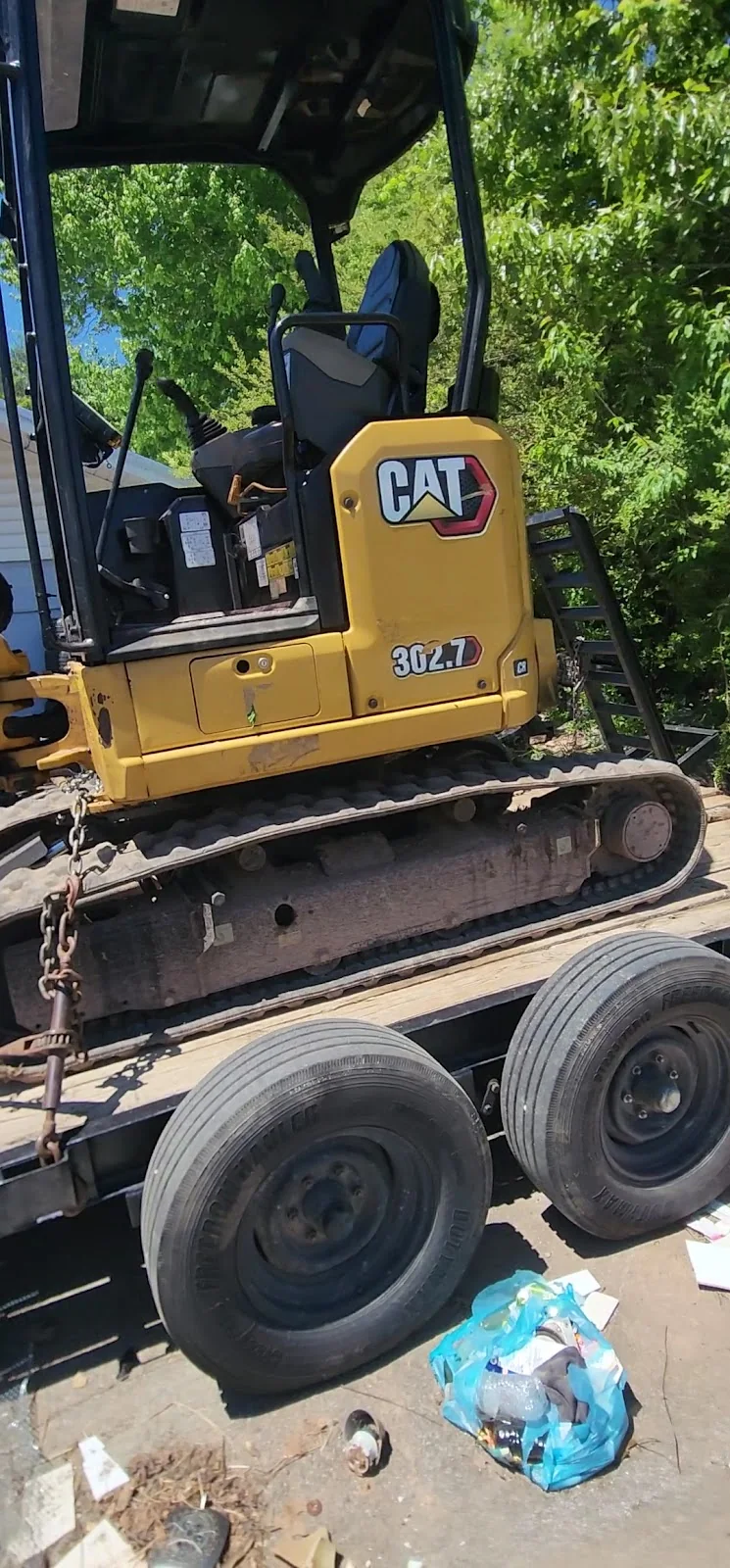
To put real texture on that table: a simple backyard regrade in a flat-lot subdivision off Brevard Road, where the soil is clay and the goal is just to stop a low spot from holding water, is often a one-day job with a mini excavator. That lands near the bottom of the yard regrade row, sometimes at or under $1,500 if the dirt can stay on site and the drainage path is obvious. Move that same job to a Leicester hillside where the yard drops four feet from the house to the property line, and the operator has to cut a bench, haul the spoil to a stable location, and build a small retaining lip to hold the new grade. Same square footage, triple the price, because the work is not moving dirt, it is holding a slope.
New build pad prep is where the Buncombe numbers spread widest. A flat lot with good access in Fletcher or Arden can have a pad cut and compacted for a modest figure. A ridge lot in Fairview or Barnardsville, where the foundation pad has to be carved into the hillside with a cut on the uphill side and fill on the downhill side, is a different animal entirely. The fill has to be placed in lifts and compacted to code, the cut slope has to be stable, and the whole thing has to drain. That is where you approach the top of the band, and where a geotechnical report stops being optional and starts being the cheapest money you spend on the project.
Rock, access, and the two costs nobody warns you about
In this county, two line items blow up budgets more than anything else. The first is rock. Depth to bedrock on Buncombe slopes is genuinely unpredictable. A lot in Leicester can turn up ledge at eighteen inches while a neighbor digs clean to four feet. When rock shows up, the hourly rate for removal changes the whole estimate, which is why honest bids here are structured around a base scope plus a rock clause, not a single flat number. Anyone who quotes a firm grading price without seeing the lot is either guessing or planning to change-order you later.
The second is access. Equipment that cannot reach a hillside yard means smaller machines, more hand work, and material moved twice. That cost is invisible until you see the driveway. Compaction is the third quiet one: fill that isn't compacted in lifts to the residential code's requirements (International Code Council standards underpin the NC residential code) settles under a future patio, driveway, or foundation footing. Ask every bidder how they compact and how they verify it.
Access deserves its own paragraph for Buncombe specifically, because so much of the county's housing stock sits on roads that were never designed for construction traffic. Narrow mountain lanes in Riceville, Weaverville, and the northern reaches of the county often have weight limits or low tree canopies that force contractors into smaller equipment. A full-size excavator that would dig a foundation in two days might not fit. Smaller machines take longer, which is time on the clock, and material that has to be hand-carried or winched up a slope costs more per yard than material a dump truck can drop at the edge of the work area. None of that shows up in a per-yard price, but it absolutely shows up in the final invoice.
Rock is the other invisible. In some parts of Buncombe, weathered shale and saprolite dig easily and can even be reused as fill. In others, hard granite or quartzite ledge stops the machine dead. The difference between a lot that digs clean and a lot that needs rock breaking or blasting is often the difference between a $3,000 regrade and an $8,000 one. A contractor who has worked this county for years can often read the terrain and the surrounding outcrops and give you an honest rock risk assessment before the machine ever moves. That is worth paying for, and it is one of the reasons local experience matters here more than in flatland markets.
Permits, licensing, and the rules that apply to Buncombe dirt work
Grading straddles the line between landscaping and construction, and in Buncombe County that line matters. Simple regrading that does not alter drainage patterns or touch a structure often needs no permit. Work that changes stormwater flow, crosses a stream buffer, moves significant yardage of earth, or ties into a foundation generally does, and on slopes, engineered retaining walls above a certain height require stamped plans and inspection. Our NC grading permit rules page breaks down where that line sits.
On the licensing side, grading and excavation are not separately licensed trades in North Carolina, but contractors doing structural or site work that pushes a project past the state's general contracting threshold fall under North Carolina Licensing Board for General Contractors rules (nclbgc.org). Erosion control on larger disturbed areas is enforced through the state's sediment and stormwater programs, which the NC Department of Insurance Office of State Fire Marshal helps administer through adopted code, and any work near water can trigger additional review. A contractor who waves off permits on a job that alters drainage is telling you how they handle every other rule too.
Buncombe County also sits in a region where stormwater regulations have tightened over the years, partly in response to the flooding history the FEMA record captures. That means work that changes how water leaves a property can attract scrutiny that a purely cosmetic regrade would not. If your lot drains toward a creek, a storm drain, or a neighbor's property, say so before the bid is written. A contractor who knows the local rules will scope the job to keep the discharge legal and stable, and that scoping is part of what you are paying for. Skipping it to save a few hundred dollars on the front end is how homeowners end up with a complaint, a stop-work order, or a washout that undoes the whole job in one storm.
It is also worth knowing that North Carolina's building code, adopted from the International Code Council model, includes requirements for fill placement and compaction that apply to any grading that supports a structure or a driveway. If your grading project touches anything structural, expect that standard to apply, and expect a good contractor to meet it without being asked.
How to keep a grading quote honest
Three habits protect your wallet on a Buncombe County lot:
- Get the water plan in writing. Before price, the bid should state where stormwater enters, where it exits, and how the grade carries it. No water plan, no deal.
- Demand a rock clause and a haul-off line. Both are where mountain-lot budgets drift. A bid that ignores them is holding the risk over your head.
- Compare against the table above. If a number lands far outside the range, make them explain why. Sometimes rock or access is a real reason, and hearing how they explain it tells you whether the bid is honest.
Wondering how your town compares or what a full build-out costs? Start with the regional grading cost guide, then scope your specific lot with our grading and excavation team.
One more habit worth building: ask any contractor you are considering to describe a recent job in this county that went sideways and how they handled it. Every experienced grading contractor in the Asheville area has run into unexpected rock, a surprise spring, or a neighbor's drainage complaint. The good ones will tell you about it plainly, explain what they changed, and tell you what it cost. The ones who claim every job goes exactly to plan are either very new or not being straight with you. In a county where the terrain itself is unpredictable, honesty about that unpredictability is the single best signal of whether you are dealing with a professional.
Finally, timing matters here in a way it does not in flat markets. Buncombe County's steep slopes mean that grading done in the wet season can turn a job site into a mud pit, slowing work and sometimes forcing re-work of grades that slumped overnight. Contractors who know the county will often steer projects toward the drier stretches of the year when the soil will compact properly and the cut slopes will hold. If your project is not urgent, waiting for better ground conditions can save real money and produce a better result. If it is urgent, ask the contractor how they plan to manage water on the site during the work itself, because that answer tells you a lot about how they think.