In Fairview, the machines get in before the pad goes down
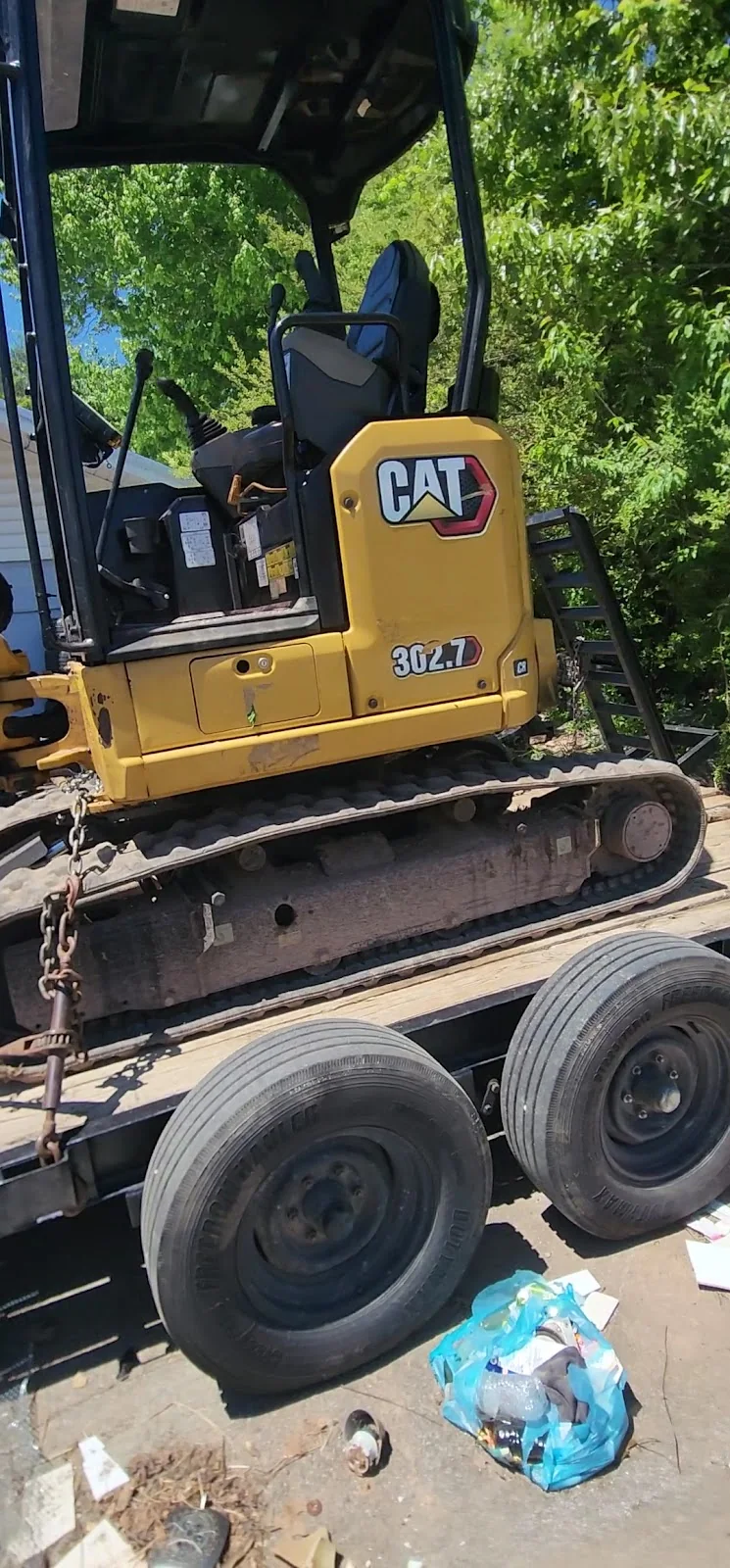
Most Fairview building pads fail as budgets long before they fail as grade work. The reason is access. Fairview's residential roads climb off the Fairview Road corridor or drop into the Cane Creek valley on single-lane private drives with culverts at the mouth, and a loaded tri-axle that can swing onto a West Asheville lot may not legally or physically make the last 100 feet. That changes everything downstream: which excavator you can mobilize, how many loads of fill the trucking rate tolerates, and whether spoils ride out on the same trucks that brought stone in. A crew that quotes your pad without walking the entry is quoting a different property.
Fairview sits in Buncombe County, in the belt of hills south of Asheville, and the county seat is also where the permitting counter, the engineering review, and most of the equipment come from. Distance from Asheville is not long in miles, but it is real in delivery cycles: every gravel load crosses the same roads your equipment does.
What the dirt has to do before a foundation goes on it
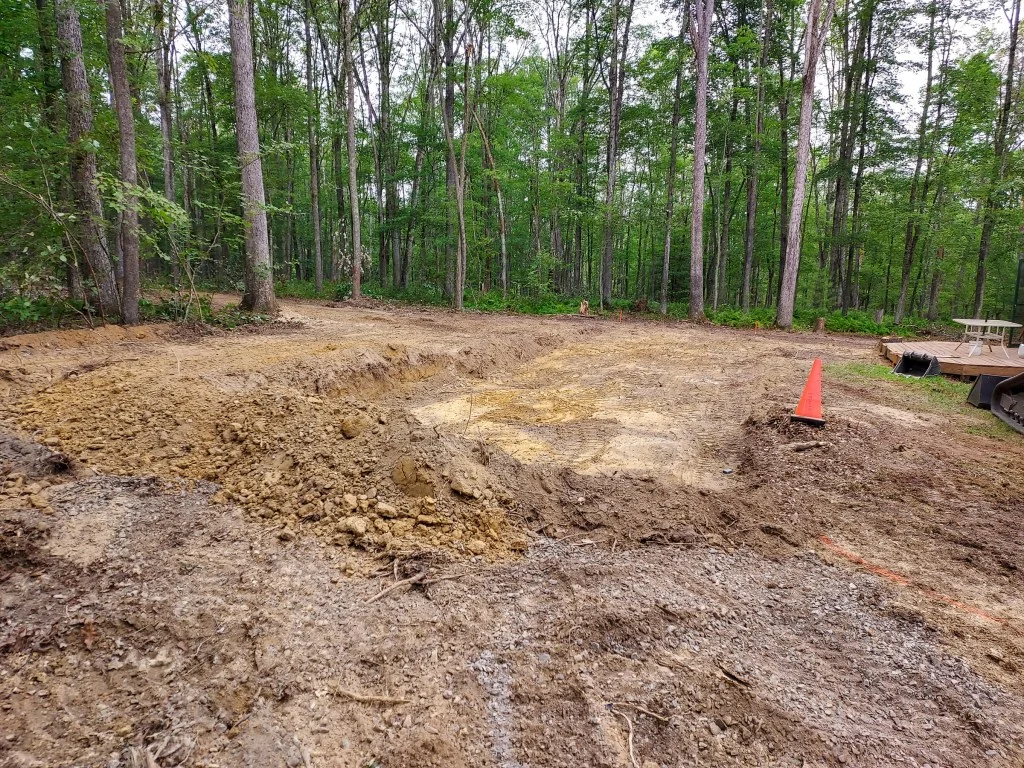
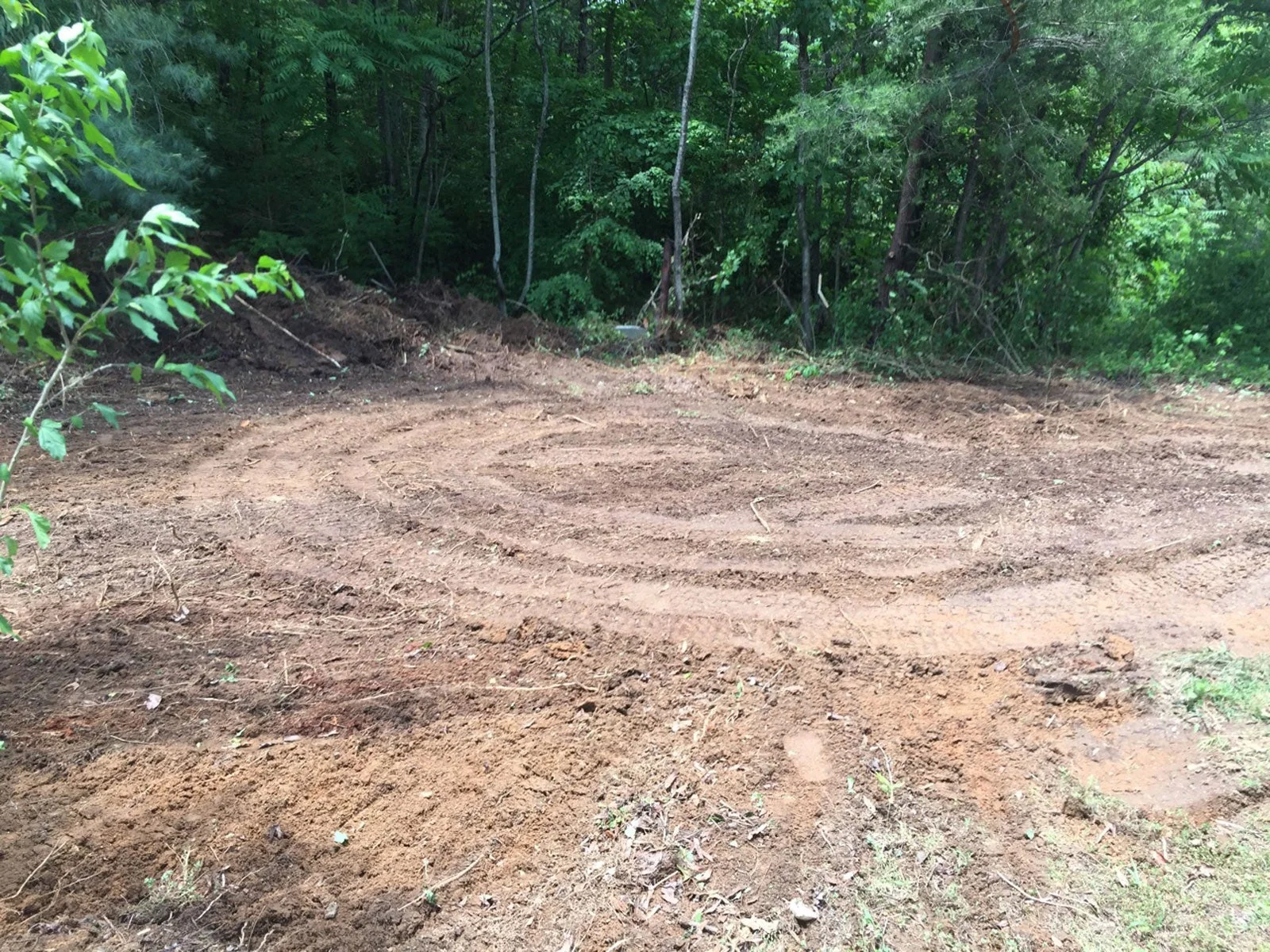
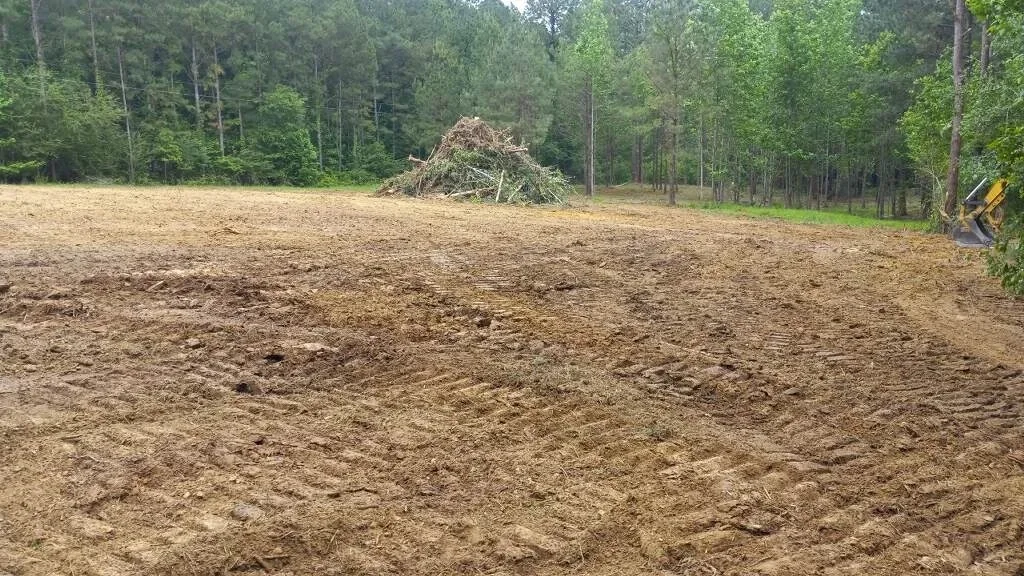
A building pad is not a flat spot. It is a cut-and-fill platform that satisfies the footing inspector. That means stripping topsoil to stable subgrade, benching the fill into the hillside rather than piling it against a slope, compacting in lifts, and keeping the finished surface above the drainage plane so the house never sits in its own water. Fairview lots on the mountain side of the valley routinely need a cut on the uphill side and a retaining element on the downhill side, and the county's review of the site plan will ask how the fill is keyed before anyone signs off.
Code-wise, the state's minimum standards for footing-bearing soil and grading acceptance live in the NC residential code, and they apply the same on a Fairview ridge as anywhere else in the state. Where contractors misread the rule is assuming the soil analysis is optional on a small house. It is not optional; it is the reason the pad either holds or develops a crack in the first wet season. See how we scope this service on the site prep and building pads overview.
The quarry run is the hidden line item
Rock in Fairview is a local fact, not a surprise. Our source aggregate, the crushed stone for the pad base and drive, comes from quarries around the Buncombe County area, which means the delivered cost of #57 stone or Class II base carries a haul charge proportional to the round trip from the county seat side. On a long private drive, a single load of gravel can cost more in trucking than in stone. That is why a Fairview pad quote that copies a flatland price per ton is not a cheaper quote — it is an incomplete one.
Two consequences you should ask about: whether the crew has a source for suitable on-site fill (the cheapest option, and often the reason a Fairview pad lands under $8,000) and how they plan to haul spoils if the site yields nothing usable. Our Buncombe County grading cost breakdown sets out the same logic for cuts and drives across the county.
The working number, by scope
The table below reflects Fairview conditions: significant slope, mixed clay-and-rock ground, tree cover, and access that varies lot to lot. These are scopes, not promises, and every one of them starts with a site visit. A pad on a gentle cleared lot off a county-maintained road is one job; a pad cut into a wooded slope behind a 12-foot culvert is another. The U.S. Environmental Protection Agency and state erosion rules also add a sediment-control obligation on any grading that disturbs ground near a creek or drainage, which in the Cane Creek watershed is common and is a real line item, not paperwork.
| Scope | Typical range in Fairview |
|---|---|
| Small cleared pad, good access, on-site fill usable | $3,500–$7,000 |
| Standard homesite pad, moderate slope, mix of cut and imported fill | $7,000–$15,000 |
| Steep or heavily wooded pad, retaining and long haul | $15,000–$30,000 |
| Rock excavation by hammer or drilling and blasting | Quoted per cubic yard after site review |
| Driveway, culvert, and sediment control as part of the pad | Priced with the pad; varies by length and slope |
Who is allowed to do this work, and what to check
North Carolina does not license landscapers or equipment operators as such, but the state does regulate who may contract construction work above a dollar threshold, and the NC Licensing Board for General Contractors is the authority that sets that line and enforces it. If your project includes a retaining structure or builds toward a house, ask for the license and insurance, not just a crew. If a contractor tells you the grading is somehow outside the requirement, that answer is the reason to keep calling.
For the parts of the job that touch water, wells, or septic, the state has separate licensing, reachable through the NC Board of Examiners of Plumbing, Heating and Fire Sprinkler Contractors. Fairview's lot stock is heavily on private wells and septic, so this matters more here than on a municipal lot in the city. And because we are in the mountains, watch the weather: a pad stripped of topsoil before a multi-inch rain is a sediment problem and a schedule problem. The National Weather Service short-range guidance is worth reading before you start cutting, which any crew that has worked this side of the county already does.
Sequencing, and how to pick a crew
Get the pad, drainage, and access right before the foundation contract is awarded, because the foundation quote assumes a buildable platform. The right order in Fairview is: walk the lot, confirm the road and culvert can take the machines, confirm where the water goes, then price the cut, fill, and stone against that reality. If you want local crews who already know these roads and rock, our pages for grading contractors in Fairview and the broader site prep guide are the place to start. When you call, have the PIN, the lot's slope, and the condition of your driveway ready. Those three facts will separate the quote that survives from the quote that does not.