Where the water comes from, and where the pad has to send it
Flat Rock sits high on the Blue Ridge escarpment, and the name is the joke every excavator here knows: the village center is flat, the lots around it are not. Most residential ground in Flat Rock falls somewhere on a slope, and the water arrives from three directions at once — sheet flow off the uphill neighbor, concentrated flow out of a driveway cut, and groundwater seeping from the hill behind the house. A pad is not finished when it is level. It is finished when it is level and the uphill water has somewhere legal and lower to go.
That means the first real decision on any Flat Rock pad is the outfall: the one point on the lot where collected water can be released without hitting a foundation, a septic field, or a neighbor's yard. Everything else — the cut, the fill, the compaction, the retaining — is downstream of that decision. A crew that starts pushing dirt before identifying the outfall is building a pond with a house on top.
Flat Rock makes this harder than it sounds because the terrain around the village rises in folds rather than a single consistent grade. A lot off a road like Greenville Highway may drain one way while a parcel two ridges over drains the opposite direction, and the subdivision roads cut into those folds create their own concentrated flow paths. On lots where the village core gives way to wooded hillside, the uphill neighbor's lawn may be the single biggest water source hitting your pad — and that water is not yours to redirect without an easement or a legal outfall. An honest scope names the outfall before it names a price, because the outfall is what determines whether the job is a scrape-and-level or a cut-and-engineer.
What site prep actually involves on a Flat Rock lot
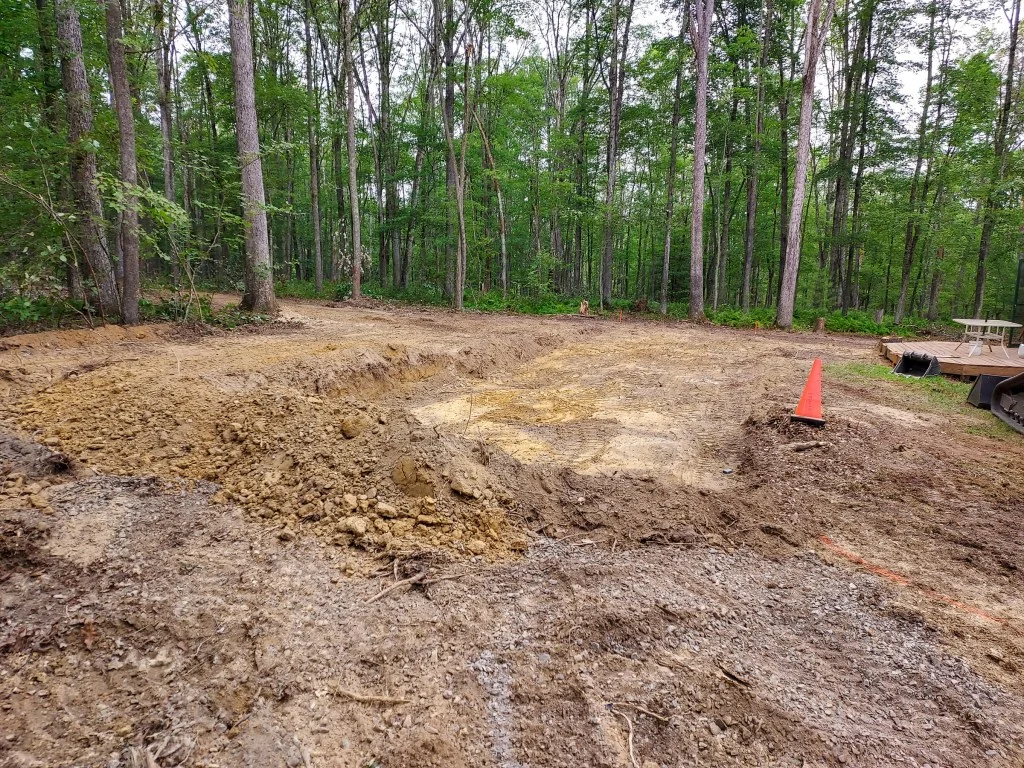
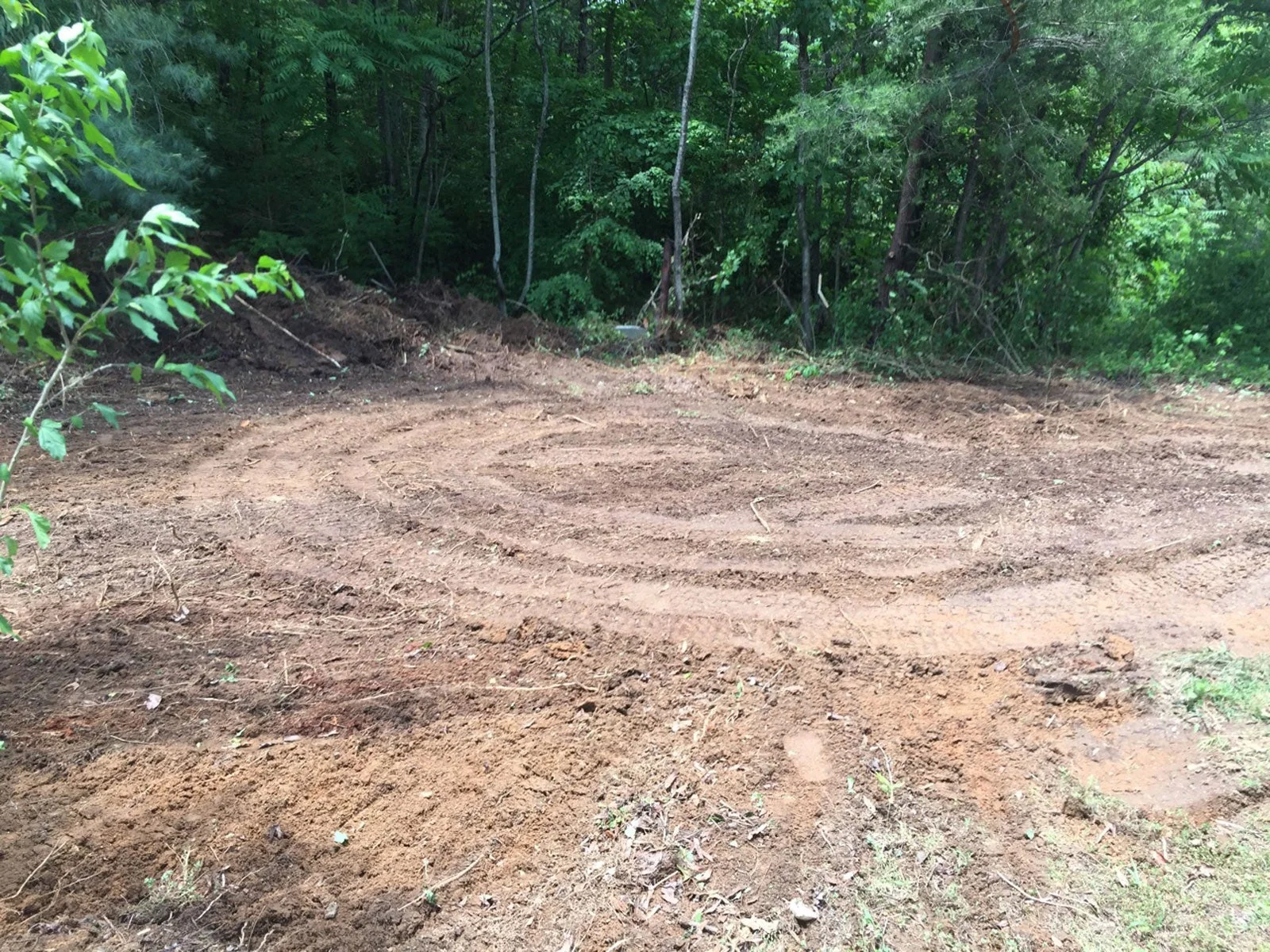
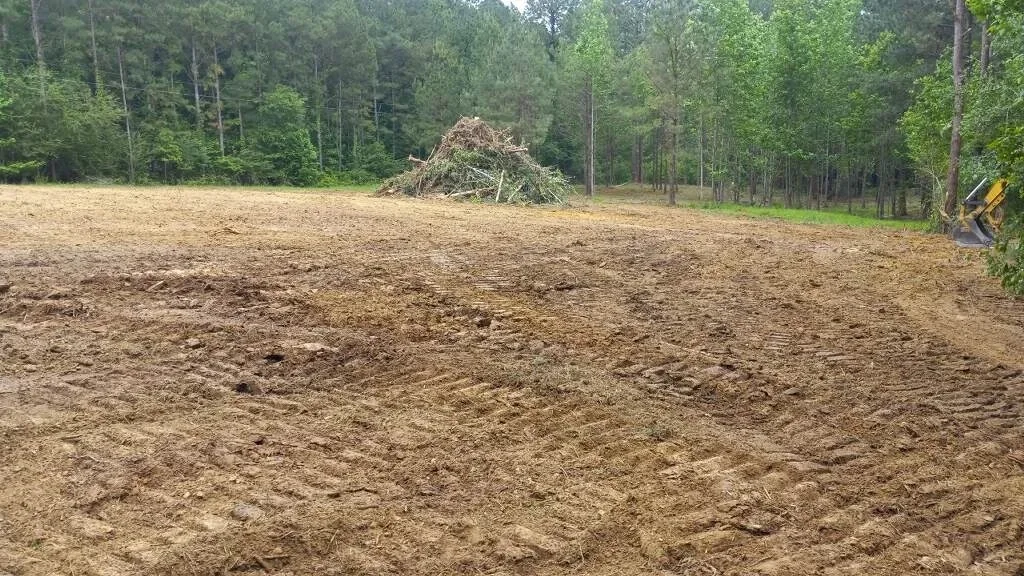
Scope on this terrain breaks into predictable stages: clearing and grubbing, stripping and stockpiling topsoil (it is worth keeping for the final grade and lawn), cutting the pad bench into the slope, placing and compacting structural fill in lifts where the pad has to be built up, and then the drainage that ties it all together — footing drains, a swale or ditch on the uphill side, and a stabilized outfall. On the steepest lots, engineered fill and retaining walls join the scope, and that is where budgets move fastest.
Compaction is the line item nobody can see and everybody regrets skipping. Structural fill placed in loose lifts will settle under a slab for years, and the cracks show up in the worst possible place. The International Code Council codes that North Carolina adopts treat fill placement and compaction as a defined requirement, not a judgment call, and a scope that does not mention lift thickness or testing is worth a second look.
On Flat Rock lots specifically, the soil profile matters because the escarpment mixes weathered saprolite, clay and rock in unpredictable layers. A pad that sits on clay with poor drainage behaves differently from one benched into saprolite. That is why stripping topsoil and stockpiling it is not just cosmetic — the organic layer holds water and cannot stay under a foundation. It also matters for the finished look: Flat Rock lots tend to want a lawn that ties back into the woodland edge, and the stockpiled topsoil is what makes that possible without trucking in new material. A crew that hauls off the topsoil and then sells you fill has moved the same dirt twice at your expense.
The Flat Rock price picture, by scope
Henderson County pricing tracks the county's terrain and haul distances — see the full Henderson County grading cost breakdown for the working numbers. The short version, by scope:
| Scope | Typical range |
|---|---|
| Simple pad on gentle grade, good access, minimal haul-off | $3,500 – $7,000 |
| Standard cut-and-fill pad, moderate slope, some rock, spoil hauled off site | $7,000 – $15,000 |
| Steep, wooded or rocky lot with engineered fill, retaining, long driveway cut | $15,000 – $30,000 |
Two Flat Rock-specific cost movers: access (a lot off a narrow mountain road with a low canopy slows every truck cycle) and rock (Blue Ridge ground is not uniformly diggable, and a day of hammering changes the number). Treat a bid that does not address rock contingency or haul-off volume as incomplete rather than cheap.
Access deserves a closer look because it is where Flat Rock bids diverge most. Lots along the older village lanes often have mature hardwoods close to the roadside, low limbs, and a gate or stone wall that a dump truck cannot easily negotiate. When a haul truck has to back down a narrow lane or a machine has to be walked in, the cycle time per load doubles and the bid reflects it. By contrast, a lot with an existing wide driveway and a cleared staging area can price far lower for the same pad because the machine stays working instead of waiting. Ask every bidder what they assumed for access; the honest ones will tell you it is a variable, and the vague ones will tell you it is included.
Drainage and storm history are not hypotheticals here
The federal disaster record explains why drainage sits at the front of every scope we write: 16 declared events touch this county (1978-2026), and the dominant family is storm and flood — the same rain that turns an unmanaged uphill swale into a foundation problem. Every one of those events pushed water at grades that were designed for a drier assumption. Before a pad is signed off, the question is not whether the lot drains, but where — and the National Weather Service rainfall record for the southern Blue Ridge is the honest backdrop for sizing that outfall. If you want the wider playbook for pads and clearing, the site prep and building pads guide covers the full sequence.
There is a second regulatory layer worth knowing about. Grading that disturbs more than a small area triggers erosion and sediment control requirements, and the U.S. Environmental Protection Agency framework for stormwater is the reason silt fence, inlet protection and a stabilized outfall show up on scopes that cross the threshold. On a Flat Rock hillside, silt leaving a graded lot does not just look bad — it travels into a roadside ditch, then a stream, and the county and state both care. The practical takeaway for a homeowner is that the drainage items on a good bid are not upsells; they are what keeps a job out of enforcement trouble.
Hiring an excavator on Flat Rock ground
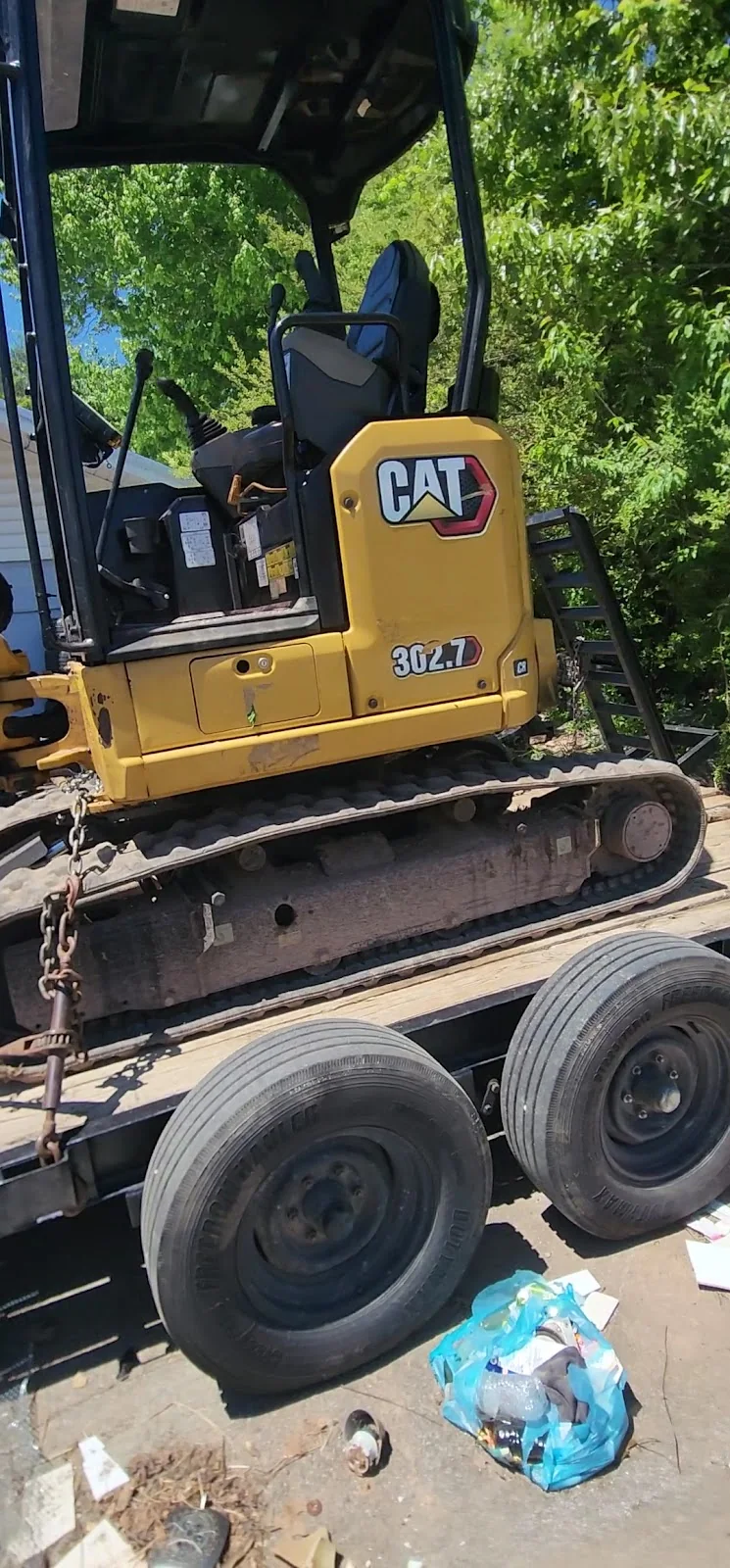
Three local checks. First, ask what their plan is for the uphill water — a crew that answers with a swale and an outfall before you mention drainage is the crew you want. Second, ask how they handle rock, and whether the bid carries a contingency or a hard number; either is workable if it is stated up front. Third, ask about licensing and erosion control on jobs that cross the state thresholds — the NC Licensing Board for General Contractors sets when a project needs a licensed general contractor, and sediment leaving a graded lot is a regulated problem, not a cosmetic one. When you are comparing bids, the Flat Rock grading contractors page walks through what a complete scope should contain.
One more thing specific to this village: Flat Rock sits inside a historic district and near preserved land, and some lots carry scenic or conservation overlays that affect clearing limits, tree removal and how much of the hillside can be cut. A contractor who has worked in the village will know which parcels those are and what the review process looks like; one who has only worked down in the valley will find out the hard way. Ask whether the scope anticipates any additional review, and treat a blank stare as a warning sign.