What the ground under Black Mountain lots actually is
Black Mountain sits in Buncombe County at the edge of the Blue Ridge, and the ground reflects it. Yards here tend to be one of three things: red clay that swells when wet and cracks when dry, shallow rock that stops a machine cold, or old fill placed decades ago when a lot was carved off a hillside. Each one changes how a grading contractor prices the job before a single bucket moves.
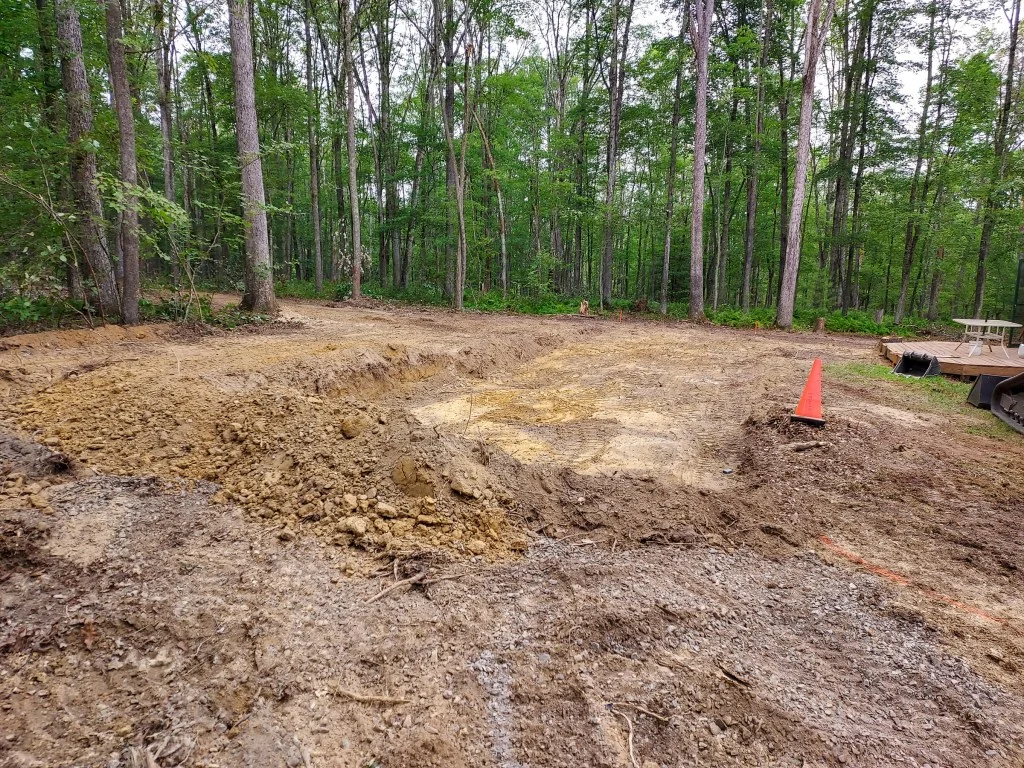
Red clay is heavy and slow to drain, so it has to be shaped and compacted carefully to keep water moving away from a house. Rock is a machine-time problem: what looks like a half-day scrape can turn into a day of breaking and hauling. Old fill is the quiet one. It can look fine on the surface and still settle unevenly, which is why any lot with a filled area deserves a closer look before grading starts.
Neighborhoods around the town matter too. Older blocks near the historic downtown and along Cherry Street often sit on small, tight lots where the house was built a century ago and the yard has never been regraded. Newer subdivisions off the Ridgecrest and Montreat corridors tend to be cut into steeper slopes, so they carry more cut bank and more fill. A contractor who has worked both knows they price differently even when the square footage is the same.
Reading a Black Mountain lot before the machine arrives
Black Mountain lots rarely sit flat. Many are cut into a slope, with a cut bank on the uphill side and a drop on the downhill side. That shape means grading is as much about drainage as it is about level ground. Water coming off an uphill neighbor, off a driveway, or off a roof needs somewhere to go that isn't the foundation.
Terrain also drives access. A narrow mountain driveway limits what equipment can reach the yard, and steep ground can mean more hand work and more hauling. That is why the same square footage can price very differently from one side of town to the other. When you're ready to compare scopes, the grading and excavation guide walks through what a proper site plan should include.
Snow and freeze-thaw add another layer in the Blue Ridge. Ground that is saturated in late winter moves differently than ground worked in July, so a lot that looked level in fall can be spongy by March. A professional walks a lot in the season it is actually being graded, checks where the low spots sit, and looks at any retaining wall, septic field, or buried utility before committing to a scope. Missing a septic field or a buried line is how a straightforward job turns expensive.
Scope versus price on a typical residential lot
Most grading work falls into a handful of scopes. The table below shows what each typically costs on a standard Black Mountain area lot. Steep or rocky ground can push a job toward the top of the band or past it, which is why a site visit matters more than a phone estimate.
| Scope of work | Typical price range |
|---|---|
| Light regrade and re-slope of an existing yard | $1,200–$2,200 |
| Full lot rough grade for new construction | $2,500–$5,500 |
| Cut and fill on a sloped lot | $3,000–$6,500 |
| Steep lot with rock or heavy fill | $4,500–$8,000+ |
| Drainage correction paired with grading | Add $800–$2,500 |
For line-item detail by area, see the full Buncombe County grading cost breakdown, which uses the same bands but breaks them out for the county's different terrain types.
A light regrade is the smallest scope and the one a homeowner with a drainage complaint most often actually needs. It means re-sloping the surface so water runs away from the house, usually without moving the whole yard. A full rough grade is a new-build scope, where the lot is shaped for a foundation pad and the final grade is left just below finish line for the builder. Cut and fill is where the money climbs: dirt is moved from the high side of a sloped lot to build up the low side, and every yard of dirt that gets moved is machine time plus compaction. On a steep lot with rock or historical fill, the onsite work and the hauling both add up, and that is the band that runs highest.
Water, weather, and why grading here is a drainage job
Buncombe County has a long record of federally declared disaster events — 19 declarations spanning 1973-2026, mostly storm and flood related. That history matters for grading because the ground that sheds water well in a dry month can send it straight at a foundation in a wet one. The National Weather Service tracks the storm systems that drive it, and the pattern is consistent: heavy rain on steep ground with clay soil has to be managed, not ignored.
Good grading answers the drainage question first: where does water enter the lot, where does it pool, and where does it leave. Any scope that reshapes a yard without addressing that is only half a job. Federal guidance from the EPA on stormwater and erosion control is a useful reference for what proper site water management looks like.
Look at the low corner of your yard after the next hard rain. That spot is the grading job waiting to happen. On a hillside lot the water often comes from above and needs a swale, a berm, or a shallow ditch to redirect it around the house rather than through the crawlspace. On a flatter lot the problem is usually one low spot where water sits and soaks in for days. Both are fixable with the right shape and the right fall, and both are cheaper to fix before erosion has taken the topsoil off a slope.
Land clearing, hauling, and the hidden line items
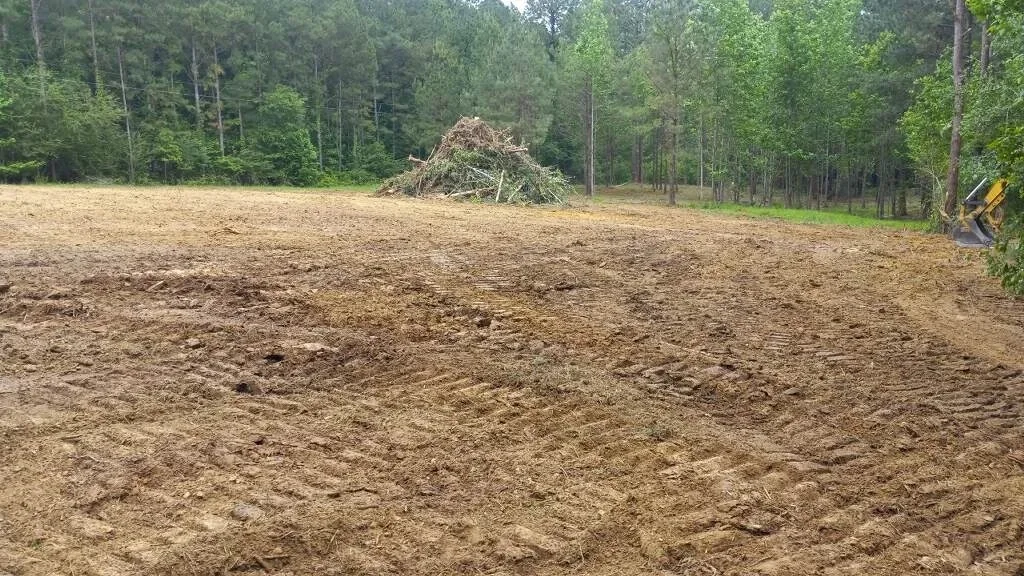
Grading rarely happens on a bare lot. In Black Mountain, most jobs start with trees, brush, or old landscaping that has to come out first. Clearing is priced separately because it depends on how much material is there and how hard it is to remove. If you're starting from a wooded lot, the land clearing service for Black Mountain covers what that step involves and how it pairs with grading.
Hauling is the other line item that surprises people. Clay and rock removed from a lot has to go somewhere, and disposal adds cost. On steep lots, getting the material out can be as much work as taking it out. Any bid that doesn't mention hauling on a cut-and-fill job is incomplete, not cheap.
Two more line items worth asking about before you sign. First, topsoil. Grading exposes heavy red clay, and growing anything on it later means bringing topsoil back in, which is a separate cost most homeowners discover after the crew has packed up. Second, compaction. Loose fill that is dumped instead of compacted in lifts looks fine for a season and then settles, leaving a dip against the foundation or under a new driveway. A scope that names compaction is a scope that respects how much of Black Mountain is sitting on older fill.
Checking a contractor before you sign
Grading is regulated work once it crosses certain thresholds. The North Carolina Licensing Board for General Contractors sets those thresholds and maintains the license lookup, so it's worth confirming status before work begins. Ask whether the crew has graded lots like yours — a contractor who mostly does flat suburban yards may underestimate rock and slope time here.
Also ask how they sequence water versus dirt. A crew that grades first and thinks about drainage later will leave you fixing erosion next spring. The best local crews walk the lot, talk through where water goes, and put that in the scope.
Finally, look at how they handle the parts of the job that touch other trades. A grade change near a septic field or a foundation drain can brush against licensed plumbing work, and the North Carolina State Board of Examiners of Plumbing, Heating and Fire Sprinkler Contractors is the reference for who is allowed to do what. Fire-sprinkler and fuel-gas lines buried on a lot fall under separate rules worth checking through the NC Department of Insurance, Office of State Fire Marshal if your project crosses them. A contractor who knows where their work ends and someone else's begins is the one to hire.