Why a Mars Hill lot is a wedge, not a rectangle
Drive out NC-213 toward the old farm lanes and you'll see it immediately: the lots here don't sit flat, they lean. Mars Hill grew up around a crossroads and a university on its hill, and the residential lots climb away from the valley in every direction — shelves, wedges, and sidehills that have been shedding water downhill since long before anyone built on them. Bailey Street and the lanes off the highway follow old farm edges and creek bottoms, so a building site is rarely a rectangle you can just blade smooth.
That's the difference from a subdivision pad in Asheville proper, where a developer already cut the grade and the contractor mostly re-dresses it. Here, the grading contractor is the site developer. Driveway approach, house pad, and stormwater path are one decision. Get the flow wrong at the top of a slope and it shows up two winters later as a rutted drive and a wet crawl space.
The trees tell you what you're working with. On a lot sloping toward the road, white pine and hemlock hold the downhill side while oak-hickory sits on the uphill edge — a sign the soil is deeper and wetter near the bottom, exactly where a grader has to design for subsurface flow, not just surface sheet runoff. Closer to the French Broad bottomland, lots flatten out but the water table sits high, and a basement cut without checking saturation first is asking for trouble.
The scope behind the number
Grading bids swing wide because "grading" covers everything from smoothing a turnaround to carving a pad out of a hillside. Here's how the work actually breaks down in Madison County, with regional ranges you can compare against. Line items should match yours; if a bid is one lump sum with no cut/fill or drainage line, ask what's being left out.
| Scope | Typical range |
|---|---|
| Driveway re-grade and re-gravel (short, gentle) | $1,200–$3,500 |
| Steep or long driveway cut, culvert, and gravel | $3,500–$7,500 |
| House pad cut-and-fill, small lot | $2,800–$6,500 |
| Yard and drainage correction (swales, French drain) | $1,800–$5,000 |
| Full site prep with clearing and pad | $5,500–$8,000+ |
See the Madison County grading cost breakdown for the fuller table, and note that haul-off of spoil is the line that surprises people most on these hills — there's often nowhere on-site to push the excess. On a narrow ridge lot off a lane above town, every yard of cut dirt either becomes fill somewhere on the property or rides out on a dump truck, and trucking is where a bid quietly balloons.
A driveway cut on a 20% pitch off NC-213 or a lane climbing toward Wolf Laurel carries a different cost profile than the same linear feet on flat ground: more machine time, tighter benching, and often a culvert sized bigger than the drainage-area math first suggests, because mountain storms here arrive hard and fast.
Water is the whole job on a sidehill
Madison County's federal disaster record tells the story: 21 declared events reach this area across 1978-2026, and they are overwhelmingly flood and storm family. Every one of those events sent water down slopes that were graded to a drier assumption. That's why the first question a good grader asks here isn't "where's the pad" — it's "where does the water go when it leaves." Roof runoff, the driveway ditch, and the uphill neighbor's seep all converge on the same low corner of your lot, and if the grade doesn't hand that water off cleanly, you'll be re-grading the same ruts in two years.
The NC Department of Insurance Office of State Fire Marshal enforces site and foundation water management as code-level requirements, not finishing touches. On a Mars Hill sidehill, a swale, a properly sized culvert, and gravel that sheds instead of ponds are the difference between a pad that stays put and one that keeps settling. The National Weather Service records for this corner of the mountains show why the design assumption matters: intense short-duration rainfall on steep ground moves a lot of water in a hurry, and a ditch that was fine in a light rain can wash out in a downpour.
In practice, that means a grader working here spends as much time shaping a bench and a swale as pushing dirt for the pad itself. On a lot where the house sits into the hill, the cut face above the pad needs its own interceptor ditch to keep upland runoff from sheeting straight into the foundation backfill — a detail flatland grading rarely needs and that gets skipped by crews who don't work slopes.
Clearing, access, and the machinery question
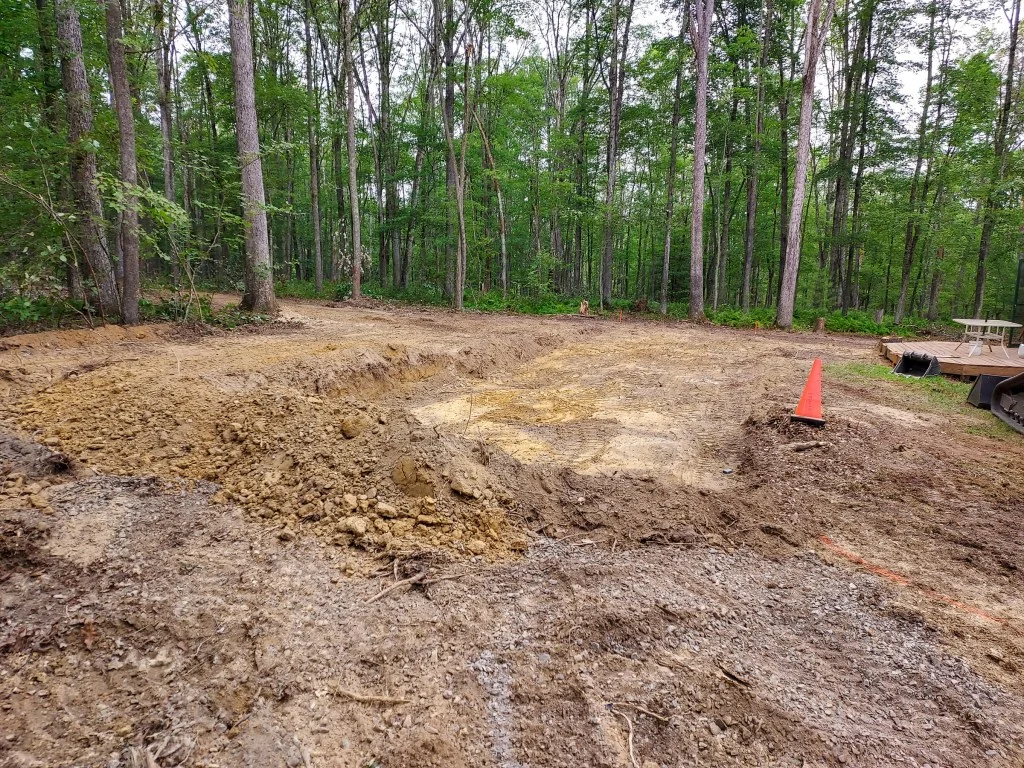
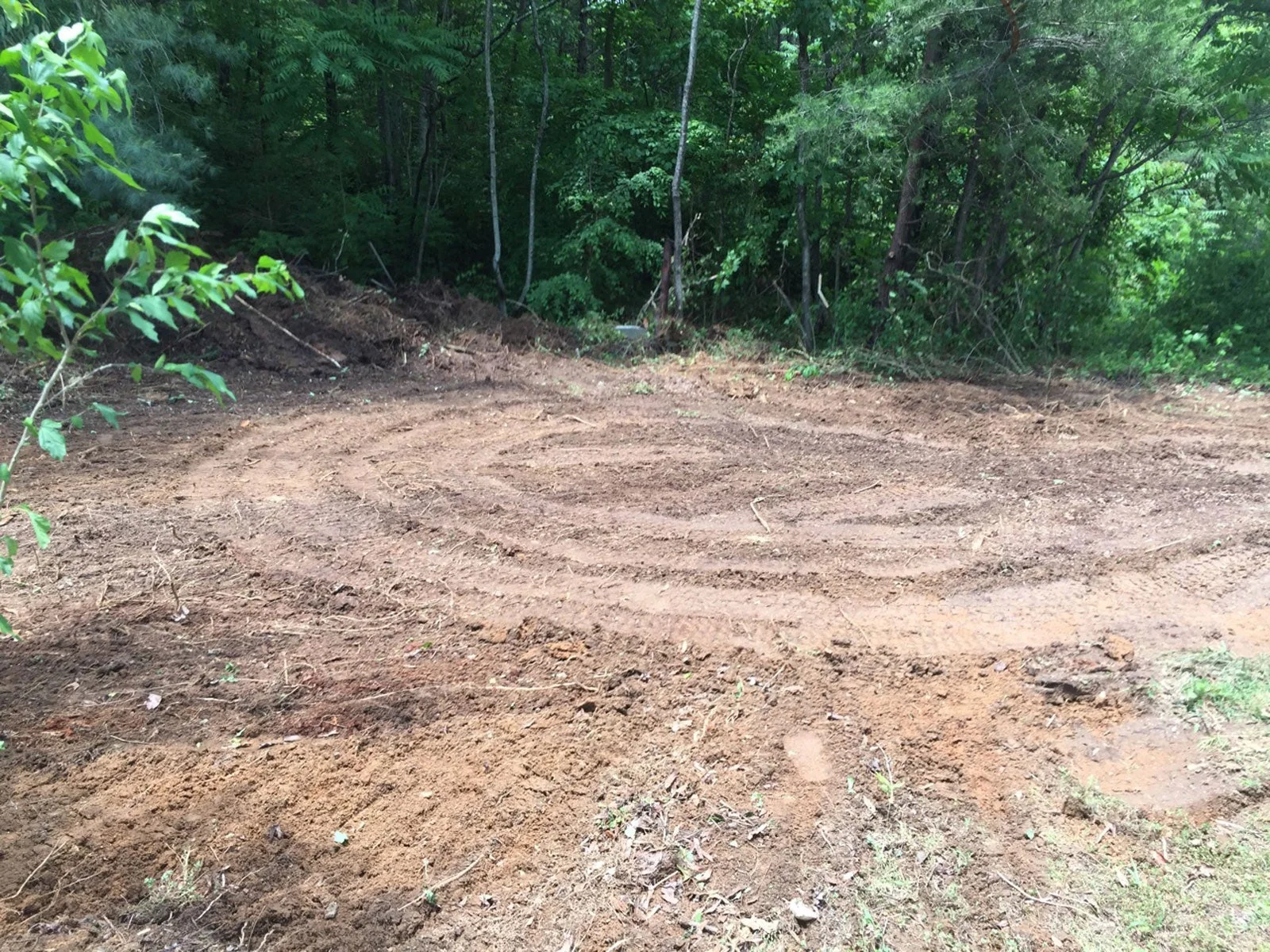
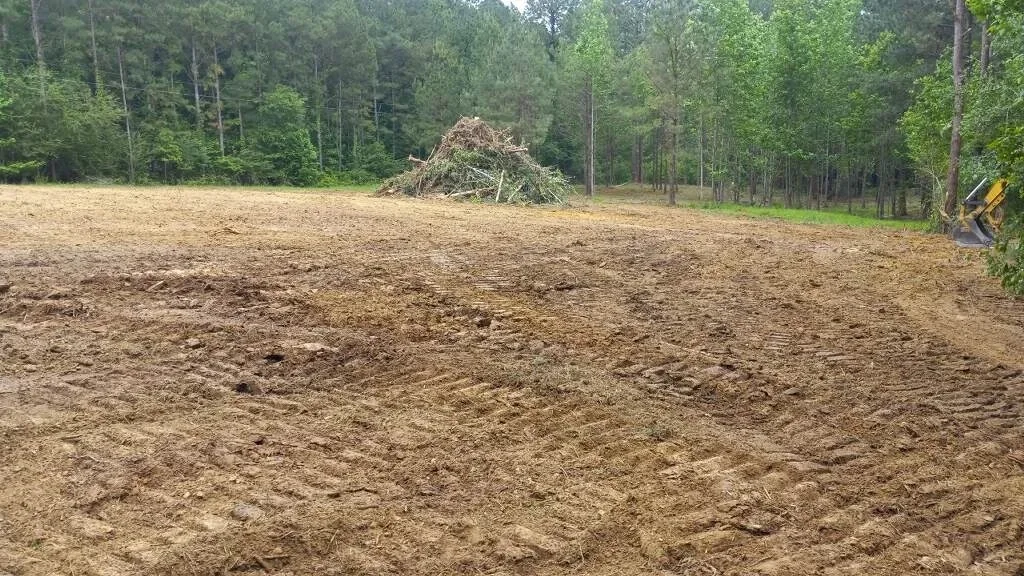
Most Mars Hill grading jobs start with trees. Whether it's a homesite carved out of woodland or a lot that hasn't been touched in decades, land clearing in Mars Hill usually has to happen before a single bucket of dirt moves, and the two are quoted together for good reason: stumps left in a pad will rot and sink, and brush pushed into a fill won't compact. If your bid skips stump removal or burn/disposal, that's a red flag, not a bargain.
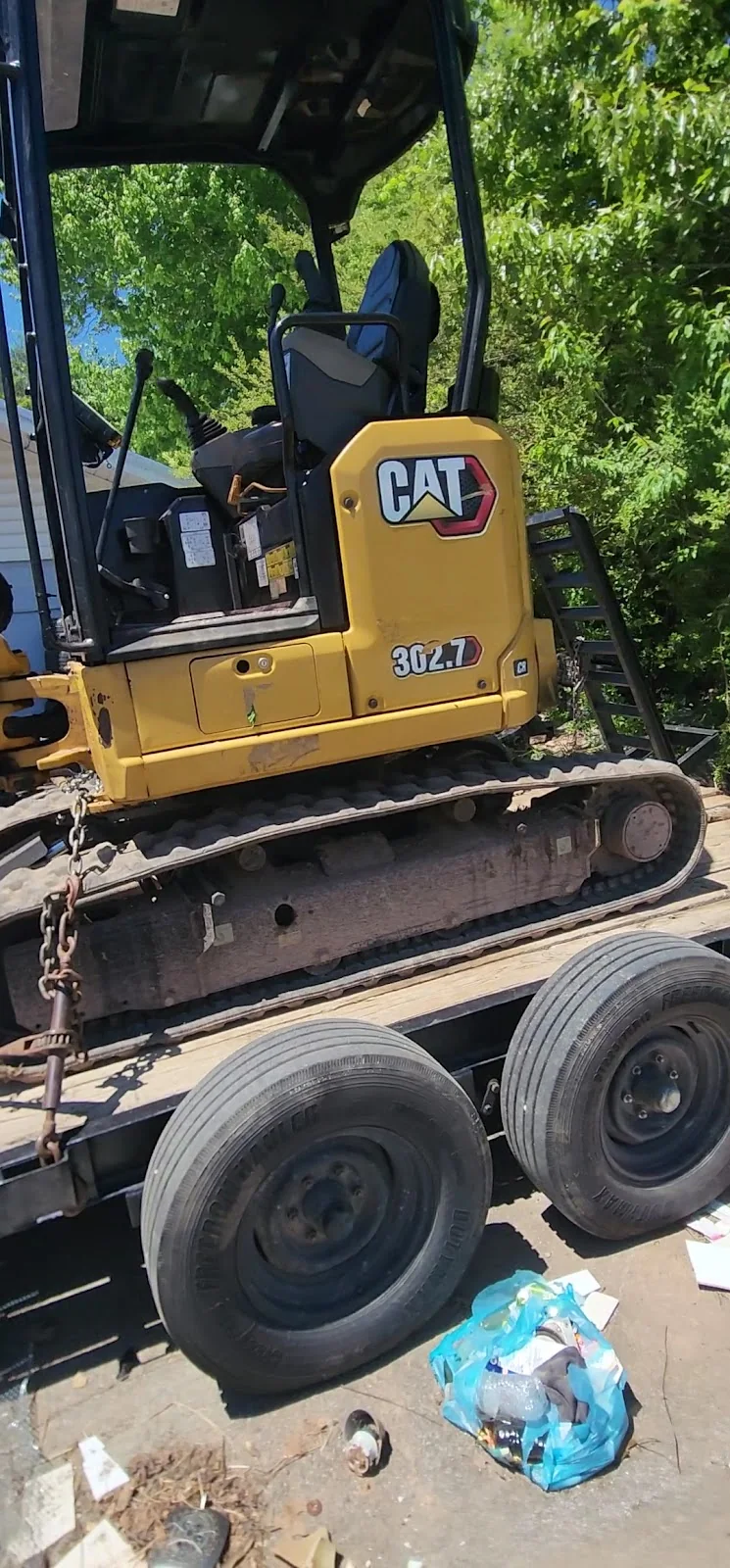
Access drives the equipment choice and the price. A wide, gentle approach lets a full-size excavator and dozer work efficiently; a narrow switchback off a mountain lane may mean a smaller machine, more trips, and higher cost per yard. Ask any contractor how they'll get equipment in — the answer tells you whether they've actually looked at your road. On lanes off Bailey Street or the older farm roads around town, a low tree canopy or a tight hairpin can force a mini-excavator and a skid steer where a full-size machine would have finished the job in half the time.
Where the dirt goes matters here too. Madison County's terrain means on-site spoil areas are limited, and pushing fill off a steep lot risks destabilizing the slope below. A grader who understands this will bench the fill, compact it in lifts, and often build a small retaining structure or riprap toe rather than dumping loose dirt over the edge — the kind of work that doesn't show on the surface but decides whether the pad is still level after a wet spring.
Checking a grader before you sign
North Carolina draws a licensing line that matters here: the NC Licensing Board for General Contractors sets the project-value threshold at which a contractor must be licensed, and site work tied to a permitted building often pulls the job across it. For anything touching a septic system's drain field or water lines, separate state plumbing and septic rules apply, so ask who's responsible for keeping the grading off the septic area — a cut in the wrong place is an expensive repair.
Two more local checks: ask for references on sloped lots specifically, since a flat-lot driveway job doesn't prove someone can hold a grade on a 20% pitch; and ask how they'll protect the downhill side and any creek buffer during rain. Because much of Madison County drains toward the French Broad and its tributaries, sediment running off a disturbed slope is a real water-quality issue, and the EPA guidance on construction stormwater is a useful reference for what good practice looks like. The grading and excavation overview walks through what a complete scope should include so you can compare bids apples to apples.
Finally, drive the property with the contractor if you can. On these lots, a five-minute walk to look at the uphill seep, the low corner, and the driveway approach separates a bid built on assumptions from one built on the ground in front of you.