Where the money actually goes on a Mills River culvert job
A Mills River driveway culvert is not a single line item. On the quotes we see come together around Henderson County, the number splits into five pieces: pipe (HDPE, CMP, or concrete), trench excavation through the existing drive, bedding and backfill stone, end treatments (flared end sections or a headwall), and any rock that has to be hammered out of the trench. The pipe itself is usually the smallest piece — 20 to 40 feet of 12- to 18-inch HDPE is a modest material cost. The trench through a packed gravel drive, the stone bedding around the pipe, and the driveway restoration are what scale the bill. On a flat lot with soft ground, a straightforward 30-foot 15-inch HDPE run with flared ends lands in the $1,500 to $2,500 range. Add rock, a longer run, or a concrete pipe spec and you climb steadily toward $4,500 and past it on engineered jobs.
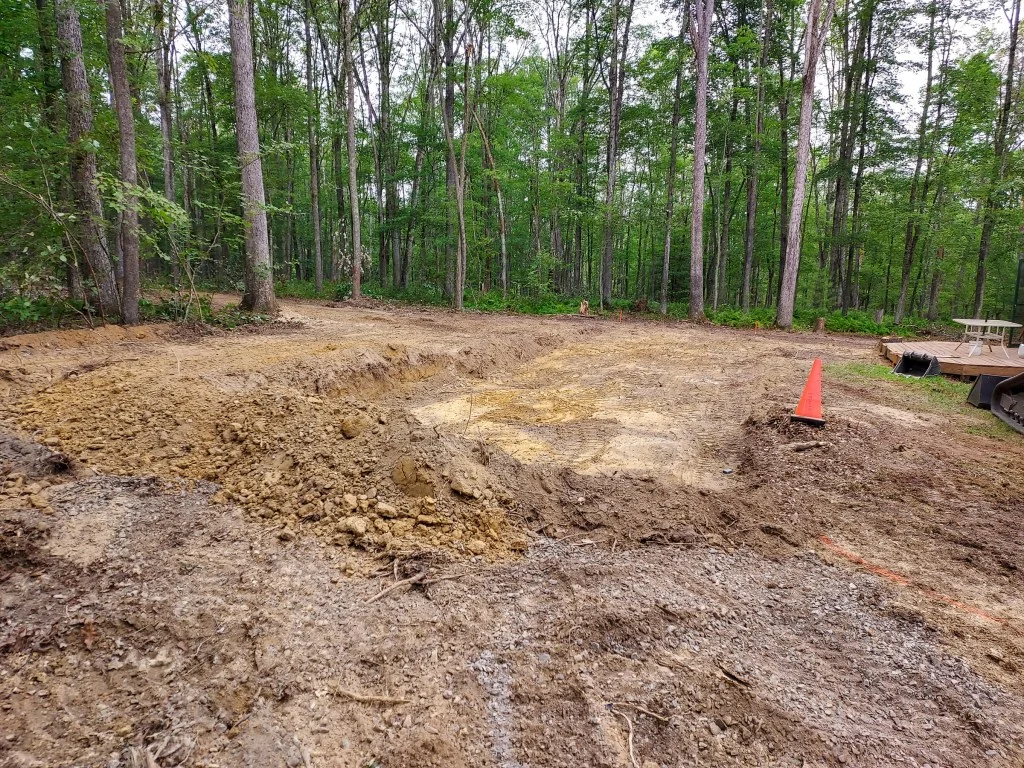
What surprises Mills River homeowners is how often the trench — not the pipe — becomes the wildcard. This valley sits on ground that alternates between deep alluvial soil near the French Broad bottoms and weathered saprolite and shot rock on the benches rising toward the Blue Ridge escarpment. A drive cut into a slope may hide a shelf of rock two feet down; when that shelf runs the length of the culvert alignment, the excavator switches to a hammer and the hourly math changes fast. We have seen jobs where the pipe and stone together cost less than the rock removal under the same 30 feet of drive.
Restoration is the other quiet line item. A gravel drive that gets trenched and backfilled needs to be re-crowned and compacted so it does not rut at the culvert. A paved or chip-sealed drive needs the cut patched — sometimes with a transition apron on both sides so the pavement does not crack at the trench edge. Bids that omit restoration look cheaper until the first hard rain.
How Mills River terrain and Henderson County rules shape a bid
Mills River sits in a valley bowl where the French Broad and its tributaries run — much of the town drains toward creek-bottom pasture, and a lot of driveways need to move water under them rather than around them. Two things make bids here diverge from flatland quotes. First, grade: many properties slope from the road down to a house pad, so the culvert must be set at the right invert elevation or it either ponds at the entrance or scours the downstream bank. Second, the county's stormwater and driveway-entrance expectations: a culvert that ties into a roadside ditch or a named stream may trigger a grading permit and a sizing review. The International Code Council model codes treat storm drainage as a structural-adjacent requirement, and Henderson County follows that spirit — pipe size is set by drainage area, not by what fits in the trench. If your culvert crosses a jurisdictional stream or wetland, the EPA rules on waters of the U.S. can add a permitting layer before a shovel moves.
Terrain detail matters here more than in a flat coastal county. A drive off a state-maintained road in Mills River often meets a roadside ditch that itself carries water from upslope parcels. When several neighbors share that ditch, a single undersized pipe at one driveway can back water onto the road shoulder and into the next driveway down. That is one reason the county looks at drainage area and not just the width of your culvert opening.
The soil profile adds its own quirks. Near the river bottoms, trench walls can slough in saturated clay and require wider excavation and more backfill stone than a bid assumed. On the higher benches, decomposed granite and mica schist hold a vertical wall beautifully but refuse to yield to a bucket. A contractor who has dug in both settings prices them differently, and that difference shows up in the estimate long before the pipe is ordered.
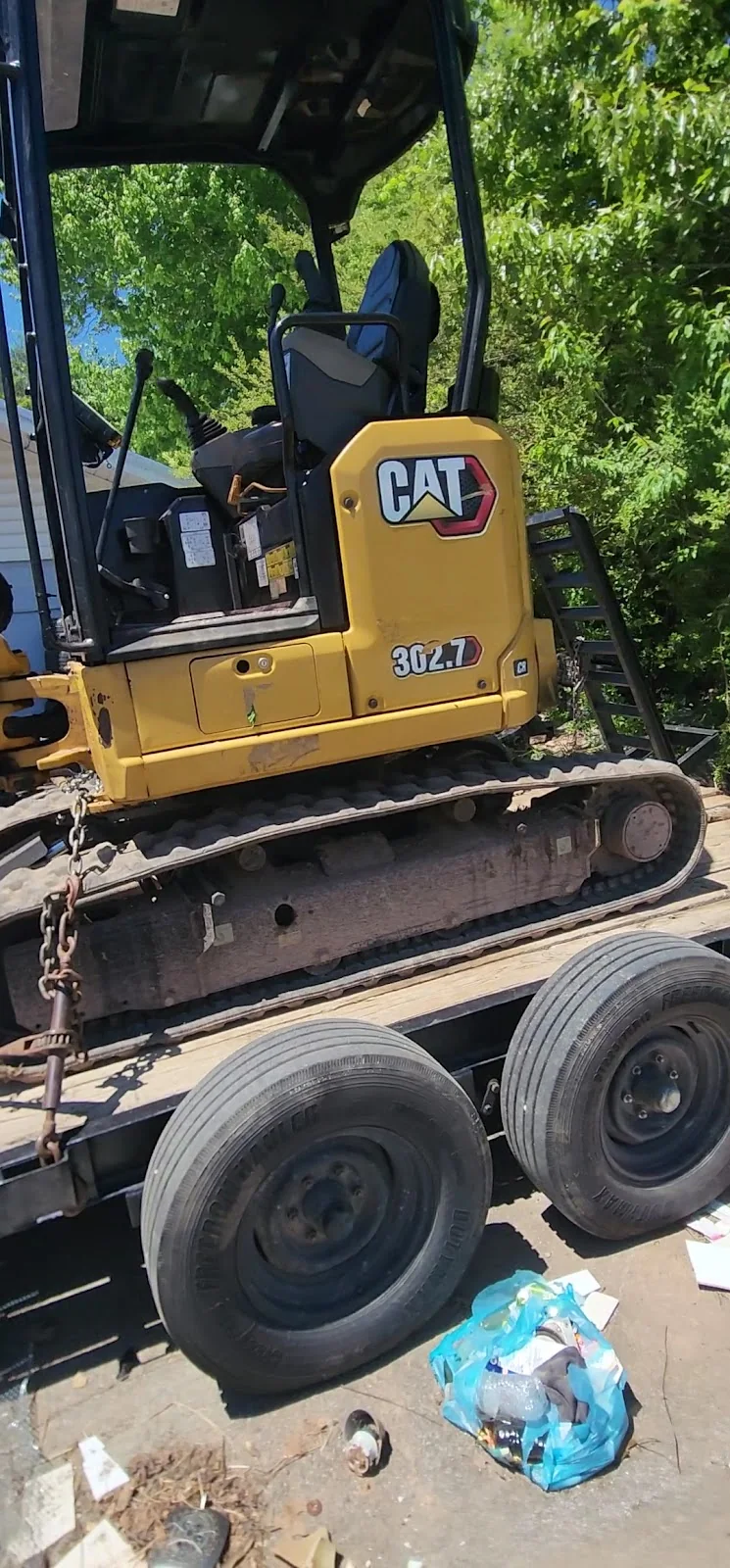
Access is the third local factor. Long gravel drives, narrow bridge approaches, and steep switchback entries limit what equipment can reach the culvert alignment. A full-size excavator may not fit; a mini-excavator will, but it takes longer. Neither is wrong — the bid just needs to reflect which machine the site actually allows.
Water history: why Mills River culverts get replaced at all
The federal disaster record for this county is a good proxy for how often driveway drainage gets tested. 16 declared events touch Henderson County across 1978-2026, predominantly storm and flood family, and the pattern repeats: undersized pipes plug with debris during a heavy rain, water backs up over the drive, and the shoulder washes out. The National Weather Service flood and flash-flood outlook for the mountain valleys is the reason sizing matters more than pipe price. A pipe that looks fine in a dry August is the one that fails a May storm. Our advice: size for the storm, not the summer.
Mills River's position in the French Broad watershed means intense rainfall cells can stack against the Blue Ridge and dump in a hurry. Debris is the second half of the problem — leaf litter, gravel wash, and small branches collect at the inlet, and a culvert that is technically large enough still fails if the inlet blocks. Flared end sections and a properly graded approach apron shed debris better than a bare pipe end, and a headwall with riprap at the outlet protects the downstream bank from the velocity that builds when the pipe finally clears.
For a homeowner deciding whether to replace, the honest test is not age but behavior: does the drive pond at the entrance after a normal rain, does the outlet bank show fresh scour, has the gravel over the pipe settled into a dip? Any of those signals that the pipe is undersized, crushed, or mis-aligned, and the fix is usually a new run rather than a patch.
What licensure and permitting you should confirm before signing
North Carolina draws a line between routine driveway work and jobs that cross into general contracting. The NC Licensing Board for General Contractors sets the threshold where a project or a contract value requires a licensed GC — ask any installer how their scope sits relative to that line, and whether a grading permit or stormwater approval is required for your specific crossing. In Henderson County, driveway culverts that connect to a public road ditch or a stream often need a county or state review; a contractor who shrugs at that question is not the one you want trenching your drive. The culvert and driveway pipe guide walks through sizing and material choices in more detail.
Two practical questions separate a prepared bidder from a hopeful one. First: who pulls the permit, and is the permit cost inside the quote or billed separately? Second: if the county requires a sizing calculation based on drainage area, does the contractor do that in-house or bring in an engineer? CMP, HDPE, and RCP all behave differently under shallow cover and heavy traffic, and the right answer depends on depth of cover at your specific crossing, not on which material a crew happens to stock.
Insurance is the third item. Ask for a certificate of insurance for general liability before excavation starts. A trench through a driveway is a low-probability but high-consequence event for underground utilities, and a contractor carrying proper coverage protects you as much as them.
Comparing bids without getting burned
The cheapest Mills River culvert quote is often the one that skips bedding stone, omits flared ends, and leaves the driveway crown low so it ponds at the entrance. Ask every bidder for the same five things: pipe material and diameter, trench length, bedding and backfill spec, end treatment, and who restores the drive surface. If you also need regrading around the culvert, the Henderson County grading cost breakdown shows how that line item is priced separately from the pipe run, and our Mills River grading contractors page explains how crews here sequence drainage and grade work together. Pairing the two trades on one site visit usually saves money over two separate mobilizations.
Watch for the bid that quotes a pipe diameter without stating the drainage area it was sized for. Two contractors can look at the same driveway and name different sizes because one counted the upslope acreage and the other did not. Ask for the assumption in writing; it is the single easiest way to compare apples to apples across three estimates.
Finally, clarify what happens if rock is hit. A fair bid either includes a stated allowance for unclassified excavation or states an hourly rate for rock removal with the equipment that will be used. A bid that stays silent and then surprises you with a change order is the one that inflates after the excavator is already on site.