How Waynesville's lots shape the drainage problem
Waynesville is the Haywood County seat, and its in-town blocks carry a pattern you won't find in a flat subdivision: short streets running off the Main Street spine, lots that climb or drop a full story from curb to back fence, and a mix of early-1900s houses on stone or brick foundations sitting right against 1970s ranches on slabs. That combination means the water arriving at a house here is rarely the water that fell on it. It's runoff from the road, the neighbor uphill, or the bank behind the kitchen.
Drive the streets off Russ Avenue or up toward the old hospital district and you'll see what we mean: front yards that pitch steeply to the sidewalk, side lots that funnel sheet flow between houses, and rear yards that dead-end against a cut bank. The residential grid here grew out of ridge roads, not a surveyor's grid, so drainage patterns follow the topography in ways that surprise people who move here from Charlotte or Raleigh. A lot that looks level at the curb can drop eight feet by the time you reach the back fence.
The characteristic calls we see: a basement wall that weeps a day after every hard rain, a backyard that holds standing water until July, gravel driveways washing to the street, and downspouts that have been dumping at the foundation since the house was built. On these lots, a trench drain or a graded swale is often doing more work than a French drain placed in the wrong direction. We also see a lot of older homes where the original grading was done decades ago and has since settled, so the swale that once carried water away now runs it back toward the house.
One more local nuance: the soils. Much of Haywood County sits on clay-heavy residual soil derived from the ancient bedrock, and clay doesn't drain — it holds. That means a trench that would work in sandy Piedmont ground can silt in or perch water if it isn't sized, sloped, and filtered correctly. Getting the fabric and gravel spec right matters more here than in a lot of places.
The scope-to-price map for Haywood County
Drainage pricing is a function of how far water has to travel, how much fall the yard gives you, and whether the discharge point is legal and available. On a steep Waynesville lot, the last item is often the expensive one. For the county-level cost detail, see the Haywood County grading cost breakdown. Typical residential ranges:
| Scope | Typical range | What drives it |
|---|---|---|
| Single French drain run (trench, pipe, gravel, fabric) | $3,000–$9,000 | Length, depth, hand-dig vs. machine access, discharge route |
| Downspout collection and subsurface discharge | $3,500–$7,500 | Number of downspouts, run distance, daylight or pop-up emitters |
| Graded swale or surface channel with riprap | $3,500–$10,000 | Slope, liner/rock, whether it ties to an existing ditch |
| Curtain drain / uphill interception | $5,000–$12,000 | Depth to water table, bank height, spoils removal |
| Whole-yard regrading and re-routing | $15,000 and up | Volume of cut and fill, haul-off, retaining needs, re-planting |
Any quote for a steep in-town lot that omits a discharge plan is incomplete, not cheap. Where the water goes after it leaves the pipe is half the job. A run that has to cross a driveway, navigate a retaining wall, or outlet into a county ditch with a specific invert elevation is going to cost more than a simple daylight out the back — and it should, because those are the jobs that actually work.
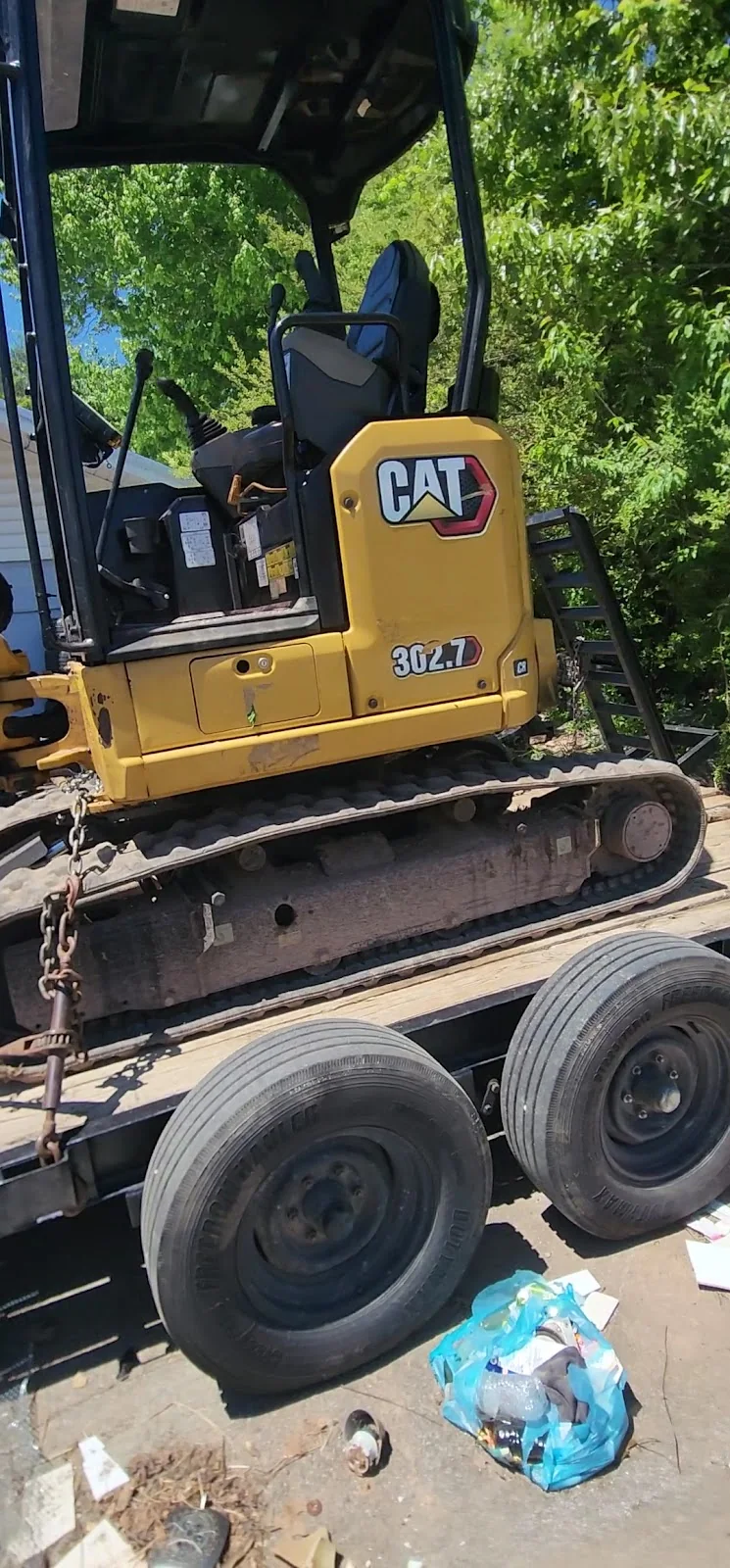
Access is the other quiet cost driver. On a narrow in-town lot with a fence, a mature dogwood, and a shed in the way, a mini-excavator may not fit, and hand-digging a 60-foot trench through clay is slow, physical work. That's not padding — it's hours. Conversely, a wide-open lot on the edge of town with machine access and a downhill outlet can bring the same linear footage in near the bottom of the band. Ask any bidder how they plan to get equipment to the trench line; the answer tells you a lot about whether the number is real.
Why Haywood County water history matters here
The federal record is the reason drainage is a live topic in this county: 19 declared events touch Haywood County across 1973-2026, mostly storm and flood family. Each one delivered more water to slopes and foundations than the original grading anticipated. If you've lived here through a wet spring, you've seen how quickly a saturated hillside turns into a moving problem. The National Weather Service's regional outlook tools at weather.gov are worth watching before big projects, because saturated ground changes how a trench behaves during construction — walls cave, spoils turn to soup, and a trench left open overnight can fill with runoff.
That history shapes how good crews schedule work here. Late spring and early fall tend to be the windows when ground conditions cooperate; a job planned for the middle of an already-soaked month may need to wait, and that's a real conversation to have before signing. It also means the discharge side of a system gets designed for the storm that actually happens, not the average rain.
The practical lesson for a homeowner: fix the water before it becomes a structural conversation. Erosion at a footing, a bank slumping toward a wall, or a crawl space that stays damp after rain all start as drainage problems. The drainage and erosion control guide walks through the order of operations, and it's worth reading before you get bids so you can tell a real scope from a vague one.
Permits, licensing, and the paperwork question
Not every drainage job in Waynesville requires a permit, but the ones that disturb a slope, cross a property line, or connect to a storm system usually trigger review. The North Carolina Licensed General Contractors rules apply once a project crosses the state threshold, and the board's guidance is at nclbgc.org. Where a project affects a protected waterway or wetland — and Haywood County has its share of creeks and bottomland — the EPA framework and its state counterparts come into play. If a project touches federal housing programs or floodplain construction standards, HUD guidance can be relevant too.
Two things to confirm before signing: who pulls any required permit, and who is responsible if the discharge point turns out to be a neighbor's problem. Get the discharge location written into the scope with a specific outlet described, not "daylights at rear." The difference between those two phrasings is the difference between a system that works and a phone call from the person downhill.
Also ask whether the contractor carries general liability and workers' comp. A trench is an excavation, and excavations are where things go wrong. This isn't a bureaucratic box to check — it's the thing that protects you if a machine clips a gas line or a wall caves on a steep lot. Any legitimate outfit answers that question without flinching.
What a good first visit looks like
A real drainage assessment starts with the whole lot, not just the wet spot. Expect the contractor to walk the uphill boundary, trace where roof water actually goes, check the street and any county ditch for the legal outlet, and look at how the foundation sits relative to grade. A crew that quotes from the driveway without walking the uphill side is guessing. On a Waynesville lot, the uphill side is often where the whole answer lives.
You should get a written scope with linear footage, pipe size and type, trench depth, outlet description, and how the yard will be restored. If the work touches grading beyond the trench, that belongs in the same document. Ask about the outlet elevation — a good contractor can tell you roughly where the pipe will daylight and at what fall, and will have thought about what happens at the bottom of the hill when the water gets there. When you're ready to compare bids, the Waynesville grading contractors page covers what to ask and how the trades overlap.
Plan on the visit taking an hour on a typical in-town lot, longer if there's a steep bank or a crawl space to inspect. The best visits end with the contractor telling you what they'd do first, what can wait, and roughly what each phase costs. That sequencing advice — what to fix now versus what can survive another season — is often the most valuable thing you get, and it's free.