What Etowah's ground does to a culvert
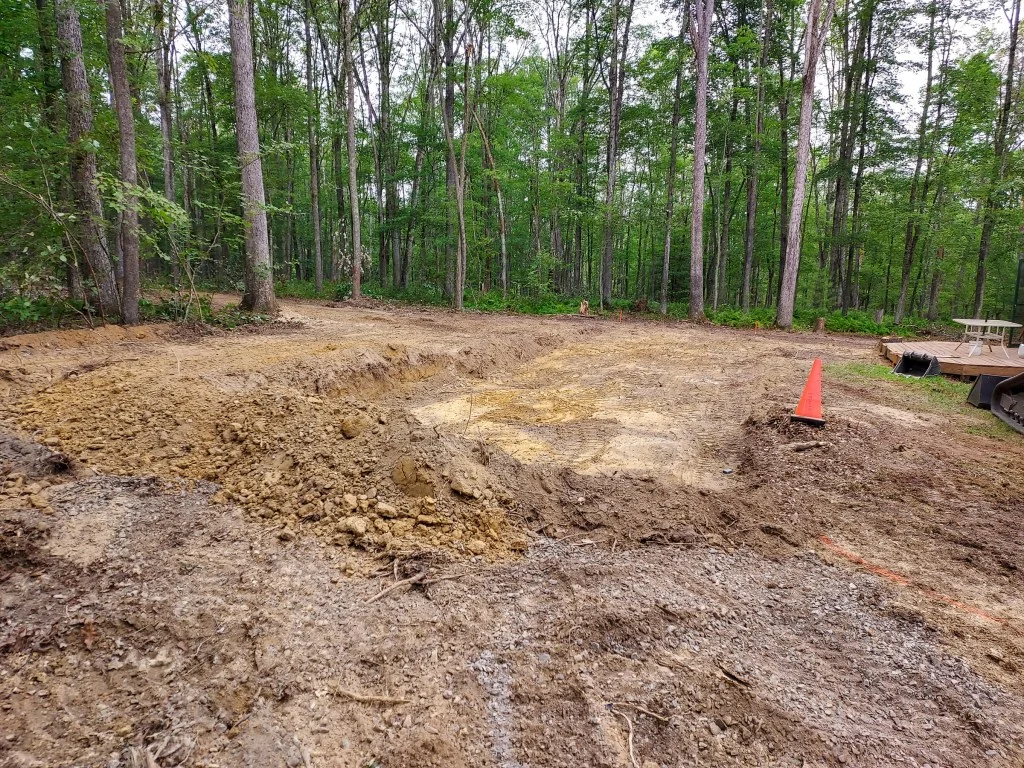
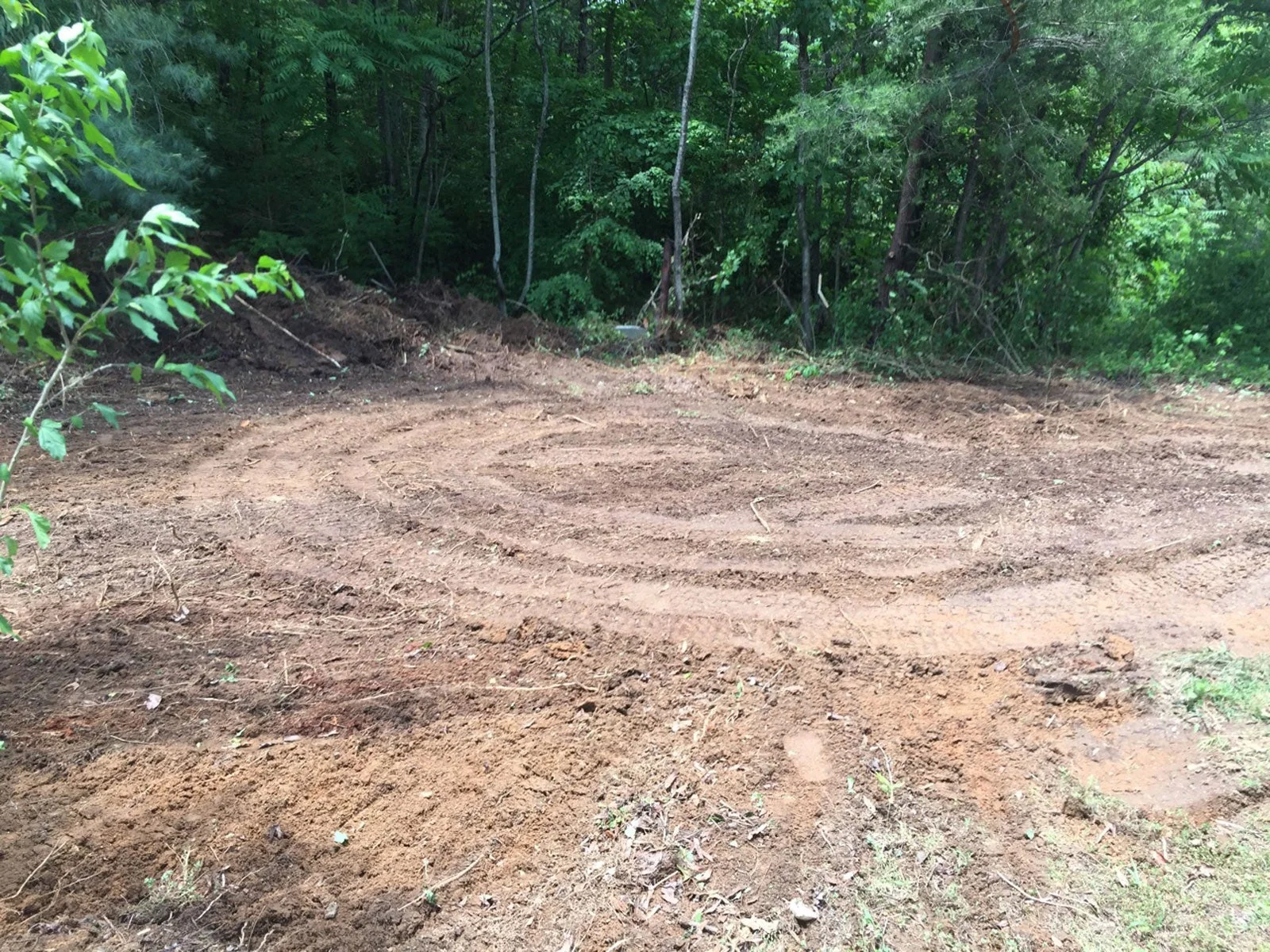
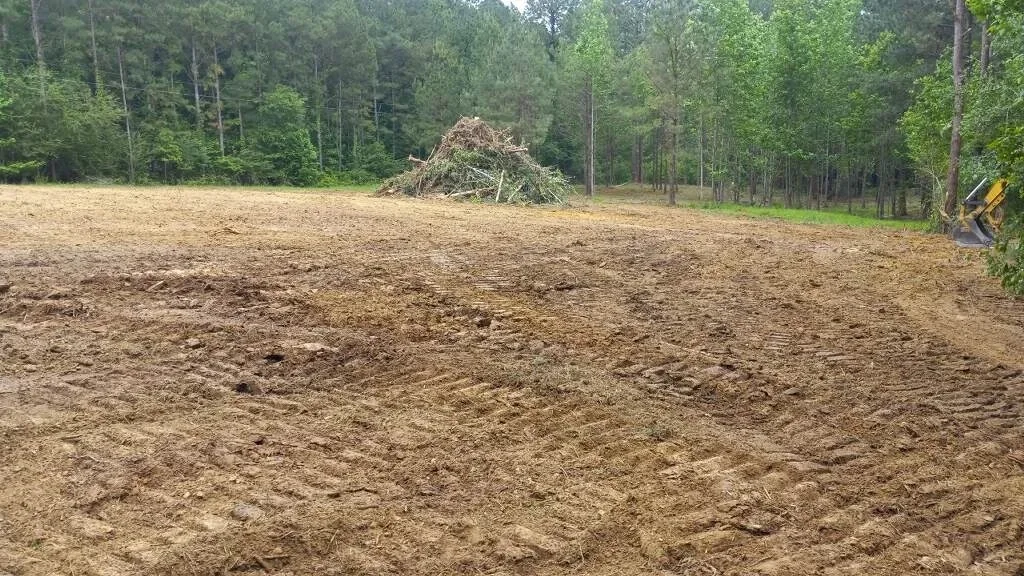
Etowah sits in Henderson County's mountain-and-valley mix, where a single driveway can cross red clay that swells when wet, shallow rock ledges left from old cut-and-fill grading, and fill pads that never fully settled. Each one changes the job. Red clay holds water against the pipe and demands fall you can verify, not guess. Rock means trenching slows to breaking, and the bed may need concrete or flowable fill instead of gravel. Old fill is the quiet one: it slumps seasonally, so a pipe set on yesterday's grade can be high and dry or buried two inches by the second spring. The culvert and driveway pipe guide walks through pipe options, but the ground under your driveway decides the cost more than the pipe does.
This is not flatland bottom ground. Etowah's lots sit on the transition from the French Broad River valley up toward the steep hardwood ridges that ring the county, and that transition is exactly where the soils get complicated. A lot near the river bottoms may be deep alluvial silt and sand that stays wet year-round. A lot up a side hollow off a road like U.S. 64 or the old Brevard corridor may be shallow clay over saprolite and rock. Two driveways a mile apart can price differently by a thousand dollars because of what is three feet below the ditch.
The age of the neighborhood matters too. Older Etowah properties, especially the small farmsteads and church-road parcels that were graded with equipment from a different era, often have drainage that was cut by eye and never surveyed. The ditch may run uphill in places. The driveway may have been built up over decades of gravel applications, so the culvert that was correct in 1975 is now buried under two feet of added fill and sitting six inches too high on the outlet side. When we talk about 'old fill' on this page, that is usually what we mean: layered gravel and soil from years of patch-and-add, not a single engineered pad. It slumps unevenly and swallows the pipe's fall.
Red clay is the other constant. Henderson County's red clay is expansive: it swells when saturated and shrinks when dry, and it does both slowly enough that a pipe set in summer can be pinched or floated by winter. A culvert bed in this soil needs a gravel or crushed-stone envelope and a fall measured with a level, not a hose, because the clay will move the pipe a fraction every season. If the bed is just native clay with the pipe laid on it, the job will not last. That is not a scare tactic; it is what the soil does here.
Costs you can actually compare
Use the table below to match scope to range before any contractor sets foot on the property. These are Henderson County numbers, so they reflect the digging conditions here, not flatland pricing. For broader grading line items, see the Henderson County grading cost breakdown. Anything that crosses the state's contractor threshold should come with a clear written scope; licensing rules are at the NC Licensing Board for General Contractors.
| Scope | Typical range installed |
|---|---|
| Short driveway culvert, standard corrugated pipe, clay or loam ditch | $1,500–$2,400 |
| Mid-length run with rock trenching or clay-stabilized bed | $2,400–$3,400 |
| Long run, multiple joints, or heavier wall pipe in fill soils | $3,400–$4,500 |
| Concrete pipe, long crossings, or extensive rock and fill correction | $6,000–$9,500 |
The table is a starting point, not a bid. What moves a job inside its band: how deep the trench goes, whether the outlet needs a headwall or riprap apron, whether rock has to be chipped or blasted, and how much spoil has to leave the site. On a typical Etowah driveway, the pipe itself is often the cheapest line item. The digging, the bedding, the stabilization, and the hauling are where the money goes.
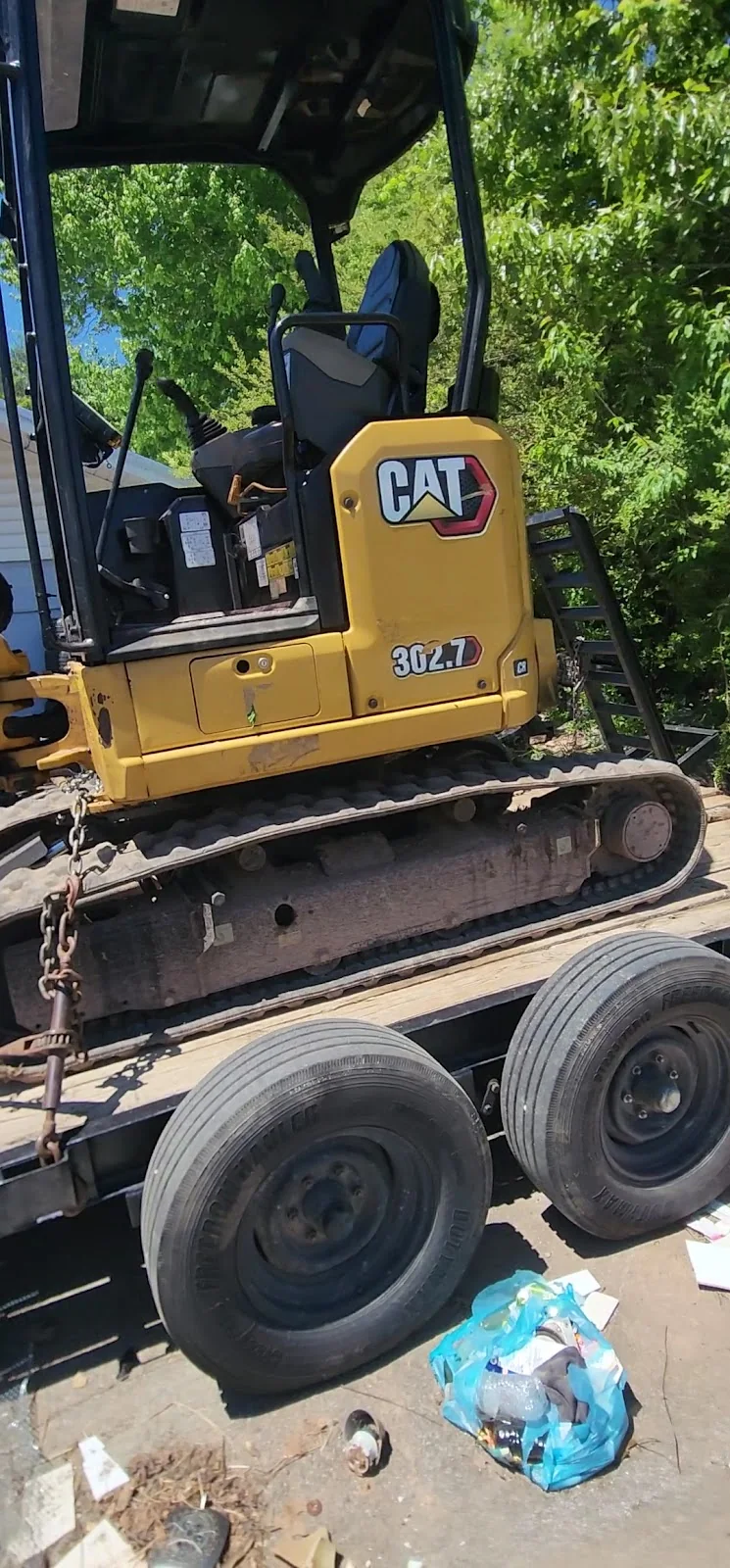
Two other cost drivers are easy to overlook. First, access: if a loaded dump truck or trenching machine cannot get beside the culvert location, material has to be moved by hand or with a smaller machine, and that shows up in labor hours. Second, the outlet: if the ditch below the culvert empties into a steep ravine or a neighbor's yard, energy dissipation — riprap, a splash pad, or a short paved channel — may be needed so the water does not cut a new gully. Neither is exotic; both are normal here. A quote that omits them is incomplete, not cheap.
When water history should set the size
Henderson County's federal disaster record runs long: 16 declared events touch this county across 1978-2026, mostly storm and flood family. That matters at the driveway because undersized pipe is the most common failure here — not corrosion, not bad material, just a pipe that can't pass the storm it eventually meets. The National Weather Service's local rainfall data at weather.gov is a reasonable starting check on how much water your watershed actually delivers. If the ditch above your driveway carries the neighbor's runoff too, say so, because the pipe has to be sized for that combined flow, not your roof alone.
In Etowah specifically, the pattern that catches people is the short, intense summer cell that drops an inch in under an hour on a watershed that was dry the week before. The clay topsoil sheds almost all of it, and a pipe sized for a gentle two-inch rain gets overwhelmed. The result is water backing up the driveway, gravel pushed into the yard, and sometimes the pipe itself displaced. This is why sizing is not a guess. It comes from the size of the area draining to the culvert, how steep that area is, how much is roof or pavement versus woods, and how the ditch above behaves in a known storm.
Existing culverts on the property tell you a lot. If you have replaced the same pipe twice in ten years, the problem is almost never the pipe brand. It is diameter, grade, or inlet condition. A crushed or half-plugged inlet, a pipe whose outlet is submerged in a ponded ditch, or a run with a flat spot at a joint will fail repeatedly even if the diameter is technically right. Honest culvert work here starts with reading the water, then sizing the pipe, then building the bed to hold that size in this soil.
Permits, utilities, and who can legally dig
A culvert in a public right-of-way or a stream crossing may require a permit from the county or state before a shovel moves. The NC Department of Insurance, Office of State Fire Marshal at ncdoi.com/OSFM is the state's reference point for code-driven construction questions. Utilities are the other gate: calling 811 before trenching is not optional, and a private line hit is your bill, not the utility's. If your project also moves dirt around the house, the grading contractors in Etowah page covers how the work fits together. Never let a crew start without confirming who pulls the permit and who calls 811.
In Henderson County, the practical question is where the culvert sits relative to the right-of-way line. Hendersonsville and the county roads that run through Etowah — the state-maintained routes and the older county lanes — have different review paths, and driveway connections in the state right-of-way are typically handled through the NCDOT driveway permit process. A culvert that stays entirely on private property, ditches to a natural drainageway, and does not cross a mapped stream may need no permit at all. The only honest answer is: it depends on the specific site, and the person who should confirm it is whoever will be responsible if the county or state inspects later. That should be settled before the first bucket of dirt moves.
Before any trenching, the 811 locate request should be made and the markings should be respected. Electric, fiber, water, and gas lines cross rural Etowah properties in places the surface gives no clue about. Old septic fields and leach lines are another hazard that 811 may not mark, because they are private. If you know where the septic system is, flag it yourself. One strike can cost more than the entire culvert job, and it is not covered by the utility.
How to tell a real bid from a photo quote
A legitimate Etowah culvert bid answers four things: pipe material and diameter, invert elevations at both ends with the fall stated in inches, bedding material and compaction, and what happens to the spoils. A quote that names only a price and a length is a guess wearing a number. On clay and fill lots, ask how they'll keep the pipe on grade if the ground moves — a slumping fill pad needs a stabilization step that a flat quote will not include. If the job also needs driveway regrading or drainage correction, price it in the same scope so you can see the whole number at once.
The four-part bid test is simple. Pipe material and diameter: is it smooth-wall or corrugated, HDPE or concrete, and what is the inside diameter? Invert elevations: what is the elevation at the inlet and at the outlet, and how many inches of fall over how many feet? Bedding: what stone, how thick, and how compacted? Spoils: does the dirt leave the site, get spread on the lot, or get left in a pile for you to deal with? Any bid that cannot answer these is not a bid yet, it is an estimate of an estimate.
One more thing to check: the scope of restoration. A culvert job disturbs the driveway surface and the shoulders. Does the price include compacting and re-graveling the driveway over the trench? Does it include seed and straw on the disturbed banks? On a hillside lot, bare clay banks will erode with the first heavy rain and send sediment into your own culvert. Restoration is part of the job, not a favor. If it is not in the quote, ask what it costs to add it.
Choosing pipe material for Etowah conditions
Most driveway culverts here are corrugated HDPE or corrugated metal pipe. HDPE is light, resists the acid soils and wet conditions common on Henderson County lots, and handles the slight ground movement that clay and fill can produce. Corrugated metal is strong and has a long track record, but in wet clay it can corrode over many years, especially at the waterline. Concrete pipe is heavier, more expensive to set, and typically reserved for long crossings, deeper cover, or situations where the owner wants the longest possible service life and the budget allows it. The culvert and driveway pipe guide compares these in more detail.
The right choice follows the site. On a short driveway with shallow cover and a clay ditch, HDPE is usually the practical answer. On a driveway that crosses a deep fill or carries heavy truck traffic, the pipe wall stiffness matters more, and the bedding has to be built to match. On a crossing that sees seasonal high water or a steep, flashy ditch, the inlet and outlet protection often costs more than the pipe upgrade. In every case, the pipe diameter should be chosen for the water, and the pipe class chosen for the load and cover. Those are separate decisions, and a bid that conflates them is cutting a corner.
Finally, think about maintenance access. A culvert that cannot be reached with a shovel or a small machine for cleaning will eventually plug. Etowah's ditches carry leaves, gravel, and the occasional dead branch from the hardwood slopes above. A slightly larger pipe with a clean, accessible inlet and a defined outlet is usually a better long-term investment than a smaller pipe that saves a few hundred dollars up front and needs to be cleaned every fall by hand. If a bid does not mention inlet and outlet condition at all, that is a sign the contractor is focused on the hole, not the drainage.