Where Candler water comes from, and why that decides your driveway
Candler sits in the Enka-Candler valley west of Asheville, where Hominy Creek and its tributaries have been reworking residential ground since long before anyone paved a lane. Two lot types dominate driveway calls here. Creek-bottom parcels off Sand Hill Road or near the state schools drain flat and slow, so water sits on a drive that was built level when it should have been built crowned. Mountainside cuts off Starnes Cove and Mount Pisgah Highway shed stormwater fast down slopes where the uphill side of the drive is actually a retaining surface, whether the builder treated it that way or not.
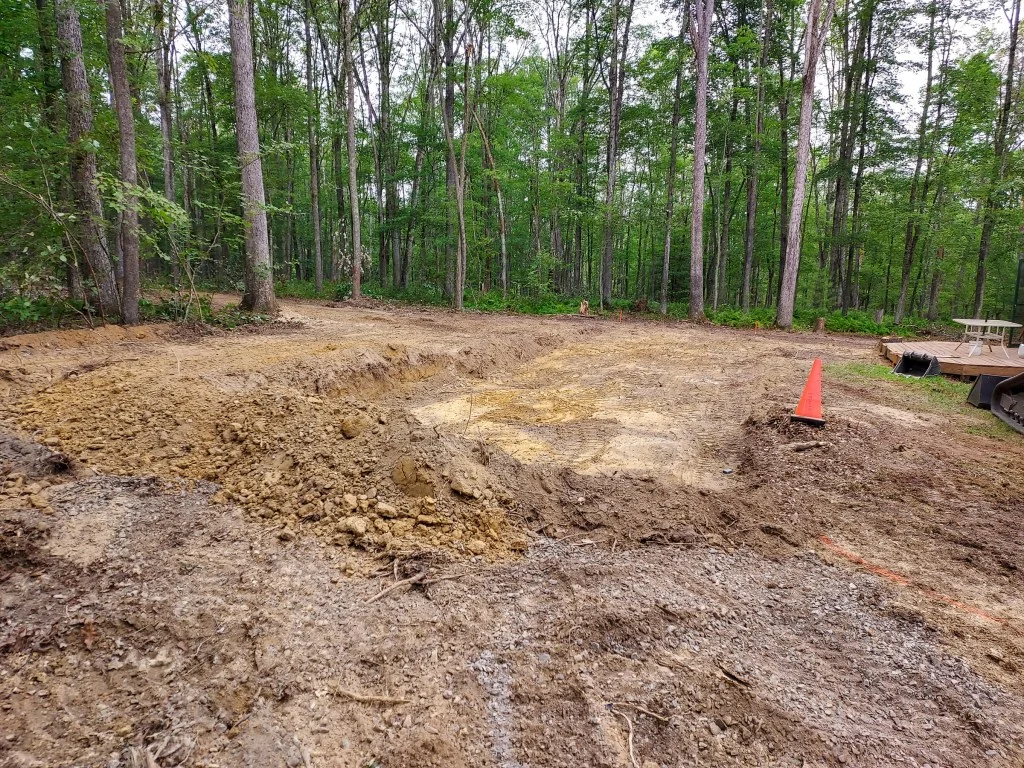
Both problems punish a driveway the same way: ruts, washboarding, gravel pushed to the low edge, and a base that loses bearing after two wet springs. A gravel drive isn't ruined by rain, it's ruined by rain that has nowhere planned to go. That's why the honest first conversation about driveway work in Candler is a grading conversation — see what proper driveway grading and gravel sequencing looks like before anyone quotes you tons of stone.
Reading your lot before choosing stone
Candler's terrain asks for scopes that flatland contractors skip. Before a yard of gravel goes down, the questions are: what crown the drive needs so sheet flow leaves instead of ponding; whether the uphill side needs a swale or ditch to intercept surface water before it reaches the driving surface; where the drive can safely daylight its runoff without dumping silt into a creek or onto a neighbor; and whether a culvert or cross-drain is needed at the low point of a hillside run.
Because Hominy Creek and its tributaries run through the middle of this community, sediment leaving a driveway after a storm is a water-quality question, not just a homeowner question. The EPA treats construction stormwater as a regulated concern for good reason, and the practical version for a residential drive is the same: stabilize, direct, and don't let the front yard silt the creek. In Buncombe County, grading work above certain thresholds also pulls in permits and possibly engineered plans — any crew who can't explain how that applies to your lot is a crew that hasn't done many of them. The county cost picture is worth reading before you compare bids: our Buncombe County grading cost breakdown lays out where money actually goes on these jobs.
The Candler price table
These are honest regional bands for a market with varied terrain, not firm quotes. Slope, distance from the road, and how much water has to be managed move every number. Steep-lot jobs above the valley routinely carry drainage and hauling line items that flat quotes never show — treat a bid without them as incomplete rather than cheap.
| Scope | Typical range |
|---|---|
| Regrade and re-crown an existing gravel drive (no new stone) | $400-$1,200 |
| New drive, 50-100 ft, modest grade, class 2 or 3 base | $2,400-$4,800 |
| Long or sloped drive, 150-300 ft, with ditches and cross-drains | $4,500-$8,900 |
| Culvert install at a low point or creek-side approach | $1,200-$3,500 |
| Stone type upgrade (crushed to washed, or recycled base) | $8-$22 per ton spread |
| Base stabilization (geotextile or fabric under stone) | $0.75-$2.50 per sq ft |
The spread matters more than the midpoint. A flat 60-foot run to a Candler valley road pads easy against the table's low end; a switchbacked cut off the mountain can triple it before a single load of stone rolls in.
Stone choice follows the water, not the other way around
The old Candler driveway default — whatever the neighbor's pile had — is usually too fine at the surface and too uniform in the base. A drive that has to shed mountain runoff wants a crown that moves water, a washed surface stone that drains instead of packing muddy, and a base sized for loads, not for price alone. On any drive that crosses a known wet spot or bottom, geotextile under the stone keeps large rock from sinking out of the profile and soft soil from pumping up through it. Those line items look optional until the first long rain, when they stop being optional.
If the drive ties into any part of the site's general drainage — a swale along the house, a downspout discharge, a foundation drain — the grading plan has to account for all of it at once. That's why driveway work in Candler so often starts with the broader site conversation. Our Candler grading contractors page covers how those scopes fit together.
Checking a contractor before they touch your lot
North Carolina regulates grading and paving work through the NC Licensing Board for General Contractors, and while a small residential driveway may not cross the licensing threshold, a contractor who understands those rules is a contractor who has done larger site work and knows the line between a driveway and a grading project. Three Candler-specific questions: Will the scope include ditches, crowns, and where the water goes, or just stone and labor? How do they handle silt leaving your lot into the creek system? And on any sloped drive, what's the plan for the mountain side — swale, ditch, or nothing?
The answers reveal whether you're hiring a driveway builder or a stone hauler. One line item distinguishes the two: water management. If it's missing from the bid, the drive isn't done.