Red clay, rock, and old fill: what Barnardsville drives are actually built on
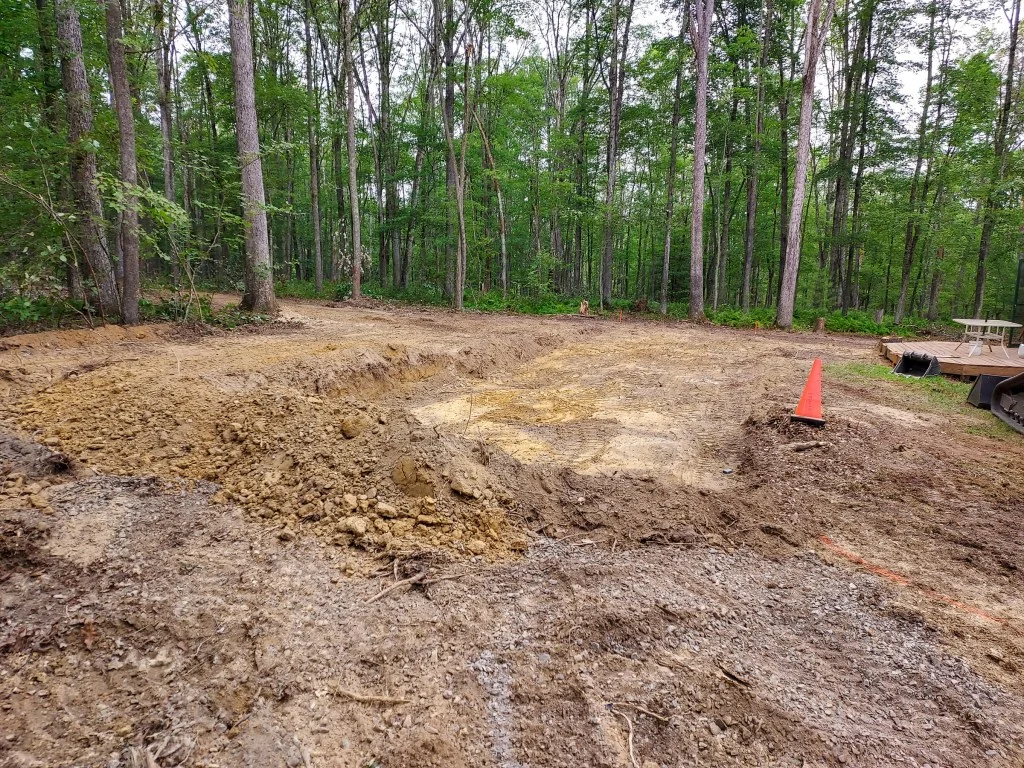
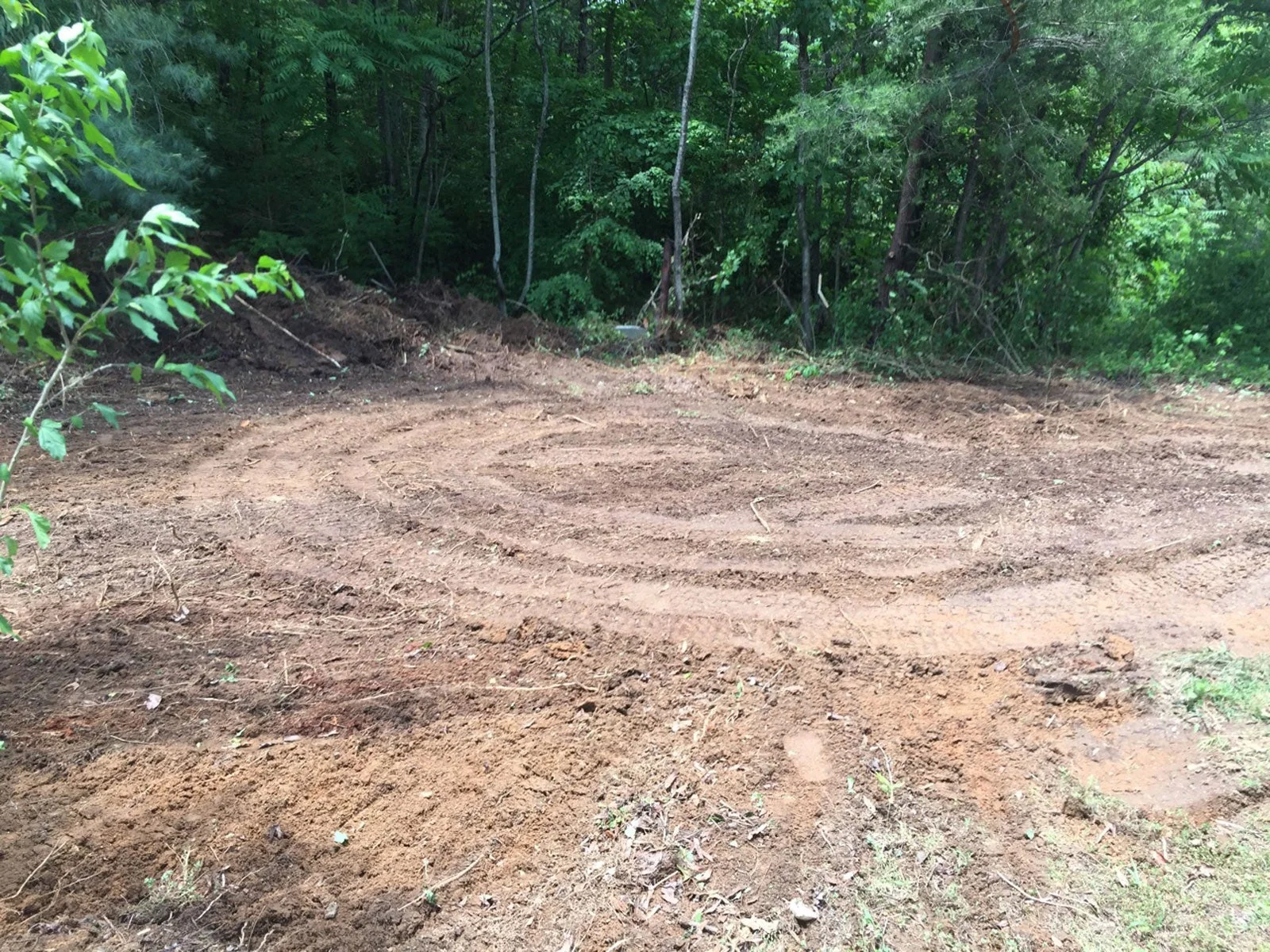
Dig anywhere in this part of Buncombe County and you meet one of three things: sticky red clay that holds water like a bowl, fractured rock close enough to the surface that a box blade skips across it, or old fill pushed into a draw decades ago when the homesite was cut. Each one fails a gravel driveway differently.
Clay-driven failures show up as ruts that never drain and soft spots after every storm. Rock-driven failures are the opposite: the water runs off fast, then scours the fines out from under the stone until you have a dry creek bed with gravel in it. Old fill is the sneakiest, because the ground itself is still settling and consolidating long after the house was finished, and no amount of new stone fixes a subgrade that is still moving.
Read your own drive before you call anyone. Where does the water exit after a hard rain? If it exits across the drive instead of along it, you have a grading problem, not a stone problem — and you will buy the same load of gravel twice if you fix the stone first.
Barnardsville sits in a narrow valley where the terrain transitions from the flat bottomland along the main creek to steep hollows climbing toward the Blue Ridge. That means a single road can have three different soil profiles in half a mile. A driveway on the valley floor might sit on decades of deposited silt and clay, while one cut into the hollow above it is fighting fractured bedrock and ancient colluvium that slid down the slope thousands of years ago. Contractors who work here learn to read the cut banks along the road to guess what is under a drive before they ever put a blade in the ground.
Rock is not always the enemy. A drive built on shallow bedrock drains well and holds grade, but the stone has to be sized for the slope. On clay, the opposite is true: the subgrade needs to be shaped and compacted before any stone goes down, or the first loaded truck will punch through the surface and leave a permanent soft spot. The honest contractors in this area will tell you which one you have before quoting, and that conversation is worth more than any online calculator.
How the grade, not the gravel, decides the bill
Barnardsville drives climb. Most sit on hollow roads and ridge cuts where the driveway has to shed water down a slope, and that changes the scope entirely from a flat-lot regrade in the valley. A drive that falls toward the house needs a crowned surface and a ditch on the uphill side. A drive that climbs away needs water bars and turnout drainage so the stone stays put instead of migrating to the bottom every spring.
On the steepest lots, the honest answer is that the driveway needs engineered drainage — a defined swale, a properly sized culvert under the drive, and riprap or a flume at the outlet so the discharge does not simply dig a new gully downhill. That work prices toward the top of the scale, and it is the difference between a repair that lasts years and one that lasts one wet season. The gravel driveway grading guide walks through the surface and stone choices that pair with each grade.
Slope percentage matters more than most homeowners realize. A drive under about five percent can usually get by with a simple crown. Between five and fifteen percent, water bars and a defined ditch become necessary. Above fifteen percent, the driveway is essentially a streambed during a storm, and the only durable fix is to give the water a designed path that does not depend on the gravel staying perfectly in place. That is why two driveways the same length on the same road can quote hundreds of dollars apart — one is on a gentle bench, the other is climbing a hollow wall.
Switchbacks are common on Barnardsville hillside lots because the original builder needed to gain elevation without exceeding what a vehicle could climb. Each switchback is a place where water wants to cut the corner and start a gully. Regrading has to restore the outside edge and the cross-slope at every turn, not just run a box blade up the middle. That detail is where cheap quotes and durable quotes separate.
Scope versus price, line by line
Numbers below reflect Barnardsville's clay-and-rock conditions and the steeper-than-average grades on the hollow roads off the main route through town. Use the Buncombe County grading cost table for the wider county picture.
| Scope of work | Typical range | What drives the price |
|---|---|---|
| Regrade existing gravel, no new stone | $350–$1,200 | Drive length, how much crown and profile must be rebuilt |
| Washout repair: regrade plus fresh stone | $400–$1,500 | Depth of the washout, stone volume, haul distance up the hollow |
| Washout with ditching and a culvert | $800–$2,800 | Culvert size, ditch length, rock encountered while cutting |
| Engineered drainage on a steep grade | $2,500–$6,500 | Swale design, flume or riprap outlet, fill stabilization |
Two line items are worth asking about on any quote: whether the price includes compacting the subgrade before new stone goes down, and where the contractor intends the water to go when the job is finished. A bid that answers both is a bid you can compare against another.
Stone type also moves the number. Crusher run with fines packs into a hard surface on a crowned drive, while washed stone drains but migrates on a slope. On a Barnardsville hollow drive, the wrong stone choice means buying it again in two years. Ask what gradation the contractor plans to use and why it fits your slope and soil, then check that answer against the EPA guidance on erosion and sediment control for steep sites. Haul distance matters too: a tri-axle load of stone has to climb the same narrow hollow road your driveway does, and some drives simply cannot take a full load without damage.
When the work crosses into a licensed job
Driveway regrading and gravel work on your own property is generally straightforward maintenance. But once a job involves structural drainage, retaining elements, or enough excavation to move significant yardage on a slope, the state's contractor licensing rules can apply, and the thresholds are worth checking before you sign anything. The North Carolina Licensing Board for General Contractors publishes those thresholds directly.
It also pays to respect how wet this county gets. The federal record here includes 19 disaster declarations spanning 1973-2026, and the pattern is familiar: heavy rain on clay soil, water with nowhere to go, and driveways acting as the path of least resistance. Where that history is relevant to your job, the practical takeaway is drainage first. Check the National Weather Service outlook before scheduling stone delivery into a freshly cut drive, since a single storm on bare clay can undo a full day of grading.
On hillside lots, grading can also touch stormwater rules if it changes how runoff leaves the property and reaches a stream or a neighbor. Buncombe County has seen enough slope failures and downstream flooding that the general direction of local and state oversight is toward more review, not less, for work that redirects concentrated flow. Ask any contractor how they handle that question, and check the International Code Council resources if your project looks more like site work than maintenance.
Getting a quote that survives contact with the weather
Ask any crew you consider three questions. First, what is my subgrade — clay, rock, or fill — and how did you determine that? Second, what happens to the water after this job? Third, does your price include compacted base and a crowned finish, or just stone spread and leveled?
The crews worth hiring will answer all three without hedging, and they will walk the drive with you rather than quote it from the truck. For a short list of local operations, the Barnardsville grading contractors page covers who works this area. If the drive is long or the slope is real, expect the estimate to mention drainage by name — that is a good sign, not an upsell.
Timing matters as much here as anywhere in the county. Grading wet clay tears it up and leaves a surface that dries hard and uneven. Late spring through fall, when the ground is workable and afternoon storms are the main risk, is the practical window. If you can, watch your drive during a hard rain before the contractor arrives and note where the water actually goes. That single observation often tells the crew more than an hour of walking the property on a dry day.
Finally, get the drainage plan in writing, even if it is a hand sketch on the estimate. What looks obvious when the contractor explains it in the driveway can be forgotten by the time the work is done, and a written plan is what you compare against the finished job. For related questions about how grading interacts with the rest of a homesite, the U.S. Department of Housing and Urban Development publishes homeowner resources on site drainage and property maintenance that apply broadly to mountain lots.