The order a clearing job actually moves in
A lot off Soco Road and a ridge parcel up Fie Top Road do not clear the same way, and the difference shows up in the first hour. The crew walks the property with the owner and marks what stays: the white oaks worth keeping, the spring head, the septic field, the power easement. That walk decides everything after it, and on a Haywood County parcel it usually takes longer than the owner expects because the corners of the lot are rarely where the map says they are.
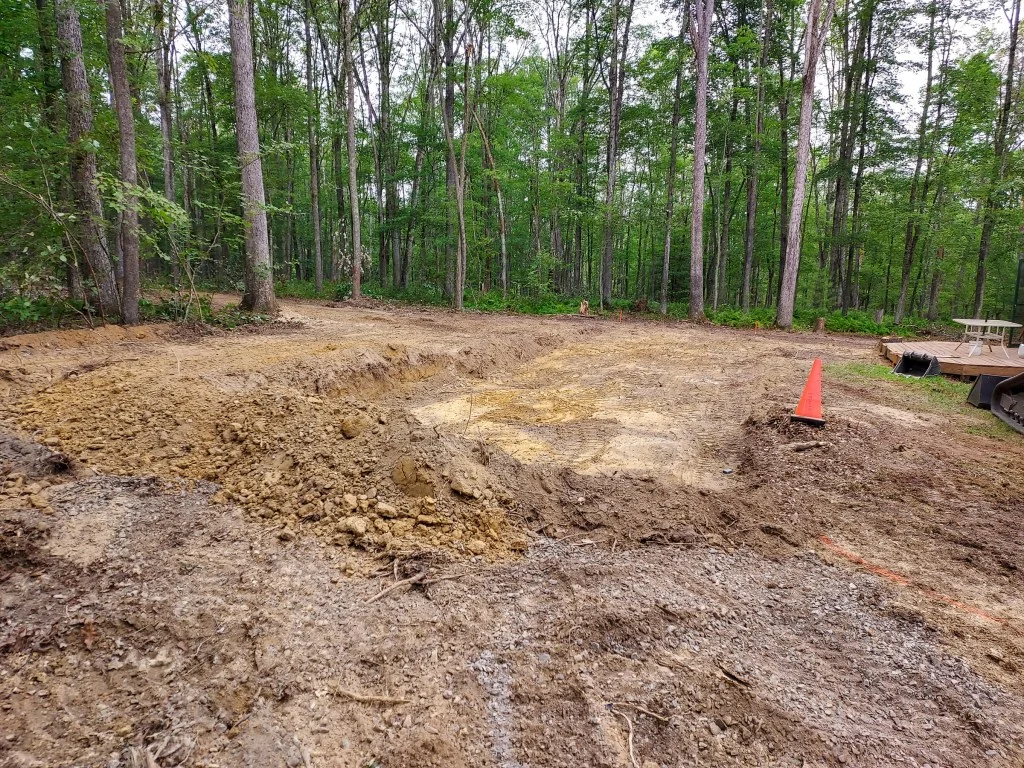
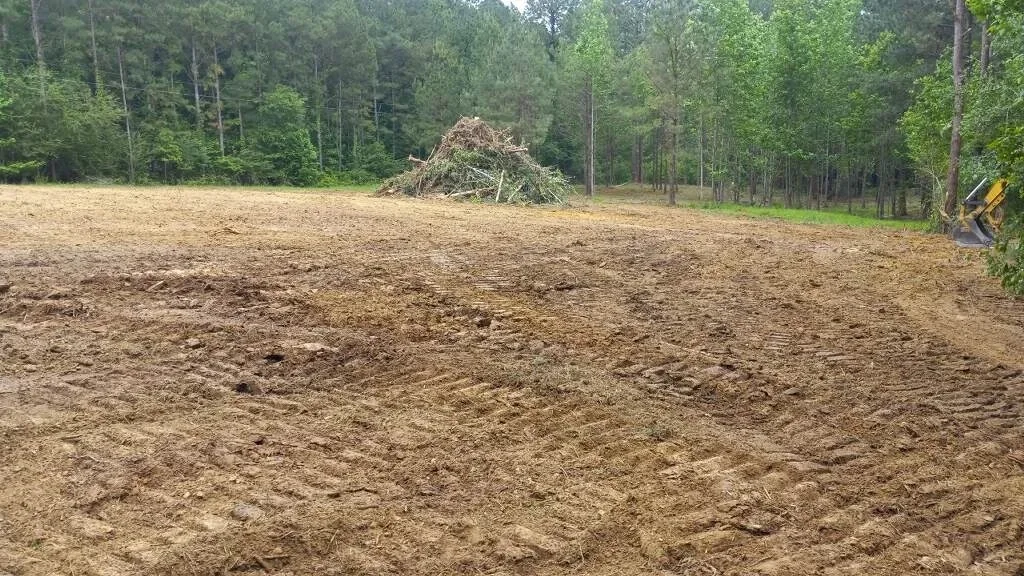
Then comes the cut. Hand crews take the understory and anything near a structure; the machine takes the stems it can push and stack. Brush piles go to a burn or a grind, and merchantable timber gets sorted separately because it changes the haul cost. A stand of straight yellow poplar that can be sold changes the economics of a cut; a tangle of rhododendron and locust that has to be chipped does not. Stumps come next, never first — grinding a stump before the grade is set just means grinding it twice, and on ground that slopes the machine may not even be able to reach the stump until the bench above it is cut.
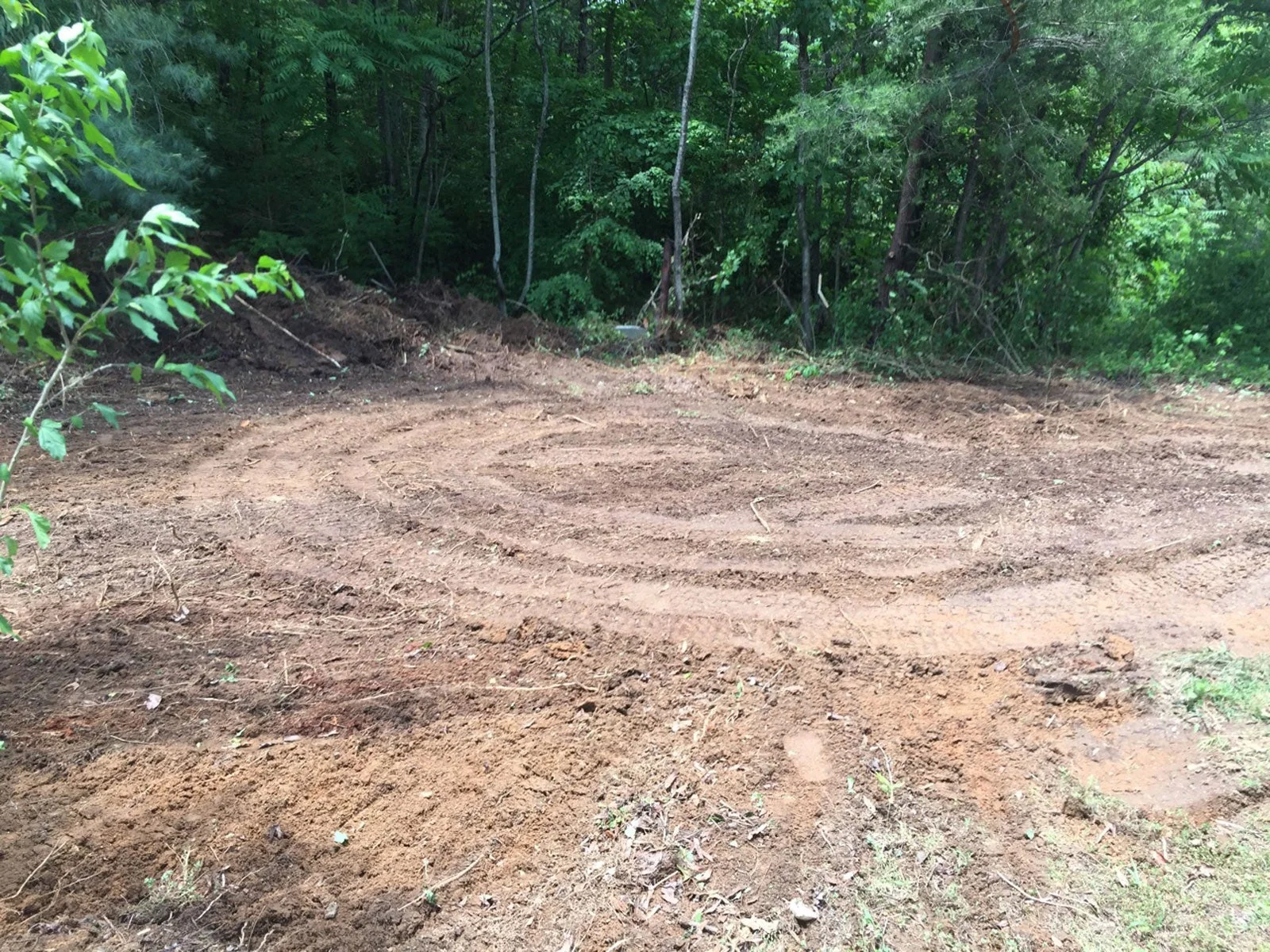
Last is the part flatland crews skip: the exposed soil gets shaped, seeded, and given a water path, because a bare slope in Haywood County does not wait politely for spring. That step is also the one most likely to be dropped from a cheap bid, and the one that costs the most to fix after a heavy rain.
A half-acre residential lot with light timber is usually a one-to-two-day cut and a third day for stumps and grade. An acre of dense hardwood on a 20-degree pitch is a week or more, weather included. A quarter-acre clearing behind an existing house for a garden or a shop pad can be done in a single long day if the access is wide enough to get the machine in without cutting a new path. That timeline is the honest answer to "how long," and it is the number most bids leave out. Ask for it in writing, along with what happens if it rains for three days straight.
One more part of the sequence that gets overlooked: where the spoils go. On a valley-floor lot the dirt from stump holes can be spread on site. On a shoulder parcel, there is nowhere to push it except downhill, and that decision has to be made before the first bucket of soil is moved, not after.
Why this valley's ground changes the price
Maggie Valley sits in a bowl, and the ground reflects it. Valley-floor parcels near the festival grounds and the main corridor are often old pasture or second growth — soft, rooty, quick to clear. Climb the shoulders toward the Blue Ridge and the same acre turns into rhododendron thicket, rock ledges, and a slope steep enough that the machine has to bench its own path in before it can work. The bench, in turn, becomes a permanent feature of the lot: whatever grading plan comes later has to account for it.
That is the whole cost story. Steep ground adds a machine, doubles the haul distance to a usable landing, and turns "clear" into "clear, stabilize, and re-route water." It also raises the stakes on what happens downhill. Sediment leaving a graded slope is a regulated problem, not just a mess, which is why the EPA stormwater guidance is worth reading before anyone cuts on a grade above a neighbor or a creek. On the hills above town, the neighbor below you may have a spring box or a driveway culvert, and both are sensitive to what your lot sends down.
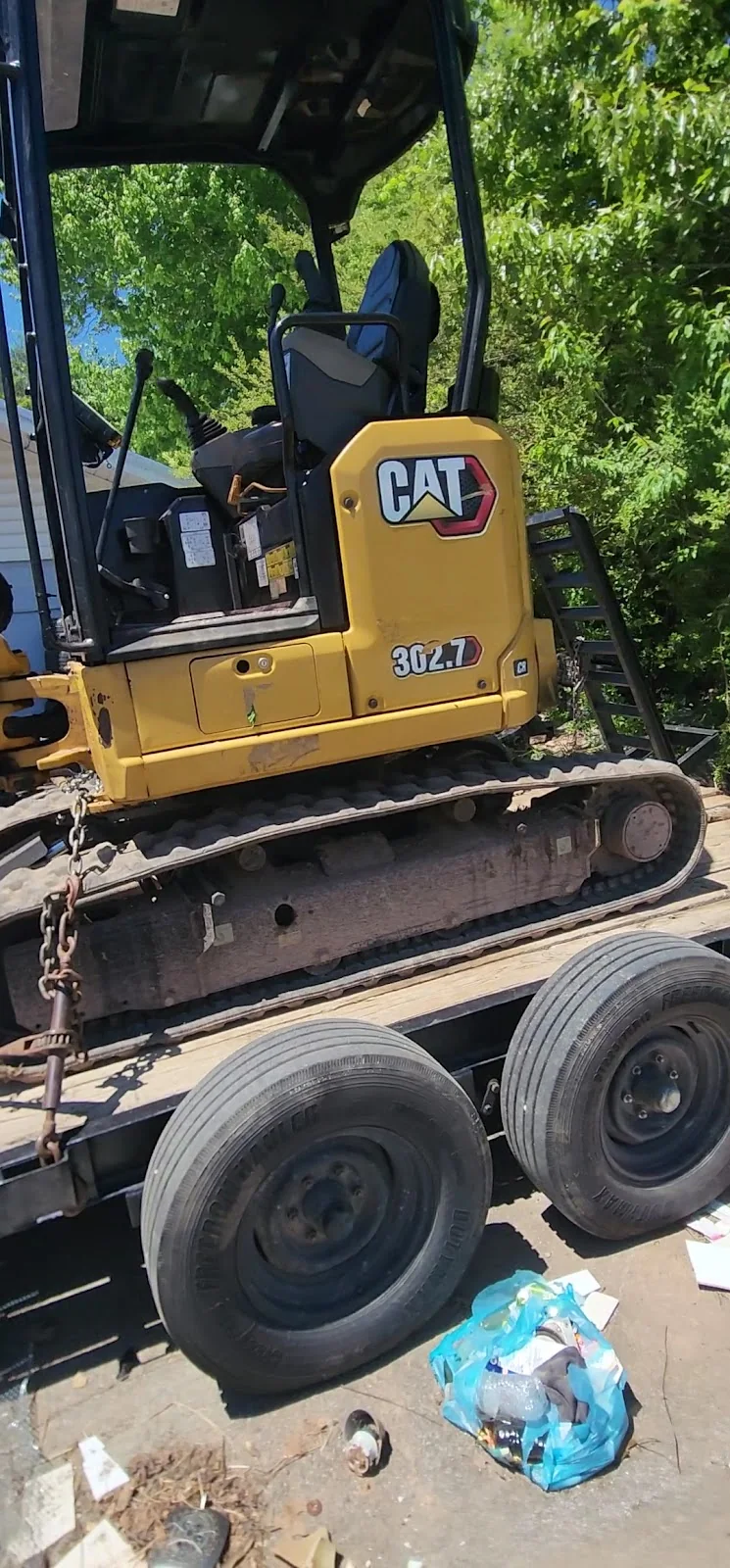
The other local factor is rock. Some benches above the valley hit a shelf within a few feet of the surface. When that happens, stump grinding is not the right tool and a small excavator may be needed to pop roots instead, which changes both the time and the number. A crew that has worked this county will tell you honestly that they cannot promise which way a given lot will go until the machine is on it.
Scope and price, line by line
The table below reflects how clearing work is actually scoped here — by what the machine does and what leaves the site, not by a flat per-acre fantasy. Compare it against the fuller Haywood County grading cost breakdown when your job includes dirt work.
| Scope | Typical range | What drives it |
|---|---|---|
| Brush and understory only, stems left standing | $750–$1,800 | Density, access width |
| Light residential lot, trees felled and stacked | $1,500–$3,500 | Tree count, haul distance |
| Full clear with stump grinding and rough grade | $3,000–$8,000 | Stump count, slope, spoils |
| Steep or densely wooded acreage, benched access | Toward and past $10,000 | Grade, rock, erosion plan |
Two line items surprise people. Haul-off is priced by the load, and a grind-in-place decision can move a bid by thousands. Erosion control is the other: silt fence, matting, and a stabilized entrance are not upsells on a sloped Haywood parcel, they are the permit.
A small job still carries fixed costs. Getting the machine to the site, fuel, and the operator's day all show up whether the lot is a quarter acre or three. That is why clearing a small garden patch can feel expensive per square foot: the truck and trailer do not care how big the job is.
Sequencing water and slope before the first cut
The mountains around Waynesville have a long federal disaster record: 19 declared events touch this county across 1973-2026, and the recurring theme is rain arriving faster than the ground can take it. A freshly cleared slope is the most vulnerable surface a property will ever have. The practical takeaway is that drainage planning belongs in the estimate, not in the cleanup.
Ask any crew what they do with the uphill water before they expose soil. The National Weather Service outlook for the southern Appalachians is a fair proxy for why: heavy rain is not an exception here, it is a season. A cut that sends its runoff onto a road, a neighbor's yard, or a trout stream becomes someone else's problem and then yours.
In practice this means a few things get done before the dozer starts. A cut-off ditch above the work area, a silt fence below it, and a matted or rocked entrance at the driveway are the usual minimum on a slope. On flatter valley-floor ground the same items may be unnecessary, which is part of why the same acre prices so differently from one road to the next. None of this is exotic; it is the ordinary weather-proofing of a job that has to survive a summer thunderstorm the week after it is done.
Paperwork, licensing, and who to hire
Clearing alone is often a smaller-ticket job, but the moment it includes grading, a driveway cut, or utility trenching, North Carolina's contractor licensing thresholds come into play — the NC Licensing Board for General Contractors publishes where those lines fall. If the scope touches water lines, septic, or a well hookup, a separate license class applies, and the NC State Board of Examiners of Plumbing, Heating and Fire Sprinkler Contractors is the place to confirm who is allowed to do that part of the work.
The hire that goes wrong here is rarely the cheapest one. It is the out-of-county crew that owns a dozer and no local reference. Three checks before you sign: ask for jobs they have cleared on a slope in this valley, ask who handles the erosion plan and the burn or grind decision in writing, and ask what they do when they hit a rock shelf. Their answer to the third question is your real reference. You can also compare the vetting questions in our Maggie Valley grading contractor guide and the broader land clearing overview for scope language to put in the bid.
One more local note: burn rules and open-burning windows vary with conditions, so a crew that plans to burn brush should confirm the day-of status before lighting anything. A grind-in-place plan avoids the question entirely, at the cost of leaving chips on the ground that may need to be worked into the grade later.