What actually drives the bill on a Biltmore Forest driveway
The number on a driveway quote in Biltmore Forest is rarely about the length of the drive. It’s about five line items: how steep the grade is, where the water comes from, how many culverts or cross-drains are already in and whether they’ve failed, how much stone has to be hauled back in, and how tight the trees and plantings make access for equipment. A flat, gravel drive on a gentle lot can be regraded and topped with fresh stone inside a day. A switchback drive off a wooded slope with an uphill neighbor’s runoff crossing it is a small drainage project first — stone second.
The housing pattern explains it. This is an older, low-density village of large lots and mature hardwood canopy inside Buncombe County, with drives that were often cut decades ago and never re-graded since. Roots heave the surface, shade keeps it wet and slow to dry, and any storm that drops serious rain sends water down the same path the drive follows. The washouts are usually a symptom of a drainage problem that predates them.
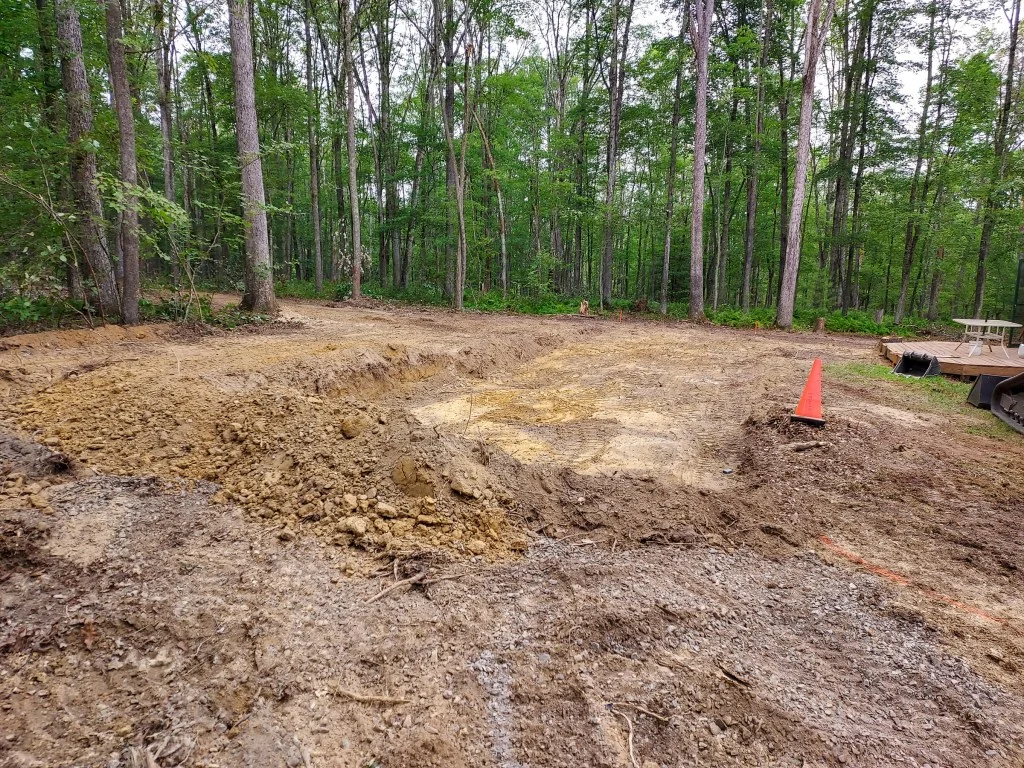
There’s a subtler line item that shows up on nearly every Biltmore Forest job: disposal of the spoils. Driveways here are often cut into slopes, so when you pull up rutted material you can’t just push it off the edge — you’re either building up a berm that channels water wrong or you’re hauling it out. Hauling adds truck time, and on the narrow, curving private drives off the main roads through the village, a larger dump truck may not fit. That can mean more trips with smaller equipment, which is labor hours, not material cost. None of that appears on a low bid that assumes an open, flat site.
The price picture, line by line
These are working ranges for a typical Biltmore Forest lot. A steeper grade, more culvert work, or heavy tree-root removal moves a job toward the top of its band rather than inventing a new one.
| Scope | Typical range | What moves the number |
|---|---|---|
| Regrade an existing gravel driveway | $350–$1,200 | Drive length, depth of ruts, stone quantity, access for equipment |
| Washout repair: regrade + fresh stone | $400–$1,500 | How much material washed out, whether sub-base survived |
| Washout repair + ditching + culvert | $800–$2,800 | Culvert size and length, ditch run, whether a new crossing is needed |
| Engineered drainage on a steep grade | $2,500–$6,500 | Grade, drainage design, number of structures, haul distance |
Compare any bid against the Buncombe County grading cost breakdown before you decide. A quote that ignores drainage on a steep drive isn’t cheap, it’s incomplete — the water it doesn’t handle comes back and re-does the job.
Two more things worth pricing explicitly rather than assuming. First, stone type and depth: a drive that gets a thin cosmetic top-dressing will look good for a season and rut again, while a properly crowned drive with adequate base holds up much longer. Second, whether the quote includes re-establishing the crown and the shoulder — the edges of a drive are where water gets in, and if the crew only smooths the center, the first heavy rain starts the same channel again. Ask for those as separate lines so you can see what you’re actually buying.
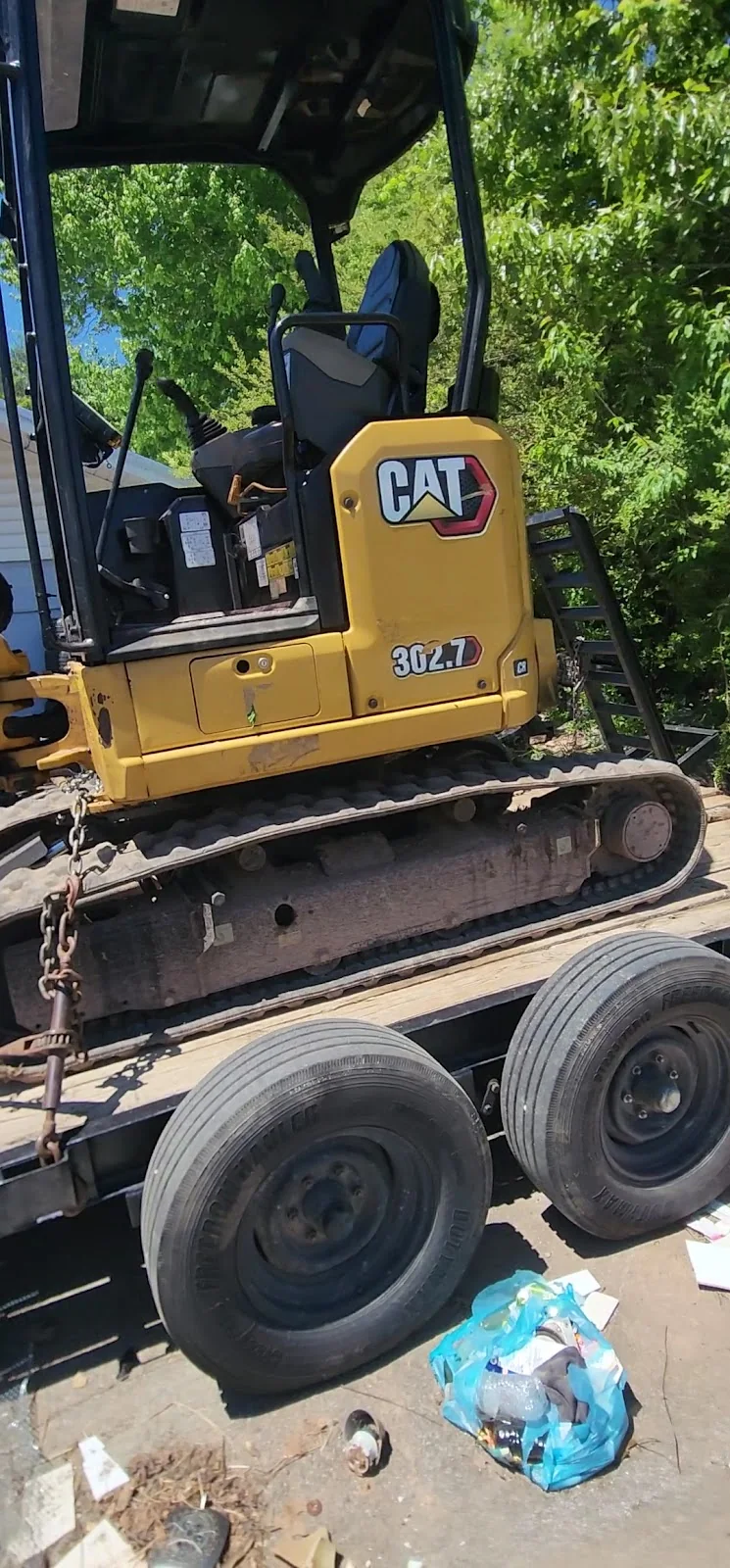
On sloped lots, the equipment itself changes the math. A full-size grader or bulldozer may not be able to work a tight switchback without damaging trees or neighboring plantings, so the job gets done with a compact track loader or mini-excavator and more operator hours. That’s not padding — it’s the honest cost of doing the work without tearing up a wooded lot that took decades to grow.
Water history is the reason most of these calls happen
The federal disaster record is not abstract here. 19 declared events touch this county across 1973-2026, and they are overwhelmingly storm and flood family. Each one pushed water at driveways that were built for a gentler assumption. That’s why the honest sequence is drainage first: crown the surface so water sheds off, ditch the uphill side, and get runoff into a defined path before it becomes a gully. The National Weather Service’s outlooks at weather.gov are worth watching during heavy-rain periods, because the repair you do after the second washout costs more than the one you do after the first. Proper surface grading and drainage is also recognized in modern codes — see the International Code Council for how site drainage is treated.
What that means on the ground in Biltmore Forest is that the worst damage usually happens fast and locally. A single intense cell parked over the upper slopes can send sheets of water across a drive that has handled ordinary rain for years. The material that moves isn’t just surface gravel — it’s the fines that hold the gravel together, and once those wash out the remaining stone is loose and the drive never firms up again until fresh material is blended back in. That’s why we don’t treat a washout as a visual problem to be smoothed over. It’s a structural loss in the top layer of the drive, and the repair has to restore both the grade and the mix.
It also matters where the water comes from. If runoff is crossing your drive from an uphill parcel, the fix has to intercept it before it reaches the surface, not just survive it. If the water is your own roof, gutter, or a spring that surfaces on the slope, the answer is different again. A crew that walks the drive and asks where the water starts is doing the job right.
Gravel or pavement: what fails and why
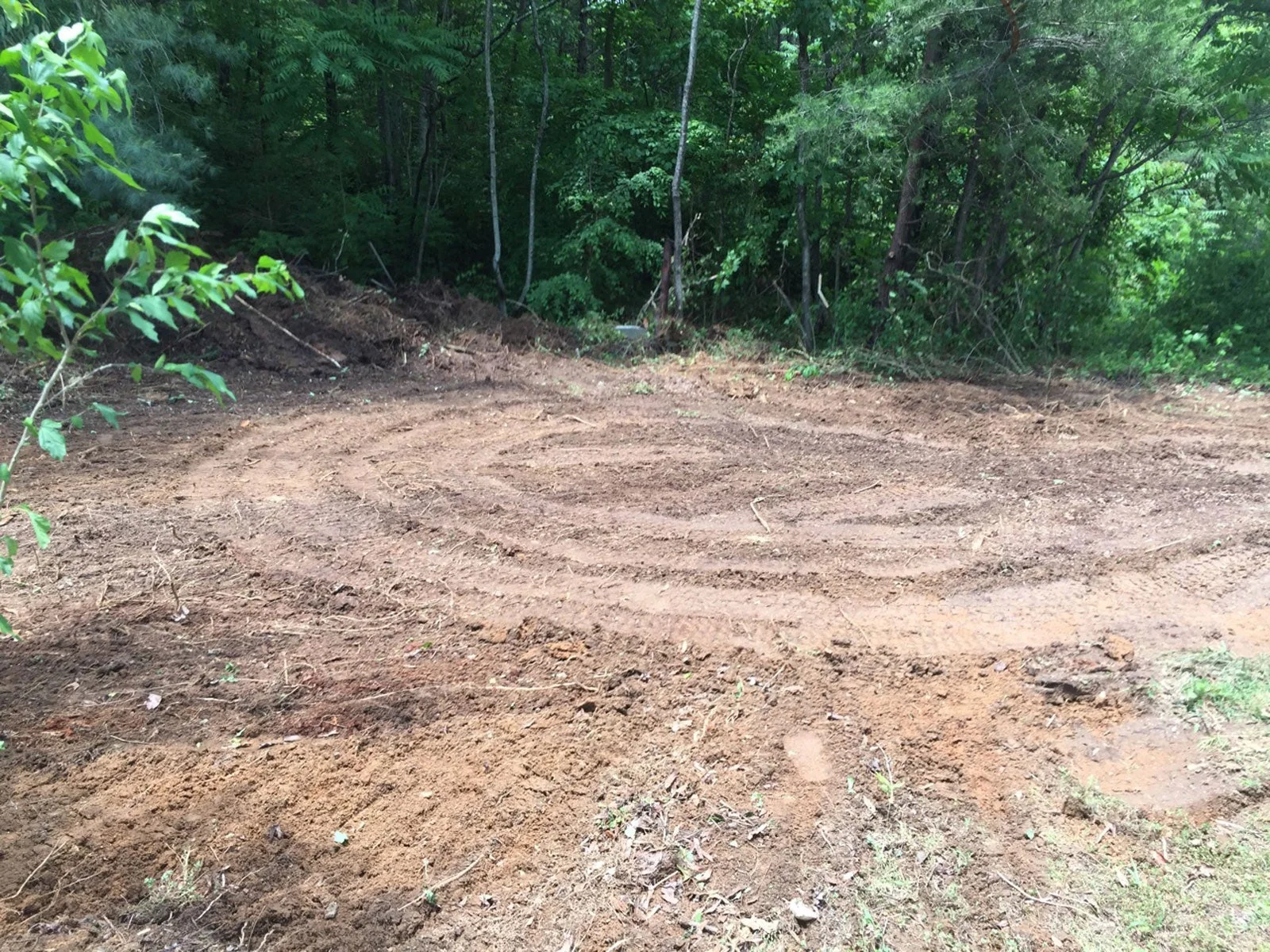
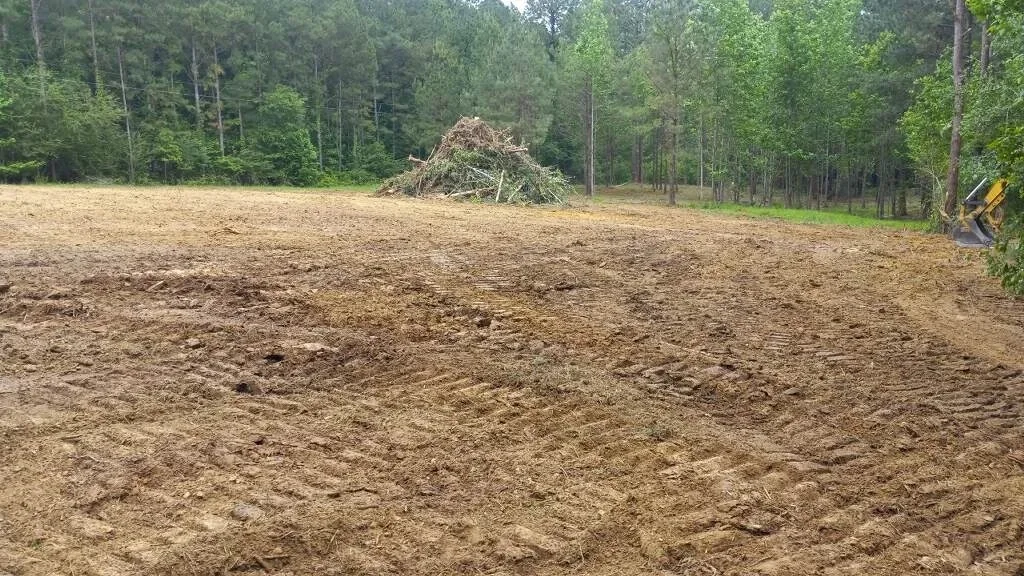
Most Biltmore Forest drives are gravel, and gravel is the honest choice on steep, wooded lots — it drains, it flexes, and it’s re-gradable for a fraction of what asphalt or concrete costs to replace. What kills a gravel drive is losing its crown and letting water run in a channel down the middle. Asphalt and concrete drives here tend to fail at the edges and at the joints where the sub-base settles, and once water gets under them the patch never holds. The durable fix in both cases is the same: correct the grade, control the water, then re-surface. That’s the core of what our driveway grading and gravel work covers.
Shade is a real factor in this village. Under a mature hardwood canopy, a drive dries slowly after rain, and that persistent moisture softens the surface so tires cut ruts that much faster. It also means weeds and moss move in along the edges, and moss holds water against the gravel. Trees do the other kind of damage from below — roots push up the surface, which is why a drive that was smooth can develop a spine of high spots over time. Regrading handles the high spots, but roots close to the surface may need to be shaved or bridged with extra stone so the drive can be brought back to a consistent plane without cutting the roots that keep the tree alive.
Hiring a crew without overpaying for it
Ask three questions. Does the crew re-establish grade and drainage, or just dump stone on the ruts? Do they own or have access to the equipment the grade demands, or will a mini-excavator struggle on your slope? And do they know how to work around mature trees, since a drive cut too close to root zones destabilizes both the drive and the tree. On larger or steeper projects, general contractor licensing rules can apply — check the NC Licensing Board for General Contractors if a job crosses the threshold. Locally, our Biltmore Forest grading contractors page covers who does this work here and what to look for.
Estimates should be free and, on a job of any size, itemized enough that you can see what’s material, what’s machine time, and what’s drainage work. If a bid quotes one lump sum, ask for the split — it’s the fastest way to tell whether drainage is actually in the scope. Get at least two or three quotes on anything beyond a simple regrade, and expect them to differ most on the drainage line, because that’s where crews either understand the lot or don’t. On a steep Biltmore Forest drive, the cheapest quote is often the one that quietly left the water out, and you’ll pay for that on the next storm.
Also worth asking: what happens after the work? A drive that’s just been regraded is vulnerable until it settles and the surface knits, so a crew that tells you how to watch it over the next few storms, and what to do if a small channel starts, is one that expects the job to hold. If you get a warranty, get in writing what it covers — workmanship on the grade is one thing, a new washout from a storm event that overwhelmed every drive on the street is another. Honest crews are clear about that line, and it protects both sides.
If you’re weighing wider site work at the same time, the same grading logic applies to yards, pads, and drainage swales, so it’s often cheaper to handle driveway repair and nearby grading in one visit rather than two mobilizations. Use the form on this page and describe the slope, where water comes from, and what access looks like, and you’ll get a scope that matches the lot instead of a generic number.