The one-acre line that shapes half the jobs here
Driveways in Henderson County share a feature that flatland quotes ignore: they are cut into grade, and most are longer than the lot they serve. A gravel lane off a mountainside spur road near Edneyville may be 600 feet long and drain an uphill acre the owner doesn't even control. That is why the honest first question on any washout job is not "how much stone" but "how many acres drain onto this drive."
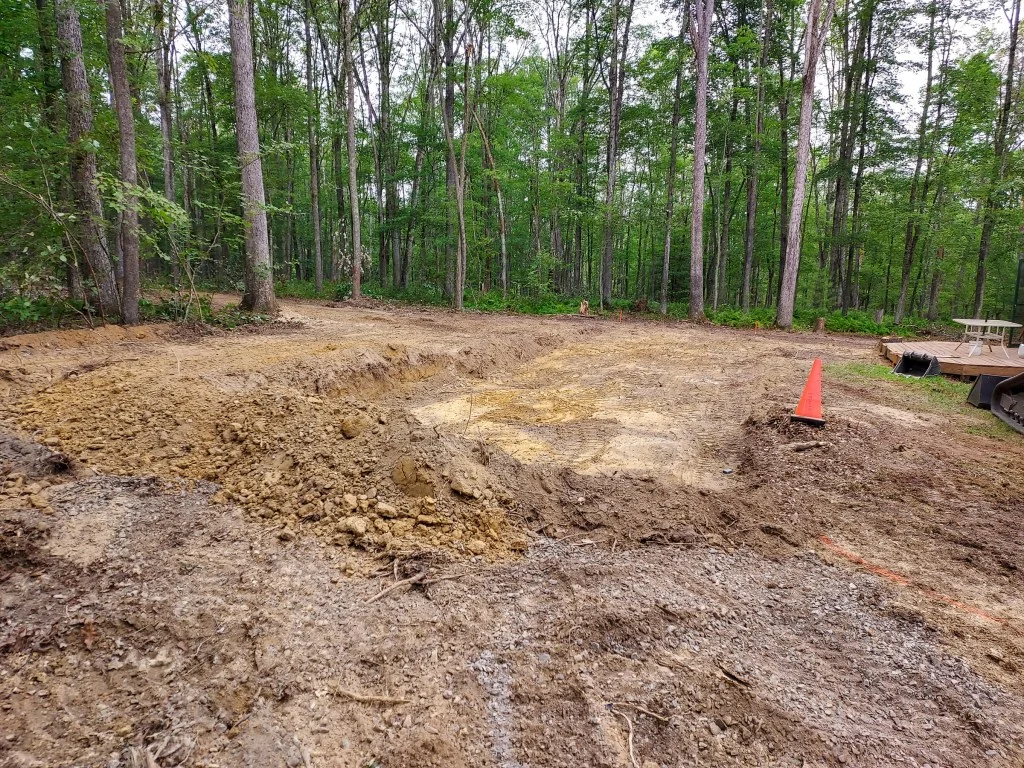
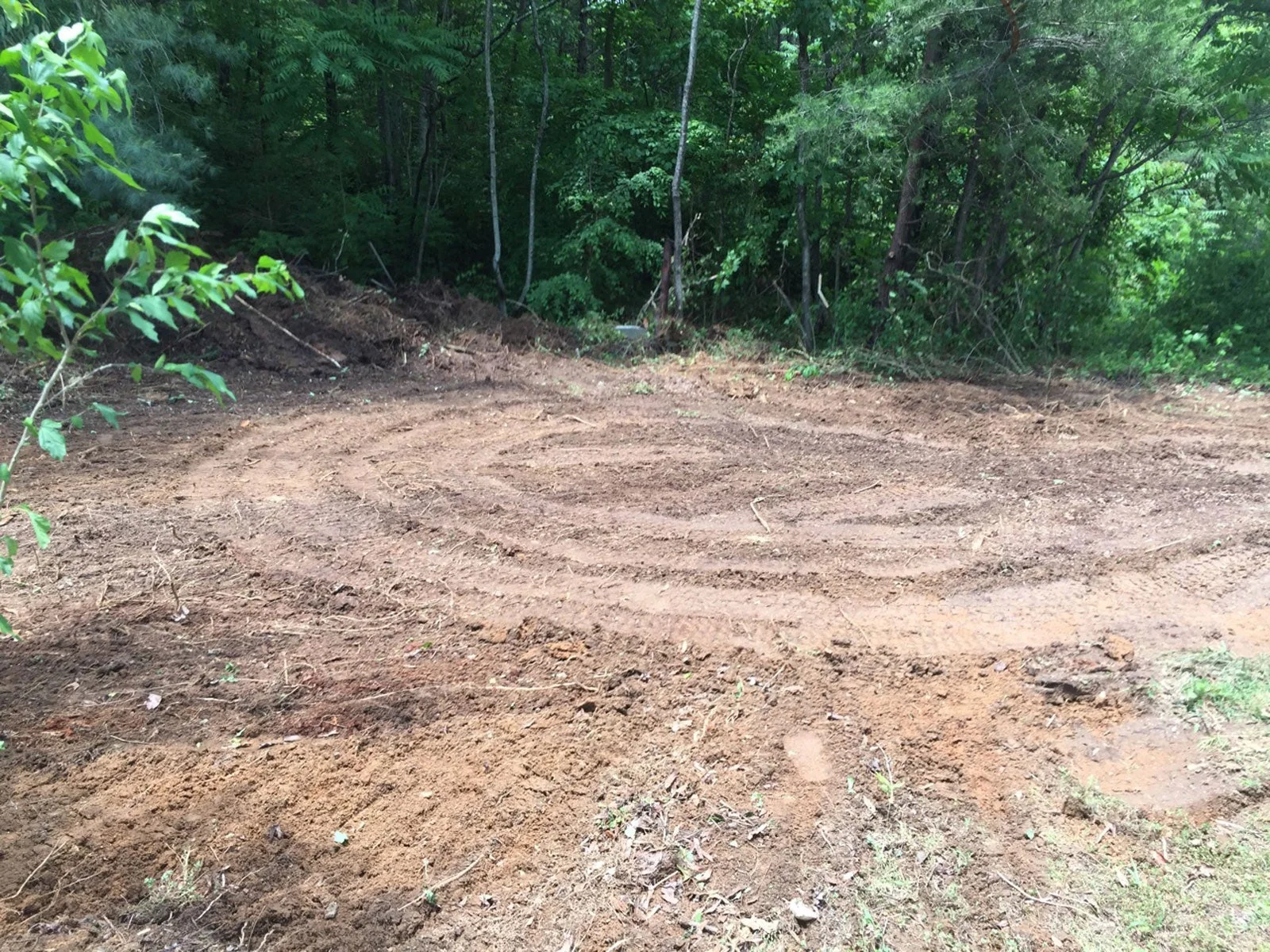
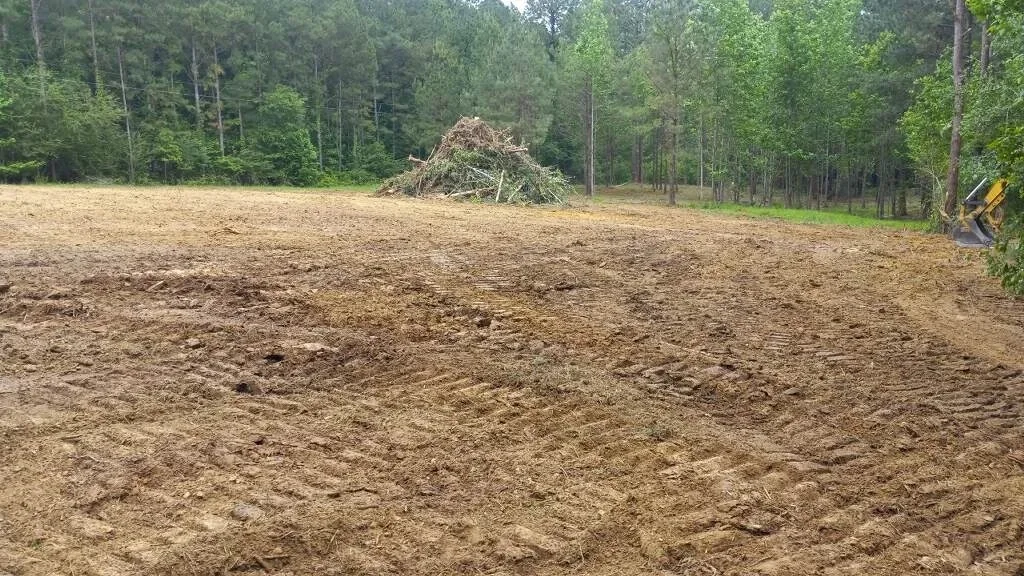
If grading work will disturb one acre or more of the parcel, North Carolina's erosion and sedimentation program applies, and the job needs a state permit and a plan, separate from any building permit. That threshold quietly moves jobs from a one-day regrade into a permitted project with a stabilization schedule attached. The federal disaster record points the same direction: 16 declared events touch this county across 1978-2026, overwhelmingly storm and flood family, and each one reset the ruts somewhere in Henderson County. Before grading, know which side of the line your job sits on.
What the county's slope terrain does is make the one-acre line easy to cross without meaning to. A quarter-mile lane up a mountainside near Saluda may itself disturb less than an acre, but the spoil bench, the turnaround, and the equipment path can tip the total over. On a valley lot off a main corridor, the opposite happens: the drive is short, but the house pad, the fill slope behind it, and the grading to tie in a detached garage add up. Either way, the plan and the stabilization schedule are the deliverable that separates a permitted job from a complaint-driven stop-work. A neighbor who calls about mud in a creek can freeze a job mid-grade, and the fix is costlier than the permit would have been.
How Hendersonville drives fail
Three patterns repeat. First, the county's older in-town lots near the courthouse and along the older street grid have short, steep drives that once ended in a garage and now end in a lower foundation wall or a retaining wall, so every rain event runs straight at the house. Second, the mountain subdivisions west and south of town put long gravel lanes on slopes above 15 percent, where a half-inch of rain turns a driveway into a creek. Third, the newer valley subdivisions in flat cut-and-fill ground off the main corridors, where the problem is not grade but compaction, and the drive pumps mud at the apron the third winter.
The tells worth acting on: gravel pushed into a fan at the bottom of a slope, a shoulder that has become a gully, water standing at the garage slab, and any culvert outlet that runs only in a storm and scours a new hole every time. Moving gravel is a symptom; moving water is the repair.
Fall and late-winter are the seasons that do the most damage here. The county sits in a basin where a warm, wet air mass can drop an inch and a half in an afternoon, and the ground is already saturated from a wet week. That combination cuts a rut down a gravel lane faster than any single summer thunderstorm. A drive that looked fine in September can have a six-inch trough by December, and the owner usually notices the first time a car bottoms out on the crown, not when the rain hit.
Clay-heavy subsoil across much of the county makes the rutting worse. Water that crosses the drive doesn't sheet off the way it would on sand; it sits, softens the base, and lets the stone punch down. By the time the stone is gone, the subgrade is a slurry, and a fresh load of gravel spread on top just floats away in the next storm. That is why the crews who fix these drives for the long haul rip the rut, crown the subgrade, and only then lay stone. Skipping the subgrade step is the most common shortcut and the most common repeat call.
What the work actually costs in Henderson County
Ranges below reflect local slope and haul distance; the working county table lives at the Henderson County grading cost breakdown. Steep-lot jobs in the county routinely carry ditching and pipe line items a flat quote omits, so an incomplete bid often reads cheap until the first storm.
| Scope | Typical range | What it covers |
|---|---|---|
| Regrade existing gravel drive | $350–$1,200 | Rip, crown, reshape, compact the existing surface |
| Washout repair, stone only | $400–$1,500 | Fill and regrade the rut, fresh stone, shoulder push-back |
| Washout with ditch and culvert | $800–$2,800 | Ditch, cross pipe, stone, outlet protection |
| Steep grade, engineered drainage | $2,500–$6,500 | Designed ditch profile, multiple culverts, riprap, stabilization |
County terrain, not the contractor, is the price mover here. A 20-foot regrade in a valley subdivision and a 600-foot mountain lane are different animals at the same hourly rate.
Haul distance is the other quiet cost. Stone bid out of a quarry near the county line and trucked up a winding mountain road costs more per ton delivered than the same stone dropped in a flat subdivision with a wide turnaround. A drive that cannot take a loaded tandem truck without rutting means the crew shuttles smaller loads, and the trip count climbs. None of that shows up in a square-foot quote, which is why an apples-to-apples bid on two Henderson County drives can differ by hundreds.
Timing matters too. A repair scheduled in the dry stretch of late spring or early fall is a graded-and-gone job. The same repair in the middle of a wet winter may need a stabilization measure the contractor didn't plan for, and that pushes the job toward the top of its range. If the washout is active and cutting, waiting is not neutral: the rut widens, the subgrade softens deeper, and the eventual bill grows.
Water first, gravel second
Any reputable scope starts with the drainage question: where does the uphill water go, and does it leave the property clean. That is not just good practice, it is what the NC Licensing Board expects of a licensed contractor and what the erosion rules are built around. Regrading a drive without moving the water that cut it simply resets the clock. Gutters, ditch profile, and the culvert size at the low crossing matter more than which gravel is chosen, and a drive crowned correctly sheds water off both shoulders instead of down the middle.
Watch for a bid that prices stone by the ton but never mentions ditch. The stone will be gone by next spring. Where the drive crosses a drainage, the fix is a properly sized pipe with rock at both ends, and the EPA guidance on stormwater and sediment is the plainest outside reference for why outlet protection is not optional.
The ditch is the piece most owners underestimate. On a mountain lane, water running beside the drive at speed will cut the shoulder and eventually undermine the road itself. A properly shaped ditch slows that water and carries it to a cross pipe, and the pipe has to be sized for the storm, not for a typical rain. Undersized pipe is the single most common reason a repaired drive washes out again two seasons later, and it is the reason crews who know the county ask about the uphill acreage before they quote pipe.
Where the drive meets a paved county road, the apron is its own problem. Water that leaves the gravel and sheets across the pavement can be flagged by the county, and the fix usually means a turnout with a defined pitch and a stable apron material rather than a pile of loose gravel pushed into the road. That detail is not exotic, but it is routinely left out of a low bid, and it is the one that draws attention if it is done wrong.
Choosing a crew for a mountain lot
Hendersonville sits in a basin ringed by slope, so the crew that regrades a valley drive is not necessarily the crew that holds a mountain lane. Ask three things. First, whether they have worked rock-lined ditches on grades above 15 percent, because that is where most of the county's driveway failures live. Second, how they sequence water versus stone, since the answer separates real grading from gravel delivery. Third, whether they handle the state erosion permit where the job crosses the one-acre line, because that paperwork changes the schedule. Our Hendersonville grading contractors page covers how to vet a bid line by line, and the driveway grading and gravel guide walks through what a proper regrade includes. If the drive has never been crowned, that is the place to start.
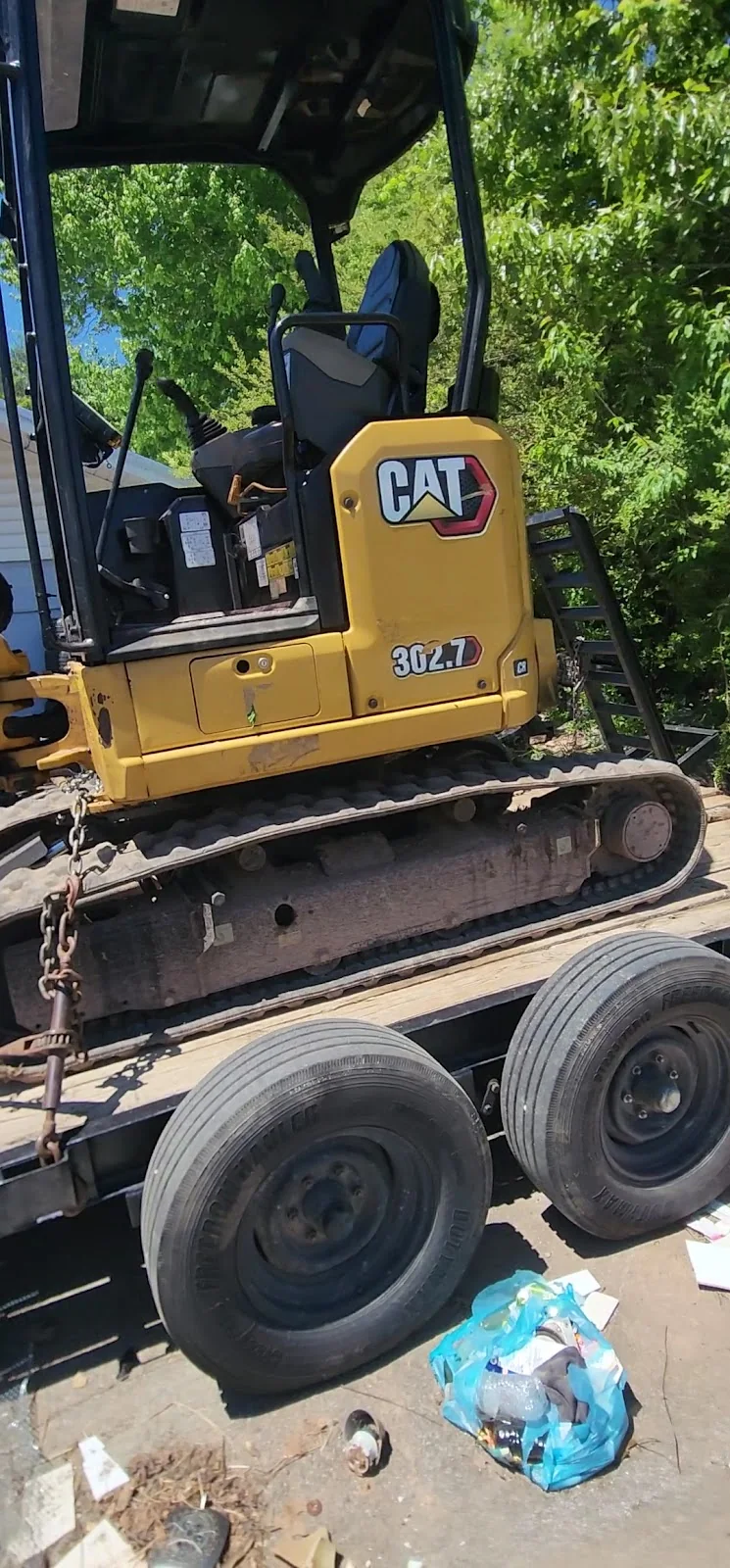
Ask to see a finished drive on a similar grade. A crew that has held a lane near Bat Cave or up toward the Blue Ridge escarpment will talk about ditch pitch and rock lining without prompting; a crew that mostly does flat subdivision work won't. The equipment list tells the same story: a machine with a tilting blade and a laser or slope gauge does crown work, and a crew that owns a plate compactor puts the subgrade back tight before stone goes down. Neither detail is a guarantee, but both are hard to fake.
Get the drainage scope in writing, in line items. A bid that says "regrade and add gravel" is a different product than one that lists ditch, pipe size, outlet protection, crown, and compaction. Ask where the water will go when the job is done, and if the answer is vague, the washout is on a schedule. On a Henderson County grade, the difference between a two-season repair and a ten-year one is almost always the drainage line items, not the stone.