How a culvert job actually unfolds in Flat Rock
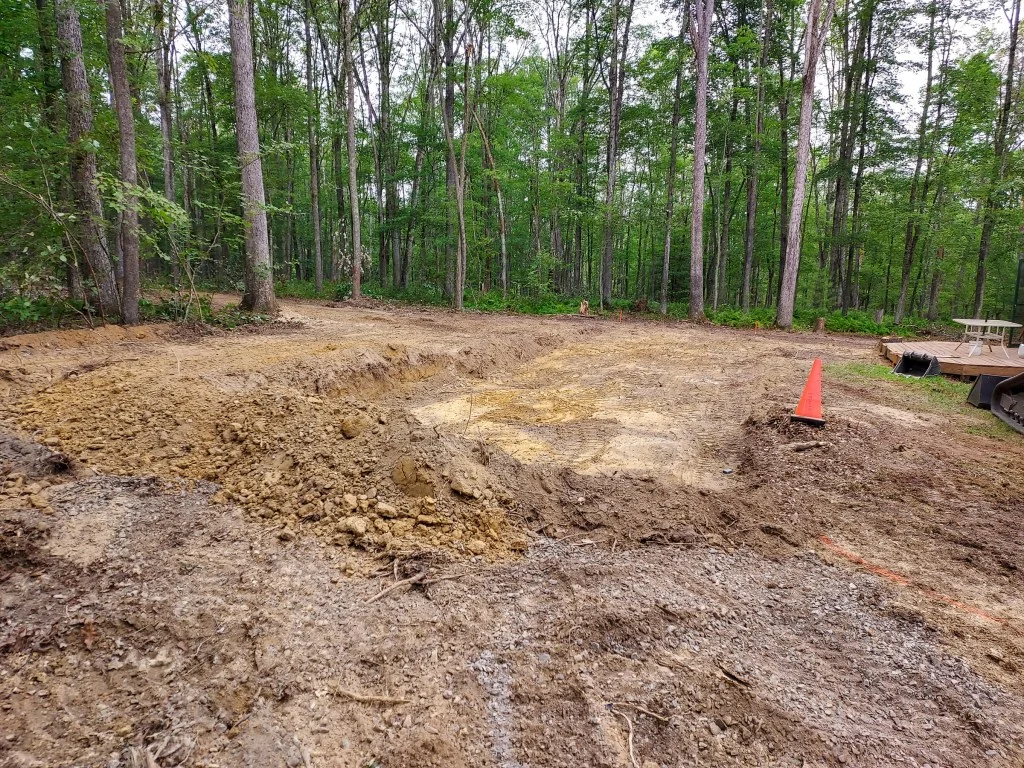
Most homeowners around Flat Rock call about a culvert after a storm, and what they picture is a pipe going in. What actually happens is a sequence, and the sequence is why some jobs wrap in two days and others stretch past a week. Day one is walk-and-mark: the crew reads the ditch line from the county road inward, checks where water enters and where it needs to leave, and confirms pipe size and material before anything moves. Excavation comes next, and on the slopes common off Kanuga and Greenville Highway that means digging to a consistent grade rather than just a depth. The pipe sets on a prepared bed, bedding stone goes over it, then backfill; driveway gravel and surface restoration close it out. A short, straight run under a gentle grade is often a two-day job. A long crossing, a steep ditch, or a driveway that needs its surface rebuilt can run four to seven days. Weather adds days in a real way here — wet ground does not compact, and no honest crew backfills over mud.
Where the money goes on a Henderson County culvert
Material and length set the floor; site conditions set the rest. Compare roughly what drives each price band:
| Scope | Typical installed range |
|---|---|
| Short residential driveway crossing, single pipe, gravel surface restored | $1,500–$2,500 |
| Standard driveway culvert, moderate run, bedding stone, end treatments | $2,500–$4,500 |
| Long run, steep ditch grade, or surface rebuild over the crossing | $6,000–$9,500 |
Long runs or concrete pipe push a job toward the top of the band; the pipe itself is rarely the biggest line item. Excavation, bedding stone, and driveway repair usually are. Henderson County's grading cost page covers the dirt-moving side in more detail, since culvert work and grading almost always get bid together here.
Why water history matters more than pipe size
Federal disaster records explain a large share of the culvert calls in this county: 16 declared events touch Henderson County across 1978-2026, concentrated in the storm and flood family. Flat Rock's terrain funnels that water hard — short, steep roadside ditches carrying runoff off larger slopes, meeting driveways that were often cut in decades ago. The result is that the ditch dictates the design, not the other way around. If a culvert is undersized for what the ditch actually delivers, it will plug in the next big rain and back water onto the driveway instead of under it. That is also why the pipe has to sit at the ditch's grade and line; a pipe set high will silt in, and one set with a kink at the inlet will scour every storm. For anyone deciding between pipe types and sizes, the culvert and driveway pipe guide walks through material choices.
What the site walk should cover
A useful first visit answers four questions in order. Where does the water come from? Where does it have to go? What size and grade of pipe connects those two points? And what happens to the driveway surface afterward? If the walk skips the drainage question and jumps to a pipe quote, you are getting half a scope. Bigger jobs also raise a licensing question: North Carolina general contracting rules apply once a project crosses certain thresholds, and the NC Licensing Board for General Contractors is the place to confirm whether a contractor should be licensed for the work you are planning. Storm-water work on a larger scale can also touch federal clean-water rules, which the EPA publishes for reference. Ask on the walk what happens if the crew hits rock or a buried utility; the answer tells you how they price surprises.
Timing your job around Flat Rock seasons
Late winter and early spring are the honest window for this work. The ground here holds moisture, and saturated soil will not compact to a grade that lasts; scheduling before the wet season, or waiting for a dry stretch in it, is the difference between a culvert that stays put and one that settles within a year. Summer jobs run faster and dry out better. Whatever the season, expect the driveway to be out of full use during excavation and for at least a few days after while the surface stabilizes — plan a second parking option before the crew arrives rather than the morning of. Homeowners comparing bids can also review our Flat Rock grading contractors page, since the same crews that shape a ditch shape a yard.
A finished culvert, judged in the first heavy rain
The real inspection is weather, not the walkthrough. After installation, watch the first significant rain: water should run through the pipe, the inlet should neither pond deeply nor overflow the headwall, and the outlet should not carve a new channel into the lawn. Minor settling along the disturbed trench is normal in year one and is easily topped up; what is not normal is a driveway edge caving toward the pipe, water pooling uphill of the inlet, or the pipe shifting at a joint. Flag any of those immediately, while the crew still has the site context. A properly built culvert on a correctly read ditch does not need annual attention, which is exactly why the grade work before the pipe goes in is worth paying attention to. Cheap culvert work is almost always a shortcut in the ditch or the trench, not in the pipe.