Red clay, rock, and old fill — three ground problems, three fixes
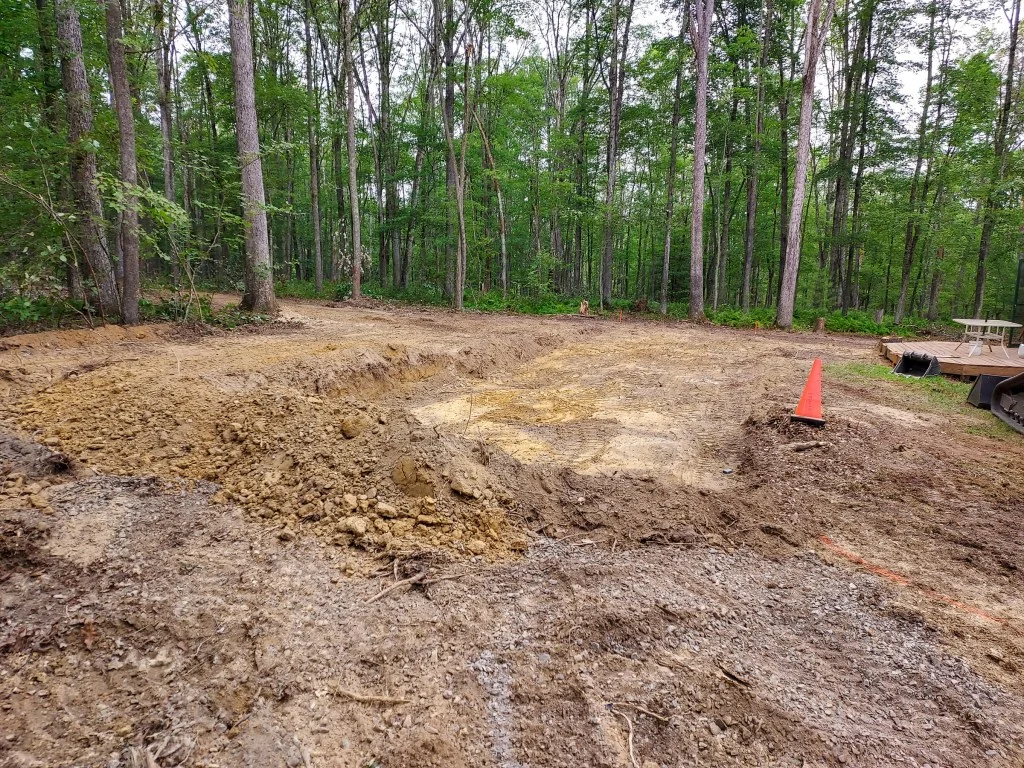
The ground under Flat Rock splits into three working conditions, and each one ruins a yard differently. The red clay across most of Henderson County absorbs almost nothing once it is saturated — water sits on top, then sheet-flows toward whichever low corner the builder left it. Shallow rock, common on the slopes above the village and along the Green River bottom approach, stops water from soaking down at all, so a French drain trenched into rock has to daylight somewhere or it becomes a bathtub. Old fill — the graded pads behind mid-century and newer hillside homes — compacts unevenly, which is why a low spot appears two winters after a build and stays.
Diagnosing which of the three you own is the whole job. A yard that puddles at the surface needs regrading or a swale, not a buried pipe. A yard that stays soggy even in a dry week usually has a shallow water table meeting clay, and that is where a properly graded French drain earns its cost.
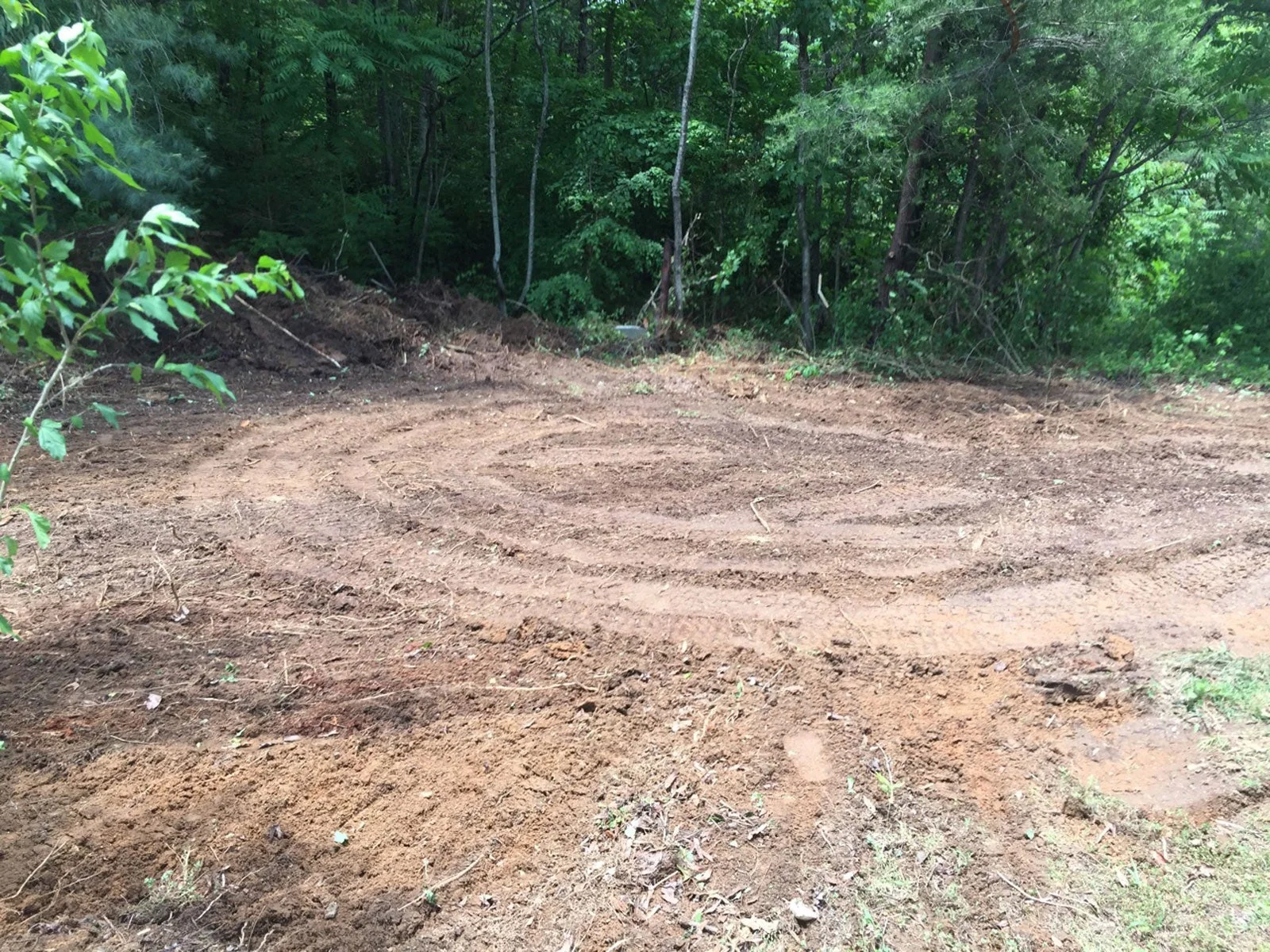
Walk a few Flat Rock lots and the pattern repeats: the newest houses sit on pads carved into slopes, the older ones on fill spread over what was once orchard ground. Both inherited a grade that made sense to a bulldozer and not to a rainstorm. On the clay-heavy lots off the flat ground near the village core, water stands in the same low corner every March. On the steeper lots climbing toward the ridge, water never stands — it sheets fast and cuts rills through bare soil, which is a grading and erosion problem wearing a drainage costume. Knowing which you have before a shovel touches ground is the difference between a fix and a second bill.
What drainage work costs in Flat Rock
The numbers below are typical residential ranges for this county; see the full Henderson County grading cost table for how earthmoving line items stack up against drainage ones. Rock changes the math fastest — trenching through shallow bedrock on these lots adds labor and equipment time that a clay-only job never touches.
| Scope | Typical range |
|---|---|
| Single French drain run (one problem side) | $3,000–$9,000 |
| Grading, swales, and gutter extensions only | $3,500–$8,000 |
| Multi-run system with dry well or daylight outlet | $6,000–$12,000 |
| Whole-yard regrading to reestablish fall away from the house | $15,000+ |
Where a Flat Rock job lands in that table comes down to three things: how deep the trench has to go before it finds drainable ground, how far the outlet has to travel to daylight, and whether the fix is one run or a system. A short run on flat clay near the village can sit near the bottom of the single-run range. A hillside lot above the Green River approach, where the trench hits rock at two feet and the only daylight is a hundred feet downhill, pushes past the top of it. Get a scope in writing that names the outlet, the depth, and the fall, because a bid that lists pipe and gravel but no destination is a guess with a price tag.
Where the water actually comes from
Henderson County's federal disaster record explains a large share of the drainage calls here: 16 declared events span 1978-2026, dominated by storm and flood categories. Every one of those pushed water at yards graded for a drier assumption. The National Weather Service tracks the same pattern — NWS rainfall records for the southern mountains show short, intense events that overwhelm clay long before the ground can take it in.
On Flat Rock's hillside lots, the uphill neighbor is often the real source. Their runoff crosses your property line and pools at your foundation because the original grade was set before either house existed. That problem cannot be solved inside your lot alone, and a contractor who does not ask about it is guessing.
There is also the matter of what the rain lands on. A lot that was pasture twenty years ago now carries a roof, a driveway, and a packed pad — all impervious, all sending water downhill that the ground used to absorb. The volume did not change; the surface that takes it did. That is why the newest neighborhoods in the county call for drainage more often than the old orchard lots, and why a driveway that slopes toward the house is worth as much attention as the gutters. Gutter downspouts dumping at the foundation are the most common self-inflicted version of the problem, and extending them is the cheapest line item on any honest scope.
Water before structure, and the code behind it
Drainage is not cosmetic work in North Carolina. The International Code Council residential provisions treat surface drainage and foundation water management as code requirements, not upgrades, and the state adopts them for a reason: a yard that drains wrong eventually moves the house it surrounds. The correct order is always water first — grading, swales, gutter discharge, then buried systems — and only after that, structural repair if movement has already started.
If your scope crosses into foundation work, North Carolina general contractor thresholds apply; the NC Licensing Board for General Contractors sets when a project requires a licensed GC. Ask any drainage bidder how they sequence this, and ask for their plan for where the water goes. "Away from the house" is not a plan.
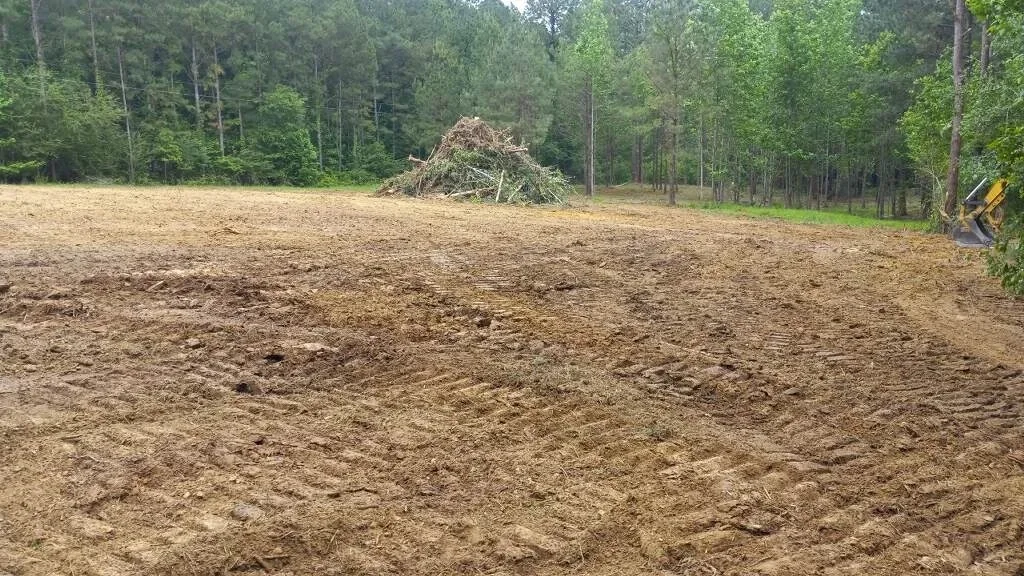
Erosion control is the other side of the same coin. Bare soil on a slope sheds water fast and carries it downhill with soil attached, which is why a grading job and a drainage job on the same lot should be one scope. The EPA treats sediment runoff as a real water-quality problem because it is: what leaves your hillside lot ends up in the Green River drainage, and ditches and catch basins downstream pay for it. A crew that leaves a graded slope bare through winter without straw or matting is telling you how they think about the rest of the job.
Finding a crew that knows this ground
Flat Rock's lots are small enough and hilly enough that a generic pipe-and-gravel bid rarely fits. The questions that separate real crews: Have you trenched through rock on this side of the county? Where does the outlet daylight? Do you handle regrading and drainage together, or subcontract half of it? Our drainage and erosion control guide covers what a complete scope includes, and the Flat Rock grading contractors page shows how the earthmoving side of the same job prices out. If a bid lists a French drain but no outlet, no fall calculation, and no mention of your soil, it is a number without a diagnosis.
Also ask what the yard looks like when they leave. Trenching through established lawn, gravel paths, or plantings leaves a scar, and crews differ on whether they restore it. On these compact hillside lots there is rarely a way to get equipment to the back without crossing something, so a good bidder will name what has to be pulled up and what gets put back. It is a small thing until it is your garden bed. The crews worth hiring answer those questions without being pressed, and they tend to walk the lot before they price it rather than bid off a photo or an address.