Before the first tree comes down, read the ground you already have
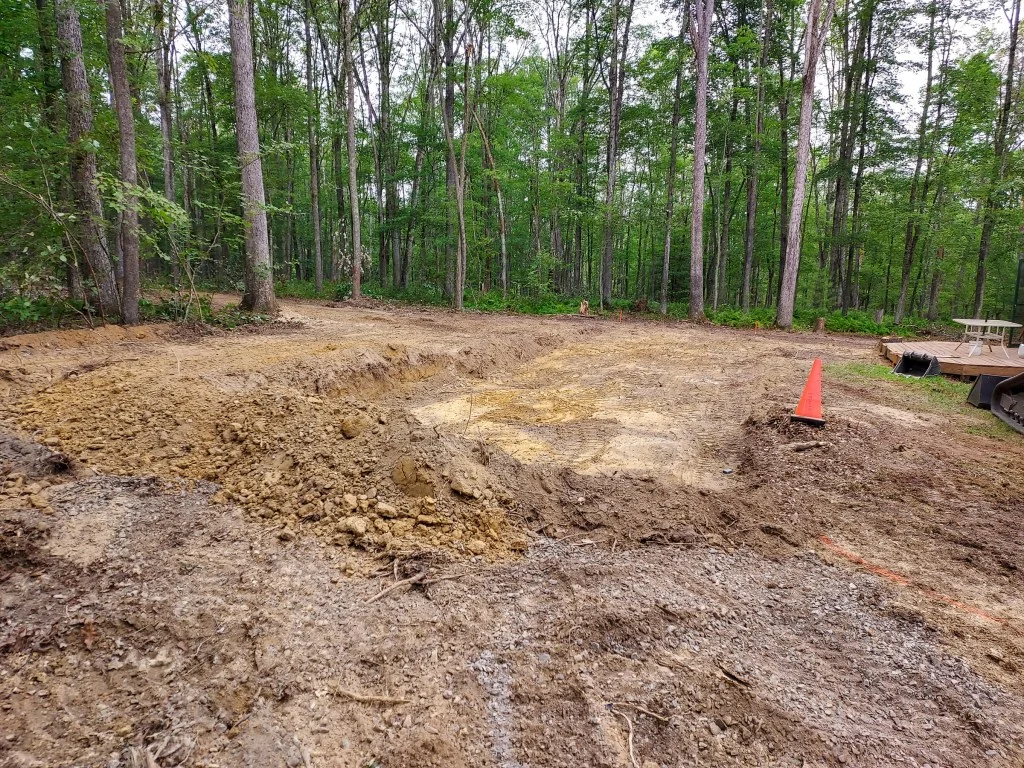
Most Fletcher clearing jobs start as a brush problem and end as a water problem. The lot off Howard Gap Road has a gravel drive that's been shedding toward the house since it was cut; the acre on Cane Creek has a building pad that ponds after every summer storm. Clearing the overgrowth first hides the evidence for one season and then hands you the same drainage repair on bare, freshly disturbed ground — which is the most expensive time to do it.
The honest sequence on a Fletcher hillside is: walk the existing drive and pad, mark where water actually goes during a hard rain, and figure out whether the stormwater path needs to change before equipment arrives. Sometimes that means the clearing scope shrinks and a small grading fix is added. That's a better job, not a padded one.
Fletcher sits in a transition band where the French Broad valley flattens out toward Arden and Skyland, but the ridges above Cane Creek and the Hooper's Creek watershed climb fast. That means a lot can look level from the road and still carry a surprising pitch once you walk the back property line. Reading that pitch before you price the cut is the difference between a two-day job and a two-week one. A Fletcher crew that has worked the ground off Naples Road or along Butler Bridge knows how quickly the grade changes once you leave the frontage.
Concrete signs to check before any bid gets signed: ruts that run parallel to the driveway instead of down it (a sign water is being pushed sideways, not away), a pad that holds a puddle 24 hours after rain, and gravel that has migrated off the drive apron onto the grass. Any one of those means the drainage fix belongs in the same conversation as the clearing, because disturbing the slope will make an existing water problem worse, not better.
What Fletcher's terrain does to a clearing bid
Henderson County's topography is why two half-acre lots a mile apart can bid hundreds of dollars apart. A gentle lot near the Fletcher park side of town clears with a skid steer and a couple of days. A wooded slope with a 20-foot drop to the creek edge needs a bigger machine, a silt fence ahead of work, and a plan for where the cut material goes. Slope, tree size, undergrowth density, and access width all move the number.
Fletcher also sits in a wet pocket. Storm systems that move through the Blue Ridge drop serious rain on the eastern slopes of Henderson County, and the federal record backs what crews see on the ground: 16 declared events touch this county across 1978-2026, overwhelmingly storm and flood family. That history is the reason the drainage question belongs in the clearing conversation rather than a separate one.
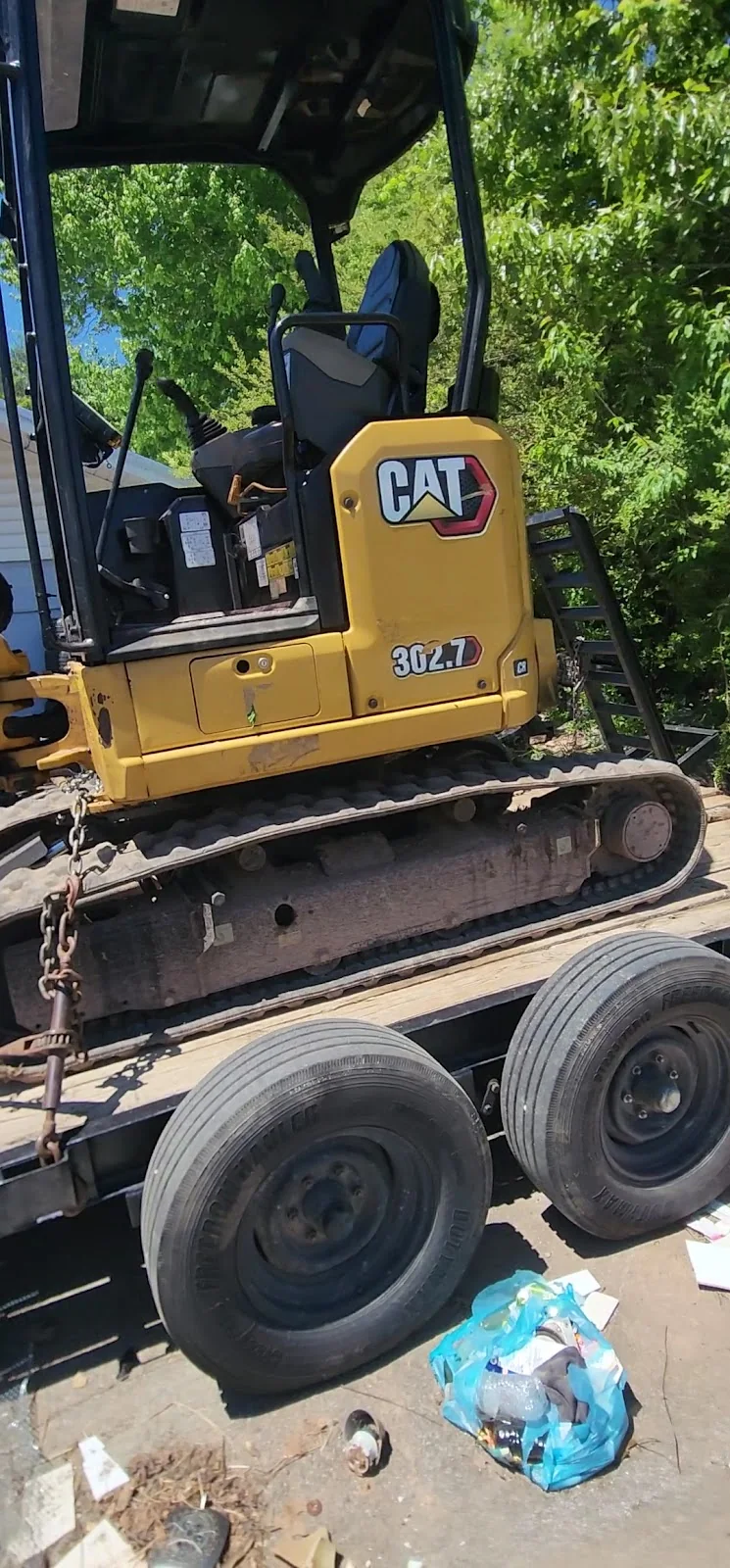
Access is the quiet cost driver here. Many Fletcher lots were platted decades ago with a single 10- or 12-foot gravel apron off a county road, and getting a full-size track machine or a dump truck through that apron without tearing up the shoulder takes either matting or a smaller machine. A lot on a private drive off Cane Creek Road or a shared easement near the Fletcher Community Park side of town often prices higher than an identical lot with a wide, paved frontage, purely because of how the equipment reaches the work.
Tree size matters too. Fletcher's hardwood mix — oak, hickory, poplar, and the occasional pine stand left after old pasture reverted — produces stump masses that vary widely. A 24-inch oak stump is a different removal job than a cluster of 10-inch poplars, and the root ball on a hillside tree is often larger because the tree has anchored against slope. When a bid lists 'stump removal' as a single line, ask whether that means grind-to-grade, full root-ball extraction, or both, because those are three different costs.
Scope-to-price: what the Fletcher numbers actually look like
Clearing is priced by the acre, the density, and the disposal plan — not by a single rate. The table below reflects the working ranges for residential lots in this county. Anything with a stump grind, root removal, and a finished grade sits at the top of the band because the work changes from cutting to earthmoving. The county breakdown lives on the Henderson County grading cost page.
| Scope | Typical range | What drives it |
|---|---|---|
| Brush and light undergrowth, small lot | $750–$1,800 | Density, access width, disposal |
| Mixed trees and brush, half acre or less | $1,500–$3,500 | Tree size, count, haul-off distance |
| Clearing with stump removal and rough grade | $2,500–$5,500 | Stump count, root balls, soil to fill divots |
| Full lot clear, stumps, grading, drainage fix | $4,500–$8,000 | Slope, existing drive and pad condition, stormwater plan |
| Steep, heavily wooded acreage | above $10,000 | Slope grade, machine access, erosion control |
Two line items show up on Fletcher bids that homeowners don't always expect. The first is disposal. Hauling cut material off-site costs fuel and tipping time, and a lot with a tight driveway may require a smaller truck making more trips than a wide-open acre would. The second is topsoil replacement. After stumps and roots come out, the divots need fill, and the quality of what goes back in decides whether grass takes or the pad keeps settling. Both are real costs, and both belong in a written scope rather than as a surprise add.
The practical rule for comparing two Fletcher bids: put them side by side and check that cutting, stump treatment, haul-off, topsoil, grading, and erosion control each appear on both. A lower number usually means one of those got left off, not that the crew is faster.
Erosion control is not optional on a hillside lot
Henderson County enforces sediment and erosion control because Fletcher's creeks and the French Broad system downstream don't tolerate a bare slope for long. A proper job puts silt fence, a stabilized construction entrance, and a groundcover plan in place before the first cut, not after the first complaint. The EPA maintains the stormwater and construction-runoff guidance that local rules follow, and the International Code Council publishes the site and grading standards that inspectors lean on.
Practically: if a bid has no line item for erosion control or for where the disturbed soil goes, ask why. On a Fletcher slope, that missing line item is usually the one that turns a clean job into a redo.
The reason is timing. A hillside lot that gets cleared in late spring and left bare through July and August afternoon thunderstorms can lose a season's worth of topsoil in a couple of events. Silt fence that looked adequate on a dry day fills and overtops; a construction entrance without stone tracks mud onto the county road. Neither is dramatic, and both generate the kind of complaint or inspection visit that stops work. Scheduling the bare-ground window — and having stabilization ready to go the same week the last machine leaves — is what separates a finishable job from an ongoing one.
Fletcher's position in the Cane Creek and Hooper's Creek drainages is the reason the local enforcement has teeth. Sediment that leaves a hillside lot here does not disappear; it settles in a creek reach that a neighbor, a farm, or the town's own storm system eventually has to deal with. Getting the silt fence and groundcover right is the cheapest part of the job and the one most likely to be skipped by a crew trying to undercut a bid.
Licensing and contractor checks specific to this market
North Carolina draws a licensing line by project value, and land clearing plus grading can cross it once the job includes substantial earthwork. The NC Licensing Board for General Contractors is the place to confirm whether the work requires a licensed general contractor. Ask any crew two direct questions: whether they carry the licensing the job requires, and who handles the sediment and erosion control inspection.
On a Fletcher lot the second question matters more than it sounds. A crew that clears beautifully but leaves the hillside bare through a wet front is handing you a repair bill. The Fletcher grading contractors page covers how the grading and drainage side of the job gets sequenced.
References matter differently here than in a flat-terrain market. Ask for a Fletcher or Henderson County address, not just a name, and drive past it if you can. A finished lot that still has grass on the slope six months after clearing tells you more than any photograph taken the day the machines left. If a crew cannot point you to finished work on similar ground — a slope, a creek-adjacent lot, a tight driveway — that is the signal to keep asking.
Insurance and disposal are the other two items worth confirming in writing. Clearing generates debris, and where it goes is your responsibility if the crew doesn't own it. A written scope that names the disposal site, the insurance carried, and the erosion control plan is a crew that has done this in the county before.
When clearing is really a driveway or pad repair
A practical test: after the next hard rain, walk the lot and note where water is standing and where it is moving. If the problem area is at the drive, the pad, or along a swale, that is a grading job with clearing attached, not the other way around. On a Fletcher lot off Butler Bridge Road or down toward the Cane Creek greenway, the fix is often a small regrade and a daylighted swale, not a full-lot scrape. Sequencing it that way puts the money where the water is and leaves the trees that are doing their job holding the slope together.