Clyde's driveway problem starts with the lay of the land
Clyde is valley town — the Pigeon River drains through the middle of it, the railroad follows the river, and most of the town spreads out on ground that is genuinely flat by Haywood County standards. That is not what makes driveways here fail. What makes them fail is everything around the flat part: the steep hollows that feed down from the ridges to the north and south, the narrow county roads that run along the bottoms, and the fact that a driveway serving a house on the valley floor often has to climb a grade to reach the roadbed in the first place.
Add the storm history and the pattern is obvious. 19 federally declared events touch this county (1973-2026), and the overwhelming majority are storm and flood family — exactly the events that push water off saturated slopes and onto gravel. A driveway in Clyde that looked fine for years can lose its surface in a single overnight rain when the ground above it is already full.
The tell is not complicated. If your gravel is migrating downhill, if you have a rut that gets deeper every spring, or if the crown of the drive has gone flat or concave, water is no longer leaving the way it used to. Grading is almost always the fix, and it is almost always cheaper than the culvert replacement that follows if you wait.
What a genuine washout repair actually involves
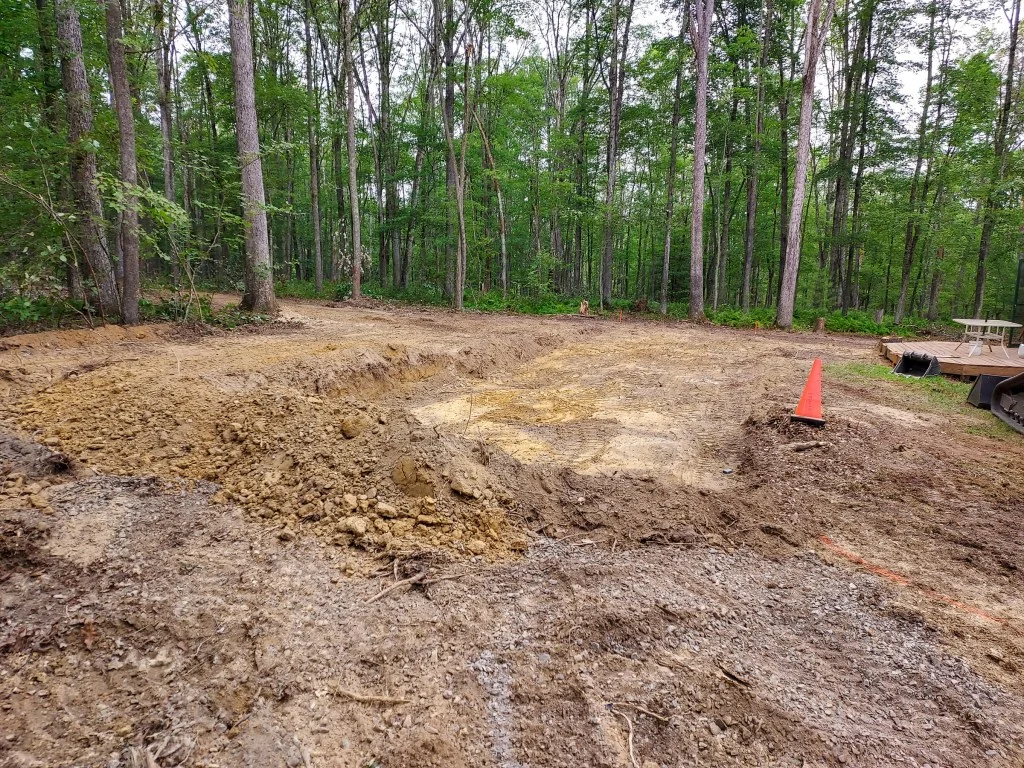
A washout is not just gravel that moved. It is a channel where water concentrated, cut down through the surface, and took the base with it. Filling the channel without addressing why the water chose that path buys you one season.
A real repair sequences like this: cut down to stable material, re-establish the crown so water sheds to the edges, restore or add the ditch along the uphill side, and place stone in graded lifts rather than one dump-and-spread pass. If the water is crossing the drive from a hillside above, a culvert or a set of water bars goes in. Only then does the surface go back on. The Haywood County grading cost table breaks these line items out by scope, which is worth reading before you take a bid.
Steep driveways off the ridges above town are their own category — those need engineered drainage, not just stone, because a graded surface with no outlet will cut a new channel within a couple of storms.
Scope and price, line by line
The table below reflects what these jobs actually cost in this area. Local crews price by access and haul distance as much as by square footage — a long, narrow drive on a tight county road costs more to work than the same yardage on open ground, because every load has to come in and every machine has to fit.
| Scope | Typical range | What it covers |
|---|---|---|
| Regrade existing gravel, no washout | $350–$1,200 | Re-crowning, pulling shoulders back in, light stone top-off |
| Washout repair — regrade and fresh stone | $400–$1,500 | Cutting out the channel, rebuilding base, replacing lost surface stone |
| Washout with ditching and culvert | $800–$2,800 | Above plus a new or replaced culvert, inlet and outlet protection, roadside ditch |
| Engineered drainage on a steep grade | $2,500–$6,500 | Designed outlet, water bars or flume, rock check dams, armoring at the steepest pitch |
Two things drive a job toward the top of its band: how steep the grade is, and how far the stone has to travel to get there. A paved drive that failed structurally is a different scope entirely and usually needs to be rebuilt from the base, not resurfaced.
Storm water, regulations, and who can do the work
Anything that changes where storm water leaves your property has the potential to affect a neighbor or a waterway, and in a river town like Clyde that matters. The EPA maintains the stormwater guidance that most local rules trace back to, and the practical version is simple: you can't concentrate runoff onto someone else's land or dump sediment into a stream or ditch that reaches one.
On the contracting side, North Carolina sets a threshold for when a project needs a licensed general contractor rather than a handyman or a landscape crew — the NC Licensing Board for General Contractors publishes where that line sits and how to verify a license. A driveway repair usually falls under it, but a large drainage project with significant excavation may not, and it is worth knowing which one you are buying.
Timing matters too. The National Weather Service issues the flood and heavy-rain watches that precede most washouts here, and the smart move is to get grading work done in a dry window rather than mid-season. Loose stone placed on saturated ground simply leaves with the next storm.
Choosing a crew in this market
Three questions separate the crews who fix driveways from the crews who just spread gravel. First, ask what they found when they inspected the ditch and the outlet — if the answer is nothing, they haven't looked. Second, ask how much stone the job needs in tons rather than in loads, because a load can mean anything. Third, ask what happens to the water when it leaves your drive, since that is the whole job.
Our own driveway grading and gravel guide walks through what a thorough estimate should include, and the Clyde grading contractors page covers how to compare bids on identical scopes so you are not pricing apples against oranges. Get two written scopes with tonnage and drainage line items, and the right bid will usually be obvious without being the cheapest.