The lot shapes that set Madison County clearing prices
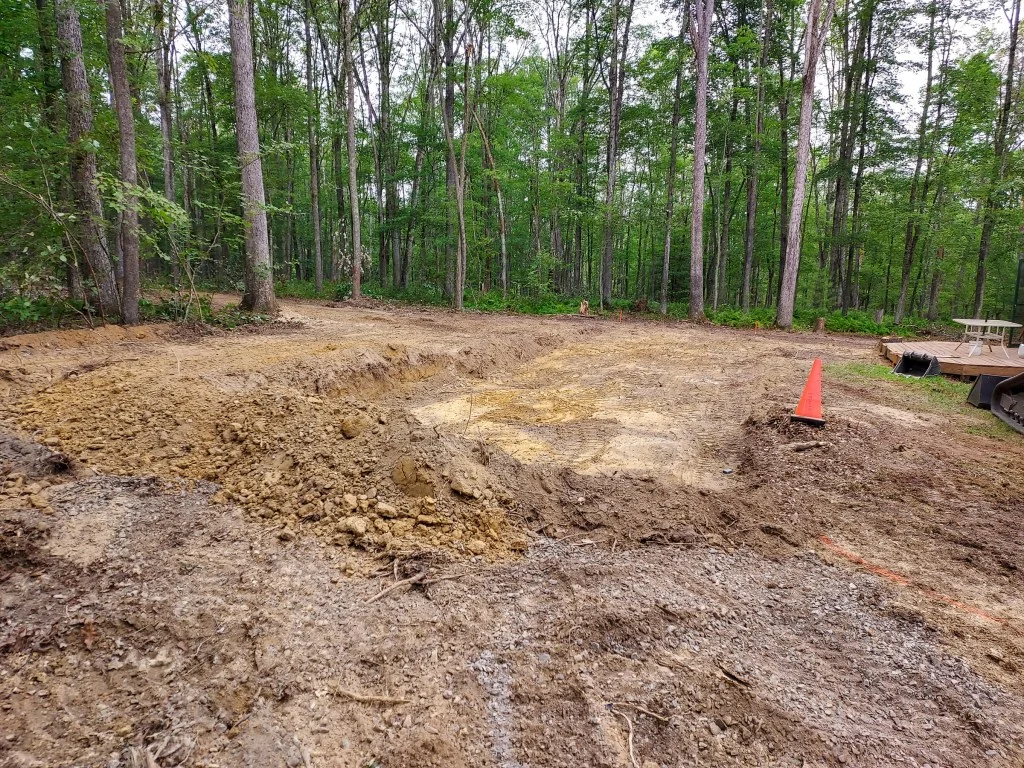
A clearing crew working a graded subdivision lot outside Asheville can often back a machine to the tree line, work a clean face, and keep a dump trailer on pavement all day. Madison County rarely offers that arrangement. Parcels here tend to run as long ridge fingers off the shelves above the French Broad, or as narrow bottoms where the creek flat is a hundred feet wide and the rest of the deed climbs. A two-acre listing on a road like Bone Camp or a gravel spur off NC 213 can carry a quarter acre of genuine building bench and the remainder at a pitch that dictates everything about how the job is priced.
The access is the tax. Single-lane gravel, switchbacks, soft shoulders in spring, and no turnaround for a full-size track machine means the crew either brings smaller equipment and more days, or brings the big machine and spends the first hours improving the drive just to get it in. That decision shows up in the bid long before anyone touches a chainsaw. It is also why a Madison quote can run well above the same acreage in flatter Piedmont counties where a lowboy can park beside the work.
Woodfin and the Marshall corridor add a second wrinkle: tighter parcels, more shared drive easements, and neighbors close enough that felled trees have to be steered rather than dropped. On those lots the job is as much rigging and direction as it is cutting, and the day rate reflects it. If you are comparing bids across the region, our regional land clearing cost overview is a fair baseline for how Madison sits against its neighbors.
What clearing actually costs here
These are working ranges for residential clearing in this county, phrased the way contractors actually talk about them: per acre, not per lot, and with the ground conditions named.
| Scope of work | Typical Madison range | What drives it |
|---|---|---|
| Underbrush and sapling clearing, gentle grade | $1,600 – $3,200 /acre | density, distance to disposal, access road width |
| Selective clearing, trees over 12 in. | $2,800 – $5,500 /acre | specimen retention, root-ball protection, haul-off |
| Full clearing with stump removal, 15–30% slope | $4,500 – $9,000 /acre | stump size, side-cast vs. haul, erosion control |
| Steep-lot clearing and grubbing (35%+) | $8,000 – $15,000+ /acre | winching, hand-work, retaining what the slope needs |
Notice the spread is roughly three times from top of the first row to bottom of the last. On this county's terrain, a number quoted without seeing the access and the grade is not a quote — it's a wish. A crew that walks the drive before pricing is doing the job right.
Two line items quietly move a Madison bid more than people expect. The first is stump disposal. On a slope, stumps can sometimes be side-cast into a fill or a brush pile on site, which is cheap; when they have to be loaded and hauled down a narrow drive, the truck time adds up fast. The second is where the tops and slash go. Burning is common here and often the least expensive route, but burn days depend on weather and local fire conditions, and a wet spring can push the burn window out by weeks. Ask your bidder to price the job with slash burned on site and again with slash hauled, so you can see what the difference actually is.
The slope-and-water discipline that adds to the bill
Madison County sits in the same storm corridor as the rest of the Blue Ridge, and the federal record shows it: 21 federally declared disaster events touch the county across 1978-2026, most of them storm and flood family. On a cleared slope that history is the whole ballgame. Every acre you bare is an acre that used to hold soil with roots, and when a stalled storm drops two inches in an hour on a fresh cut, the water goes downhill through whatever is below — often a driveway, sometimes a neighbor's foundation.
That's why a responsible clearing bid here includes temporary erosion control and a plan for what happens to the runoff after the trees are gone: silt fence, straw-wattles on contour, a stabilized outlet, or a grade change that slows the water before it reaches the property line. The National Weather Service's rainfall data for western North Carolina is a fair reference point for why this matters (weather.gov). If a bidder leaves erosion control out entirely, that's not a cheaper job — it's an incomplete one.
Water also shapes which trees you keep. On a Madison slope, the root mass on a mature hardwood is doing structural work you can't see, and stripping it off a seep or a drainage swale invites a slump the first wet winter. A crew that knows this terrain will leave a buffer along the draws and take the timber off the ridge instead, even when that means a less tidy-looking finished lot. The EPA's guidance on stormwater and erosion is a reasonable primer on why bare ground on a grade is a liability rather than a blank slate (epa.gov).
Clearing and grading are joined at the hip on these lots, and the sequence matters. See our grading cost guide for what typically follows a clearing scope, or the Buncombe County grading cost breakdown for how a neighboring county's numbers come together. On a Madison hillside, the pad, the drive, and the cut slope are usually designed together, and clearing is simply the first cut of that plan.
Permits, licenses, and the rules that apply
North Carolina does not license "land clearing" as a standalone trade, but the work runs into two regulatory walls worth knowing about. First, contractors who clear and then grade, excavate, or install drainage cross the threshold where the state's general contractor licensing rules apply — the NC Licensing Board for General Contractors (nclbgc.org) publishes the current dollar threshold and what scope crosses it. Second, land disturbance over certain acreage triggers state sediment and erosion control requirements, and smaller lots on steep slopes can trigger county-level review even under the acreage threshold.
For grading and excavation after clearing, the NC residential code's provisions on footings and site work apply (ncosfm.gov), and if the lot will eventually hold a home, site plan review in unincorporated Madison County usually wants to see the erosion control and building envelope drawn to the actual slope, not the plat. Builders who clear first and ask about the envelope afterward tend to make expensive second passes.
One more honest note: if the trees include anything of merchantable size, some crews will take the timber off the price instead of charging haul-off. That's a legitimate line item to ask about — but the value depends on species, access, and whether a mill is close enough to justify the trip. On a steep Madison tract with a long gravel pull, the haul cost can eat most or all of the timber value, and a bidder promising a big credit before walking the access is guessing.
How to keep a Madison County clearing bid honest
Four things protect you on this terrain:
- Make them walk the access. Where the machine enters, where it turns, and where the spoils go. On a switchback drive, that walk tells you more than the acreage number ever will.
- Price per acre, with slope named. Slope percentage changes the equipment class and the day rate. Lock it in writing.
- Ask what stays and what's burned or hauled. Burn piles are common here; haul-off is not free, and stump disposal is where cheap bids quietly become change orders.
- Get the erosion plan in the same document. Silt fence and stabilized outlets are part of clearing on a slope, not an optional extra.
Ask too about timing. Late summer and fall are the busiest windows on these hills, and a crew booked solid may quote high or quote late. A winter or early-spring slot on frozen ground is sometimes cheaper, though a wet February can bog a low drive so badly the work stalls. If a bidder can't tell you when the ground is workable on your particular slope, that is a sign they haven't been on it much.
Want the county-by-county picture? Our Buncombe County grading cost breakdown shows how a neighboring county's numbers come together — useful for sanity-checking any Madison bid against regional norms, and a good reminder that the terrain, not the county line, is what actually sets the price.