The one-acre line that decides your Montreat budget
Montreat's building lots tend to be small and steep, but driveways, septic fields, and shared access easements stack disturbance on a single parcel fast. Once you cross one acre of graded ground, North Carolina's erosion and sedimentation rules stop being a formality and start being a permit with a plan, a fee, and inspections. That single threshold reshapes how a Montreat job gets scoped: under it, a grading contractor can usually move dirt on a Buncombe County permit; over it, the state gets involved and the timeline stretches weeks, not days.
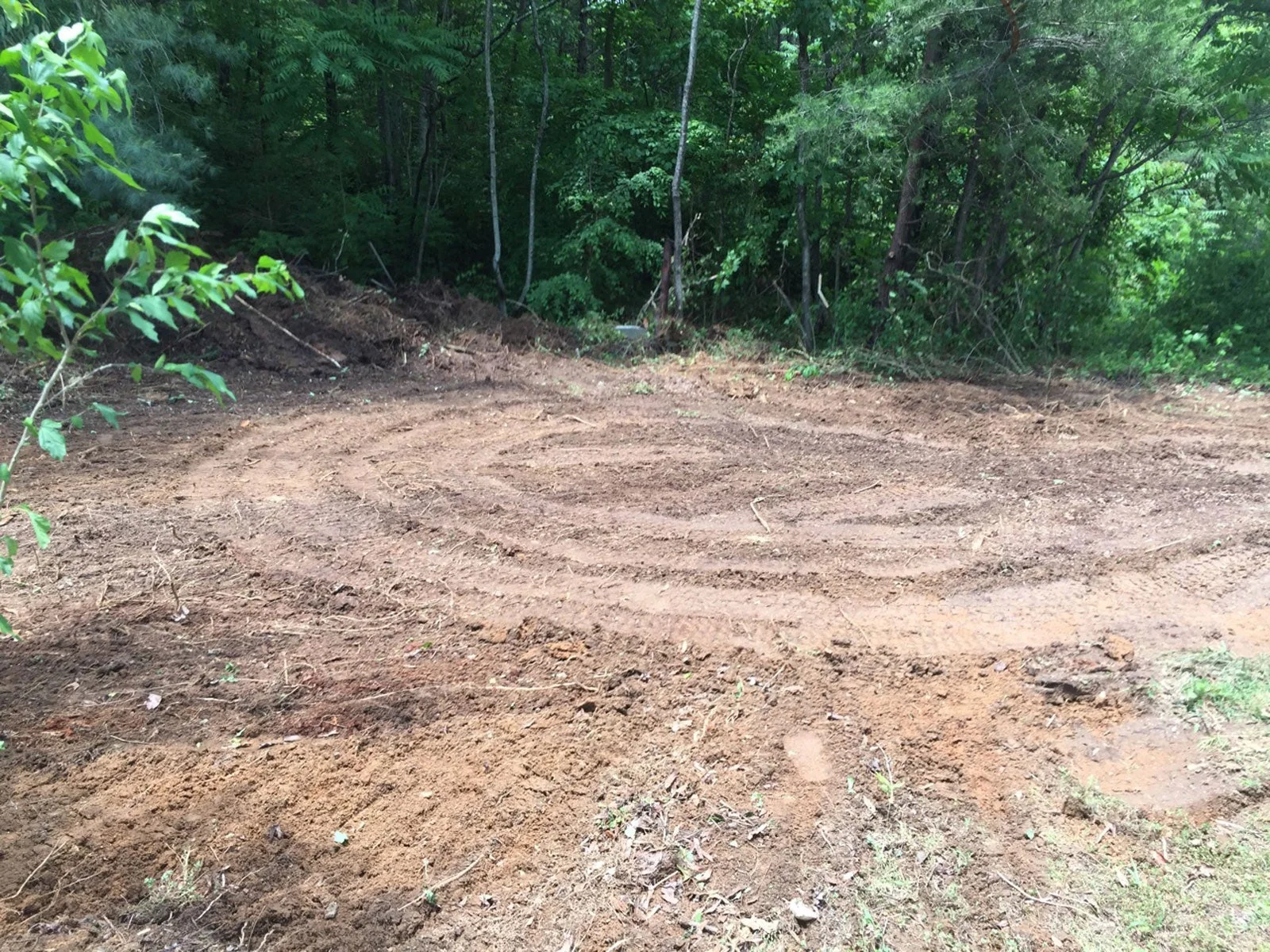
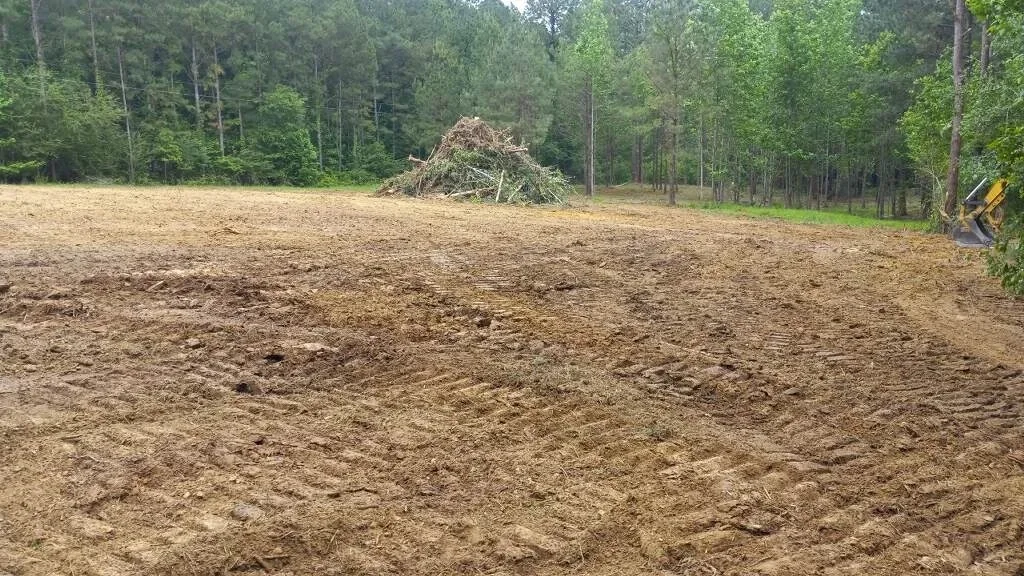
The practical upshot for anyone searching site prep in Montreat: get a disturbance number before you get a price. A pad for a modest cabin on a quarter-acre lot is a different animal than a switchback driveway cut into a mountainside that disturbs 1.5 acres of tree cover. The second job is a permitting project with dirt attached.
Here's where the math gets sneaky in this town. A lot that looks like a quarter acre on paper often has a shared driveway easement running through it, and that easement counts toward disturbance if you're widening or re-grading it. Add a septic repair area, a utility trench, and a small parking pad, and a homeowner who thought they were safely under the threshold discovers they're over it. The plan, the fee, the inspection schedule — all of it lands at once, usually mid-project, when the excavator is already on site.
Montreat also sits inside a watershed that feeds the town's own reservoir and the Swannanoa River system downstream, so erosion leaving a job site here isn't just a regulatory problem. Sediment that reaches a creek in a cove this steep moves fast and soils in the lower reaches. Contractors who work here regularly know that the inspection schedule isn't a box to check — it's the thing that decides whether the job passes.
What Montreat's terrain does to a pad job
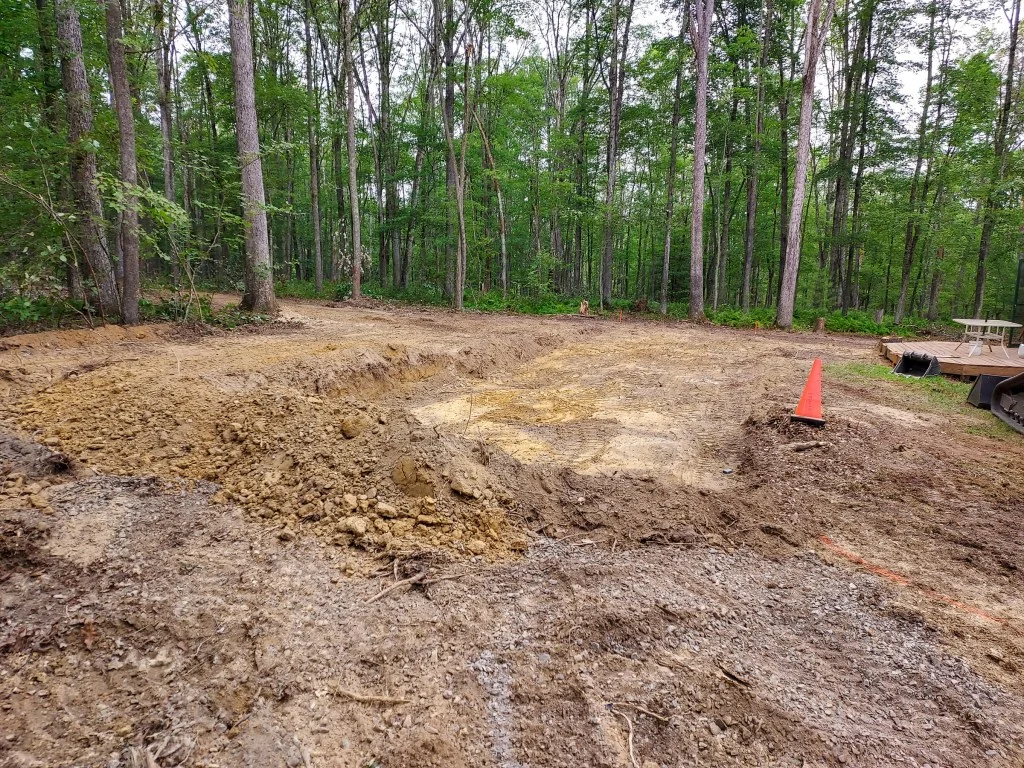
This is a town tucked into a cove below Greybeard, with lots that climb, drop, and drain in ways flatland grading contracts never anticipate. A building pad here is usually cut-and-fill on a grade, which means retaining walls, footer drains, and a plan for where the uphill water goes once you've removed the trees that were slowing it down. Rock is common. So is the discovery that the flattest-looking spot on the lot is actually a seep.
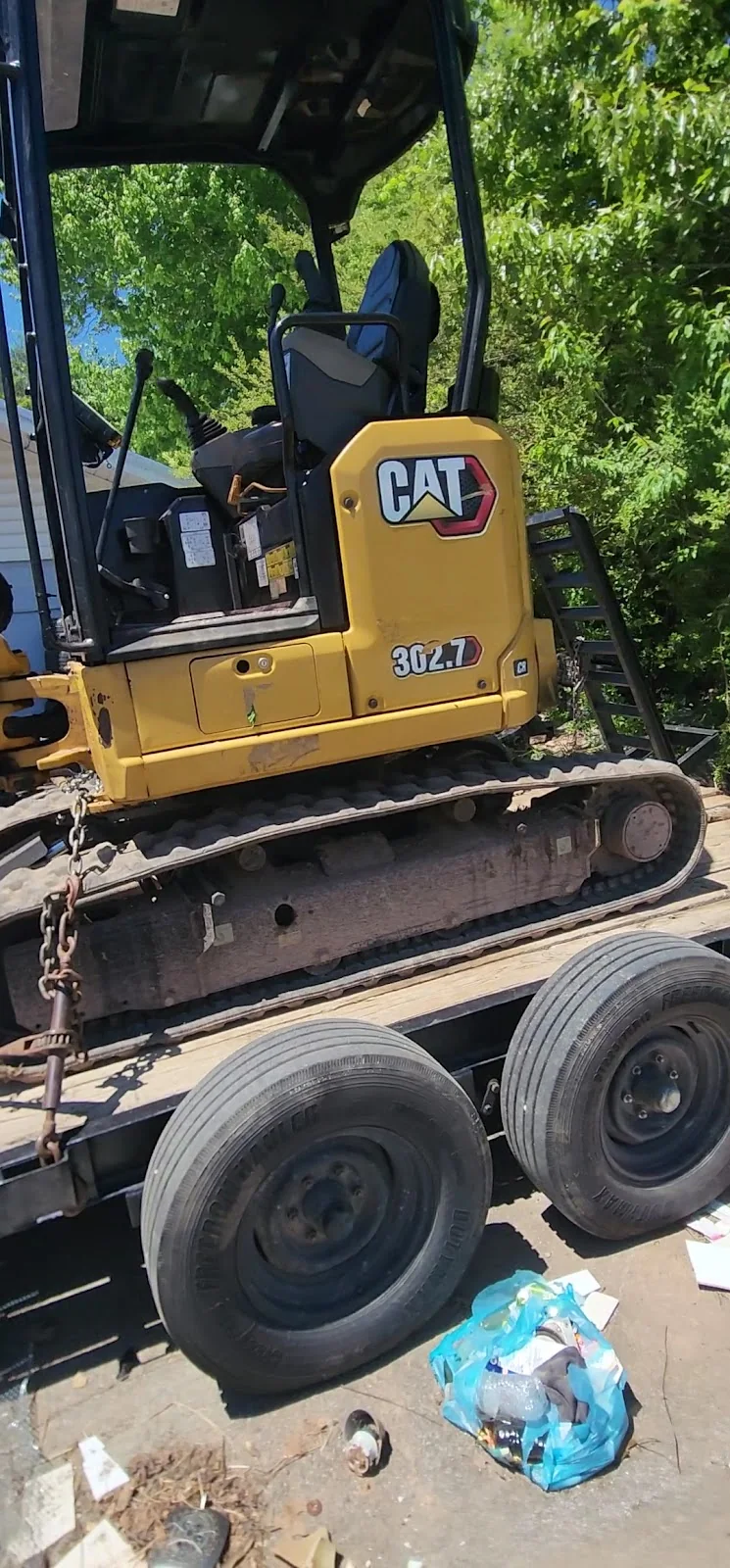
Access is the other Montreat variable. Narrow mountain roads and long shared driveways limit what equipment can reach the pad. When a full-size excavator can't get in, smaller machines and more hours produce the same pad at a higher number. That's not a markup, it's geometry.
There's a seasonal layer too. Buncombe County clay holds water, and in a cove like this the ground stays saturated well into spring. Grading wet clay doesn't compact — it smears and pumps, and a pad built on it settles later. The window between frozen ground and summer thunderstorms is narrower than in the valley, so scheduling matters as much as machinery. A crew that knows Montreat will tell you when not to dig, not just when to show up.
Tree cover is its own line item. Mature hardwoods and hemlocks on these lots have root systems that hold the slope together. Clearing for a pad and driveway removes that reinforcement, and on a steep lot the slope sometimes needs stabilization after the cut — matting, riprap, or a planted buffer — before the next rain. That's not optional decoration. It's what keeps the downhill neighbor's yard from becoming your excavation's destination.
Scope and price ranges
Ranges below reflect typical Buncombe County mountain-lot work; the Buncombe County grading cost breakdown has the full working table by line item.
| Scope | Typical range |
|---|---|
| Small pad, gentle grade, easy access | $3,500-$6,500 |
| Cut-and-fill pad with retaining wall | $8,000-$18,000 |
| Driveway cut and gravel, per 100 ft on grade | $2,500-$6,000 |
| Erosion control plan and state permit (over 1 acre) | $1,500-$4,500 plus timeline |
| Rock excavation, per day when encountered | $1,200-$3,000 |
Treat any bid without a drainage line item as incomplete rather than cheap.
Two line items that surprise homeowners here. First, haul-off. On a tight cove lot there's often nowhere to stockpile spoil, so every yard of cut dirt that doesn't stay on site gets trucked out — and on a narrow mountain road that's slow, expensive trucking. Second, the temporary gravel construction entrance most jobs need to keep mud off the pavement. It's small, but it's real, and a bid that omits it is a bid that's hiding something.
Retaining wall pricing deserves its own note. A short landscape wall that holds two or three feet of grade is one thing; a structural wall holding the uphill side of a cut pad is another, and the taller it gets the more it behaves like engineered work — footing, drainage behind the wall, and often a design that a licensed professional needs to sign off on. Ask early which category your lot falls into, because it swings the number more than almost anything else on the list.
Permits, code, and who can legally take the job
Grading and excavation that moves enough dirt to affect drainage or slopes falls under North Carolina code, and the state's erosion program is enforced through the NC Office of State Fire Marshal code framework at the local level. For projects crossing the one-acre disturbance threshold, expect a formal erosion control plan and inspections. For structural work tied to the pad — retaining walls over a certain height, for example — the contractor licensing threshold matters; the NC Licensing Board for General Contractors publishes when a job requires a licensed general contractor. Ask any excavation crew how they handle permitting on a slope lot. The answer tells you whether they build pads or just push dirt.
On the code side, retaining walls above a modest height and any structure tied to a foundation generally pull in building permits through the county, and those inspections happen alongside the dirt work rather than after it. Staging matters: you can't backfill against a wall that hasn't been inspected, and you can't pour footings on a pad that hasn't been approved. Sequencing errors here are what turn a six-week job into a season-long one.
Water quality rules also get real fast in a watershed town. Federal clean-water law handled through the U.S. Environmental Protection Agency sits behind the state erosion program, and in a cove that drains to a public supply the local tolerance for muddy runoff is low. Practically, that means silt fence that's actually installed and maintained, not just billed; a stabilized construction entrance; and inspections that get passed rather than argued about.
Water is the whole job here
The federal disaster record explains why: 19 declared events touch Buncombe County (1973-2026), overwhelmingly storm and flood family. Montreat sits at the bottom of a watershed, and a pad that ignores uphill runoff will be a wet basement and a settled foundation within a few seasons. Every serious site prep plan in this town starts with where the water comes from and ends with where it goes — swales, curtain drains, and a finished grade that sheds away from the structure.
Because the cove funnels drainage, a lot that looks dry in August can carry a surprising volume of water in a two-inch storm. The fix isn't a bigger ditch; it's reading the slope above the pad and intercepting that water before it reaches the building. Curtain drains along the uphill cut, a swale that carries flow around the pad rather than through it, and a footer drain that daylight somewhere downhill all work together. Skip any one of them and the others have to work harder than they were sized to.
When the dirt work is done, the foundation crew inherits whatever the pad gives them, so getting the grading right first is cheaper than fixing it later. The site prep and building pads guide covers the sequence, and Montreat grading contractors lists the local crews who do this work with mountain-lot experience.
One more local reality: in a town this small, the neighbors watch. Muddy runoff crossing a shared driveway or a walking path gets noticed and reported, and the town takes drainage complaints seriously. Building the water plan into the job from the start isn't just good practice in Montreat — it's the difference between a project that finishes quietly and one that spends the summer explaining itself.