What a Buncombe County leveling invoice is really made of
Watch a grading crew pull up to a West Asheville bungalow lot and you can almost price the job before the first bucket of dirt moves. The invoice that follows is not one number for "leveling" — it is four or five line items stacked together, and on a county this hilly, the stack is what separates a half-day skid steer job from a week of cut-and-fill.
| Scope of work | Typical range | What drives it |
|---|---|---|
| Spot regrade, small yard, machine already on site | $1,800 – $2,800 | square footage, how far soil moves across the lot |
| Full-yard laser level, topsoil respread | $2,800 – $5,500 | existing grade variation, topsoil depth needed |
| Cut-and-fill on a sloped lot | $5,000 – $9,500 | vertical drop, retaining need, how much dirt leaves |
| Haul-off of excess dirt (per load) | $450 – $850 | dump distance, road access for the truck |
| Topsoil and seed to finish | $900 – $2,400 | yard size, whether sod is specified |
Crew time is the cheap part. Moving dirt off the property, and building something to hold the new grade in place, is where local quotes climb. A Black Mountain lot with a fifteen-foot drop from street to rear corner is not the same job as a flat Leicester pasture, even at identical square footage.
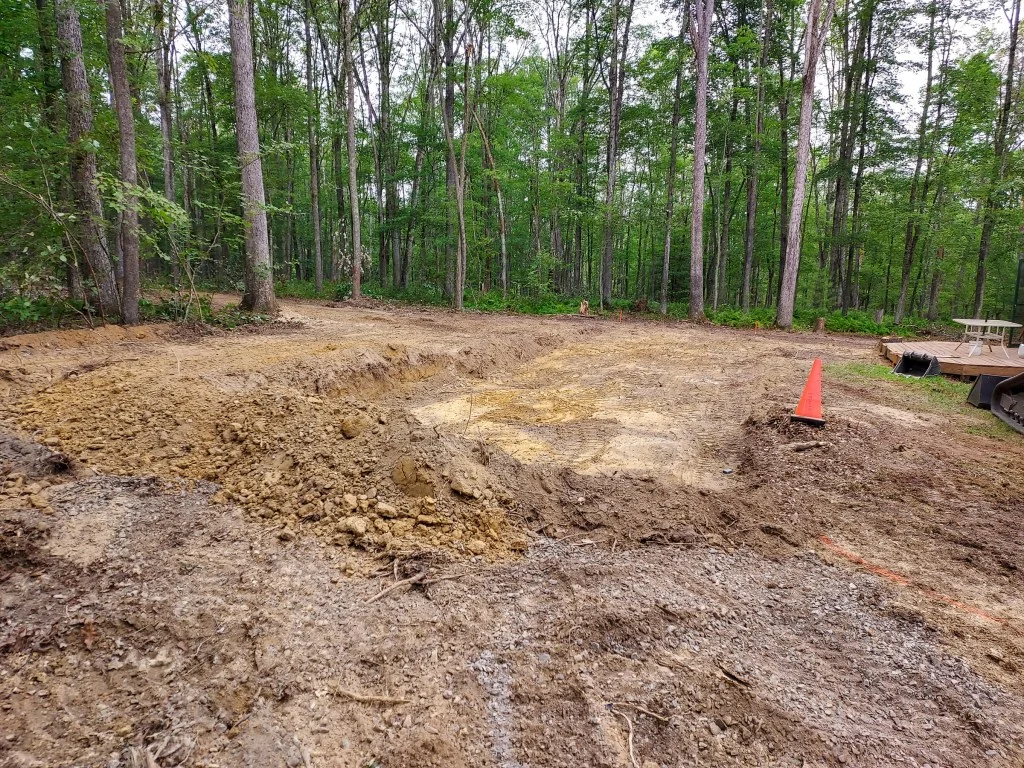
Picture a 1950s ranch in Oakley with a backyard falling toward a creek branch. The owner wants a flat play area. That job starts by cutting the high side near the house, which means working an excavator around a mature oak whose root zone the operator can't just scrape through. The cut dirt gets pushed downhill, but it's clay-heavy and won't drain, so screened topsoil has to be trucked in. A swale runs along the fence line to keep the creek branch from backing up. None of that shows in a per-square-foot price; all of it shows on the invoice.
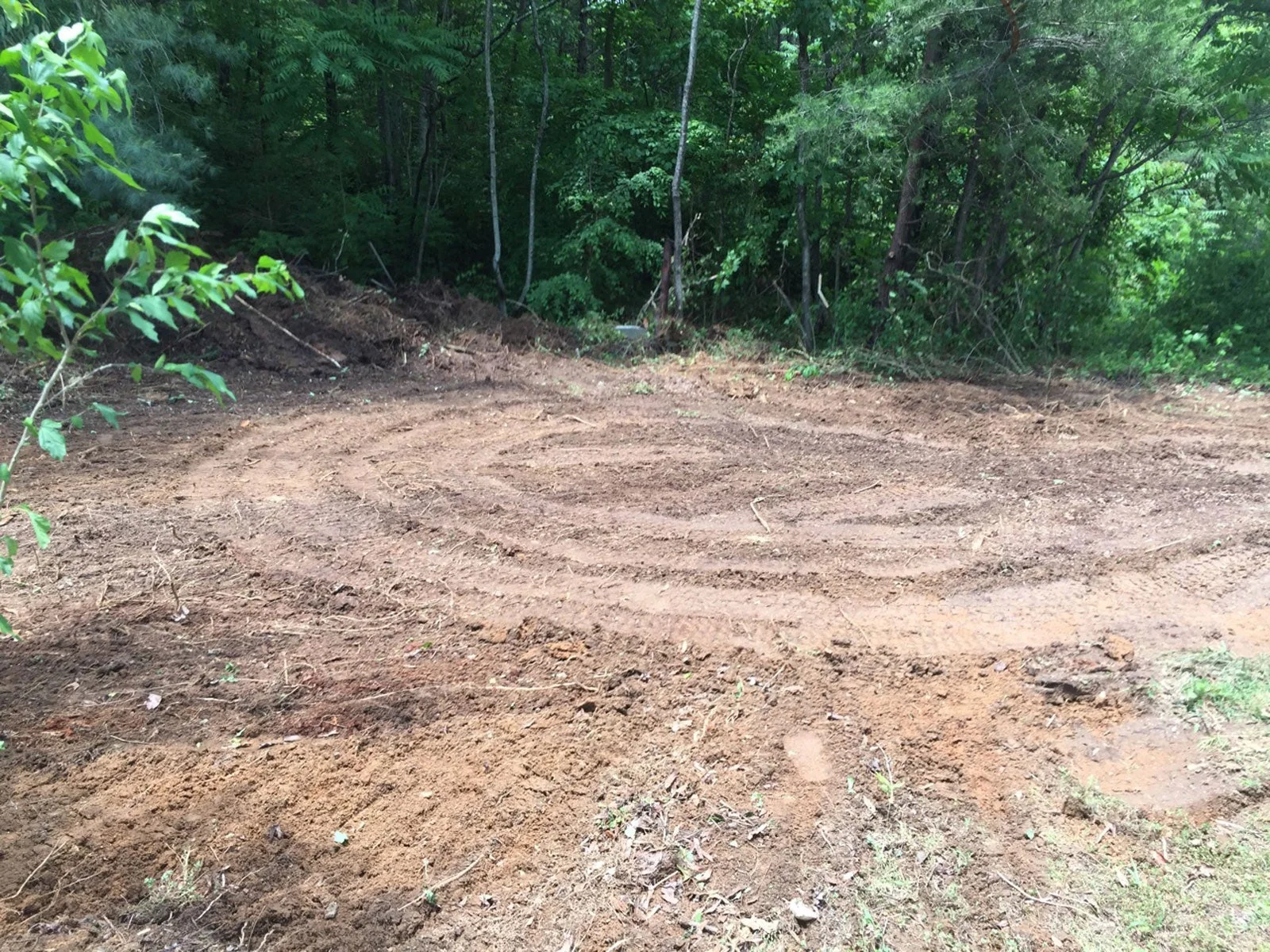
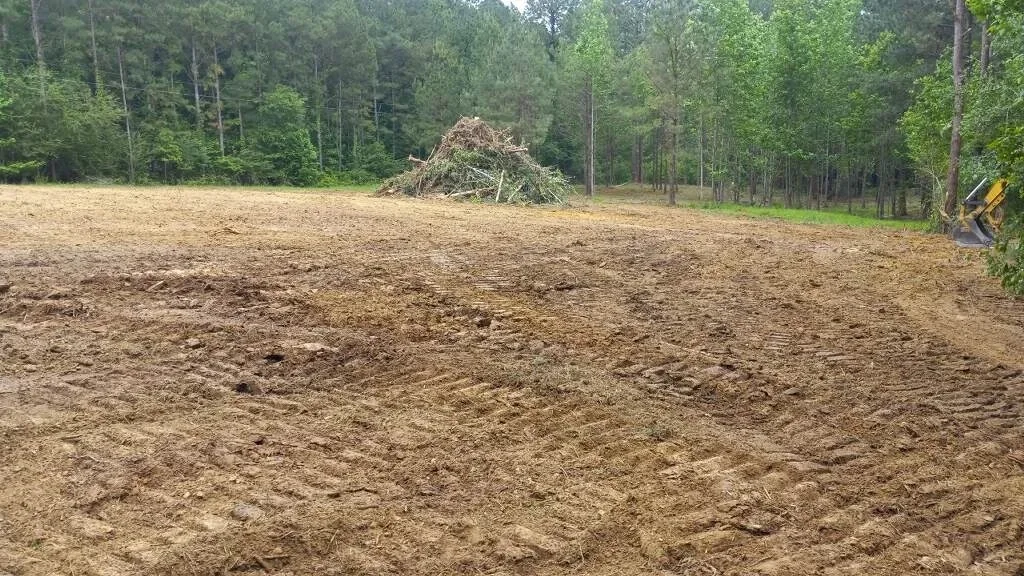
A flat Fletcher lot with a shallow dip near the driveway, by contrast, might be a half-day with a skid steer and two yards of fill. Same county, same trade, wildly different bills. That gap is why comparing leveling bids by square footage alone almost never works around here.
Slope, not square footage, is what sets the number
Most of Buncombe County is hillside. Homes sit on cut pads with a bank behind and a drop in front, so leveling almost always means either filling low ground or shaving a high bank, and both create a water problem if nobody plans for it. Uphill runoff that used to sheet across an uneven yard will pool against new fill the first time a storm stalls over the Blue Ridge. The federal record backs that pattern up: 19 federally declared disaster events touch this county across 1973-2026, most in the storm and flood family.
The practical read: a leveling quote that never mentions where water goes is a quote for a mud puddle with nicer edges. Pair grade work with drainage planning where the lot asks for it, since our yard leveling service page walks through when a yard needs a swale or French drain as part of the fix.
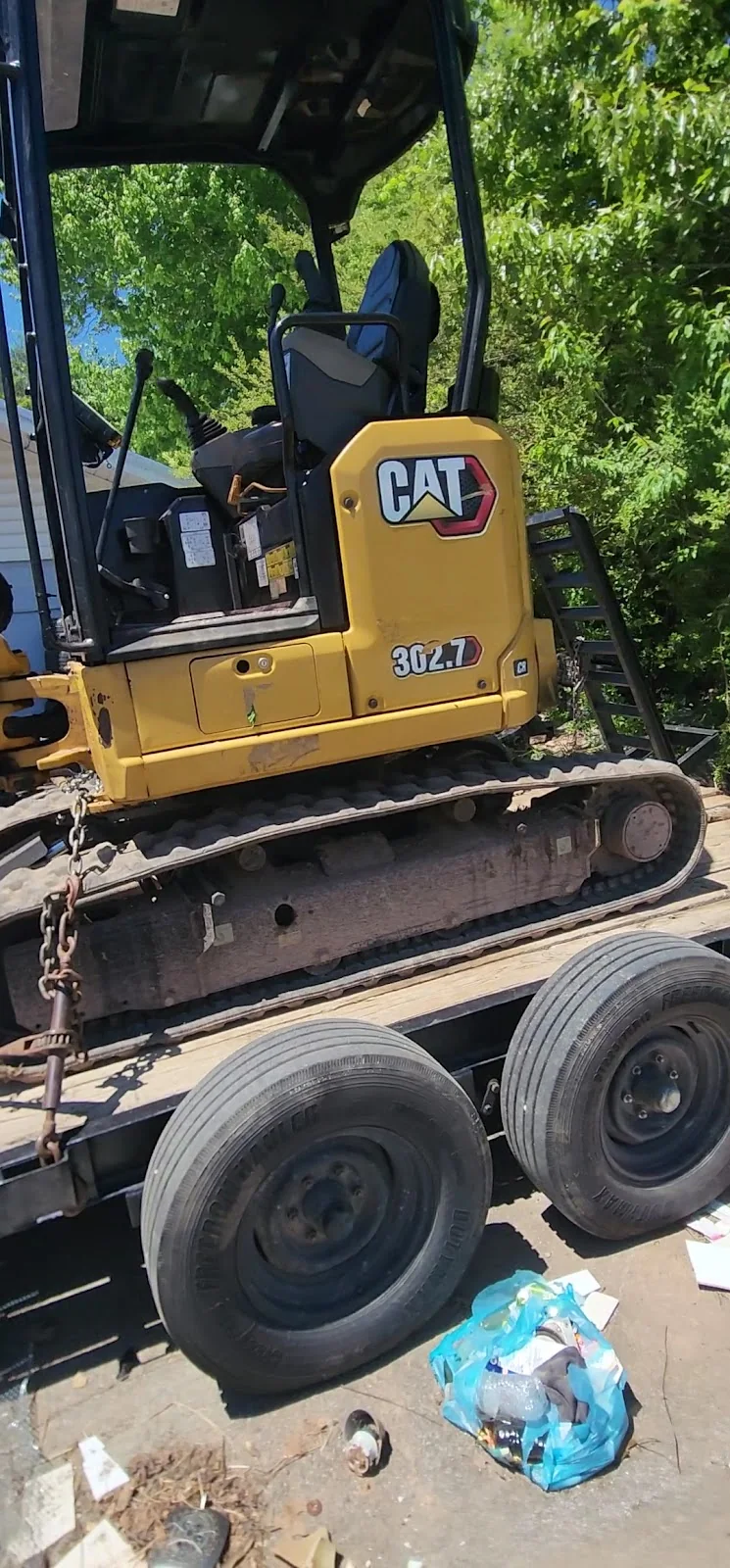
Slope also swaps out the equipment. A flat Leicester pasture may only need a skid steer and a laser level. A steep Haw Creek or Town Mountain lot often needs a mini excavator to reach the back corner, sometimes a track machine that can work on grade without tipping. Equipment day rates live inside the quote, and the steeper the lot, the fewer machines that can safely do the work.
Then there is where the water used to go. On older Asheville lots, especially in neighborhoods platted before modern stormwater rules, runoff often crossed three or four yards before reaching a ditch. Re-leveling one yard can dam that historic path and push water onto a neighbor's foundation. That's a civil problem more than a grading one, and it's why experienced local crews walk the property line before quoting. Our grading cost guide covers how that drainage line item prices out region-wide.
Permits, licensing, and the dirt nobody asks about
Simple regrading inside an existing yard usually does not require a permit in North Carolina. Once a job touches a retaining wall past the code threshold, changes drainage onto a neighbor's property, or reshapes a lot line, the county wants to see it. Grading that alters stormwater flow is regulated, and the NC Department of Insurance Office of State Fire Marshal publishes the residential provisions inspectors apply to retaining structures and site work. On the contractor side, the NC Licensing Board for General Contractors sets the threshold where grading and site work crosses into licensed general contracting territory.
One rule that quietly costs people money: excess fill is not free to dump. Clean dirt can sometimes stay on site, but anything mixed with roots, debris, or old construction material has to go to a permitted facility, and the hauling line reflects that. Ask every bidder where the spoil is going before comparing prices, because a cheap quote that "leaves it in a pile out back" is not a finished job.
Retaining walls deserve their own note on Buncombe slopes. A short garden wall under a couple feet is landscaping. Anything taller holding back a cut bank under a house or driveway is a structural element, and inspectors look at footing depth, drainage behind the wall, and whether it was engineered for the actual soil and slope. Weathered granite saprolite, common on hillsides here, behaves nothing like the clay fill many out-of-town bidders assume.
The hauling math is local too. Dump sites serving the Asheville area are limited, and the drive from a Weaverville or Fairview job adds real time to every load. That's why two contractors can quote the same dirt volume and land hundreds apart on the hauling line alone. Compaction standards behind all of it trace back to the International Code Council, which is worth knowing if a bidder shrugs off lift thickness.
Getting three quotes that mean the same thing
Since "level the yard" describes an outcome rather than a scope, two honest contractors can quote the same yard and be $4,000 apart. Three moves make bids comparable:
- Ask for cubic yards, not just a total. How much dirt comes in, how much leaves, and where it goes are the real variables. A bidder who cannot answer in cubic yards is guessing.
- Require a drainage note. Even one line about the final direction of fall tells you water was considered. Our grading cost guide explains how that line item prices out region-wide.
- Check the finish scope. Topsoil and seed are frequently left out of the low bid on purpose, then added as a change order. Decide up front whether you want bare graded dirt or a yard you can walk on.
For the county-level picture before you call anyone, the Buncombe County grading cost breakdown puts these same line items in context for lots here.
One more money-saver: schedule for late spring or early fall when you can. Summer thunderstorms and winter freeze-thaw both make compaction harder and delays more frequent. A crew that can work three dry days in a row on a sloped yard will get a better result than one squeezing the job between storms.