Before anyone digs, read the driveway crown, the pad, and the old swale
Laurel Park yards sit on slopes that drain toward the house, not away from it. That is the starting condition, not the emergency. Before anyone sells a french drain, an honest walkthrough starts with what is already on the property: the driveway that was crowned wrong, the patio pad poured flat against the foundation, the swale that used to carry water until the last owner planted shrubs in it. In most calls here, the water problem is not missing infrastructure. It is existing infrastructure that was built right and then ignored for twenty years.
A homeowner on a wooded lot off Willow Road may have a functioning curtain drain from the 1980s whose outlet simply needs clearing. A house near the Hendersonville Country Club may have a driveway whose asphalt crown has settled, sending sheet flow straight into the garage. Both look like drainage emergencies. Neither one necessarily needs a new system. Reading first is what saves thousands, and it shapes every scope decision below.
The reading is low-tech. Walk the property during or right after a hard rain and watch where water actually goes, not where you assume. Check the driveway's cross-slope at the garage apron, look for a visible crown line down the center, and note whether the edges shed toward the house or away. On the pad, a level or string line across the patio tells you in two minutes whether it drains to the yard or the foundation. Around the foundation, look for the old trench: a linear depression, sometimes a gravel ribbon, sometimes a capped riser where the outlet used to daylight. In Laurel Park's older neighborhoods the drain usually exists. Its outlet is usually the failure point.
This matters because the rebuild-versus-repair decision is almost never about the pipe in the ground. It is about whether the surface grade still sheds water away from the structure. If it does, the existing subsurface system can often be brought back with cleaning and a new outlet. If it does not, no amount of new trench compensates for water that never reaches it.
Fix-first scope versus full rebuild on these hillsides
Henderson County's terrain and housing mix drive two very different scopes. The fix-first scope is a one-day visit: re-grade a swale, re-crown a driveway edge, clear an outlet, extend a downspout. The rebuild scope is a multi-day install: perimeter french drain, catch basins, a dry well or daylighted outlet, plus erosion control on disturbed slope. The rebuild is sometimes right. It is just not the default, and any bid that jumps straight to it without explaining why the existing grade cannot be corrected is worth questioning.
Because Laurel Park sits inside the French Broad watershed and the county enforces erosion control on disturbed ground, rebuild-scale work also carries a compliance layer. The drainage and erosion control guide covers what that means once soil actually moves. Fix-first jobs usually skip that layer entirely.
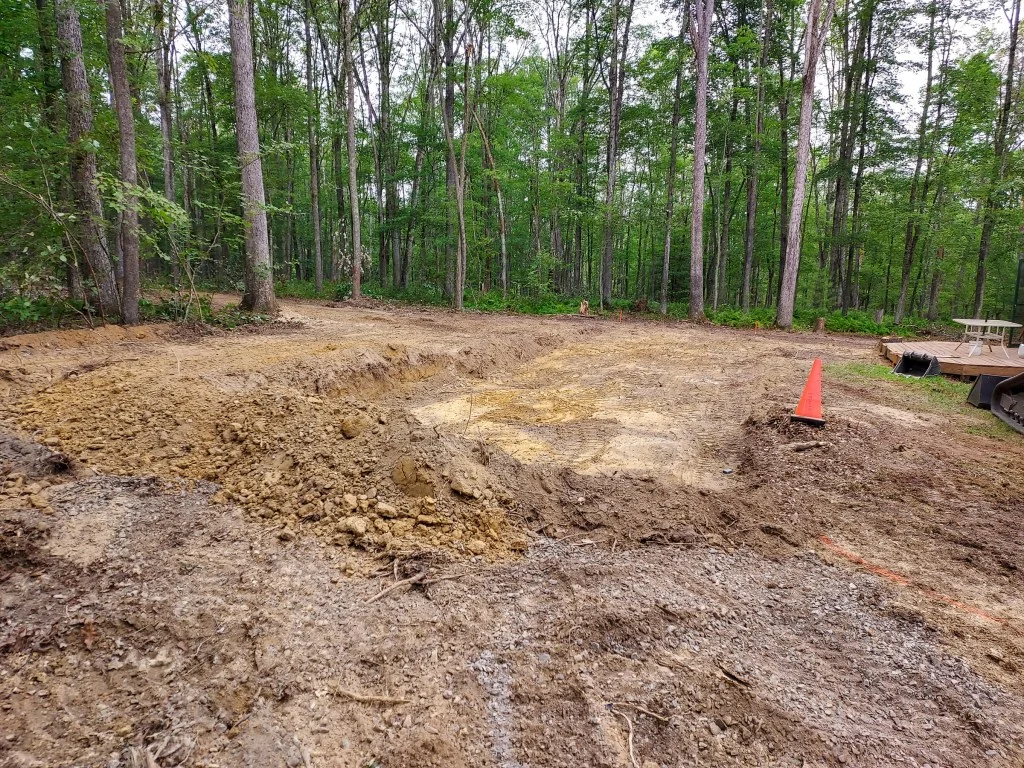
Terrain decides a lot. Laurel Park's lots climb and fall quickly, with many build sites dropping ten or fifteen feet from the street to the back of the house, and quite a few homes sitting below the road with a retaining wall holding the driveway up. On those lots water arrives from uphill off-site, and the first honest question is whether it can be intercepted at the property line instead of at the foundation. A shallow swale along the uphill edge, kept clear and graded to a daylighted outlet, does more than any french drain run behind the house. On flatter lots inside the old country-club ring, the problem is usually a settled pad or a garage apron with no positive fall. That calls for a re-crown and downspout extensions, not a trench.
Two more local specifics shape scope. First, tree canopy: Laurel Park is heavily wooded, and roots are the most common cause of a failed old drain tile, so a fix-first scope that ignores root intrusion is incomplete. Second, leaf litter: a catch basin installed here without a leaf guard is a maintenance appointment waiting to happen, and the fix-first version of a clogged basin is a grate and a cleanout, not a new basin.
What drainage work actually costs in Henderson County
Costs scale with linear feet of trench, outlet type, and how much soil disturbance the site allows. The full county breakdown lives at the Henderson County grading cost table, but the working ranges look like this:
| Scope | Typical range |
|---|---|
| Re-grade swale, re-crown driveway edge, clear outlet | $400-$1,500 |
| Downspout extensions and splash management | $300-$900 |
| French drain, 50-100 linear feet, daylighted | $3,000-$6,500 |
| Perimeter drain with catch basins | $4,000-$9,000 |
| Dry well plus drain, sloped lot | $6,000-$12,000 |
Fix-first scopes land in the first two rows. If a contractor's bid skips past them without a reason, ask what the existing grade is doing wrong that only a new system can solve.
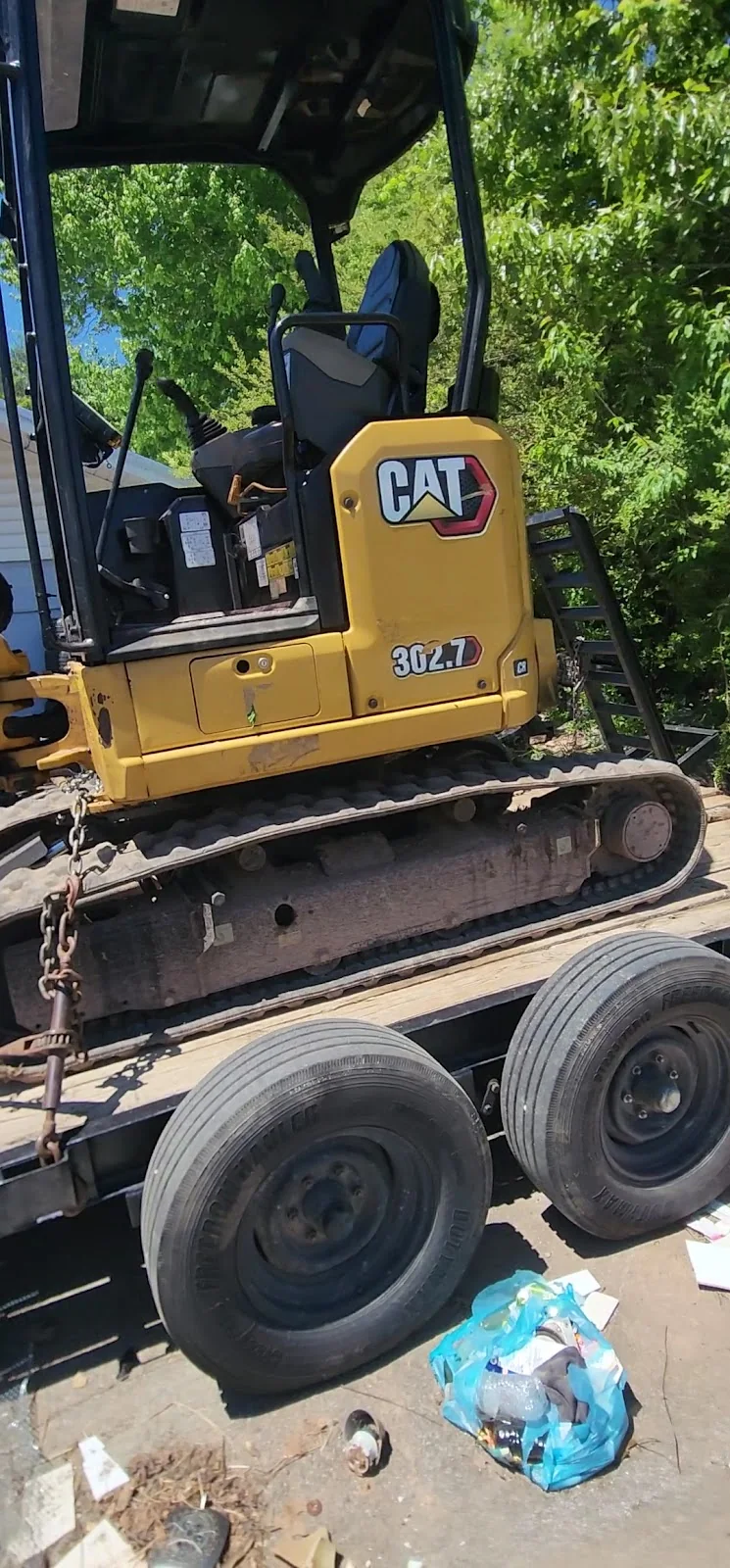
Three line items move the number most on these hillsides. Trench depth and outlet: a drain that can daylight below the house is far cheaper than one that needs a dry well because the lot falls the wrong way or the neighbor below will not accept discharge. Rock: Henderson County's saprolite and residual clay turn to rock at shallow depth on some ridges, and a trencher that hits it changes the day's math. Access: narrow mountain driveways and steep slopes slow equipment and hand-digging, and that labor is real. None of these are surprises a good contractor cannot flag during a walkthrough, which is exactly why the walkthrough should come before the number.
Permits, licensing, and where a drainage job crosses the line
Small re-grading and drain work usually stays under the county's land-disturbance threshold, which is where the NC Licensing Board for General Contractors threshold for licensed work also tends to sit. Once a job involves significant excavation, retaining structures, or a rerouting that changes how water leaves the property, both the licensing question and the erosion-control question activate. The state's adopted codes are published through the NC Department of Insurance Office of State Fire Marshal, and the county enforces them locally. A contractor who can explain where your job sits relative to those thresholds is worth keeping.
For fix-first work the practical translation is simple. Re-crowning a driveway, re-grading a swale, and cleaning an outlet are maintenance and rarely touch a permit. Digging a new trench across a slope, adding a retaining wall to hold a regraded pad, or concentrating flow into a new outlet that changes the discharge point are where the questions start. On sloped Laurel Park lots, a retaining wall over a certain height brings its own structural review, separate from the drainage scope. If a bid bundles a wall and a drain, ask which parts are which.
The outlet is the part homeowners underestimate. In this county, stormwater that leaves your property has to go somewhere lawful, usually a drainage easement, a street gutter, a natural channel, or an approved outfall. A drain that simply terminates at the property line and dumps onto a downslope neighbor is the single most common complaint generator in hillside neighborhoods. Ask the contractor to name the outfall before the first shovel moves.
Why these yards stay wet, in the county's own weather record
Henderson County sits in one of the wettest temperate zones in the eastern U.S., and the federal disaster record backs it up: 16 declared events touch this county across 1978-2026, overwhelmingly flood and storm family. Every one of those events stressed drainage systems sized for average rainfall, not for the extremes in the record. The National Weather Service tracks the pattern locally, and it is the reason drainage design here has to assume more water than the last owner's system did.
That history does not mean every wet yard needs a major install. It means every wet yard deserves an honest read of whether the existing grade can handle the next big storm, or whether the fix-first scope has already been outgrown.
The seasonal pattern matters too. In the mountains of western North Carolina, the wettest stretches often arrive outside the headline storms: prolonged frontal rain in late winter and early spring, tropical moisture in early fall, and the occasional stalled system that drops several inches in a day. A swale cut for a gentle yard handles the first case and fails the second. That is why the fix-first conversation is not a one-time decision. A yard properly graded five years ago and dry through ordinary rain may still back up in a record event, and the honest answer then may be a capacity upgrade on the existing line rather than a fresh design.
One local nuance: Laurel Park's elevation and tree cover mean some yards stay saturated long after a storm passes. Shade slows evaporation, and clay subsoils perch water. That combination is why a graded swale here has to be deep enough to carry flow and wide enough to resist sidewall collapse, not a shallow scrape that greens over in a season.
Choosing a drainage contractor in Laurel Park
Ask three questions. First, will they walk the property and identify what the existing grade is doing wrong before quoting new work? Second, will they put the fix-first option in writing even if they think a rebuild is the better long-term call? Third, do they know how the county's erosion rules apply to the specific job they are proposing? The Laurel Park grading contractors page covers what a qualified crew brings to a hillside job, and the fix-or-redo question separates them fastest.
A few practical tells are worth watching during the walkthrough. A contractor who reads the driveway crown and the pad slope before touching a shovel is doing it right. A contractor who asks where the old outlet was, and whether the neighbor below has ever complained, is doing it right. A contractor who can point to the exact outfall and explain what happens in a two-inch rain is doing it right. The bid itself should separate fix-first line items from rebuild line items, so you can approve one and defer the other. If everything comes as a single lump with no breakdown, that is a signal.
Finally, get the maintenance expectation in writing. In this county, drains need a fall cleaning and a spring check, and a system that is not maintained will fail in exactly the same spot a second time. A contractor who says so up front is the one worth calling back.