The one-acre line decides your driveway's paperwork
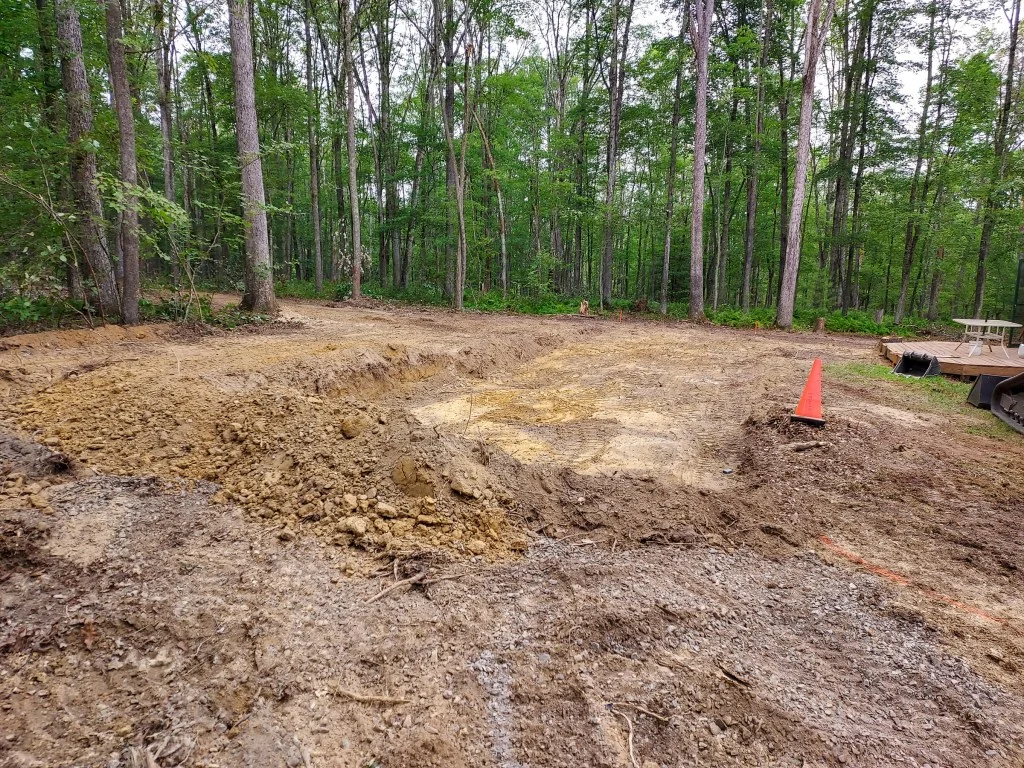
Leicester sits in the western pocket of Buncombe County, where parcels are still measured in acres instead of feet and the county seat of Asheville is a twenty-minute haul down New Leicester Highway. That single fact changes the job before anyone quotes it: North Carolina's erosion and sedimentation rules trigger a state permit once a land-disturbing project crosses one acre of graded area. A half-mile gravel drive cut into a hillside, plus the turnaround, the parking pad, and the culvert work, can quietly push a "simple driveway" past that line. The county seat is Asheville, but out here the driveway is often the largest graded feature on the property.
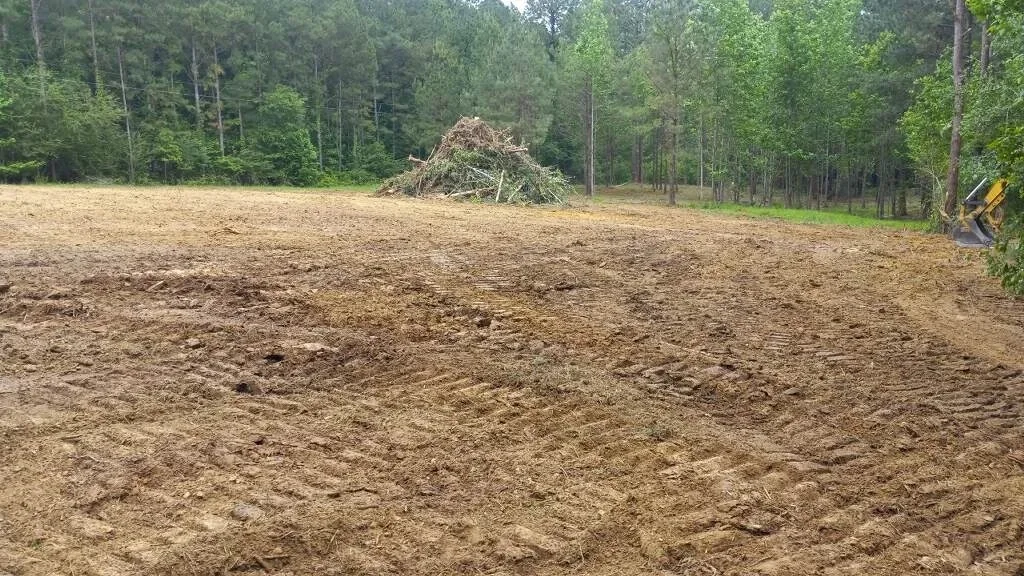
What the permit adds is real: a sediment and erosion-control plan signed off by a qualified designer, a designated entry point, silt fence on the downhill edges, and inspections while the work is live. On a steep Leicester slope that plan is also the difference between a drive that drains and one that channels stormwater into the county road. If your layout is closer to the one-acre threshold than you'd guess, the honest first step is a driveway grading and gravel scope that measures the disturbance area, not a truck dropping stone on Monday.
Most Leicester parcels off Lees Creek Road, Gilbert Road, or the ridges above Sandy Mush were carved out of larger farm tracts, which means the driveway often follows an old logging cut or tractor path. Reusing that path saves cut volume and keeps more of the disturbed area under the one-acre line, but the existing grade is rarely right—it usually falls too fast, drains toward the house, or dies in a low spot that stays mud until June. A designer measuring disturbance area will count the turnout, the parking apron, and any culvert headwall excavation, not just the drive centerline. That arithmetic is what separates a $6,000 job from a $9,000 one.
What a Leicester driveway actually costs, by scope
Prices below reflect mountain-parcel grading in Buncombe County: rocky subsoil, real fall, and haul distances from the quarry. Treat them as bands, not bids—rock and access swing every number.
| Scope | Typical range | What drives the price |
|---|---|---|
| Short flat drive, clear and gravel | $4,500–$7,000 | Length, existing surface, stone depth |
| Graded hillside drive with culvert | $8,000–$11,000 | Cut volume, drainage, pipe sizing |
| Long farm drive, 500 ft plus | $12,000–$14,000 | Haul distance, base thickness, turnouts |
| Crown and re-gravel existing drive | $2,000–$4,500 | Crown restoration, new stone, ditch work |
| Erosion permit plan and inspections | $1,000–$3,000 | Disturbed acreage, slope, plan detail |
The full county picture, including grading-only line items, lives in the Buncombe County grading cost breakdown.
Two local variables push a Leicester bid toward the top of its band. First, haul distance: aggregate comes off quarries on the Buncombe–Madison line, and a long, winding pull up a ridge road eats truck time that flatland jobs never see. Second, rock. Subsoil here hides blue shale and the occasional boulder from an old field-clearing burn pile, and a bucket that meets rock on day one can triple the cut portion of the estimate before lunch. A quote that holds up treats rock as a stated contingency line, not a surprise change order.
Why the ground here punishes a cheap base
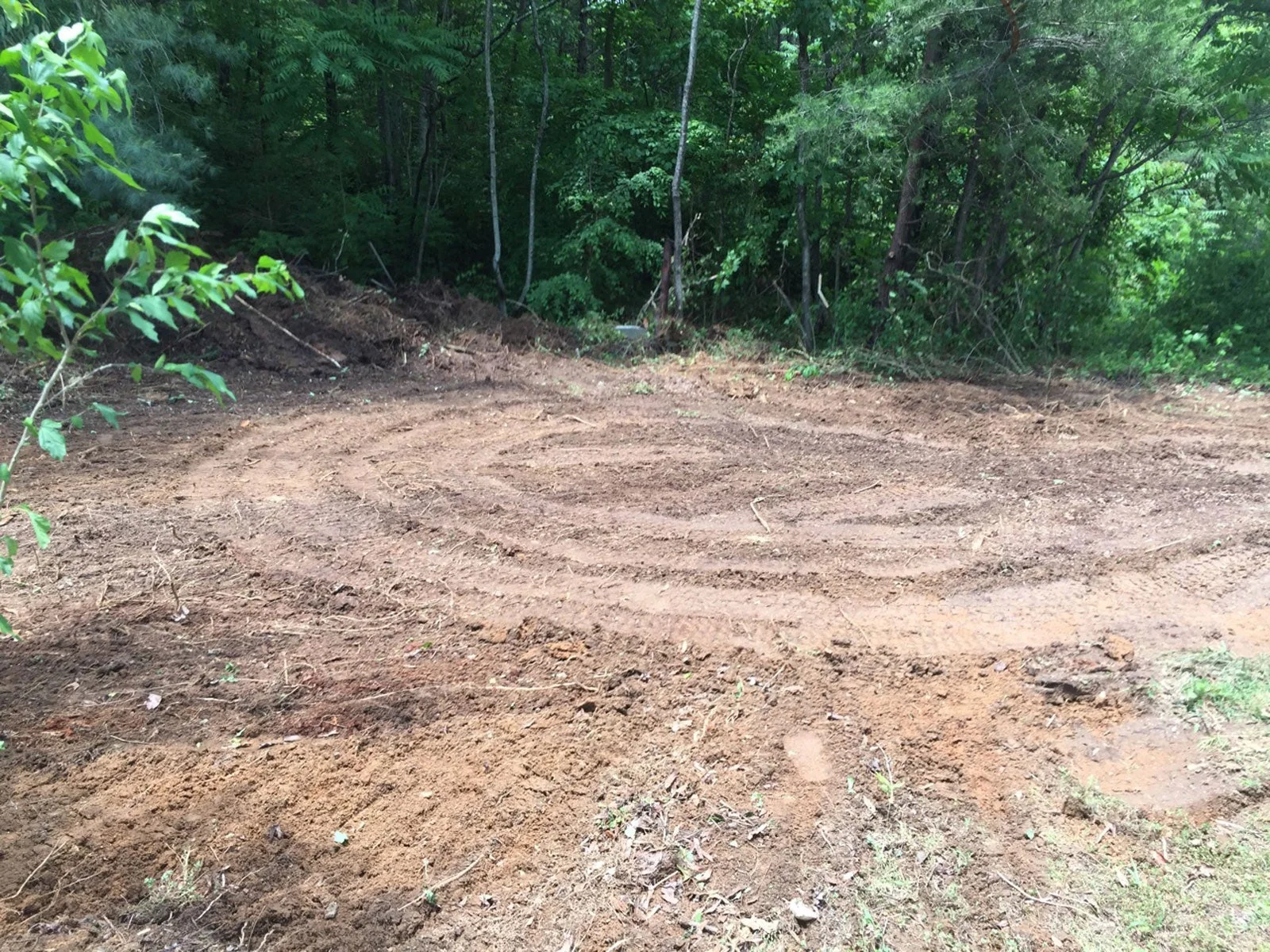
Leicester's soil runs heavy with clay and shale, and clay holds water the way a bucket does. A driveway built without a proper crowned subgrade and a stone base sized for the traffic will rut within two winters. The fix isn't more gravel on top—it's shaping the subgrade so water sheds off the crown and into a ditch that actually goes somewhere.
That drainage geometry is code territory. The NC residential code treats stormwater management and site grading as requirements, not upgrades, and the state Building Code Council publishes the standards behind it at ncosfm.gov. Pair that with the region's storm history—19 federal disaster declarations touch Buncombe County across 1973-2026—and the case for over-building the drainage, not the topcoat, gets obvious. Federal data on flood risk and mitigation is public at epa.gov, and it's worth a look before you commit a layout.
The stone choice follows the drainage, not the other way around. On a Leicester hillside, a common build runs a coarse, angular base stone that locks together under compaction, then a smaller topcoat that sheds tires without washing downslope. Round river gravel looks finished for one season and then rolls out of every curve. If a contractor can't explain in plain terms where the drainage stone goes, the job is being priced on tonnage instead of on water.
The driveway also has to survive how it's used. A short drive to a cabin sees a car a few times a week; a farm drive feeding a tractor, a loaded trailer, or a wood-hauling truck needs a deeper base and turnouts wide enough to pass. Building a farm drive to passenger-car spec is one of the most common false economies in western Buncombe County, and it shows up as ruts the first wet spring.
Contractor rules every Leicester job should respect
Driveway work looks like a one-truck job, but once a project crosses North Carolina's general-contracting threshold it's a licensed trade—the North Carolina Licensing Board for General Contractors is the reference at nclbgc.org. Ask any crew about licensing before you compare bids, because the low number is often the unlicensed one.
Licensing is not the only filter, but it is the fastest honest one. A crew that carries liability insurance and workers' compensation protects you when a machine rolls on your slope; a crew that doesn't leaves the risk with the landowner. Ask to see the certificates, and don't be embarrassed to call the carrier.
Then ask three questions that separate the local operators from the drive-by graders: How deep will the base be, and with what stone? Where does the water go when it leaves your property? And do they carry the erosion-control responsibility or hand it to you? The answers, not the truck count, tell you what you're buying. The Leicester grading contractors page walks through what a qualified local crew brings, and it's the fastest way to filter the field before anyone shows up.
One more local reality: out here the driveway sometimes crosses a creek or a mapped stream buffer before it ever reaches the road. That is a different approval path than a hillside cut, and it should be identified during the walk, not discovered by an inspector mid-job. A contractor who has built drives in this valley will recognize the buffer line on sight.
Reading the estimate like a local
A Leicester driveway bid should read less like a shopping list and more like a drainage plan. The numbers that matter are the ones a grader changes once the blade is in the ground: how deep the cut runs, how the crown is shaped, and where the water exits the property. If those three are described in writing, the tonnage on the page is a consequence, not a guess.
The best time to schedule the work is the dry stretch of late summer into early fall, before the ground softens. A winter build on saturated clay turns into a mud job that no amount of stone cures, and the install window in this valley is genuinely short. Plan the paperwork—the erosion-control plan and any county review—during the dry weeks so the machines move the moment the ground is ready.
None of this is exotic. It is the same discipline any honest mountain grader in western Buncombe County applies: shape first, drain second, stone last. Get the sequence right and a Leicester driveway is a fifteen-year surface. Get it wrong and it is a rutted reminder every February.