The Fairview problem is getting the machine to the dirt
Fairview is not flat ground with trees on it. It is ridge, hollow, and creek-bottom land southeast of Asheville, and a lot of the housing sits on grades that were cut in decades ago and never re-graded. That means the first question on almost every yard leveling job here is not how much dirt is needed, it is whether a compact track loader can physically get to the spot that needs the dirt. Narrow driveways off a two-lane road, a culvert crossing that a dump truck cannot legally or safely take, a switchback that a full-size machine cannot turn — any one of those changes the plan, the equipment, and the number.
Drive the Fairview roads and you see the pattern. Off Garren Creek Road, lots climb away from the pavement on short, steep gravel pulls with a culvert pipe at the mouth. Off Cane Creek Road and the side roads that drop toward the creek, the house often sits on the high side and the yard falls toward the water. Off Charlotte Highway toward however you come in, you find older cuts where the builder pushed dirt to the edge and left a bench that now tilts the wrong way. None of that is unusual for the area, and none of it is visible from a satellite quote.
The second Fairview-specific factor is where the material comes from. Fill dirt and gravel are quarried and processed at a distance from most of these lots, so every yard of material carries a haul charge that flatland quotes out of the county never reflect. The Buncombe County grading cost breakdown shows the working ranges; treat any Fairview bid that omits haul and access as incomplete rather than cheap.
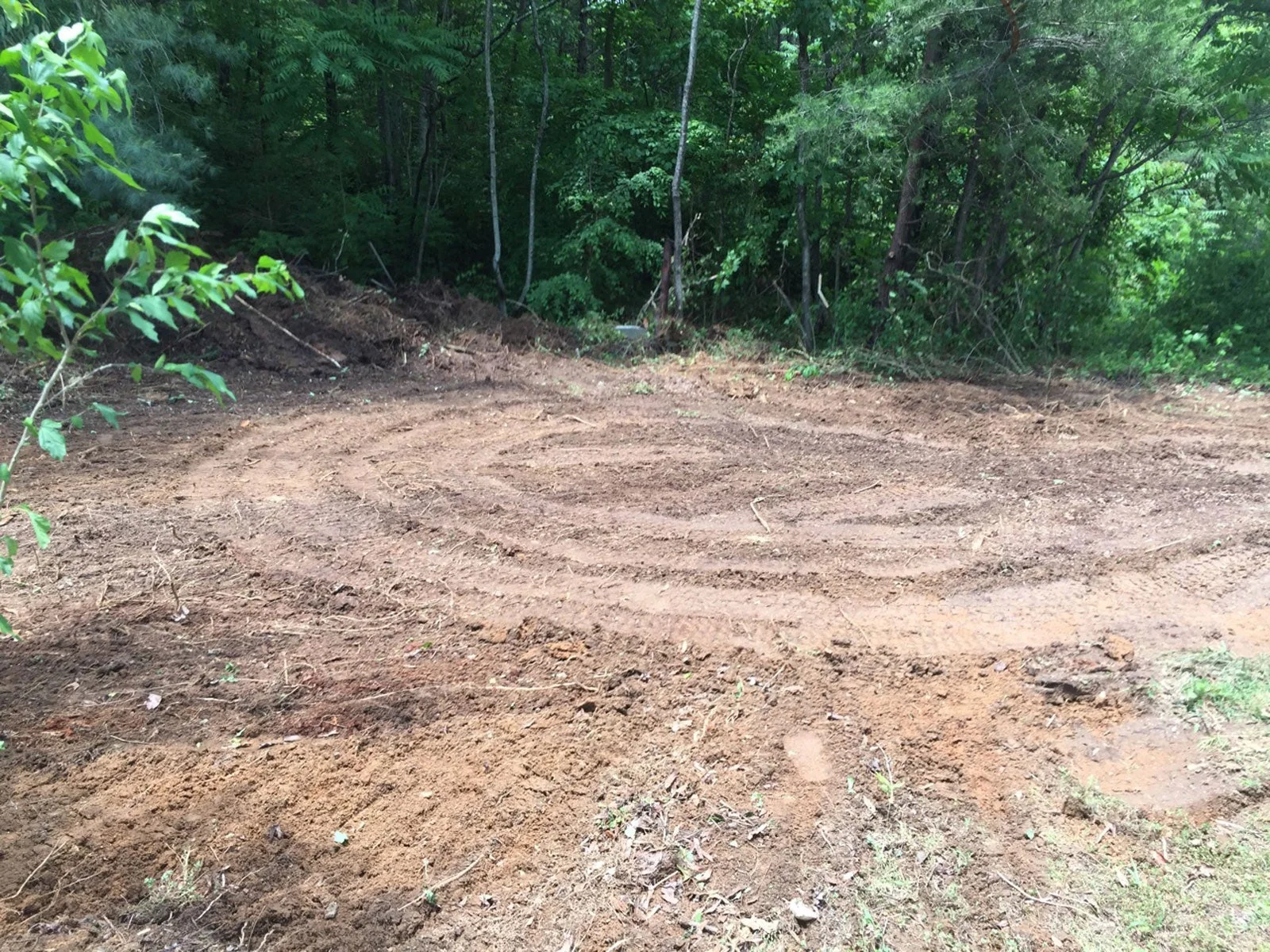
There is also the question of what is under the grass. A lot of these yards have a shallow topsoil layer over clay and rock, and a machine that digs in to fix a low corner quickly finds it is moving subsoil, not loam. That matters because subsoil does not grow grass, it compacts, and it holds water differently. A crew that has worked Fairview before knows to stockpile the topsoil, fix the grade underneath, and put the good dirt back on top. A crew that has not will scrape everything into one pile and leave you a yard that grows weeds for two years.
What the scope looks like, and what it costs
Leveling is a few different jobs wearing one name. A low corner that ponds after rain is not the same project as a whole backyard that slopes toward the foundation, and neither is the same as carving a usable lawn out of a hillside. The scope drives the price more than the square footage does.
| Scope | Typical range | What moves it |
|---|---|---|
| Re-grade one low spot, no new material | $1,800–$3,000 | Machine access, how far spoil has to be moved |
| Full yard re-slope away from the house, modest fill | $2,500–$4,500 | Tons of fill, haul distance, drainage correction |
| Build up a sunken lawn or remove a mound | $3,500–$6,000 | Volume of cut and fill, subsoil vs. topsoil |
| Steep or tight-access lot with off-site spoil removal | $5,000–$9,500 | Truck count, quarry and dump distance, shoring |
Most Fairview yards land in the $2,500 to $6,000 middle. The ceiling shows up when there is a slope to hold, a lot of spoil to leave the property, or a driveway that forces smaller loads and more trips.
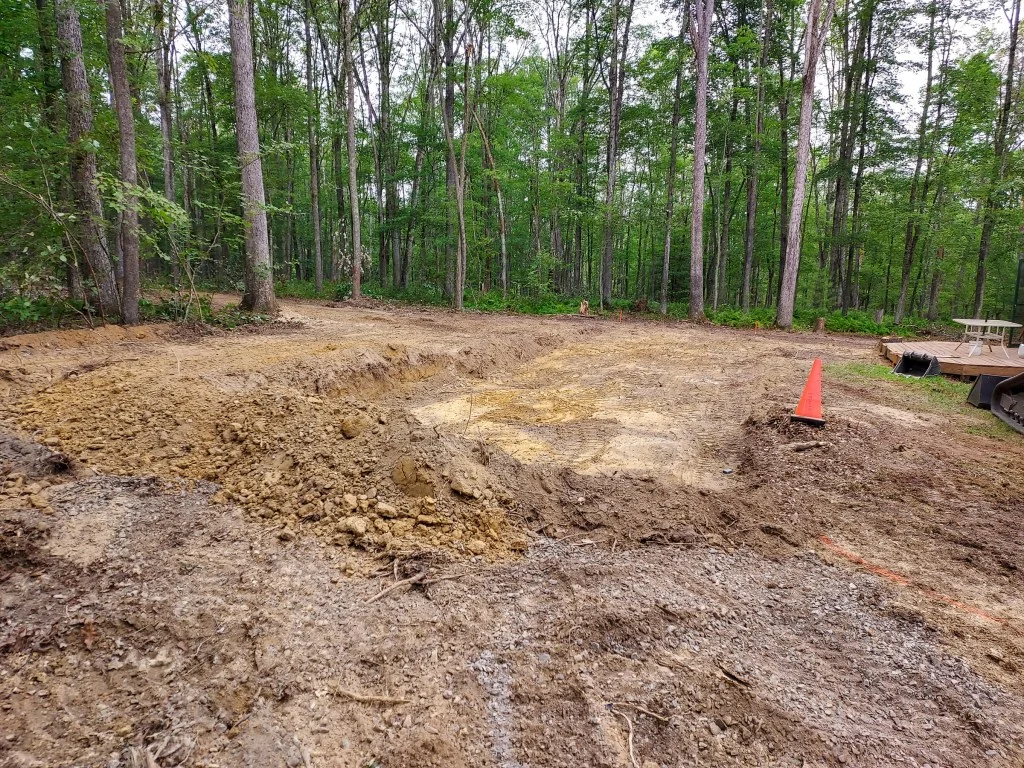
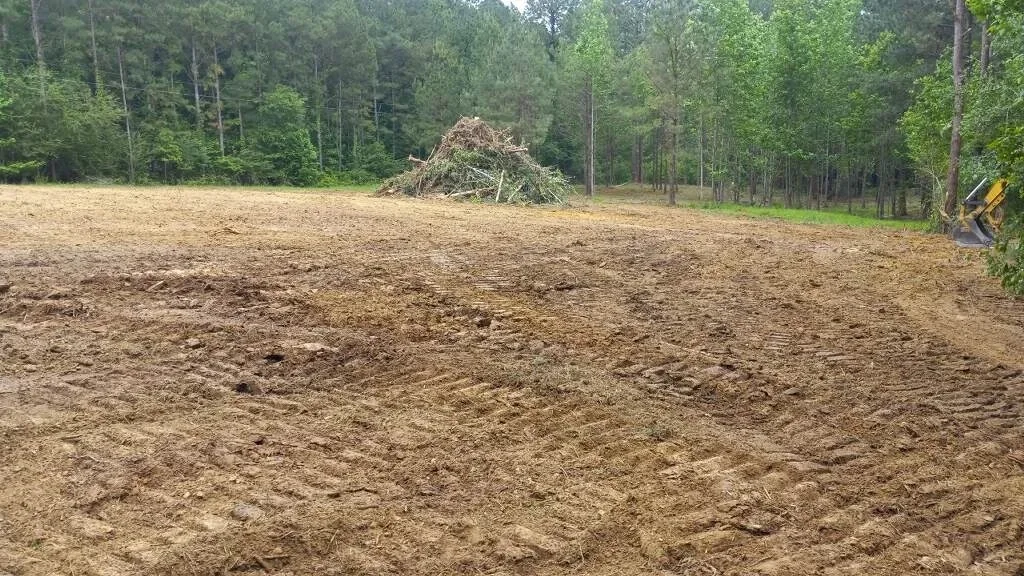
Walk through a real example. Say the yard behind the house falls toward the foundation and ponds at the corner of a deck. That is a cut-and-fill job: scrape the yard to a fall line, add fill at the low corner, compact, restore the topsoil. If the driveway lets a dump trailer reach the yard, the material cost is modest and the job sits in the $2,500 to $4,500 band with drainage correction. If the driveway is a quarter-mile gravel pull with a low culvert, the trailer cannot get there full, so the same job needs more trips and more machine time, and it climbs toward the top of the band. Nothing about the yard changed. The access did.
Now the other kind of Fairview job: a whole side yard that was never really graded, sloping steeply away from the house with a pile of old builder spoil at the bottom. Here you are not fixing a spot, you are building a usable surface. That means removing the spoil (which has to go somewhere, and if it goes off-site you pay per load), importing fill to create a level bench, holding that bench with a slope that will not slough off in the next wet spring, and draining it. Jobs like this are where Fairview quotes separate into two groups: the ones from contractors who have actually walked the lot and the ones from contractors who have not.
Water decides where the dirt goes
Leveling without a drainage plan is landscaping that undoes itself. On a Fairview hillside, the yard also has to accept runoff from uphill neighbors and shed it somewhere that is not the foundation. The federal record explains why this matters more here than in the flat country: 19 declared disaster events touch Buncombe County across 1973-2026, overwhelmingly storm and flood family. Each one pushed water at ground that was graded for a drier assumption.
Think about what that means on a specific lot. If you live on a hillside above a creek off Garren Creek Road, your yard is not only catching the rain that falls on it, it is catching the rain that falls above it and crosses your property on the way down. If your neighbor graded their yard to shed water south and yours sheds south too, the two combine at your fence line and cut a gully. If your yard slopes toward the house because the original cut was sloppy, water sits against the foundation and finds the basement door. None of this is exotic. It is the ordinary behavior of water on a slope, and it is exactly why a grading quote that talks only about dirt is a quote that will not solve your problem.
So the honest sequence is grade, then drain, then finish. The yard leveling guide walks through the order of operations. The state code treats surface drainage as a real requirement, not an afterthought, and the National Weather Service's local outlook is a fair reminder of what mountain rainfall does to a yard that has no fall line.
Practically, drainage on these lots usually means one of a few things: a swale cut along the uphill edge of the yard to intercept runoff before it gets to the house, a graded fall line that pushes water around the building rather than into it, a French drain or curtain drain at the low corner, or a dry creek bed that gives sheet flow somewhere to go without ripping the turf. Which one you need is a site question, not a price question. But the grading and the drainage are one scope, and a bid that separates them is telling you something.
Which crews are set up for this terrain
Not every grading outfit wants a Fairview job, and the ones that do tend to own smaller machines and a dump trailer for a reason. When you are comparing bidders, ask what equipment they plan to bring and how they will get it in — the answer tells you whether they have looked at your driveway or just your address. Ask where the fill comes from and where the spoil goes, because both are line items that should appear on the quote. North Carolina sets a licensing threshold for general contracting that grading work can cross, so it is fair to ask about licensure through the NC Licensing Board for General Contractors once a project gets beyond a hand-tool scale.
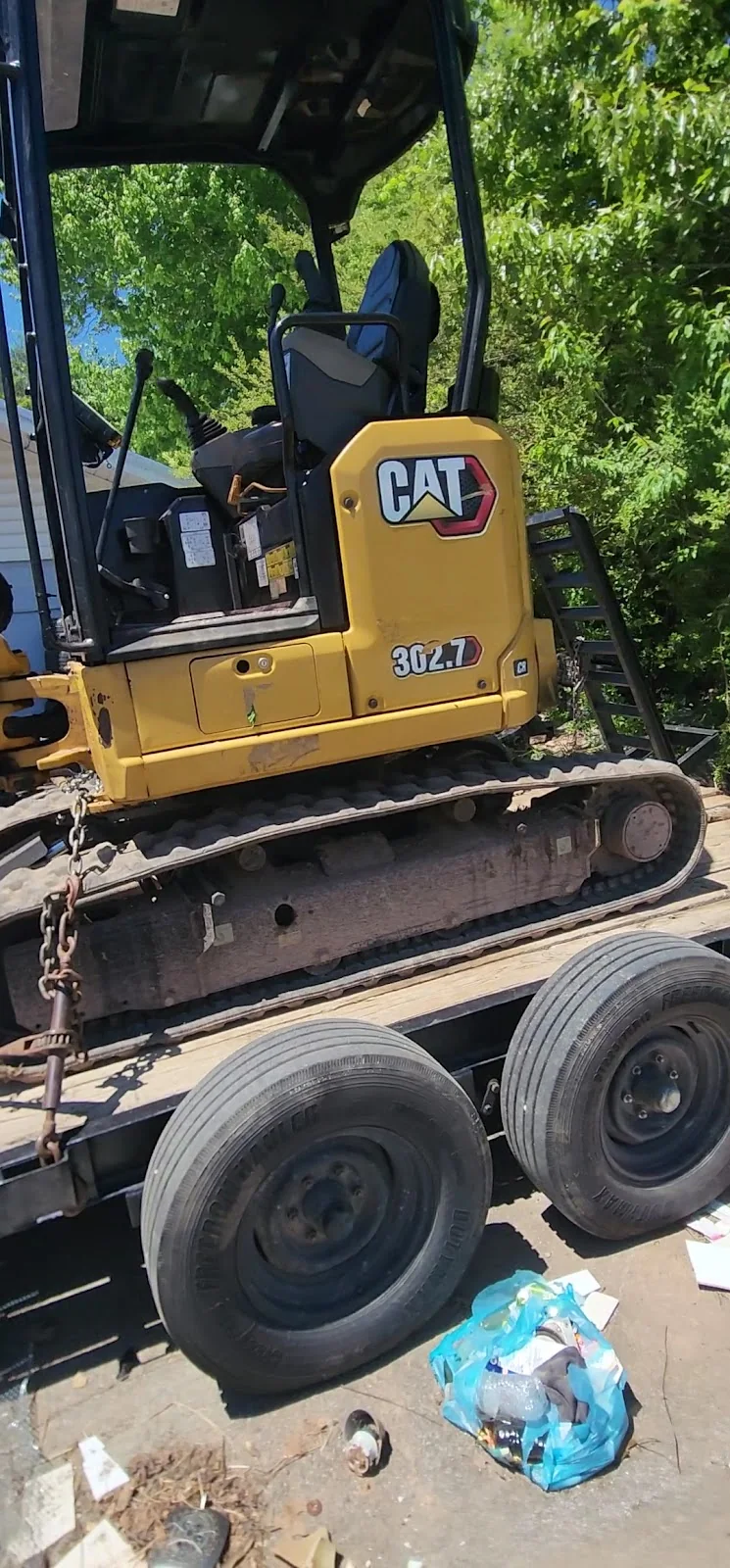
Equipment is the tell. A compact track loader on rubber tracks will climb a Fairview grade and turn on a driveway pad where a wheeled skid steer would tear ruts and slide. A mini excavator reaches over a retaining wall and digs a footing for a swale where a full-size hoe would not fit through the gate. A dump trailer behind a one-ton pickup moves material a tri-axle cannot legally take down a private drive, but it moves it a few yards at a time, which is why tight-access jobs cost more per yard. When you ask a bidder what they are bringing and they answer with a specific machine and a specific reason, you are talking to someone who has done this here.
The other tell is how they handle the soil. A crew that plans to stockpile your topsoil, work the subgrade, and put the loam back is a crew that understands what happens to a Fairview yard in year two. A crew that talks only about moving dirt and getting paid is a crew that will leave you a smooth, bare, compacted surface that sheds water and grows nothing.
If you are not sure your lot even has a grading problem versus a drainage problem, the Fairview grading contractors page and a first walkthrough are the cheaper way to find out.
Reading a Fairview bid
A usable quote on a hillside lot names four things: the machine and how it reaches the work, the cubic yards of cut and fill with the source and destination of the material, the drainage correction that keeps the new grade from washing out, and the surface treatment, whether that is topsoil and seed, gravel, or nothing. If a number arrives with none of those, it is a guess. The EPA's guidance on stormwater and erosion control is background worth skimming, because bare graded ground on a slope is the exact condition that sheds soil into a creek the first hard rain.
Two more things belong on a Fairview quote. The first is a disposal plan for spoil. If the job removes a mound or cuts a slope, that dirt has to go somewhere, and on a lot that backs up to woods the answer might be a graded berm on the property, or it might be hauling off-site, and those are very different costs. The second is a compaction note. Fill that gets dumped and smoothed is not the same as fill that gets placed in lifts and compacted, and on a slope the difference shows up as settling and rutting within a season.
Do not be afraid to ask a bidder to walk the lot again with you and point at the spots. Good ones will, and the walk usually surfaces something the first look missed: a buried drain line, a soft spot where a spring comes up, a septic field that grading must not touch. Those are the Fairview details that turn a fair quote into a real one, and they are the reason the final number here is quoted after a site visit rather than over the phone.