When an Etowah drainage job crosses into state erosion permitting
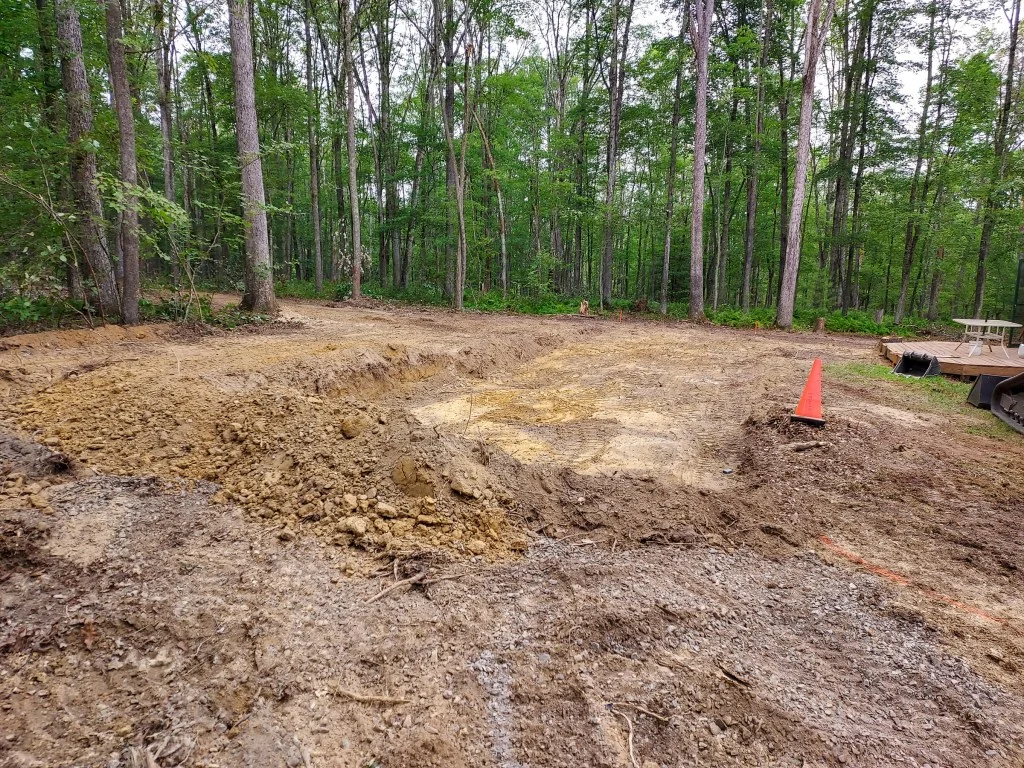
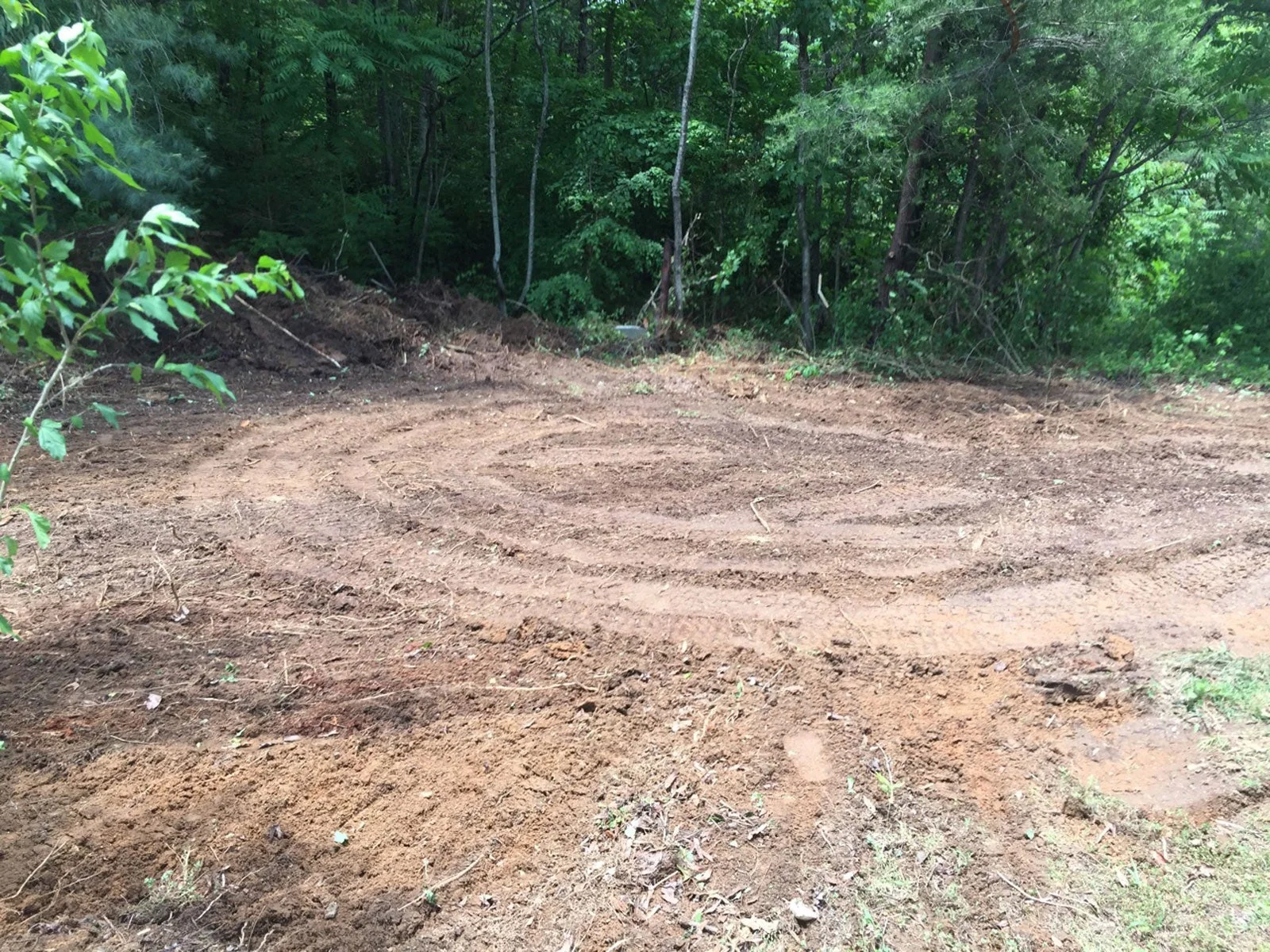
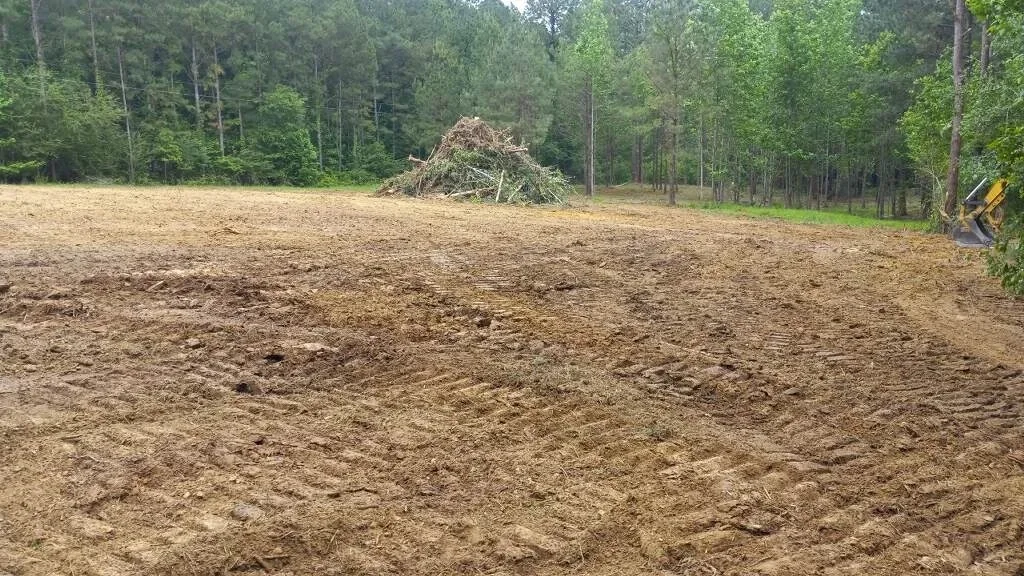
The acre line is the dividing point in Etowah. Lots here on the Henderson County side of the river often run a half-acre to several acres, which means a drainage fix that reshapes a swale, cuts a long trench, or regrades a slope can push disturbed ground past the threshold where North Carolina's erosion and sedimentation rules apply. Below that line, most residential drainage is a straightforward build. Above it, you're adding a state permit application, a plan sheet, and inspection milestones — and that overhead lands on the job cost before a single trencher rolls.
What makes Etowah different from a tight-subdivision town is lot geometry. Many parcels here were carved from old farm and orchard tracts, so they're wide, irregular, and often share a long boundary with a neighbor's uphill pasture or woodland. When your drainage fix needs to intercept water before it reaches your house, the trench may have to run hundreds of feet across open ground — and that linear disturbance adds up fast against the acre threshold. A short foundation drain near the house usually stays well under the line. A swale-and-curtain-drain system that crosses the width of a two-acre lot may not.
That's why two Etowah quotes for what looks like the same job can diverge by thousands. One contractor priced a yard; the other priced a permitted land-disturbing activity. Ask which one you're being quoted, and ask early. The question isn't just cost — it's timeline. A permitted job has to wait on plan review and can't be left unstabilized during a rain event, so scheduling tightens around the inspection calendar.
What Etowah's ground does to water
The French Broad River corridor and the rolling terrain west of Hendersonville shape every drainage call in this community. A lot that drains fine in July turns into a sheet of water when a summer thunderstorm dumps two inches in an hour — the clay subsoil sheds it before it can soak in, and it follows gravity toward the nearest foundation, driveway cut, or low corner.
Federal storm history backs up what anyone who lives here already knows: 16 declared events touch this county (1978-2026), and they lean heavily on flooding and storm damage. Each one pushed water across ground that was graded for a drier assumption. The National Weather Service tracks the pattern; the drainage plan has to answer it.
The other local wrinkle is our wet-season timing. Winter and early spring here bring long, soaking rains rather than the quick summer downpours, and saturated clay behaves completely differently from dry clay. A drain that looks adequate in August may be overwhelmed in February, when the subsoil can't absorb anything and the water table sits high. Any honest Etowah drainage design accounts for both storm profiles — the flash summer event and the slow winter soak — because they fail a yard in different ways.
Drainage scopes and what they cost in Henderson County
Below are working ranges for the scope types Etowah homeowners actually buy. They sit inside the site-wide band; slope, run length, and outlet options move a job within it.
| Scope | Typical range | What drives the number |
|---|---|---|
| Single French drain run | $3,000–$9,000 | Run length, depth, stone volume, outlet distance |
| Full-yard drainage system | $3,500–$12,000 | Number of runs, catch basins, tie-in to existing storm lines |
| Yard regrading and swale work | $15,000 and up | Disturbed acreage, cut-and-fill volume, permit overhead |
| Downspout and gutter drainage | Often folded into a full-system bid | Number of drops, buried line footage |
| Erosion-control installation | Priced per the permit plan | Silt fence, inlet protection, stabilization timing |
The ranges shift within each row based on the outlet. In Etowah, getting water off the property is often the hardest part of the bid — a lot with a natural low corner near a creek or road ditch is far cheaper to drain than one that needs a long buried line to reach a legal discharge point. Where the outlet is close, you pay for the drain. Where it's far, you pay for the pipe.
Material choices matter on our clay too. Washed stone and proper filter fabric cost more up front than cheaper alternatives, but they're what keeps a drain from silting shut in a few seasons. A bid that's noticeably low often trimmed exactly there. See the full county picture in the Henderson County grading cost breakdown for line-item detail.
Who can legally take the job
Drainage work that stays under the general contracting threshold doesn't require a GC license, but any job involving plumbing connection — tying a drain into a sanitary line, for instance — brings the North Carolina State Board of Examiners of Plumbing, Heating and Fire Sprinkler Contractors into scope. Larger land-disturbing projects fall under the NC Licensing Board for General Contractors rules. For permitted erosion work, the county soil and water office reviews the plan.
The practical filter: ask any Etowah drainage contractor whether their scope includes permit coordination, and whether their crew has built on your soil type. Clay-heavy ground on a slope behaves differently from a sandy flat lot, and the wrong pipe-and-stone spec fails within a season or two.
It also helps to know what a legitimate scope document looks like. A serious bid should name the pipe type and diameter, the stone gradation, whether filter fabric is included, the depth and slope of each run, and the specific outlet point. If a quote says "install French drain" and little else, it's not a spec — it's a hope. On a sloped Etowah lot, the difference between a 4-inch and 6-inch line, or a 1-percent versus 2-percent fall, is the difference between a drain that works for decades and one that ponds at the midway point after the first big storm.
Sequencing the work so it actually holds
Drainage fails in Etowah for a predictable reason: it's installed before the water source is understood. A French drain along a foundation won't fix water that's arriving from an uphill neighbor's runoff, and a swale won't help if the gutters are dumping at the foundation. The right sequence is to trace the water first — grade, roof drainage, surface flow, and where the outlet goes — then design the system around what the trace finds.
On these hillside lots the source is often invisible until you walk the property during or right after a storm. Water that appears to seep from a foundation may actually be surfacing from a shallow water table moving downslope through the clay. Those two problems call for different fixes, and treating the wrong one wastes the whole budget.
That's also why we point homeowners to the drainage and erosion control guide before requesting a bid, and why any reliable Etowah grading contractor will walk the yard with you before quoting. A bid that shows up in an inbox without a site visit is a bid for someone else's yard.