The one-acre line: where Arden dirt work changes class
Arden is the kind of place where the lot next door decides your paperwork. Along the Cane Creek and French Broad bottomland off Brevard Road, parcels are small and flat, and a house pad is a two-day scrape and compact. Push south and west toward Royal Pines, Avery Creek, and the leading edge of the Blue Ridge escarpment and you find subdivided tracts where a single homesite pads out past 43,560 square feet of disturbance once the driveway, turnaround, and septic area are counted.
That number matters. In North Carolina, land-disturbing activity that touches one acre or more falls under the state's erosion and sedimentation program, and the plan has to be prepared and certified by a qualified professional before a grader moves. Practically, that means your Arden bid now carries a plan sheet, silt fence, a temporary sediment basin or outlet protection, and a sequence of inspections tied to construction milestones. On a small in-fill lot you never see any of it. On a one-acre pad cut into a Buncombe County slope, it can be a five-figure input and a month of schedule you didn't plan for.
What Arden ground actually does to a pad budget
Two things drive cost here more than square footage: how much dirt has to move, and whether the cut hits rock. A flat Brevard Road lot may need 30 to 60 cubic yards of fill; a graded homesite on the slope above it can need several hundred, plus engineered fill placed in lifts and tested for compaction so the footing design holds.
Rock is the wildcard. The same geology that makes the escarpment scenic puts shallow bedrock under plenty of Arden lots, and a cut that turns into rock removal shifts from hourly machine time to drilling, breaking, and hauling. Wet bottomland brings its own bill: unsuitable soil has to be undercut and replaced, and anything you can't reuse gets trucked out and charged by the load.
The drainage picture amplifies all of it. Buncombe County sits in a federal disaster record of 19 declared events spanning 1973-2026, overwhelmingly storm and flood family, and every one of those events tested pads that were graded for a drier assumption. The National Weather Service tracks the rainfall that drives those events; your pad's finish grade, swales, and outlet have to be built for it, not for a dry year. That's also why the residential code treats site drainage as a structural matter — see the NC Licensing Board for General Contractors for how grading work overlaps licensed general contracting once a project crosses the improvement threshold.
Arden site prep scopes and what they cost
The table below reflects a typical Buncombe County range for residential pad work. Your number lands inside it based on access, slope, rock, and how much of the disturbed area has to be stabilized and inspected.
| Scope | Typical range | What moves the number |
|---|---|---|
| Small in-fill pad, flat lot, under one acre | $3,500–$6,500 | Fill volume, driveway tie-in, topsoil strip |
| Standard homesite pad, moderate slope | $6,500–$11,000 | Cut/fill balance, temporary driveway, sediment control |
| Steep or heavily wooded lot, engineered fill | $11,000–$20,000 | Lift compaction, retaining, tree clearing and root grubbing |
| Rock removal, wet soil undercut, or over-one-acre permit | $20,000–$30,000 | Breaking and hauling rock, import fill, certified erosion plan and inspections |
Notice the top of that band is not a different service; it is the same service with rock, water, and permit obligations layered on. That is the honest reason two Arden neighbors on similar acreage can be $18,000 apart. The full county picture, including line items for clearing and driveway, is in our Buncombe County grading cost breakdown.
Sequencing the job so the pad is ready when the builder is
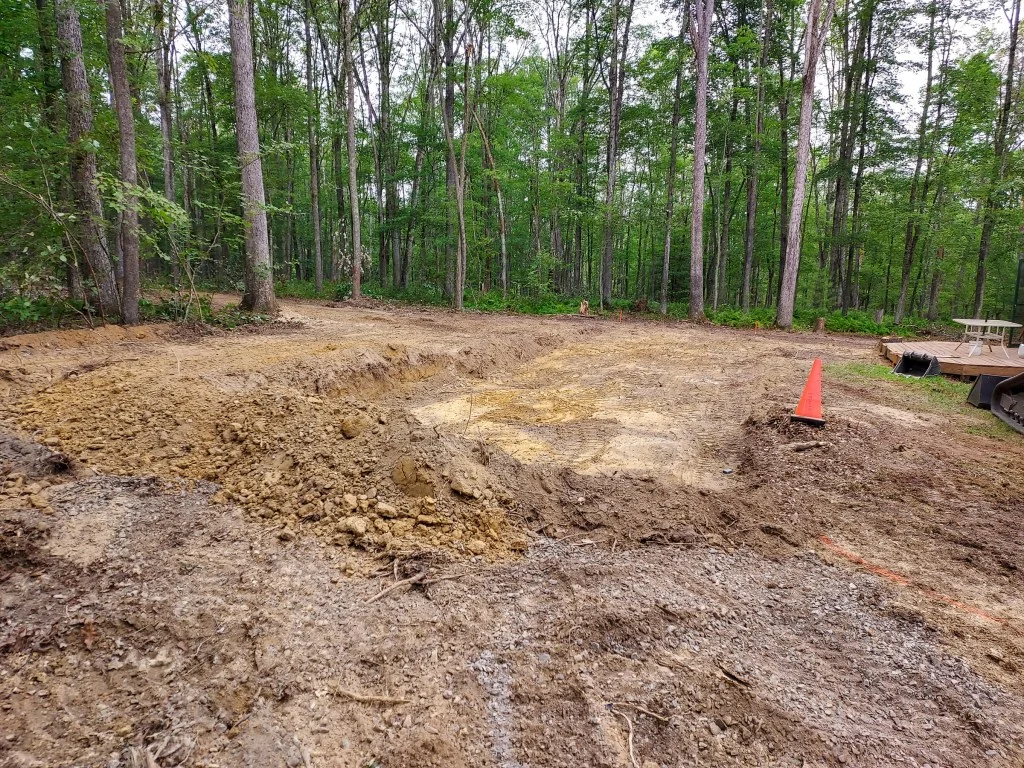
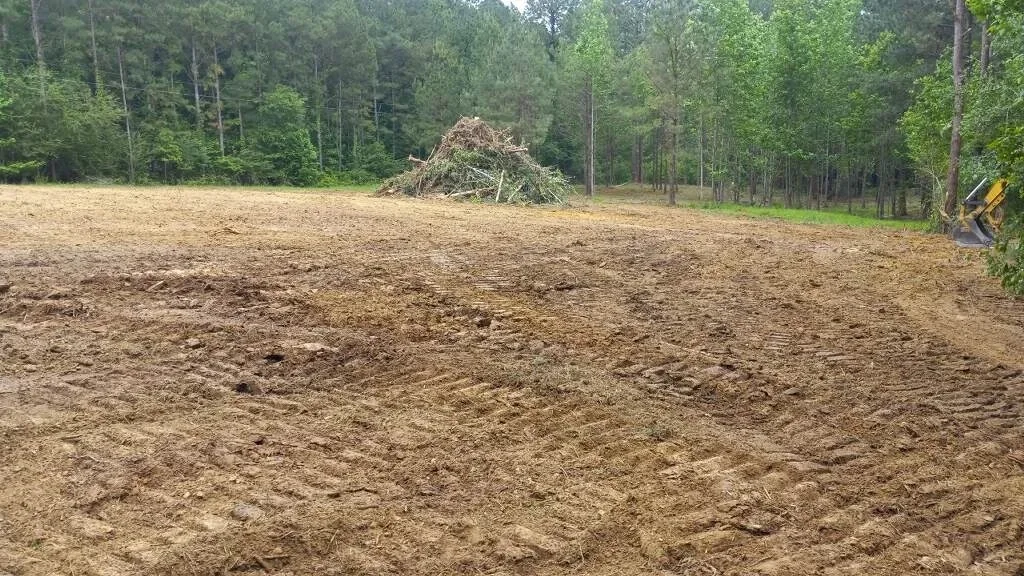
A building pad is not a finished product; it's a handoff. The grader's job ends when the pad is at design elevation, compacted, and draining away from the footprint, and the footing crew can walk on it without sinking. Get the order wrong and you pay twice: a pad cut too early sits through a wet season, loses compaction, and has to be reworked before the foundation goes in.
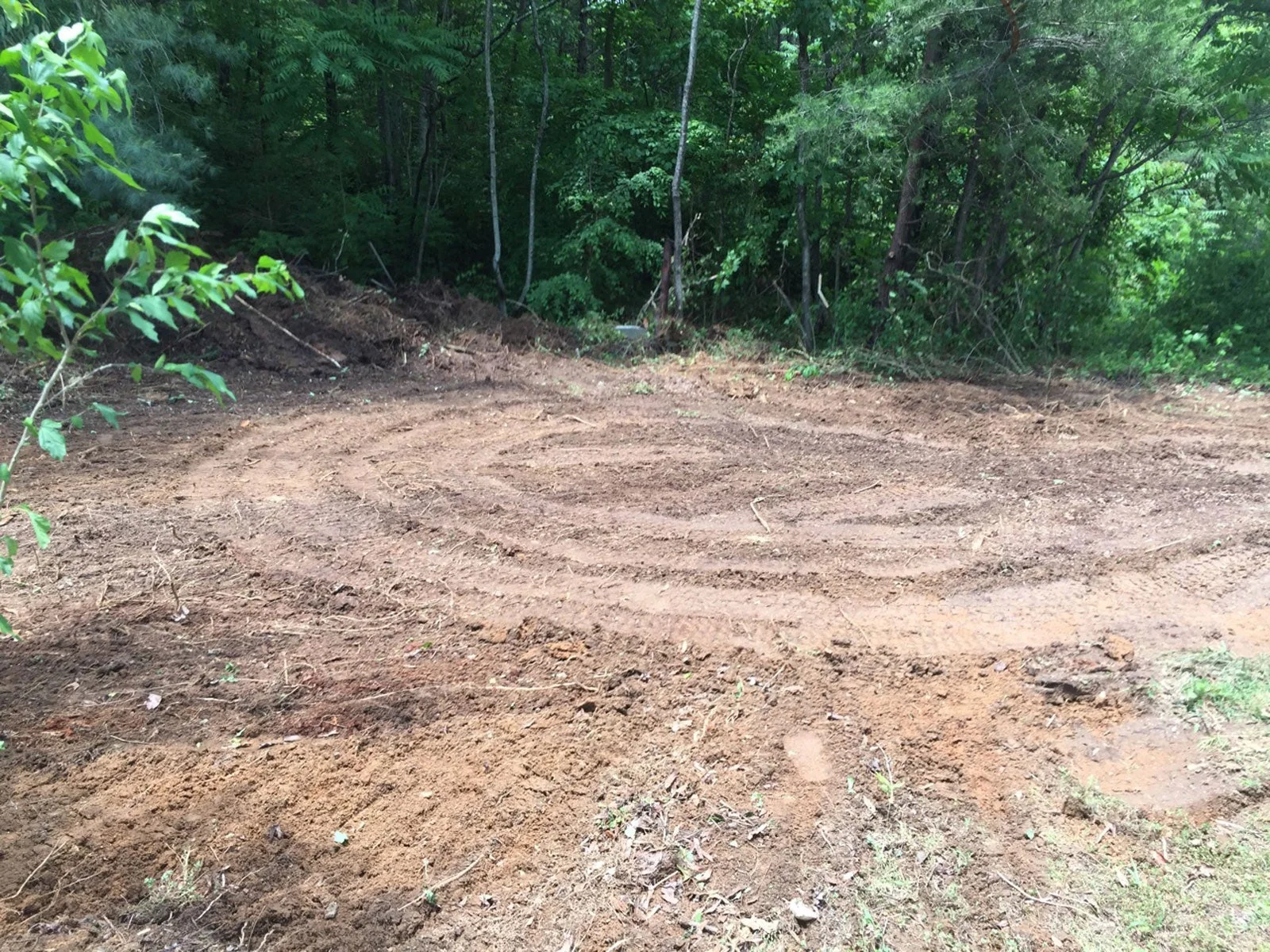
In Arden the practical sequence looks like this. Clear and grub first, with root balls and topsoil separated from reusable fill. Establish the erosion controls before the first cut, because disturbed ground and a rain event are the two ingredients the state program exists to separate. Cut and fill to the engineer's elevations, placing fill in lifts if the pad is structural. Finish grade the lot so water leaves the footprint and reaches a defined outlet rather than the neighbor's slope. Stabilize everything you disturbed, because bare dirt is the inspection item that stalls a project.
If a septic system is in play, its approval area and the pad have to be sited together, and that is where the NC State Board of Examiners of Plumbing, Heating and Fire Sprinkler Contractors licensing rules enter for the trades that follow. If you are comparing crews, our Arden grading contractor guide covers what to ask before anyone quotes.
Getting a bid you can actually compare
Site prep quotes fail to compare for one reason: they quote different jobs. A complete Arden bid should state cut and fill volumes and where the fill comes from, whether fill is placed in lifts and tested, how rock is handled and at what unit price, where spoil goes and who pays the haul, how the erosion plan and inspections are handled if you cross an acre, and what stabilization is included at the end.
If your lot fronts a slope, expect a retaining line item and treat its absence as a gap rather than savings. If your lot is wooded, confirm root grubbing and not just mowing, because stumps left under a pad become a settlement claim later. And ask who holds the permit obligation when the disturbed area crosses the one-acre line, since that responsibility shapes both price and schedule. Our site prep and building pads overview walks through the full scope if you want a checklist to hold bids against.