Swannanoa lots don't price like Asheville lots
Drive US-70 through Swannanoa and you pass two different excavating towns. On the valley floor, between the river and the old mill ground, parcels are long and low and often sit within the floodplain, where the work is as much about grade as it is about dirt. Climb Bee Tree Road or Flat Creek Road and the same crew is cutting a driveway bench into a hillside, hauling spoils down a lane with no shoulder and no turnaround. Same county, same machine rates, very different day. That split is the single biggest reason a Swannanoa bid can land thousands of dollars from an Asheville bid for what sounds like the same scope on paper.
The town's housing stock splits the same way. Mill-era houses on tight town lots need footings and utility trenches dug within a few feet of an old block wall, often with mature trees whose roots you're trying not to kill. New builds on subdivided pasture need pads, septic fields and a full drainage plan before the first concrete truck arrives. Neither is automatically more expensive. Both are cheaper when the dig is scoped to the lot you actually own, not a template from somewhere flatter. A crew that bids every job off a square-foot formula will either overcharge the simple lot or underbid the hard one and disappear when the rock shows up.
Lot shape matters here in a way it doesn't in newer subdivisions out toward Weaverville or Fletcher. Swannanoa parcels frequently run narrow and deep, following old farm lines rather than a developer's grid, which means the driveway is long, the buildable pad is small, and every machine move has to be planned. On a wide, graded suburban lot the excavator drives wherever it wants. Here, the machine often works in a corridor the width of the house footprint plus a few feet, and the operator's skill at tight quarters is worth more than the hourly rate suggests.
What a Swannanoa dig costs, line by line
Machine time, access and haul-off drive every number below, and the Buncombe County grading cost breakdown carries the working table for the county as a whole. The short version for Swannanoa:
| Scope | Typical range | What moves it |
|---|---|---|
| Single footing or pier dig | $1,800–$2,600 | Depth to bearing soil, hand-dig near existing walls |
| Utility or drainage trench run | $2,000–$3,500 | Length, rock, crossing existing services |
| Small pad or garage slab | $2,800–$4,500 | Cut volume, spoil removal off site |
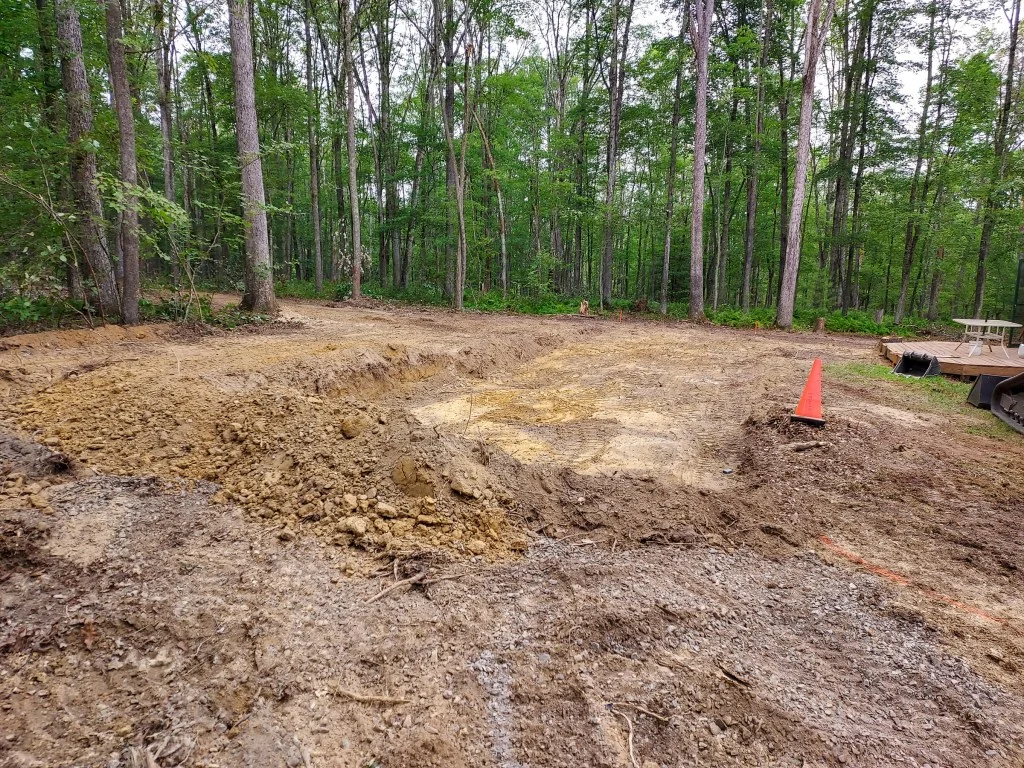
| Full site excavation, new build | $6,000–$15,000 | Slope, retaining needs, truck access, haul distance |
Two line items separate a Swannanoa bid from a flatland bid: rock and haul-off. Valley-floor lots hit river cobble and old fill, the kind of ground that looks fine on a probe and turns into a fight once the bucket is in it. Hillside lots hit weathered rock and need spoils trucked rather than pushed to a back corner, because there is no back corner to push them to. If a quote has no rock or haul line and you're on a hillside parcel, treat it as incomplete rather than cheap. When you compare estimates, compare scopes through the excavation contractor guide before comparing totals.
The footing line deserves a closer look, because it's where Swannanoa's older housing stock bites. A mill-era house sitting on a shallow original foundation often needs new footings dug tight against the existing wall, sometimes by hand where a machine can't reach without undermining the structure. That's slower than open-ground digging, and the price reflects it. On a clean new-build pad, the same footing scope runs faster and cheaper. Same row in the table, two very different afternoons.
Storm water is the local variable
Swannanoa's federal disaster record explains a lot of the excavation work here: 19 declared events touch this county (1973-2026), overwhelmingly flood and storm family, and the river corridor through town has absorbed more than its share. That history changes what a good dig looks like. Finished floor elevations get checked against flood maps before a pad is staked. Swales and drainage runs get sized for the storm that actually arrives, not the average one. The National Weather Service maintains the local rainfall and flood-warning record worth checking before you finalize any grade that moves water toward a neighbor.
Practically, that means the answer to "where does this water go" should be in the plan before the machine shows up. Sites that regrade without it tend to call the same crew back in a year, and that second visit is never the cheap one. On the valley floor this shows up as pads set a little higher than a naive grade would suggest, and as swales that look oversized on a dry day and earn their keep on a wet one. On the hillside, it shows up as cut-off ditches above a bench and as a culvert sized for real flow rather than the smallest pipe that fits the drive.
There's a permitting angle too. Buncombe County's erosion-control rules are stricter than many rural counties, and ground disturbance near a stream or across more than a small area brings additional requirements. The EPA maintains the national stormwater and construction-runoff guidance that local rules are built on, and it's a fair plain-language starting point if you want to understand why a silt fence and a stabilized entrance aren't optional. A crew that treats them as paperwork will cost you later when the county inspects.
Permits, erosion control and who's allowed to bid
Grading and excavation in Buncombe County come with erosion-control requirements and, on larger or steeper jobs, engineered plans. The NC Licensing Board for General Contractors sets the threshold at which a project needs a licensed general contractor, and excavation tied to a permitted structure usually crosses it — verify the license before you sign, not after. If the dig touches septic lines or water service, plumbing licensing rules under the NC State Board of Examiners of Plumbing, Heating and Fire Sprinkler Contractors apply to who can make those connections. That second rule catches people in Swannanoa more than you'd expect, because so many homes here are on septic and well rather than city utilities, so a routine site dig can brush against both licensing worlds at once.
The honest test of a Swannanoa excavator is simple: ask what they'll do when it rains mid-dig. A crew with a silt fence and a stabilization plan answers immediately. A crew that shrugs is planning to leave your mud on the road, and in a town where a storm can drop serious rain with little warning, the mud on the road is a real problem rather than a hypothetical one.
It also pays to know what the bid should contain before you shop. A complete Swannanoa excavation scope names the dig, the haul-off destination, erosion control during and after, and restoration of any disturbed ground that isn't getting built on. Quotes that list only "excavation" as a lump sum are the ones most likely to grow change orders halfway through.
Working with the town's terrain, not against it
Swannanoa jobs reward sequencing. On a hillside parcel, cut the access and the bench before ordering materials; on a valley lot, settle drainage and elevation before the pad is compacted. Local crews that run this town regularly know which lanes a loaded dump truck can actually climb and which driveways need a mat or a smaller machine. That knowledge is worth more than a low hourly rate. When you're ready to compare bids, the Swannanoa grading contractors page covers the sitework side that usually goes with the dig.
Timing is part of the local reality too. Swannanoa's wet seasons and its clay-heavy valley soils mean a dig scheduled in a dry window goes smoother than the same dig after a week of rain. Ask any crew you're considering what they do to a site before leaving it for a forecast storm, and whether they'll pause rather than fight a saturated lot. The answer tells you how the job will actually go, and it's the kind of detail that separates a finished pad from a rutted mess you'll be fixing for months.