The one-acre line that decides your paperwork
Black Mountain sits at the mouth of the Swannanoa Valley, which means the town limits and the unincorporated ridges right around it mix gentle bottomland with true mountain parcels. Those two price and permit differently. The line that matters most is disturbance over one acre: stay under it and a small residential clearing job mostly answers to the county, but once you clear or grade an acre or more, North Carolina's erosion and sediment control rules and a state-issued permit come into play. A half-acre lot in town rarely crosses it; a five-acre wooded tract on a valley side slope almost always does.
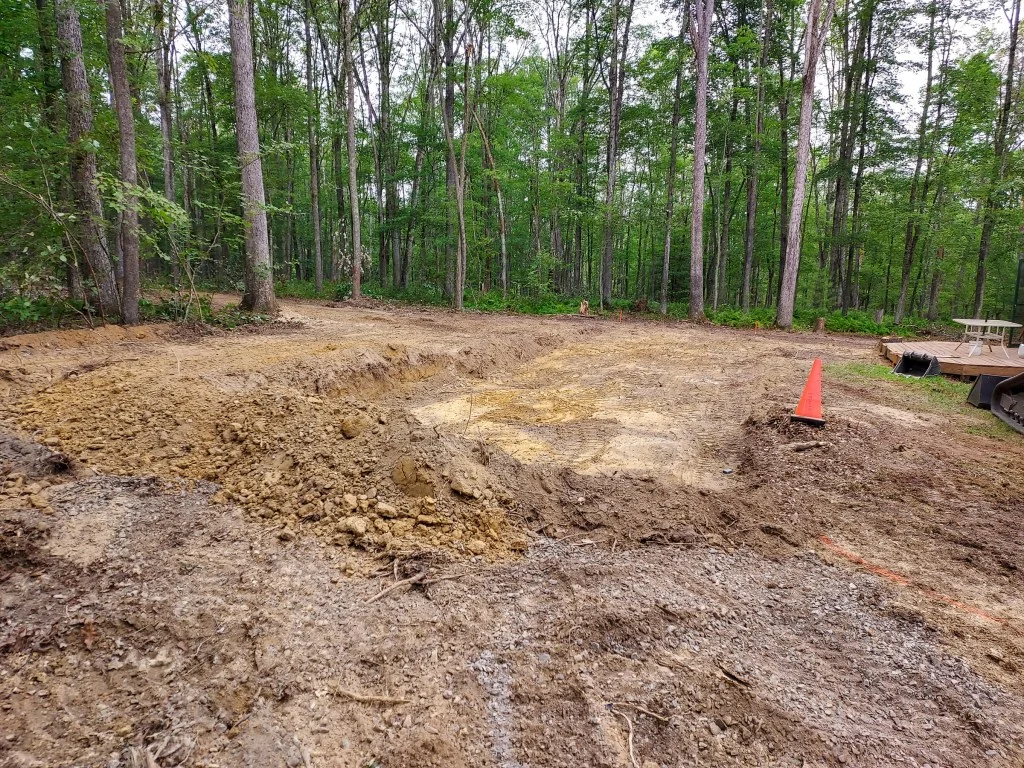
What that means in practice is two different jobs. Inside the town grid, a lot on a street like a gentle grade off the old highway corridor can be mowed down and grubbed in a day, with a silt fence and a gravel construction entrance as the only erosion extras. Up a cove road toward the ridges, an acre-plus parcel needs a state-approved plan before a machine moves: sediment basins sized to the drainage, a stabilized entrance long enough that mud does not track onto the pavement, and inspections through the wet months. Permitting adds design time on the front end and maintenance on the back end, not just a fee. Budget for both, and ask which side of the line your parcel sits on before you sign anything.
There is a smaller trigger people miss: even under an acre, a parcel that touches a creek branch or sits on a steep cut can draw review, because sediment leaving that slope reaches the Swannanoa fast. If your property line runs along a stream, treat the one-acre figure as a floor, not a ceiling.
What drives the number on a Black Mountain lot
Four things move a clearing bid here: how steep the ground is, how big the trees and stumps, how hard it is to get equipment and trucks to the work, and where the material goes. A lot off a main valley road on gentle ground clears quickly. A parcel up a single-lane drive with a hemlock stand, a 25-degree pitch, and a creek branch along one edge takes longer, needs smaller machines, and costs more to haul off — and that last piece is invisible until a contractor walks it. This is why the same acreage can quote as a fair number on one property and a surprising one on the next.
Species and size matter more than people expect. A stand of white pine and poplar cuts and chips easily; a hardwood lot with big white oaks and hickory means larger stems, more stump grinding, and more debris by volume. Hemlock along a shaded cove branch adds weight and moisture, and grinding wet stumps is slow work. If the trees have market value, a logger may pay for the take on a large tract, but on a residential lot that rarely pencils out, so plan on clearing as a cost, not a credit.
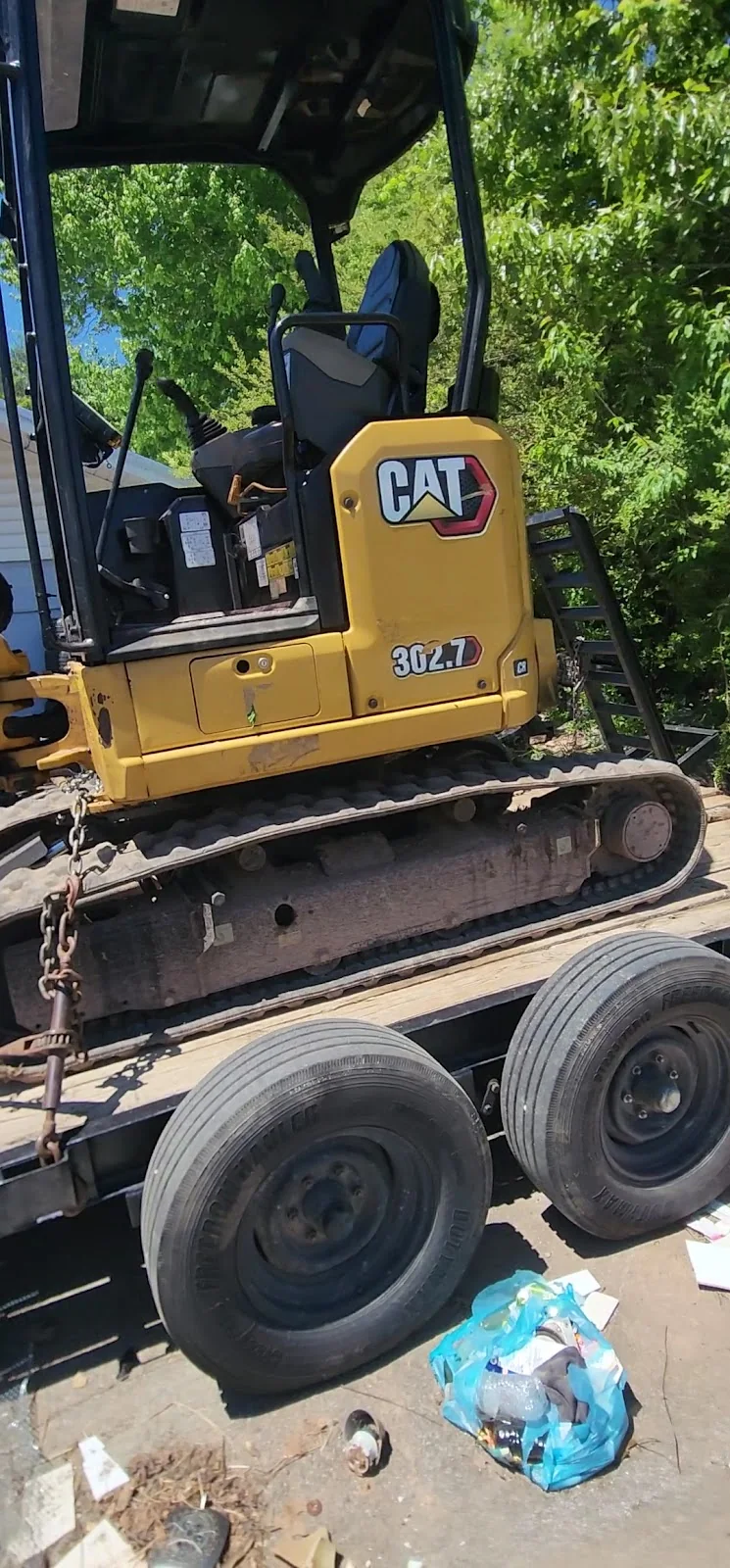
Access is the quiet multiplier. A paved drive that a full-size excavator and a dump truck can use keeps the job in normal pricing. A steep gravel drive, a tight switchback, or a low tree canopy over the entrance forces smaller machines and more trips, and every extra trip is time on the clock. Ask a crew to describe the machine they'd bring and how debris leaves the site — the answer tells you whether they have actually stood on the property. Then compare the working numbers on the Buncombe County grading cost breakdown so you are reading apples to apples.
Scope versus price, side by side
Clearing bids get confused because they bundle different scopes. Use this as a sanity check when you read quotes, then compare it against the working numbers on the Buncombe County grading cost breakdown.
| Scope | Typical range |
|---|---|
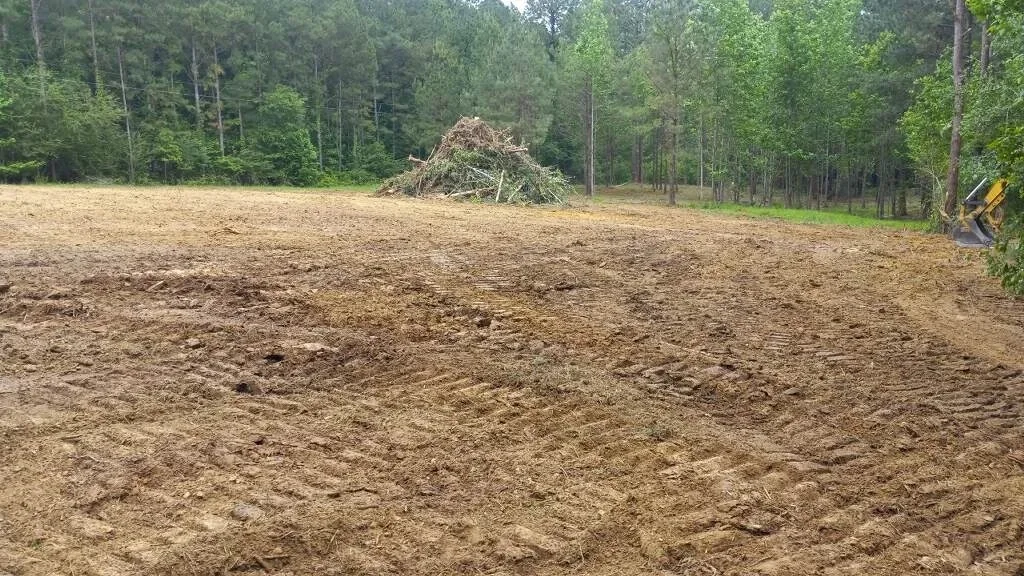
| Brush, saplings, light trees; material stays or chips on site | $750–$2,500 |
| Mid-size trees cleared, stumps ground, rough graded | $1,500–$5,000 |
| Full lot clearing with stump removal and haul-off | $3,000–$8,000 |
| Steep or heavily wooded acreage, complex access | $8,000–$10,000+ |
If a bid lands well above the top row with no slope, access, or haul-off explanation, ask what changed. If a bid lands below the bottom row on a rugged parcel, ask where the stumps and spoils are going. On mountain ground the honest answer is usually haul-off or on-site burial, and both have a place — burying stumps in a designated pit saves trucking but eats usable yard, so know which one you are buying.
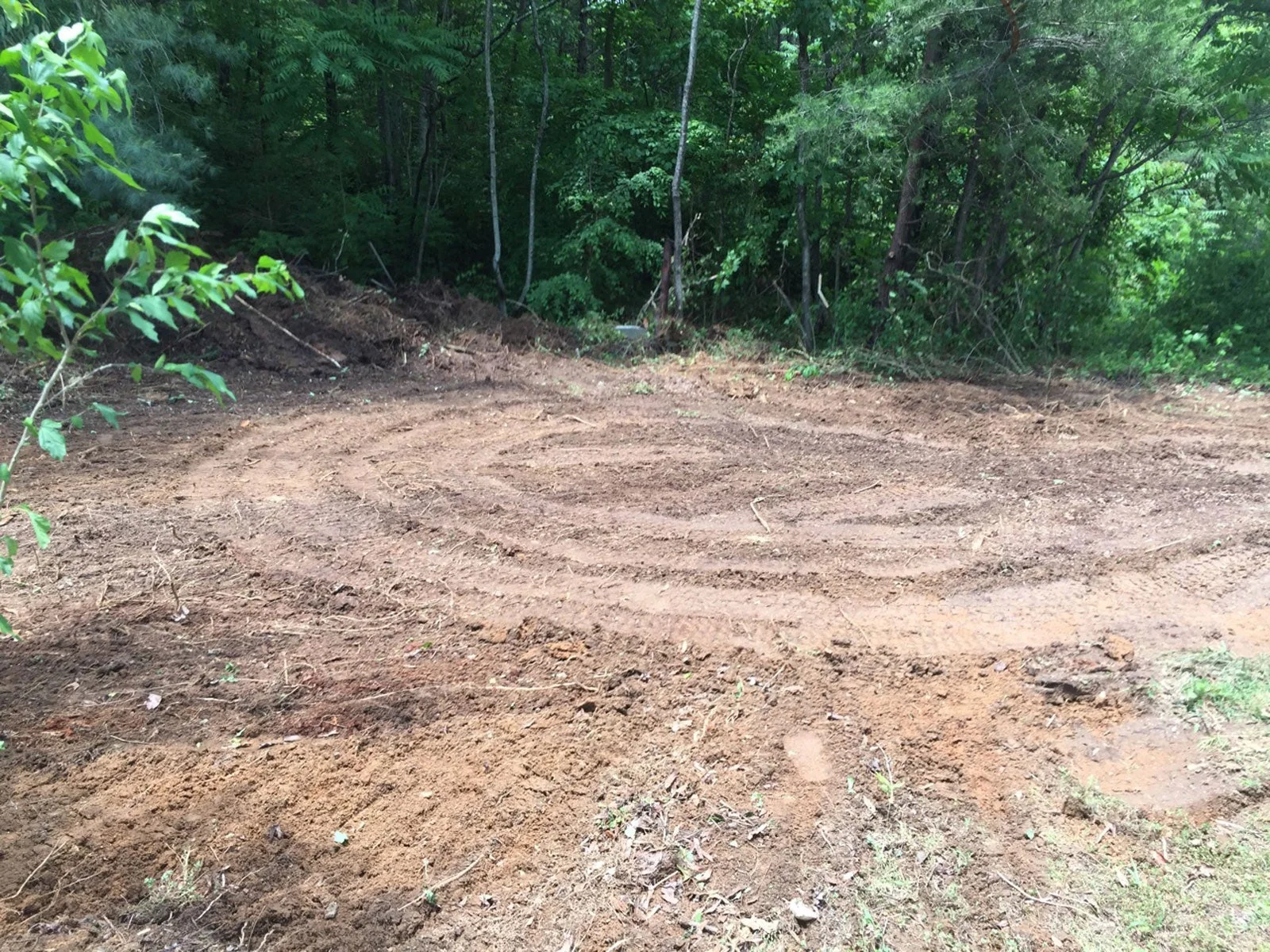
Two more line items to pin down in writing: grubbing (removing roots and topsoil versus just cutting stems) and whether the bid includes rough grading to a usable pad or stops at bare dirt. A lot left rough with root balls and ruts is not ready for a build, and the next contractor's quote for that work is real money. Our land clearing service overview shows how those questions map to scope.
Erosion control is not optional on mountain ground
Cleared soil on a slope does not stay put. The EPA treats sediment as a leading pollutant in surface water, and in a valley with creek branches feeding the Swannanoa, disturbed ground sheds fast. Practically, that means silt fence, a stabilized construction entrance, and often a sediment basin on larger jobs — items that belong in your scope before a blade touches dirt, not after a rain. On a parcel near a stream or a slope, the rulebook gets thicker, and the state's erosion-control program is the authority that signs off.
Timing and weather tie straight into this. Black Mountain's fall and winter rains make disturbed ground a liability, and that is not a local legend: the federal disaster record backs it, with 19 declared events spanning 1973-2026 in this county, largely storm and flood. Clearing in a wet stretch means more erosion-control upkeep and more mud to manage; clearing in a drier window often costs less in the end because the site stays workable and the slope holds. The National Weather Service outlook is the tool crews watch when scheduling around a wet front.
Do not treat erosion control as an add-on you can skip to save money. A failed silt fence or a washout that reaches a creek can mean stop-work, rework, and fines, all of which cost more than the controls would have. On a steep lot, the controls are part of the build, not a formality.
Choosing a crew that knows this valley
Three local checks before you sign. First, ask how they handle the one-acre threshold — a crew that can't explain when a state erosion permit is required hasn't worked much graded mountain ground. Second, confirm licensing: North Carolina's general contracting thresholds run through the NC Licensing Board for General Contractors, and a job that expands into significant grading or structure work may cross that line. Third, walk the access — ask how big a machine fits the drive and where debris leaves the site. Our land clearing service overview shows how those questions map to scope, and local grading contractors handle the pad work a cleared lot usually needs next.
Ask for proof of insurance and a written scope that names what happens to trees, stumps, and spoils. On a valley lot, also ask how the crew will protect the driveway, any septic area, and mature trees you want to keep — a good operator flags those before work starts, because a scarred oak or a crushed culvert is expensive to undo. For anything that adds a structure or a major grade change, the International Code Council building codes are the baseline local inspectors work from.
Timing around the wet season
Black Mountain's fall and winter rains make disturbed ground a liability, and that is not a local legend. The federal disaster record backs it: 19 declared events span 1973-2026 in this county, largely storm and flood. Clearing in a wet stretch means more erosion-control upkeep and more mud to manage; clearing in a drier window often costs less in the end because the site stays workable. If your timeline is flexible, ask a crew which month they'd pick for your parcel and why.
For a build, sequencing matters as much as season. If the pad and foundation come later, a lot cleared in a dry stretch and left rough through winter will need erosion maintenance and possibly rework in spring. Some owners clear, grade, and start the build in one push to avoid opening the ground twice; others clear early to see the lot's true shape and drainage before finalizing a house plan. Both are reasonable, and the right call depends on how fast your build follows the blade. Ask the crew to name the trade-off for your property rather than quoting a generic best month.
The last thing to sort early is drainage. A cleared slope changes where water runs, and a plan that ignores it can send storm flow toward a neighbor, a drive, or a foundation. Erosion control during clearing and a drainage plan for after it are two halves of the same job on mountain ground, so treat them that way when you compare bids.