Getting a machine to your driveway is half the job in Etowah
Etowah sits in Henderson County's Blue Ridge foothills, where a lot of residential driveways were cut into grade rather than graded across it. Several climb steeply from the road, some cross a wooded draw on the way to the house, and a few hit their first turn before the truck can build momentum. That shape decides everything about driveway repair here: the skid steer or mini excavator has to actually reach the trouble spot, the driver has to work without swinging into the neighbor's bank, and the spoiled material has to come back out somehow.
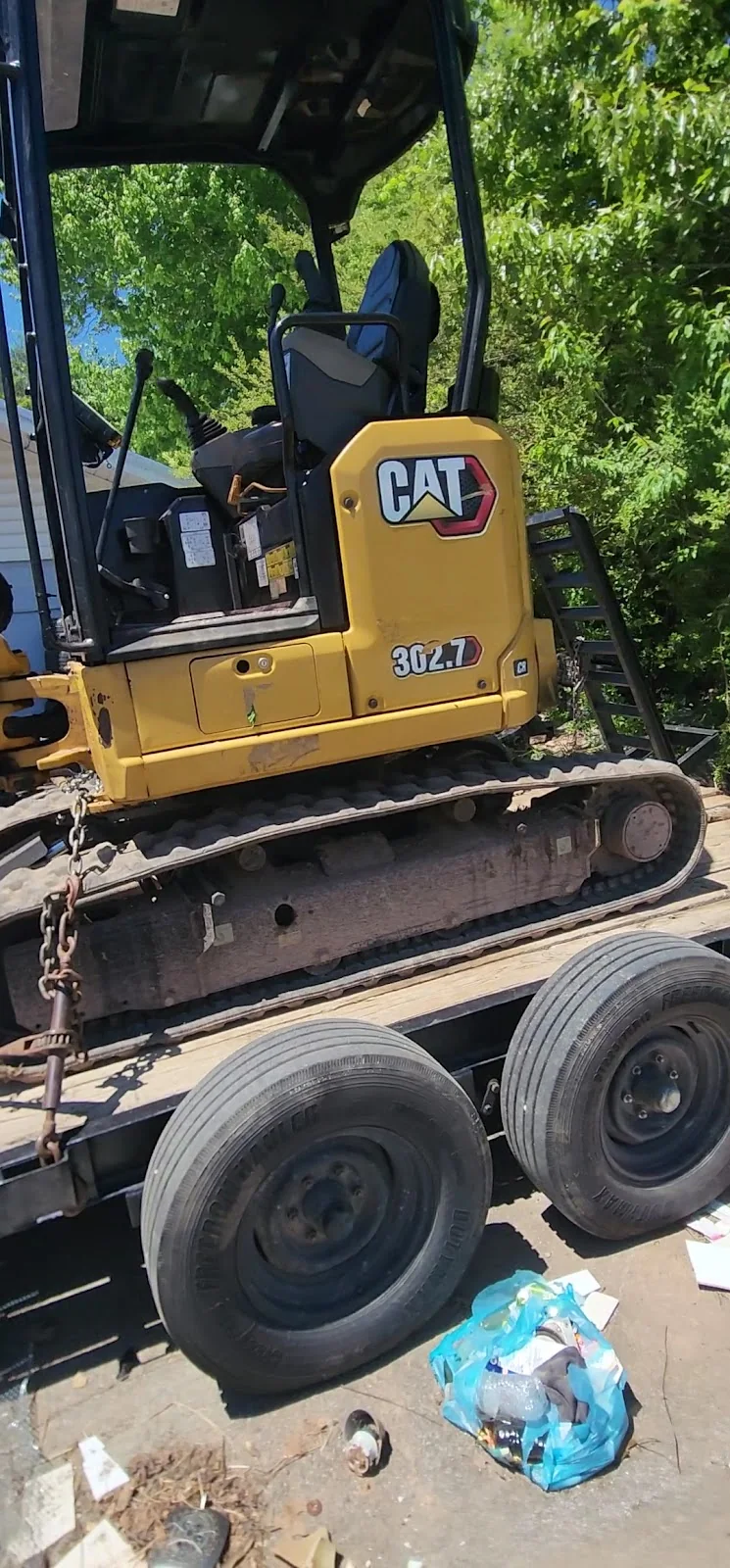
Where a driveway ends at a locked gate or a low-branch tree line, we take the machine apart before we take your driveway apart. Tracked mini equipment handles most Etowah grades; a full-size machine rarely fits a hill driveway without chewing up the shoulders. The gravel itself is the other half of the story. Stone reaches Etowah from the county's quarries by truck, and a single-axle load that would be cheap hauling on flat ground costs more when the driver has to back up a grade and spread in tight quarters. That haul, not the spreading itself, is why two identical-looking driveways a mile apart can price differently.
What washout repair actually costs on a Henderson County slope
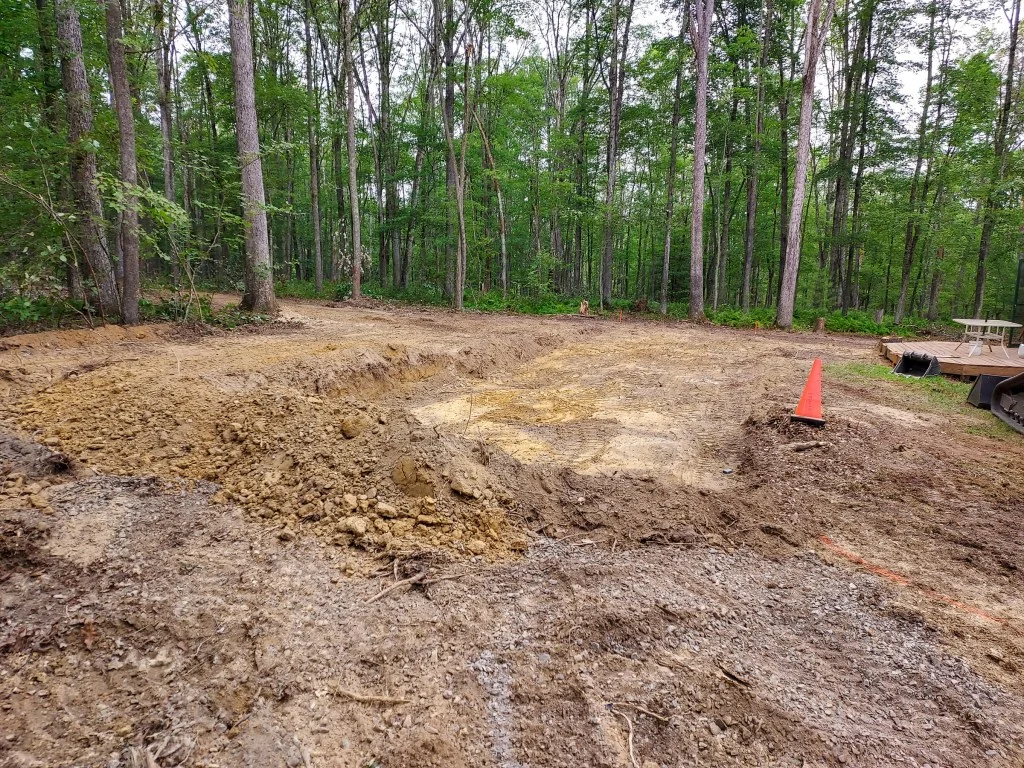
County cost context lives on the Henderson County grading cost page, but the local picture is easy to see from the shoulder: rain arriving on a steep driveway moves like a small stream, and wherever the crown is wrong or a culvert is undersized, that stream cuts a channel. A shallow rut from one storm is a regrading job. A trench that now reaches the subgrade, with the stone pushed onto the shoulder or into the woods, is a washout repair.
| Scope | Typical Range |
|---|---|
| Regrade existing gravel surface, restore crown | $350–$1,200 |
| Washout repair, regrade plus fresh stone | $400–$1,500 |
| Ditching and culvert installation added | $800–$2,800 |
| Engineered drainage on steep grade | $2,500–$6,500 |
Two honest notes on that table. First, stone: the tonnage a washout swallows is often larger than a homeowner expects, and the quarry-to-driveway haul is built into every load. Second, ditching: on a hillside lot the ditch is what keeps the next storm from repeating the first repair. Charging for drainage you can see on a plan beats regrading the same driveway next spring. That approach lands closer to the gravel driveway grading work we do across the county than to a spot fix.
Reading Etowah's driveways: older cuts, worn crowns, uphill runoff
Henderson County's housing runs from older farmstead properties out toward the county seat to newer builds on subdivided bench land, and Etowah has both within a couple of miles. The older drives were often pushed in with a dozer, crowned once, and never re-graded after the first few winters. Gravel that started as a two-inch surface is now mixed with native clay, which holds water instead of shedding it. The newer drives on subdivided lots have the opposite problem: they were built to a decent grade but their shape sends water toward the driveway rather than away from it, especially where an uphill neighbor's runoff joins the party.
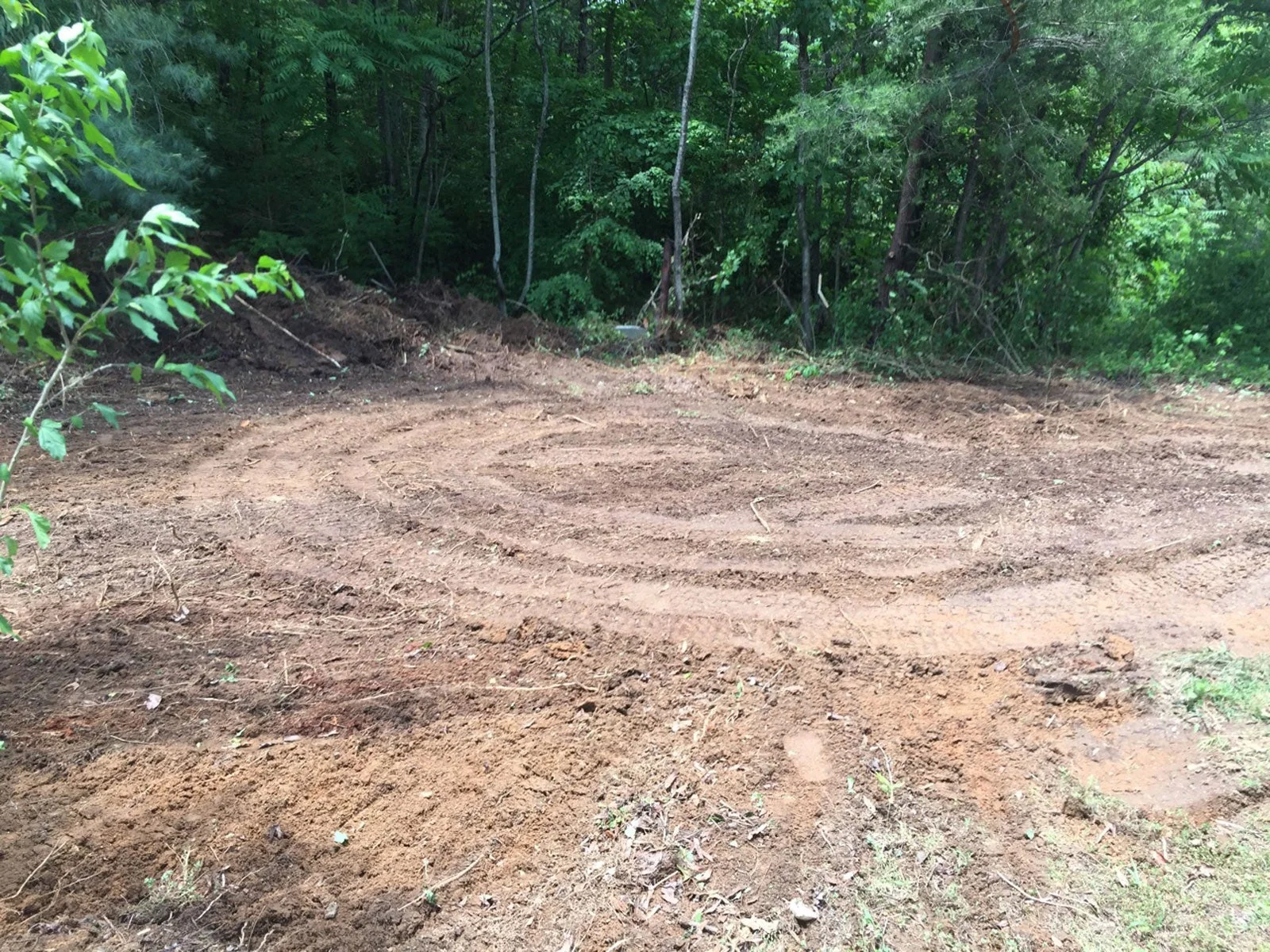
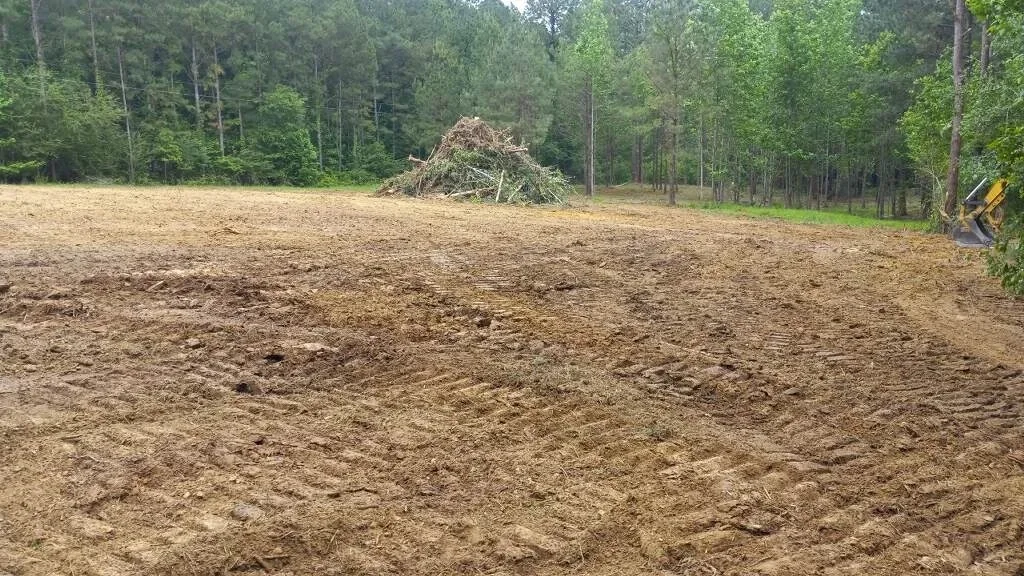
Where the fix is genuinely repairable, we repair it: re-establishing the crown, recovering as much existing stone as the machine can rake back, then topping up with washed stone that will not turn to paste. Where it is not, the honest conversation is about rebuilding the base, which is where the engineered-drainage line item appears. None of this requires a general contractor on a simple regrade, but larger drainage installations and anything structural can cross the licensing threshold set by the NC Licensing Board for General Contractors — worth knowing before you compare bids.
Storm water is the reason most Etowah drives get repaired
This corner of the mountains collects water. The federal disaster record for the county counts 16 declared events across 1978-2026, mostly storm and flood family, and every one of them pushed runoff at driveways that were built for a gentler assumption. The National Weather Service handles the warnings; the driveway handles the aftermath. If your drive washes out every time a summer storm parks over the ridge, the repair is not really a repair yet — it is a drainage design waiting to be drawn.
That means looking uphill before we look at the ruts. Where does the water enter the driveway? Is there a cross-ditch above it, a turnout that dumps onto the surface, or a failed culvert under a neighbor's drive carrying water to your fill? Sometimes the fix is a simple water bar that costs less than a load of stone. Sometimes it is a lined ditch and a properly sized pipe — the one place where a cheap bid becomes an expensive habit.
Choosing a crew when the driveway is also your road
In Etowah, the driveway is often the only way a truck, an ambulance, or a propane delivery reaches the house, so the work has to leave the surface drivable at the end of each day. Ask two questions of any crew quoting the job. First, how will they stage stone so the drive stays passable while they work? Second, what happens to the spoil — is there a place on the property to spread it, or does it have to be hauled out at additional cost? The answer to the second question often explains a bid gap.
For homeowners who want to compare scopes before calling, the grading contractors serving Etowah page lays out what a proper estimate includes. Between quarry haul and hillside access, our part of Henderson County prices driveway work by logistics first, technique second, and the crews who quote it the other way around usually end up learning that the hard way.