How a Biltmore Forest culvert job actually unfolds, start to finish
Most culvert work in this town starts the same way: a crew standing in the rain, watching where the water actually goes. Biltmore Forest is built on wooded ridge and hollow just south of Asheville, and the spring-fed creeks that thread through the neighborhood do not always run where a plot plan says they should. Before any equipment moves, a good crew walks the lot on a wet day, reads the high-water stains on the trees, and confirms the pipe will line up with the receiving channel downstream. On these shaded lots, the pipe that looks right on paper is often pointed the wrong way.
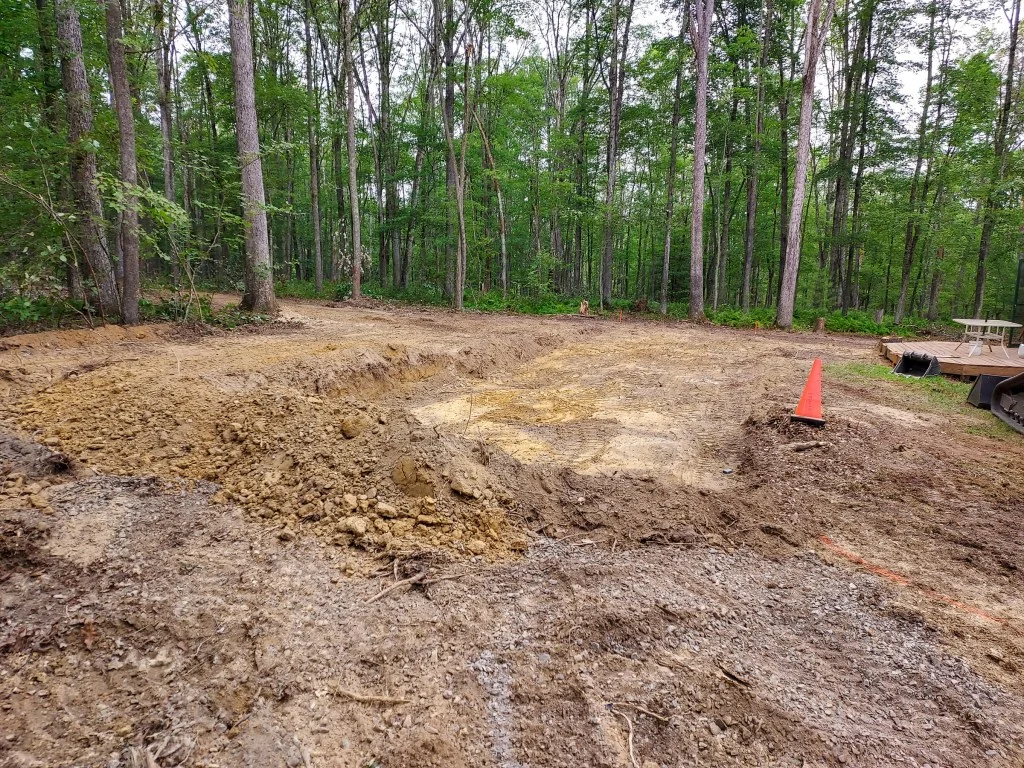
From there the sequence is fairly fixed, and it is the same order on nearly every job: stake the run and dial 811 for utility marking, pull the town and county paperwork, cut and grade the trench with the fall the pipe needs, set and join the pipe, build headwalls and riprap at the inlet and outlet, then backfill and stabilize the banks with grass or matting. Small driveway crossings wrap in a day or two. Anything past about 40 feet with a driveway above it usually runs three to five working days, weather included, because the clay soils here will not dry on a convenient schedule. Add one to four weeks ahead of that for permitting, which is why the honest total is closer to three to seven weeks from first call to finished job.
What drives the price on these lots
Culverts get priced by linear foot, plus everything surrounding the pipe. A 15-inch HDPE culvert under a residential driveway is a different job from a 24-inch run carrying a feeder creek, and both differ from one needing a concrete headwall because the bank is already slumping. The table below reflects the realistic Buncombe County spread. Read the low number as the best case on a flat, friendly lot and the high number as a steep, wet, riprapped run through mature hardwoods.
| Scope | Typical range |
|---|---|
| Small driveway culvert, single 15" pipe, short run | $1,800 - $3,400 |
| 18"-24" HDPE culvert with riprap inlet and outlet | $3,200 - $6,000 |
| Long run (40+ ft) with headwalls | $5,500 - $9,500 |
| Bank stabilization and outlet protection added | $1,000 - $3,500 |
| Drainage study or engineered sizing letter | $500 - $1,800 |
The full project math, including excavating, hauling, and erosion control line items, is on the Buncombe County grading cost page, which breaks down what this terrain actually charges.
Permits and the rules that shape the schedule
Any culvert that changes how water leaves a lot is a regulated activity in Buncombe County and, in most cases, inside Biltmore Forest too, because the town carries its own overlay rules for creek-side and wooded parcels. The NC Office of State Fire Marshal code enforcement page explains how the state's adopted building code treats drainage, and the NC Licensing Board for General Contractors sets the dollar threshold at which a job needs a licensed general contractor rather than a handyman. Practically speaking: small driveway culverts are simple, but creek crossings and anything inside a mapped floodplain usually require engineering and creek buffer review before a shovel turns.
The civil side matters too. The EPA's stormwater and NPDES pages explain why bare soil near a creek cannot sit exposed during construction. On a lot with a live creek, silt fence and inlet protection go in before excavation and stay until grass is growing, and that sequencing is part of the timeline, not an afterthought.
The terrain that makes every decision here harder
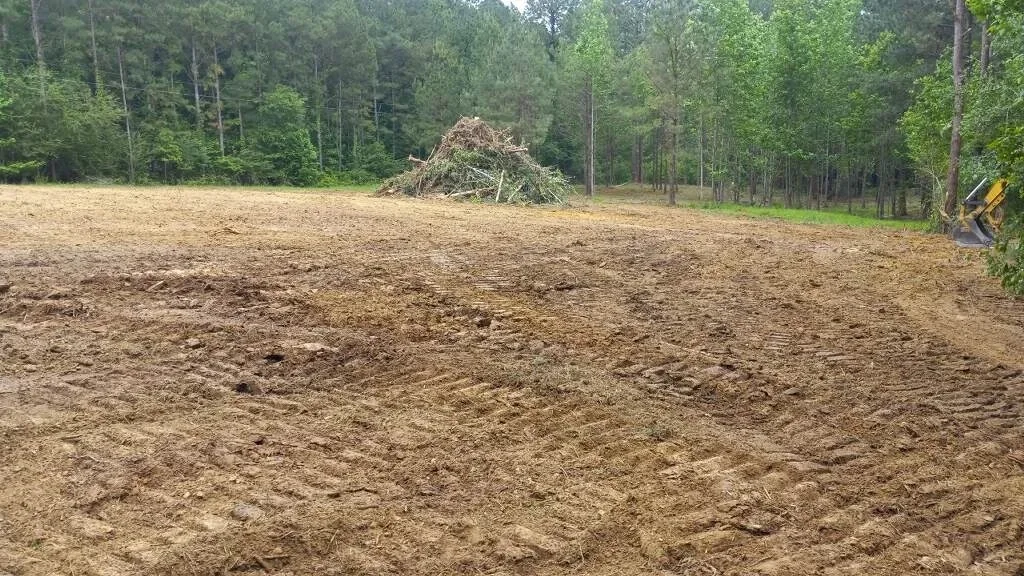
This is not flat farmland, and the work reflects it. Most of the town is wooded ridge dropping quickly to the creeks, so culverts tend to be shorter but steeper than the county average, riprap and concrete outlet protection are almost always part of the scope, and crews have to plan equipment access without tearing out mature hardwoods. Access alone can add half a day. It also pushes more jobs into the engineered column, because a 20-percent slope behind a retaining wall is not a place to guess at pipe sizing.
That is why the Biltmore Forest grading contractors page leans on slope and drainage experience first and price second. For the pipe-side detail, the culvert and driveway pipe guide covers material choices, sizing rules, and what to insist on at the inlet.
When the crew shows up, and when to call early
A realistic schedule looks like this: a site visit and rough quote within a week of contact, a formal proposal with any engineering or permitting scope spelled out a few days later, permit approval from the town or county taking one to four weeks depending on complexity, then two to five days on site. Spring and fall are busiest because the ground is workable and the creeks behave. If a culvert is failing now and pushing water toward a foundation, say so, because emergency drainage work moves to the front of the queue. This county has seen 19 federal disaster declarations across 1973-2026, and the overwhelming majority were storm and flood driven, so the urgency is not theoretical. The National Weather Service tracks the localized flooding that does most of the damage here.