Why Flat Rock drives don't price like Asheville drives
Flat Rock sits south of Hendersonville in the Blue Ridge foothills, and its roads reflect that. Many residential lots here are carved into gentle-to-moderate slopes, with driveways that curve through mature trees and climb short pitches to reach a homesite. That shape matters: a 200-foot run on a 10 percent grade needs different base depth, different drainage, and often a culvert or turn-out that a flat subdivision lot never requires.
The town's lot pattern adds another wrinkle. Flat Rock evolved around historic estates and smaller in-fill parcels rather than grid subdivision, so driveway lengths vary widely and access can be tight. Before anyone quotes you, they need to walk the actual route a dump truck will take — because if the approach is too narrow or too soft, part of your budget goes to fixing the access before a single load ever lands.
Compare that to a newer subdivision off a four-lane in Asheville proper, where the pad is already cut and the drive is a straight, short shot from the road. Here, the drive is often the last piece of a site that was never engineered as a subdivision lot. That is why two neighbors on the same Flat Rock road can get quotes hundreds of dollars apart for what sounds like the same job. One lot drains away from the house naturally; the other sends water straight down the drive and into the garage apron. The second one needs a swale, a culvert, or a grade change, and none of that is gravel.
What a proper gravel drive includes
A driveway that lasts in this climate is built in layers. The subgrade gets shaped and compacted, a geotextile fabric goes down on softer ground, then a base course of larger crushed stone, then a top course of smaller stone that actually meets your tires. Skipping the base is the single most common shortcut, and it shows up as ruts and potholes within a couple of wet seasons.
Henderson County's rainfall pattern is the other half of the story. The federal disaster record shows 16 declared events touching this county across 1978-2026, and the storm-and-flood family dominates. That history is why drainage cues — crown, ditch, culvert, and where the water exits — matter as much as the stone itself. The EPA maintains guidance on managing runoff, and the principle is simple: water that can't leave your drive will eventually take it apart.
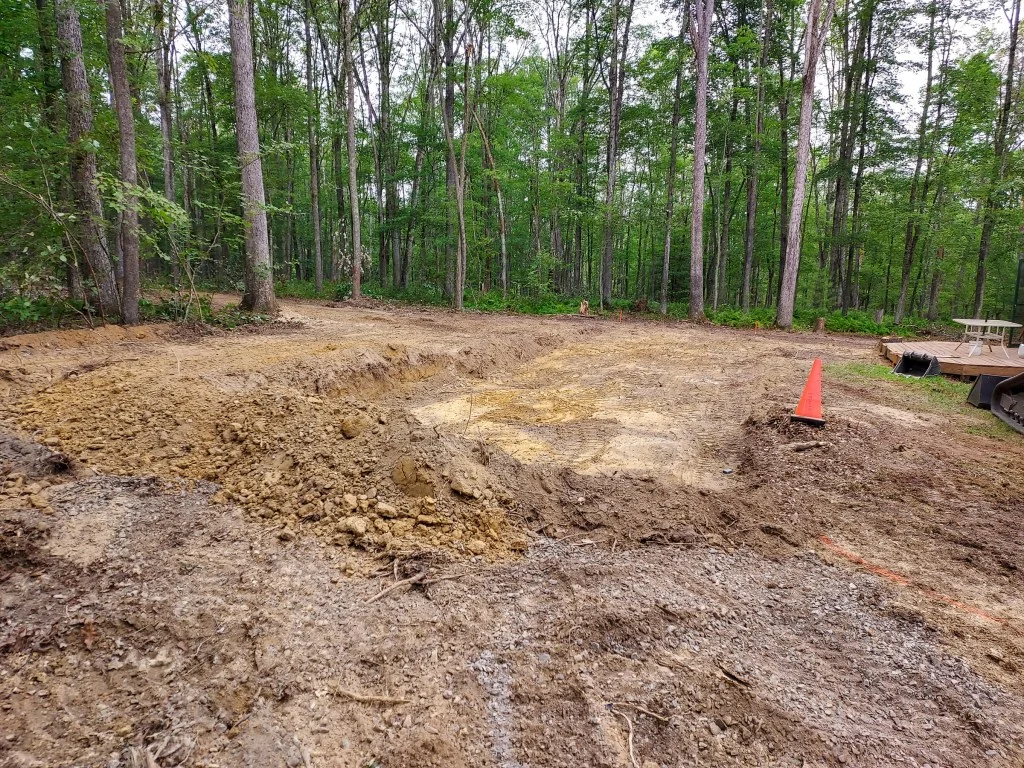
In practice, a Flat Rock build usually means excavating six to eight inches of subgrade, compacting it in lifts, then adding four to six inches of crushed base and a two-to-three-inch top course of smaller stone. On the clay-heavy soils common under these foothill lots, fabric is not optional. Clay holds water, water softens the subgrade, and a loaded truck will find the soft spot every time. A driveway that gets fabric and a real base can go years between touch-ups. One built on bare graded dirt often needs re-grading after the first hard spring.
Flat Rock driveway pricing at a glance
Use this table to sanity-check any bid. Longer drives, steeper grades, and heavy site prep push toward the top of each line, and a genuinely long mountain approach can exceed the typical band entirely — see the Henderson County grading cost breakdown for how those line items stack.
| Scope | Typical range |
|---|---|
| Short regrade and fresh gravel top on existing drive | $1,800–$2,800 |
| New gravel drive, moderate length, light grading | $2,800–$4,200 |
| New drive with fabric, base course, and culvert | $4,200–$5,500 |
| Steep or long mountain approach with engineered drainage | $8,000–$12,000 |
Where the money actually goes: grading and drainage usually cost more than the stone. A drive that's quoted cheap almost always has a drainage question left unanswered. A load of gravel is a known commodity; moving dirt, shaping a ditch, setting a culvert, and compacting a base are not. When you compare two bids, compare what happens to the ground under the stone, not just the price per ton of the stone itself.
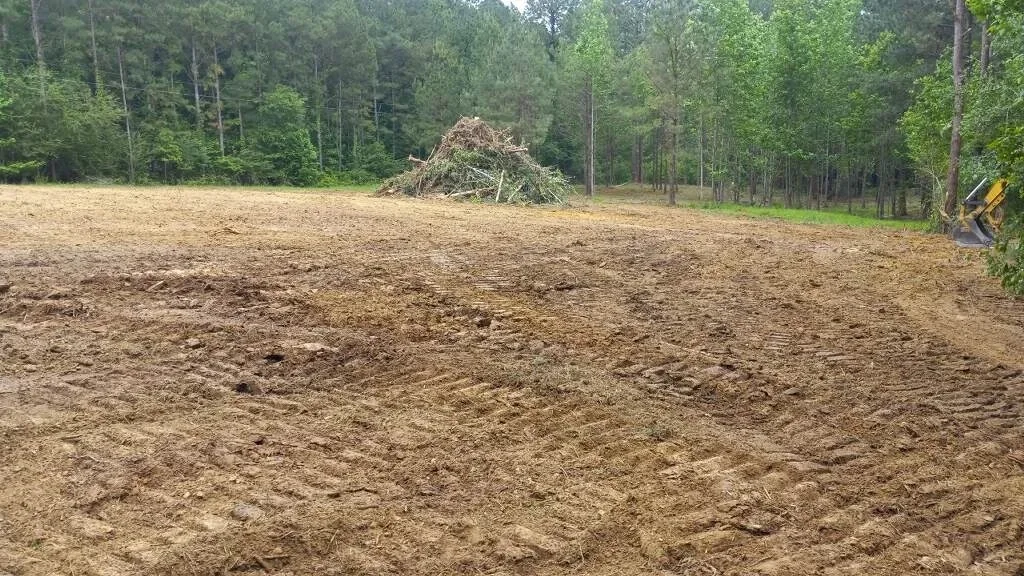
It also helps to know what pushes a job up a line. A driveway that needs a new culvert under the entrance typically adds cost for the pipe, the bedding, and the headwall or riprap that keeps water from scouring the outlet. A drive that crosses a drainage swale needs fill and compaction that a straight run does not. And a lot where the house pad is already cut and gravel-ready will always come in lower than a raw, wooded parcel where the path has to be carved and stumps pulled before the first load of base goes down.
Getting the grade right the first time
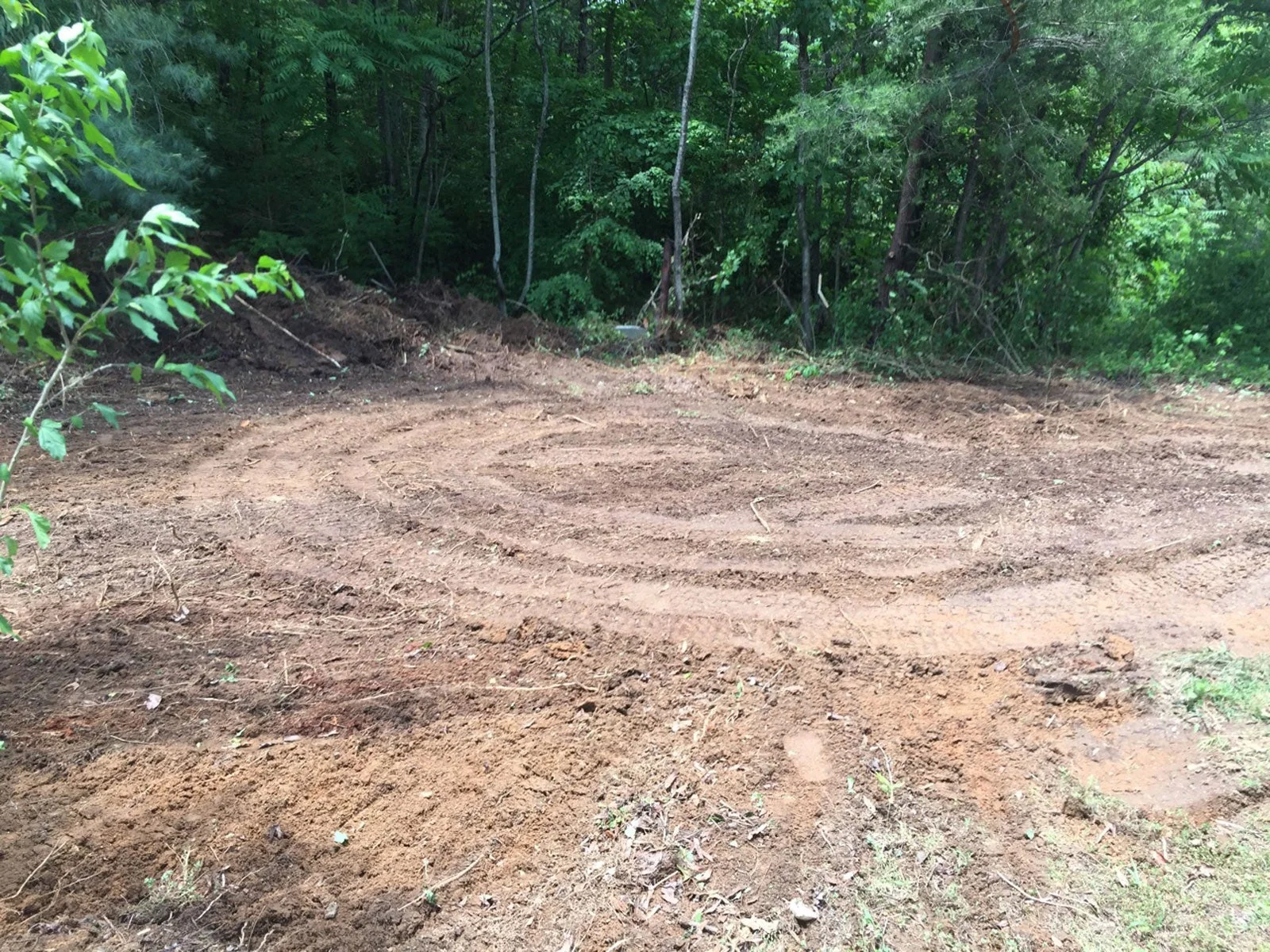
In a town where lots roll with the terrain, the grade is the project. Too flat and water sits; too steep and the stone migrates downhill every time it rains. The workable answer is a crowned surface with a defined ditch or swale that carries water to a legal exit point, not the neighbor's property line.
This is also where contractor credentials matter. Under North Carolina rules, grading and excavation work can cross the threshold that requires a licensed general contractor, and the NC Licensing Board for General Contractors is where that threshold is defined. Ask any crew how they handle drainage before they quote, and ask whether their scope respects the requirements your job triggers. If you want the fuller picture of what a proper site visit covers, the Flat Rock grading contractor guide walks through it, and the driveway grading and gravel overview explains how the two trades work together.
On steep Flat Rock approaches, a common fix is a series of water bars or a shallow swale cut diagonally across the drive to divert sheet flow before it gains speed. On longer runs, a turn-out or a widened apron at the top gives water a place to spread out instead of cutting a channel down the middle. These are inexpensive details when planned before the base goes down and expensive ones when added after the fact. That is the argument for paying for a real site walk now rather than a phone quote from the truck cab.
Three questions that separate good crews from cheap ones
First: how deep is the base, and what stone goes in it? A real answer names sizes and depth. Second: where does the water go when it leaves my drive? A real answer points to an actual outlet. Third: what happens to my access during the work — how many loads, what size truck, how long? Vague answers on any of these tend to become change orders later.
It's also fair to ask about safety and site protection: tree roots, septic lines, and utility corridors are easy to damage and expensive to fix. The ICC publishes model codes that many local rules draw from, which is a useful starting point for understanding what a properly permitted job should include.
A crew that has worked Flat Rock roads will also ask you questions the cheap bidder skips: where does the driveway meet the town or county road, is there an existing culvert under that entrance, and can a loaded tandem dump truck turn around at the top without backing down the hill. Those access questions decide whether the job runs smoothly or stalls on the first morning. They are also the questions a homeowner can ask any bidder to see who actually knows this terrain.