Where water lands on a Biltmore Forest lot, and where the pad has to send it
Most Biltmore Forest lots were laid out for privacy, not for drainage. Deep oak and poplar canopy, long gravel drive approaches, and a house site tucked back off the road on ground that falls away in one direction and rises in another. That shape means the uphill side of your pad collects water from a bigger area than the pad itself, and the downhill side has to carry it away without cutting a gully through the lawn.
The federal disaster record here is not theoretical: 19 declared events have touched Buncombe County over a 1973-2026 span, overwhelmingly storm and flood family. Each one is a reminder that a pad graded flat to the eye can still be a bathtub in plan view. Before we cut anything, we walk the lot with a laser or rotary level and mark where existing water goes, where it ponds in a normal rain, and where the driveway currently dumps it. The pad design starts from that map, not from a corner stake.
Biltmore Forest is a relatively small, heavily wooded town between Asheville and the Blue Ridge Parkway, and its terrain is not uniform. Some lots sit on gentle benches where the main problem is a high water table after a wet spring. Others pitch hard enough that the driveway itself becomes the drainage channel. On the steeper parcels, the drive cut acts as a catch ditch whether you intended it or not, which is why driveway design and pad drainage have to be drawn together. A pad that sends its water into the driveway, and a driveway that sends its water back at the pad, is the classic failure loop here. We break it by picking one controlled discharge point and grading everything toward it.
If you want the broader service picture first, the site prep and building pads guide covers the full sequence from clearing through final grade.
What a real pad package includes in this terrain
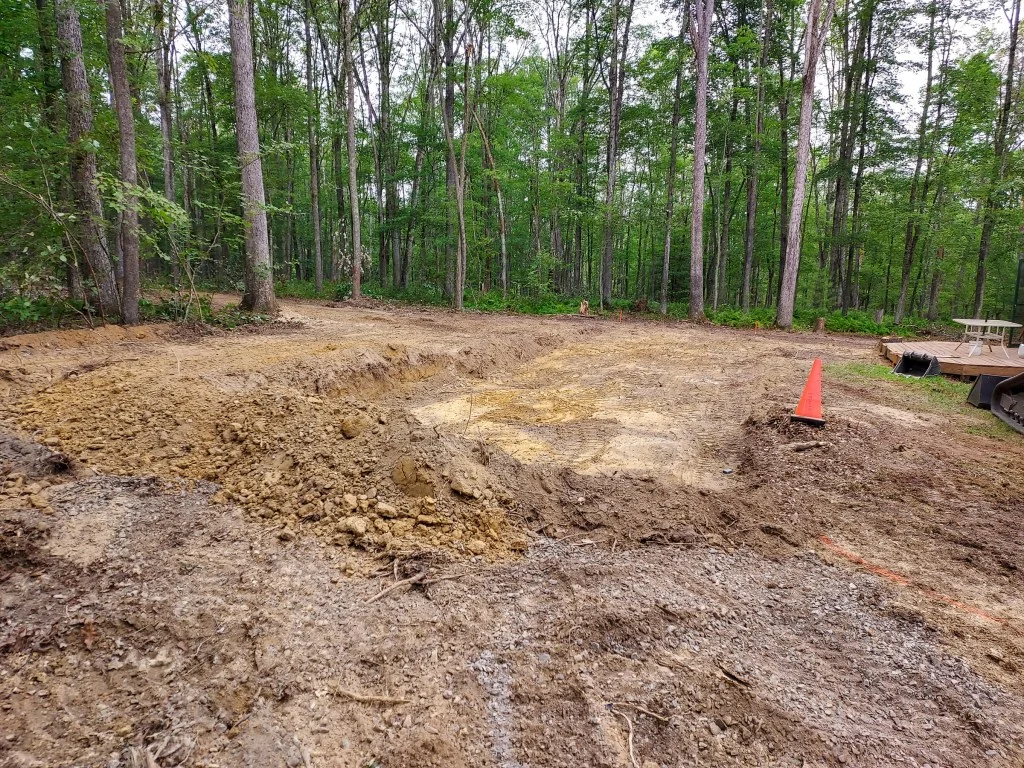
A pad quote that lists only "clear and grade" is missing most of the cost. On a wooded Biltmore Forest lot, the working scope usually reads: selective clearing and stump removal, topsoil strip and stockpile, cut on the high side and fill on the low side with compaction in lifts, undercut of any soft organic pockets, footing subgrade prep, and a positive drainage plan that sends roof and surface water to a daylight point or an engineered infiltration area.
Compaction is where cheap pads fail. NC residential code, enforced through the NC Office of State Fire Marshal code enforcement framework adopted from the International Code Council family of codes, requires fill under footings to be engineered or approved and compacted in a way that actually holds a foundation. Fill dumped in one pass and raked flat will pass the eye test and fail the footing.
Stump removal deserves its own mention. In this canopy, a lot that looks like a dozen trees can hide two dozen stumps after clearing, and each one leaves a void that has to be grubbed out, not buried and covered. Rotting stumps under a pad settle unevenly for years. Grubbing them completely and backfilling with compacted select material is slower and costs more, and it is one of the first things a low bid will quietly skip.
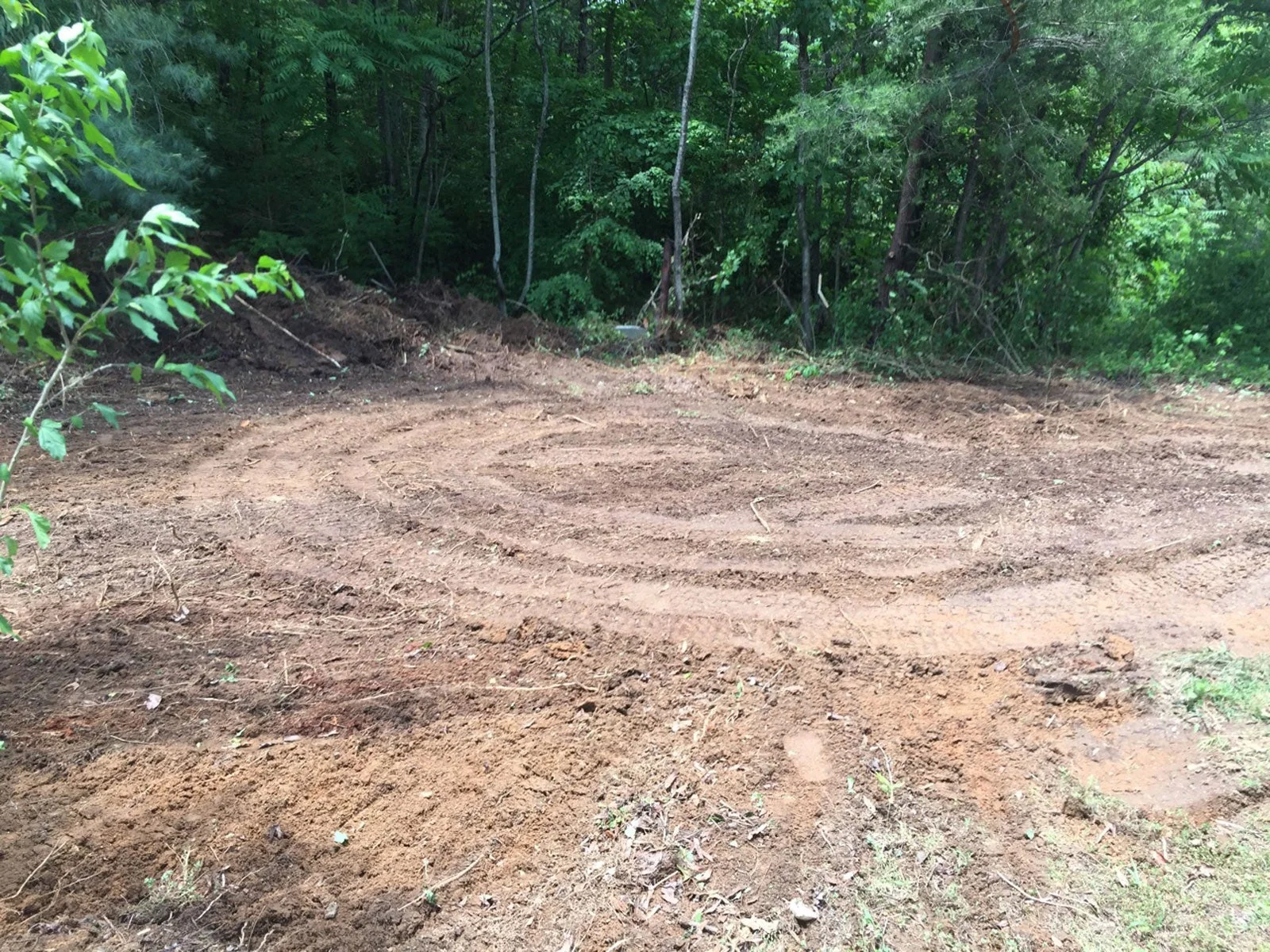
Undercut is the other quiet line item. Biltmore Forest lots often carry a thick organic duff layer from decades of leaf drop, and pockets of soft ground can show up once the topsoil is stripped. That material cannot stay under a footing. It gets excavated to stable subgrade and replaced. A quote that does not mention undercut either assumes none exists or plans to leave it in place.
Biltmore Forest pad pricing, scope by scope
Numbers below are working ranges for this terrain and lot type, not a bid. The Buncombe County grading cost table carries the county-wide working figures if you want to sanity-check a quote.
| Scope item | Typical range | What moves the number |
|---|---|---|
| Selective clearing + stump removal | $3,500–$9,000 | Tree size, stump count, haul-off vs. on-site burn |
| Topsoil strip and stockpile | $1,200–$3,200 | Lot size, depth of organic layer |
| Cut, fill, and compaction (house pad) | $4,000–$12,000 | Slope, how much is cut vs. imported fill |
| Footing subgrade prep | $900–$2,400 | Undercut needs, footing complexity |
| Drainage: swales, pipe, daylight outlet | $2,000–$7,500 | Uphill contributing area, outlet distance |
| Drive cut and gravel base | $2,500–$9,000 | Grade change, culvert needs, base depth |
A full package on a typical wooded Biltmore Forest lot usually lands somewhere between $8,500 and $28,000. The upper end is not a bigger house pad. It is a steeper approach, more uphill water, and an outlet that has to travel.
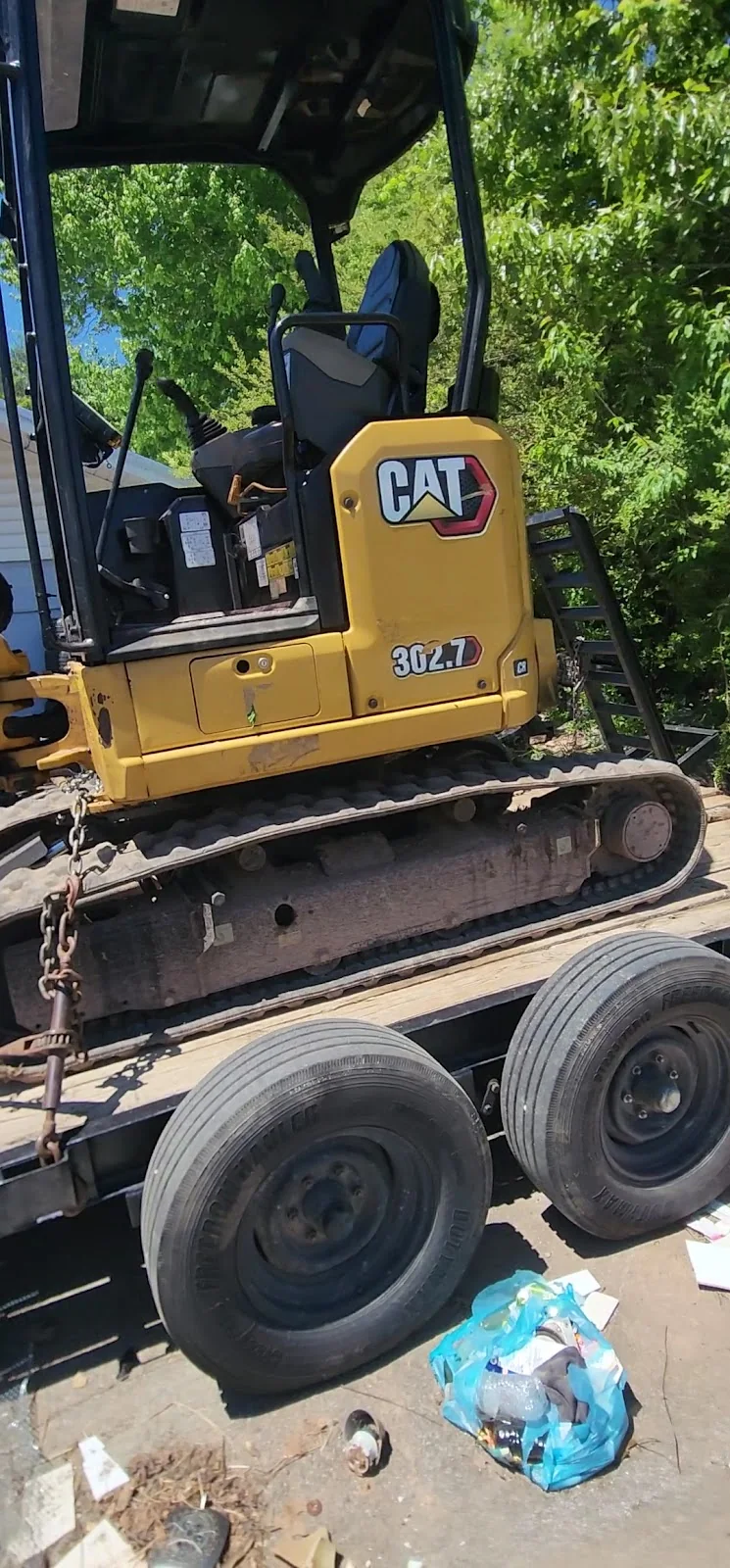
Two things push a project toward the top of that band here. The first is haul distance and access. Some Biltmore Forest drive approaches are long and narrow, with mature trees tight to both sides. Getting equipment in and spoil out without wounding the canopy adds time, and sometimes it means smaller machines and more trips. The second is outlet distance. If the nearest legal discharge point is well downslope from the pad, the pipe run, the grade, and the energy dissipation at the end all grow together. A pad near a natural swale is cheaper to drain than one perched in the middle of a gentle bowl.
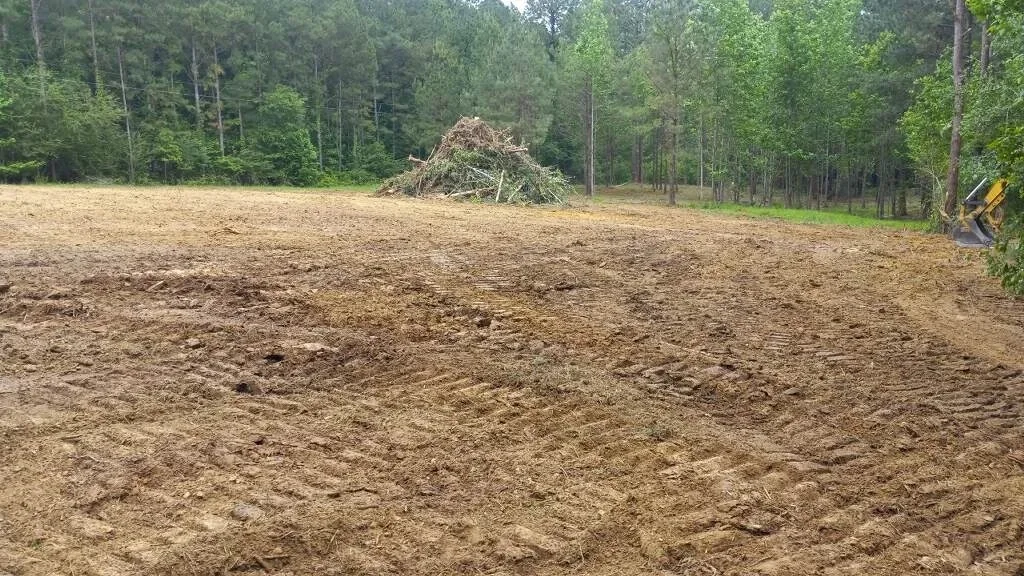
On the other side, a lot that is already partially benched, with a usable clearing and a reasonable drive stub, can land near the bottom of the band. The spread is real, and it tracks scope, not square footage.
Permits, licensing, and the paper trail that protects you
Grading and site work here crosses two thresholds worth knowing before you hire. First, state licensing: the NC Licensing Board for General Contractors sets dollar thresholds where a project requires a licensed general contractor, and site work tied to a permitted structure generally rides inside that. Ask plainly whether your job crosses the line and who holds the license.
Second, stormwater and erosion control. Disturbed ground above a threshold acreage triggers a state erosion control plan, and even below that, the county expects sediment to stay on site. Honest grading crews write silt fence and inlet protection into the scope. If a bid does not mention them, that is an omission, not a savings.
The federal side of that equation is worth understanding too, since the U.S. Environmental Protection Agency sets the stormwater framework the state program is built on. You do not need to read the regulations to protect yourself. You need to see the erosion control items spelled out in your bid and installed before the first cut, because sediment that leaves your lot is your liability, not the contractor's, once it is on the road or in a neighbor's pond.
For local crews and how to vet them, the Biltmore Forest grading contractors page covers the questions that separate real site work from guys with a skid steer and a truck.
Timing, weather, and the season this work actually wants
Biltmore Forest sits in the mountain-adjacent band of Buncombe County, and the rainfall pattern is closer to a wet hardwood forest than to Piedmont red clay country. That matters for scheduling. Pads cut in a wet spring hold water, fail to compact cleanly, and get re-graded twice. Pads cut in a dry fall compact and hold grade.
Watch the National Weather Service forecast before any cut, and plan a window that gives your pad at least a week of dry weather after final grade so the subgrade can cure before footings. If your build schedule cannot flex, budget for stabilization fabric and a stone cap on the subgrade. It costs more, and it is the difference between a pad that holds and a pad that pumps.
Fall is the sweet spot for a reason that goes beyond soil moisture. The canopy thins, which makes clearing safer and easier to inspect, and the ground has usually drained down from summer storms. Winter work is possible but unforgiving: frozen ground will not compact, and a thaw on top of a fresh cut turns a pad into a mud pit. Summer afternoons bring the pop-up thunderstorms that dump a lot of water in a short time, and those are exactly the events a freshly cut pad is least ready for. If your only window is summer, plan for temporary diversion and cover, and expect the schedule to move.
One more local reality: the trees are part of why people buy here, and some of them are protected by neighborhood expectations even where no ordinance applies. Plan the clearing limits before equipment arrives, mark the trees you are keeping, and put protection around them. It is far cheaper to fence a tree than to replace a mature oak, and it keeps the site recognizable once the pad is done.