The one-acre line that splits every Haywood County grading quote
Most grading bids in this county come down to a single number nobody mentions until you ask: how much ground will actually be stripped bare. Disturb under one acre on a single-family lot and you are generally working under local rules alone. Cross that acre, and North Carolina's erosion and sedimentation program kicks in — a state permit, a certified plan, and a paper trail that has to match what the crew does on the hill. That single threshold is why two neighbors with similar-looking lots in Waynesville can get bids thousands apart. One lot's grading plan tucks the cut behind the house site and stays under the threshold; the other spreads fill across the whole side yard and crosses it without anyone intending to.
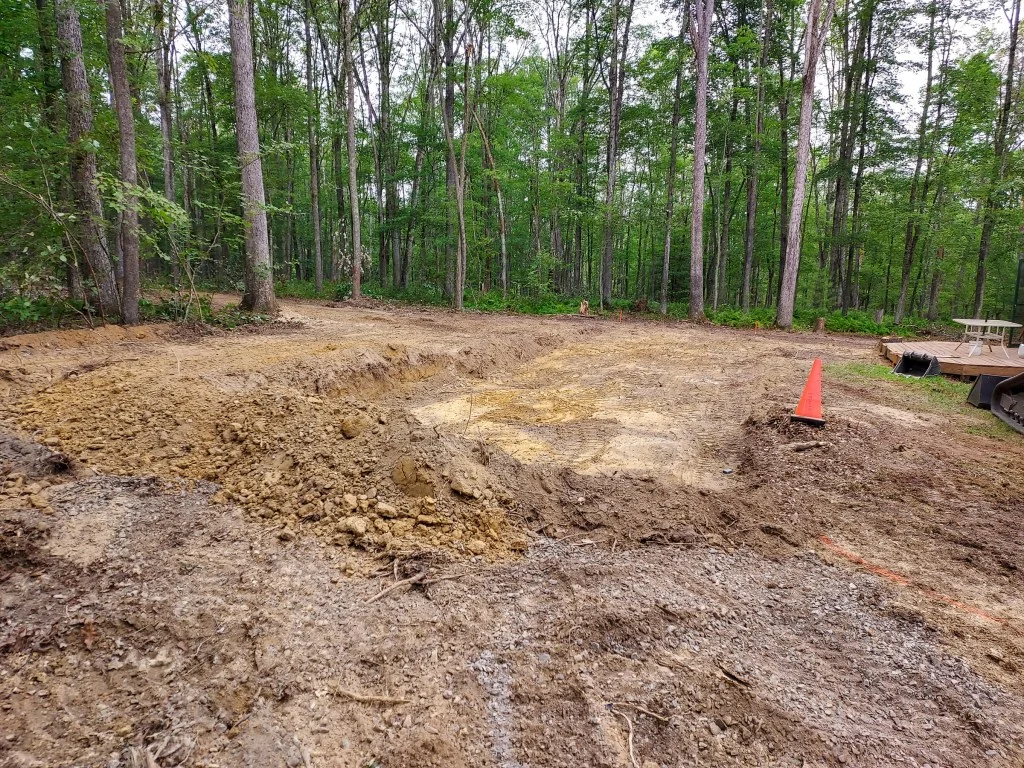
The terrain here makes crossing it easy. Haywood County runs from the Pigeon River valley up through steep hardwood coves, and a homesite that needs a cut on the uphill side plus a fill pad on the downhill side can disturb well over an acre without the lot itself being large. A typical ridge lot off Ratcliffe Cove Road or up in the Crabtree community might only be an acre and a half total, but the usable building envelope is a fraction of that — so the disturbed area creeps outward fast once a driveway bench, a house pad, and a septic repair area get carved in. If your project is anywhere near the line, price it as if it crosses. Our NC grading permit rules page walks through what the state program actually requires.
What the permit adds is rarely just the paperwork. It adds a designed sediment basin or a reinforced silt fence layout sized to the disturbed acreage, a ground cover schedule that has to be installed on a timeline, and inspections that continue until the site is stabilized. On a Waynesville hillside, that can mean a few thousand dollars of work that a sub-acre job would never be asked to do. It also adds time: the plan has to be approved before earth moves, and stabilization has to happen before the next inspection window. Crews that understand the local review rhythm build that into their schedules. Crews that don't end up paying for it out of their own margin, which is one more reason the low bid on a borderline lot deserves a second look.
What grading actually costs in Haywood County
These are working ranges for this county's terrain, not quotes. Slope, rock, and haul distance move numbers more than square footage does. A flat lot near the Pigeon River in Canton prices very differently than the same square footage on a steep cove lot above Waynesville, even though the two jobs look identical on a site plan.
| Scope of work | Typical Haywood range | What drives it |
|---|---|---|
| Small pad prep / leveling | $1,800 – $4,200 | size, access, how much cut is needed |
| Driveway cut and shaping | $3,200 – $7,500 | length, grade, drainage crossings |
| Hillside cut-and-fill with retaining | $6,000 – $8,000+ | wall height, soil, engineering |
| Erosion control plan and installation | $1,500 – $5,500 | disturbed acreage, slope, inspection cycle |
Rock is the wild card. A crew that hits blue rock on a Waynesville hillside can spend a day on ground another bidder expected to move in an hour, and no honest estimator will promise otherwise before the first bucket. The geology changes fast here — decomposed granite in one cut, hard rock a hundred feet up the same slope. That is why the best local bids tend to state a price for soil and a separate line for rock removal, rather than burying the unknown in a single lump sum.
Haul distance is the quiet second variable. On a tight mountain lot, there is often nowhere to push spoil except a stockpile near the entrance, which means every yard of cut material gets loaded and trucked off-site. On flatter ground near Canton or Clyde, spoil can often be spread on the property and graded out, which cuts trucking dramatically. A bid that doesn't address where the dirt goes isn't finished. If you want to compare this job to what other western North Carolina properties pay, our full grading cost guide shows how the bands shift across the region.
Why water and slope drive the price here
Haywood County sits in the path of storms that stall against the Balsams, and the federal record backs that up: 19 federally declared disaster events touch this county over a 1973-2026 record. That history is why grading here is really drainage work with dirt moving attached. Uphill runoff has to be intercepted before it reaches a fresh cut, or the slope fails the first wet spring after the job. On a graded hillside, water that reaches a cut slope at speed does not just erode it, it undercuts the toe, and a retaining wall built on an undercut toe is money already spent that will have to be spent again.
The practical answer is almost always a diversion at the top of the cut, a stable outfall point, and enough rock or matting to keep the discharge from scouring its way back uphill. None of that is optional on these slopes. A driveway cut that crosses a natural drainage swale needs a culvert sized for storm flow, and a driveway that just runs water down its own length needs a turnout or a paved apron where the water leaves the roadbed. Skipping those details is the most common reason a freshly graded Haywood County driveway is rutted within two seasons.
That is also why the National Weather Service's forecast and hydrology tools matter to scheduling — pouring a fill pad right before a multi-inch rain event is how good dirt turns into a washout. Local crews watch the forecast the way other trades watch lumber prices. A fill pad placed and compacted in lifts on a dry week will hold; the same material pushed into place ahead of a soaking rain may never consolidate properly and will keep settling for years. The cheap week to grade is the dry one, and in these mountains that window is worth waiting for.
Permits, licensing, and who can legally bid the job
North Carolina generally requires a building permit for grading tied to structural work, and the state erosion program applies once disturbance crosses the one-acre threshold on a single-family lot. Contractors doing this work fall under the state's licensing threshold rules (NC Licensing Board for General Contractors) once a project crosses $40,000 — and hillside jobs here cross that line more often than people expect. A cut-and-fill homesite with a retaining wall and engineered drainage can cross it before the wall is even poured, which means the person who quoted you the job needs to be able to legally hold the contract.
Sediment leaving a site is not just a fine risk. It is regulated under the Clean Water Act, and the EPA's stormwater and erosion resources explain why inspectors treat a silt fence failure as a serious event rather than a housekeeping issue. In a county where so much of the drainage runs toward trout water in the Pigeon River watershed, a muddy discharge off a hill lot gets attention quickly. Design details also have to satisfy current building and site code, which is where the International Code Council's model codes (ICC) sit behind much of what local reviewers apply. Our grading and excavation overview covers how a compliant site is actually built, from first cut to final stabilization inspection.
How to keep a Haywood County grading bid honest
Three moves protect you on this terrain:
- Ask for the disturbed acreage in writing. Any bidder who cannot state it is guessing about the permit, and the permit is often the difference between two quotes. If the number is close to one acre, ask what the plan does to stay under it, or what crossing it will cost.
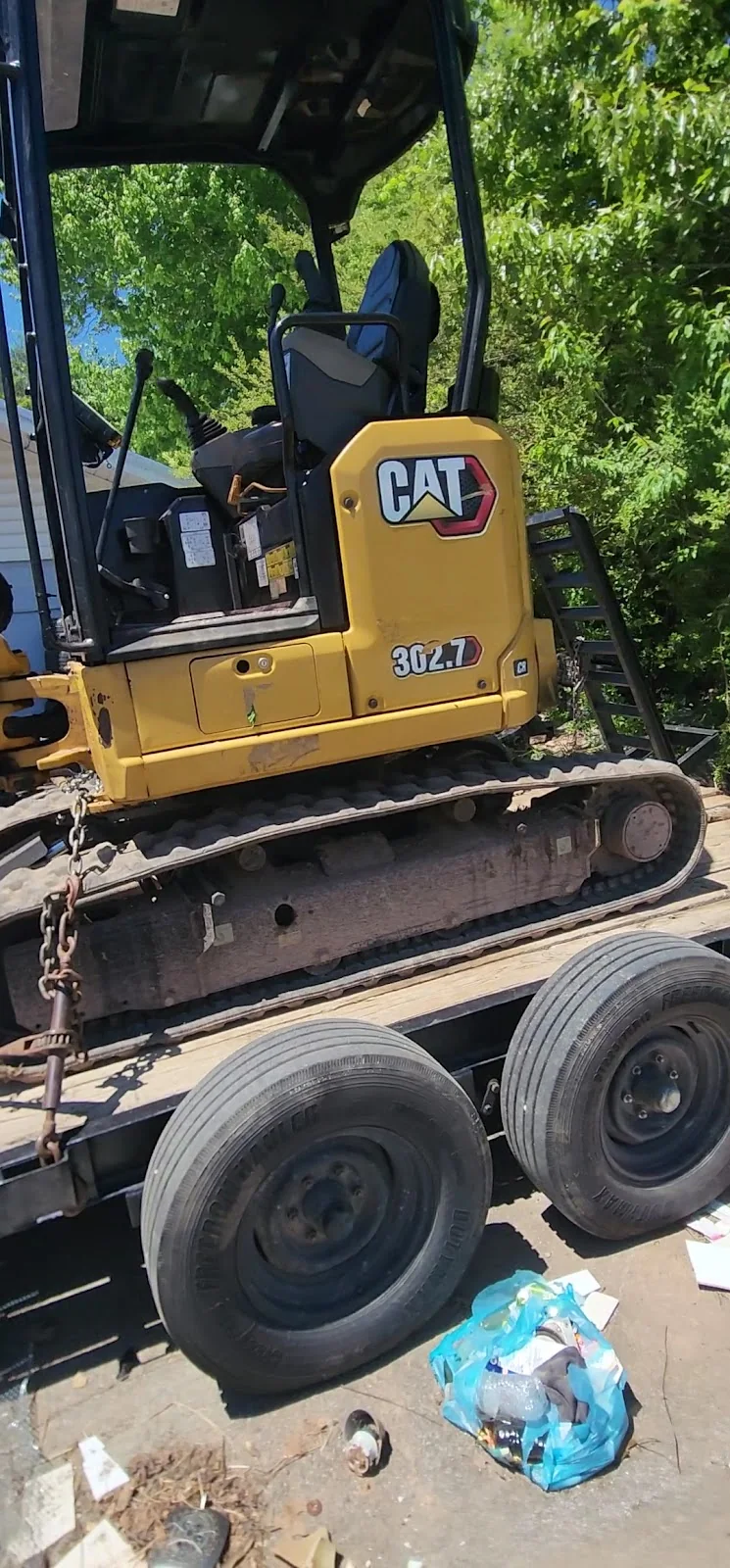
- Price rock separately. A bid that treats rock as an unknown add-on is more honest than one that pretends it will not happen. Ask how the contractor will handle a rock encounter and whether the machine on the job can actually break it or has to be swapped out.
- Make drainage part of the scope. A graded pad without a drainage plan is a repair waiting to be scheduled. Ask where the uphill water goes after the cut, and get the answer in the bid rather than the change-order conversation.
One more local point: ask the contractor how they schedule around the rainy season. Grading in Haywood County is a weather business, and a crew that plans stabilization before the next rain event is usually a crew that finishes cleanly. A crew that doesn't is one you will call back in the spring. If you are still comparing approaches, the broader grading cost breakdown and the permit rules walkthrough cover the two decision points that matter most on mountain lots — disturbed acreage and drainage — before you sign anything.