The cheapest clearing in Etowah is the work you don't redo
Etowah's terrain rewards a slow first walk. Lots off the croplands near the French Broad river bottoms are flat and forgiving; lots climbing toward the Horse Shoe and Mills River edges are neither, and a pad cut into a grade without a matching drainage plan will send water at the house you build on it. The most common expensive mistake we see is a homeowner paying twice: once to clear and build a gravel drive on the wrong alignment, again to tear it out after the county or the first big rain disagrees with it.
So the first pass on any Etowah lot is reconnaissance, not equipment. Where does the existing drive meet the road? Does it climb at a survivable grade? Is there a pad that already drains away from the building envelope? Is the low corner of the property the one you were planning to build on? Answering those questions costs a walk and saves the kind of money that shows up as an eight-thousand-dollar surprise later in the project.
What the ground here actually holds
Henderson County sits in a transition zone between the Blue Ridge and the Piedmont, which is a polite way of saying the dirt changes under your feet. One Etowah parcel is old pasture with shallow topsoil over clay; the next has rock shelves close enough to the surface that a machine operator finds them in the first hour. Both are workable, but the plan and the price are not the same, and the difference is not visible on a plat map.
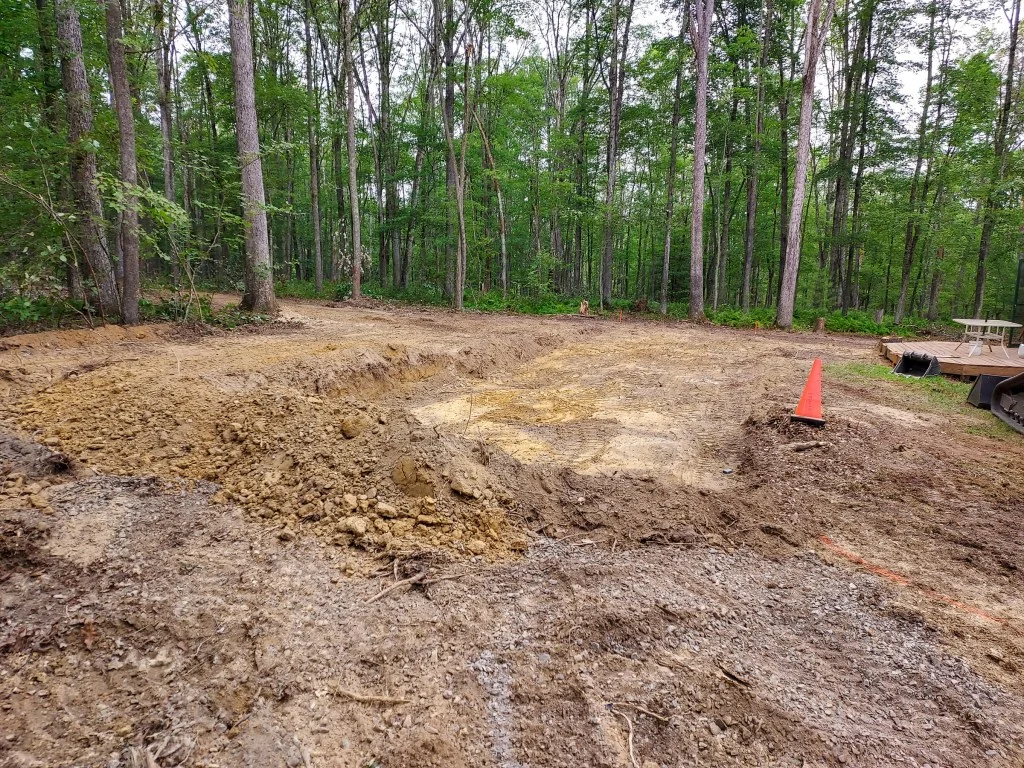
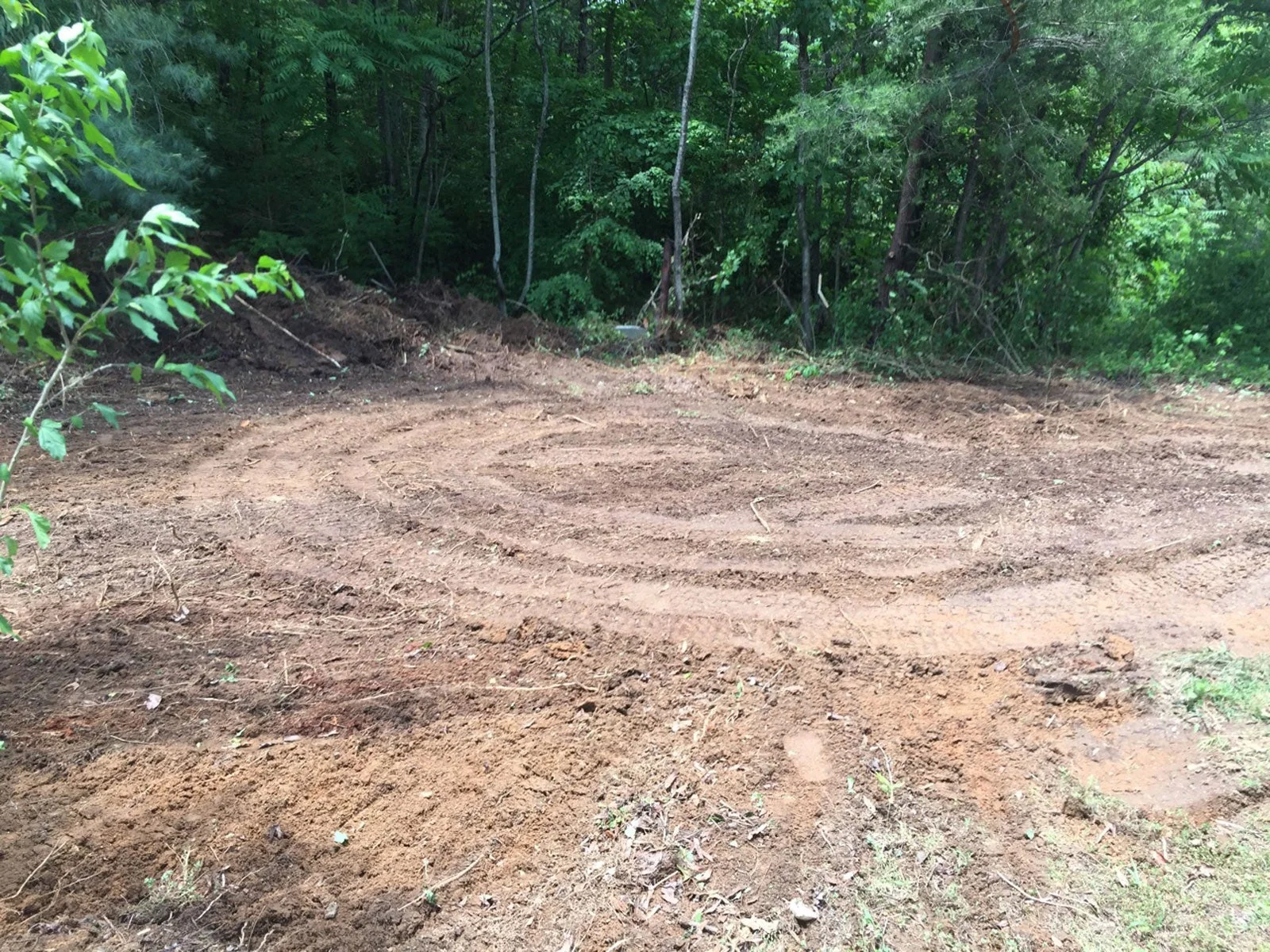
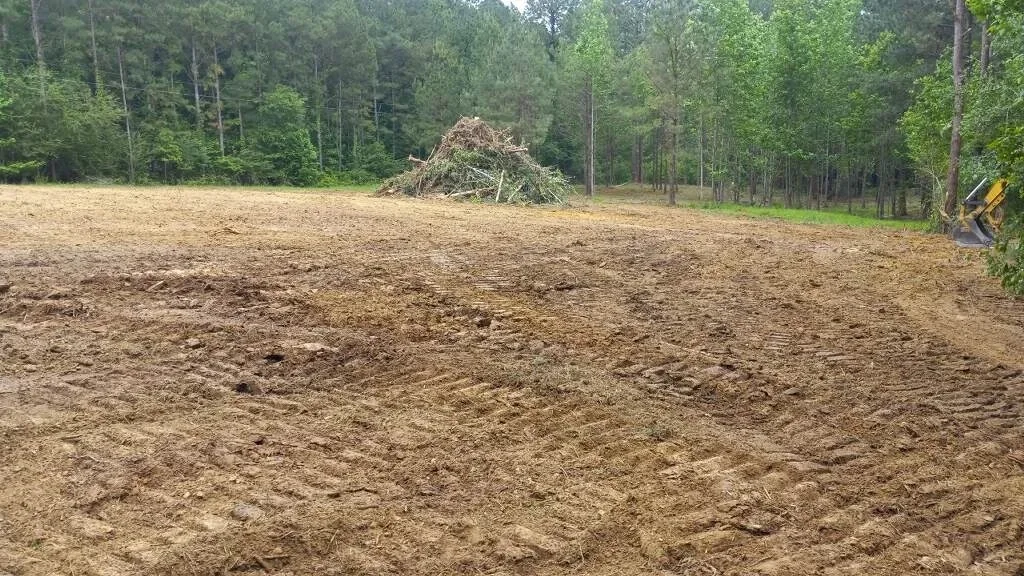
The clearing itself follows from that ground. Pasture with scattered trees clears faster than a cut-over hardwood lot with decades of understory and stumps. Steep slopes off the ridge edges need equipment that can hold grade and operators who respect it, and those are the jobs that push toward the top of any realistic range rather than the middle.
Reading the lot before the machine arrives
Three things get checked before anyone commits a scope, and all three are existing conditions:
1. Access. Can a machine reach the work without crossing a neighbor's property line or a septic field? A lot with a usable entrance clears dramatically cheaper than one that needs a new culvert and a widened approach just to get started.
2. Water. Where does the property shed, and where does the uphill runoff from the neighbor go? Henderson County's storm history is the whole reason this question exists here. 16 federally declared events have touched this county across 1978-2026, overwhelmingly storm and flood family, and each one pushed water across ground that was graded for a drier assumption. The National Weather Service keeps the regional record if you want to see how often this area gets tested.
3. Reuse. Is the old drive centerline correct? Does the existing pad sit where the house will actually go? If yes, you grade and repair it. If no, that is better learned now than after a load of gravel is spread. Our land clearing overview walks through the sequence from brush to buildable.
Etowah clearing costs, by what you're actually buying
Prices below are for Henderson County residential lots. Clearing alone is the smaller job; the moment stumps and grading join it, you are buying groundwork, not just brush removal. For the broader county picture, the Henderson County grading cost breakdown carries the line-item table this page summarizes.
| Scope | Typical range | What moves the number |
|---|---|---|
| Brush and small-tree clearing, easy access | $750–$2,500 | Density, distance to the road, whether brush can be burned on site |
| Clearing with stump removal | $1,500–$4,500 | Stump count and diameter, rock near the surface |
| Clearing, stumps, and rough grading to a pad or drive | $2,500–$8,000 | Cut-and-fill volume, slope, drainage work that comes with the grade |
| Steep, heavily wooded acreage | $10,000+ | Grade, machine access, hauling, engineered drainage |
If a bid lands well under the low end without a site visit, treat it as incomplete rather than cheap — the missing line items are usually access, hauling, or drainage, and they reappear as change orders.
Rules, watershed, and who can legally do the work
Henderson County includes designated watershed and protected-area parcels, and clearing in those areas can require more than a handshake and a dozer. Grading that disturbs significant acreage or alters drainage triggers erosion-control obligations under North Carolina rules, and the EPA publishes the federal stormwater and sediment framework those state rules sit on top of. If a project moves enough dirt, the state threshold for a licensed general contractor applies — verify any bidder through the NC Licensing Board for General Contractors before signing. A local crew that already knows which Etowah parcels sit in a watershed will tell you before you ask.
Sequencing the job so nothing gets done twice
The right order on an Etowah lot usually runs: walk and read the site, clear access first, clear the rest, pull stumps, then grade to a plan that includes drainage rather than tacking it on. Doing drainage last is how the same crew ends up back on the property in a year fixing ruts and a washed-out drive. It is also why we treat the driveway, pad, and drainage read as part of the estimate rather than an upsell — the honest scope on this ground is the one that leaves you with a lot that holds its shape. When you're ready to talk specifics, our Etowah grading contractors page covers what the first visit includes and how the work is phased.