Where the water comes from on a Hot Springs lot
Almost every grading call in Hot Springs starts with water arriving from somewhere the owner doesn't control. The town sits low in the French Broad valley, and the ground rises steeply on the north and east sides. A hard rain off those slopes sheets downhill, crosses property lines, and lands on yards that were never shaped to carry it. Add spring seepage common in these Madison County hillsides and you get the tell-tale pattern: soggy back corner, mossy foundation line, driveway gravel pushed toward the road every storm.
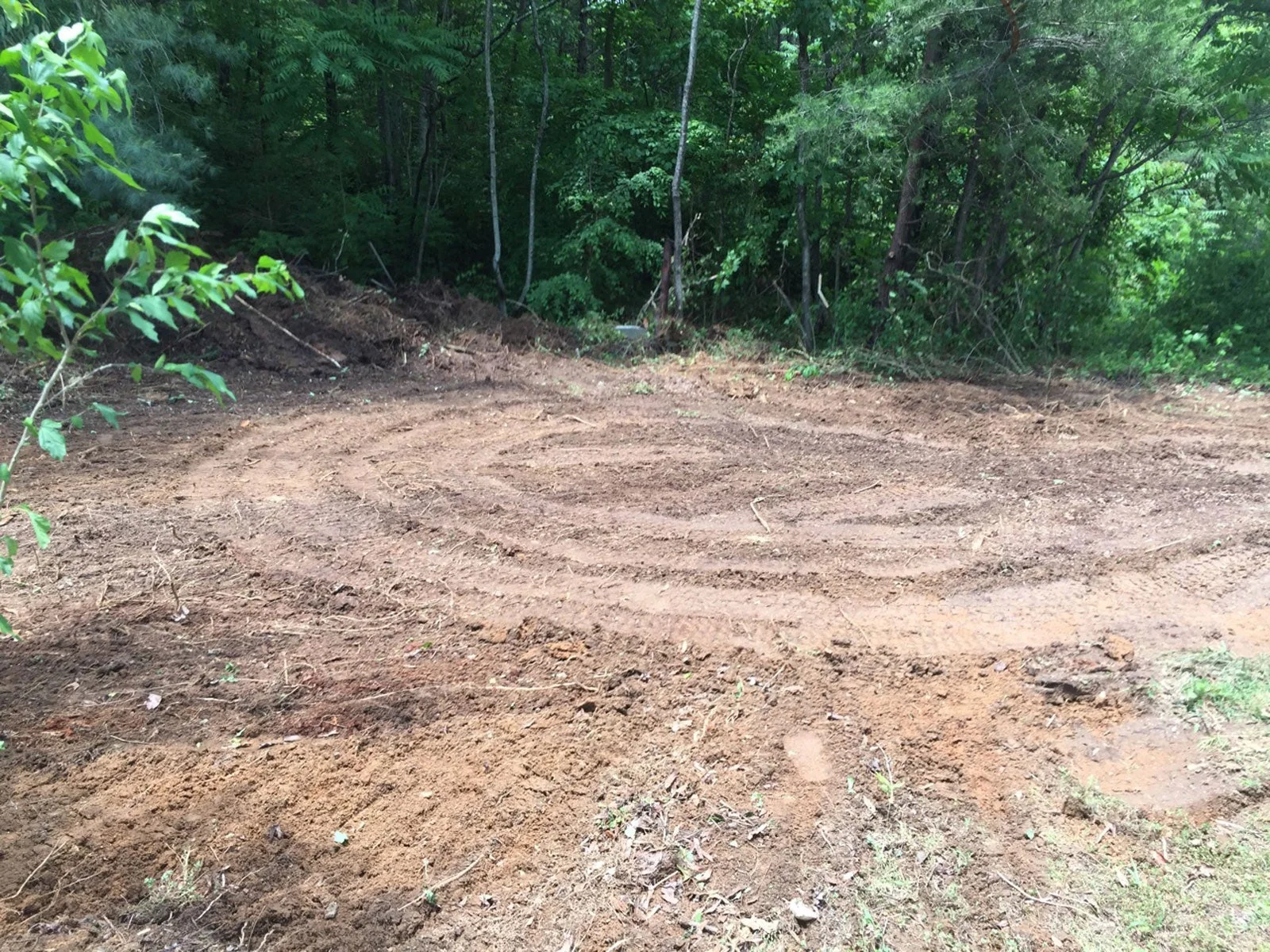
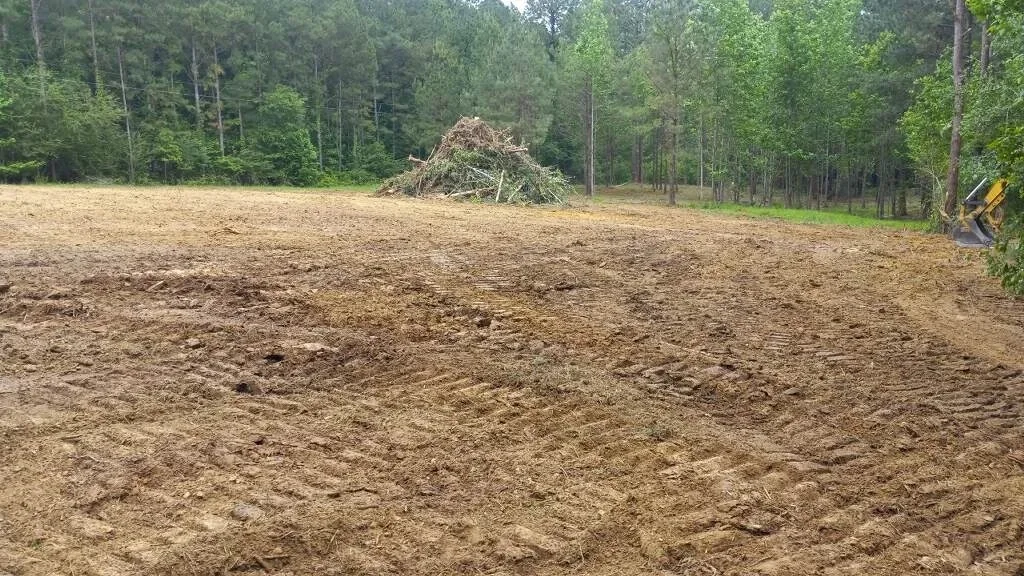
The grade has to do one job: take that water from where it enters the lot and deliver it to where it can leave, a ditch, a swale, a daylight outlet, or the storm system, without crossing the house pad or pooling at the foundation. That is the scope. Everything else (regrading, new gravel, drainage rock, culverts) is the equipment you use to get the grade to do its job.
Slope, access, and what equipment can even reach the lot
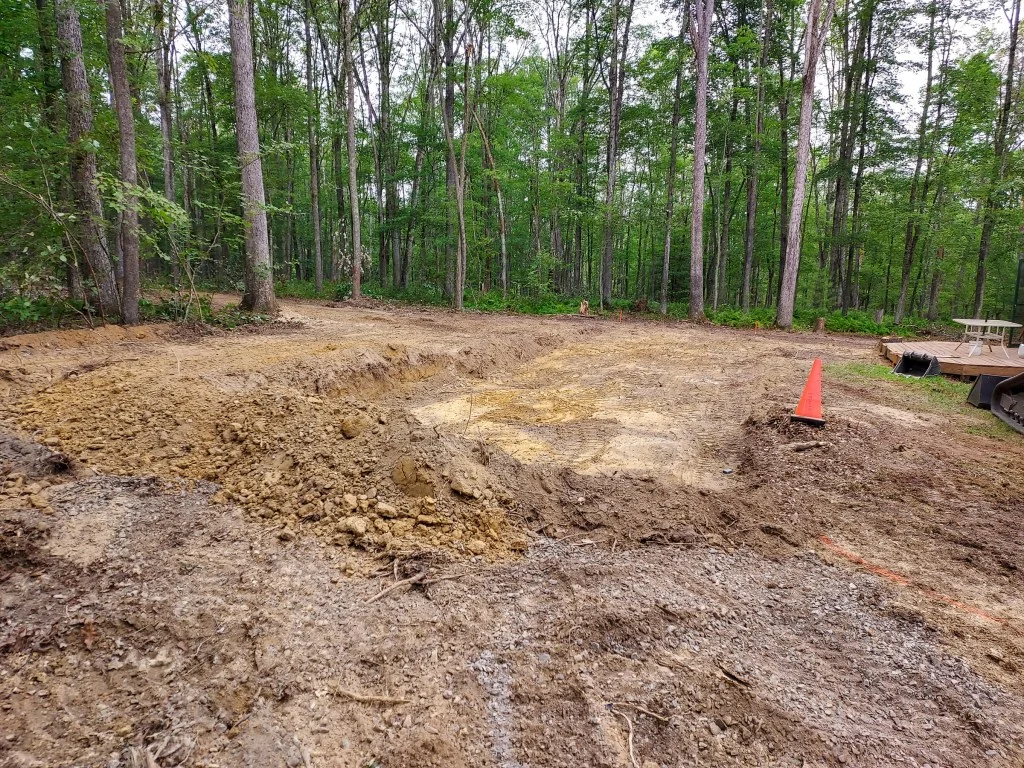
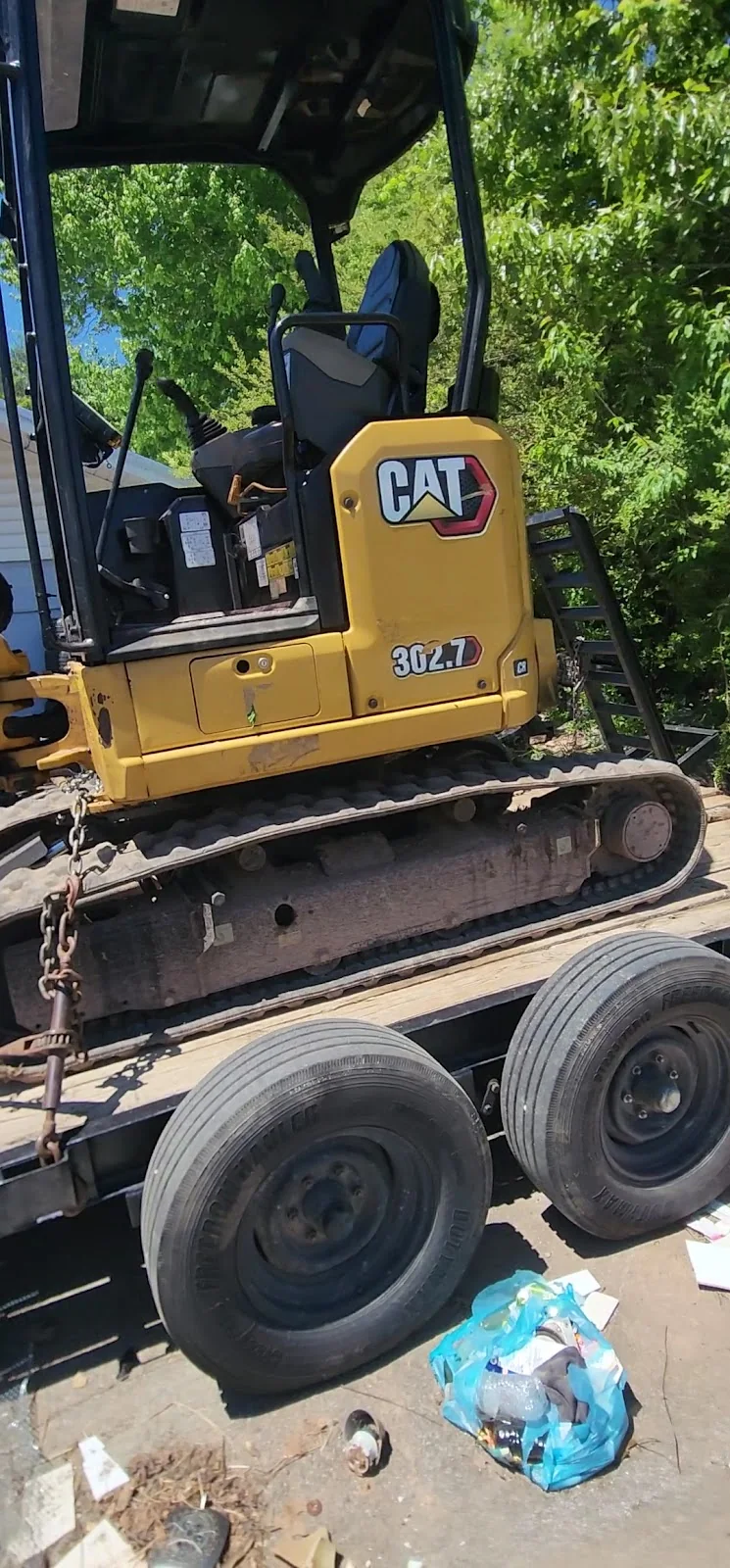
Hot Springs lots are not flat lots. Many sit on grades of 15 to 30 percent, with driveways that switchback to a house pad cut into the hill. That changes the estimate in real ways: a mini-excavator and a walk-behind plate compactor may be the only machines that fit, topsoil and gravel have to be moved in smaller loads, and any fill placed on a slope needs benching or a keyway so it doesn't slide the first wet winter.
Access is the other cost driver. Narrow driveways, low tree canopy, and no turnaround mean the crew hand-carries more material and spends more hours on machinery moves. If you have been quoted a flat per-yard rate from an out-of-county outfit, ask how they priced access, because a number that ignores it will grow once they see the lot.
When the work involves clearing trees or brush before the grade can be shaped, that's a separate scope; see land clearing in Hot Springs for what that involves here.
What grading work costs in Madison County
Ranges below reflect typical Madison County residential work. Slope, access, and haul distance move the number more than the square footage does. Full line items live on the Madison County grading cost page; the working table:
| Scope | Typical range | What moves the price |
|---|---|---|
| Yard regrade, light reshaping | $1,200–$3,500 | Square footage, how much dirt has to move vs. be imported |
| Foundation-line regrade with swale | $2,500–$5,500 | Length of swale, outlet location, whether a ditch already exists |
| Driveway grading and gravel refresh | $2,200–$6,500 | Slope, culvert needs, gravel depth, haul distance |
| Cut-and-fill build pad prep | $6,000–$8,000+ | Volume of cut, engineered fill requirements, retaining needs |
| French drain or curtain drain install | $3,000–$7,500 | Run length, depth, whether an outlet can daylight |
| Culvert install (driveway or ditch) | $1,500–$5,500 | Pipe diameter, length, rock headwalls, permits |
Any bid that names a single flat number before seeing the lot is guessing. On steep Hot Springs ground, the differences between two neighboring properties can double a job.
Permits, code, and who is allowed to do the work
Grading that changes drainage patterns, adds fill in a floodplain, or crosses a stream buffer may need a county permit or state review before equipment shows up. The NC Department of Insurance, Office of State Fire Marshal publishes the residential code that governs fill placement, foundation drainage, and slope stability expectations. When a job is large enough to be a general contracting project, licensing thresholds and contractor verification run through the NC Licensing Board for General Contractors. If the work touches a septic field, wellhead, or utility line, stop and confirm before digging, because a cut in the wrong place is a very expensive mistake.
Storm history shapes what this ground expects
Federal disaster records tell the story better than any sales pitch: 21 declared events have touched Madison County across 1978-2026, and they are overwhelmingly flood, storm, and landslide family. That pattern matches what contractors here see, saturated slopes that move after multi-day rain, driveways that wash out, and yards that drain fine in July but not in a wet February. The National Weather Service maintains the flood and flash-flood outlooks for this part of the French Broad basin, and every design decision on a graded Hot Springs lot should assume the wet year, not the dry one.
Practical implication: build the grade for the worst week of the decade, not the average Tuesday. Extra rock in the swale, a larger culvert than the math strictly requires, and a daylight outlet that is not dependent on a neighbor's cooperation are all cheap insurance on this ground.
Getting a real scope before you sign anything
A proper first visit walks the lot, finds where water enters and where it must leave, and identifies the outlet before pricing anything. The written scope should name the machinery, the cubic yards moving, the drainage components, and the disposal plan for spoils. It should say what happens to the grade if the outlet cannot be reached as planned. If a bid talks about tonnage of gravel and never mentions the outlet, it is not a grading plan, it is a delivery order.
For the broader picture of what this trade does across the county, the grading and excavation overview walks through scope types, and it is the right place to start if you are still deciding whether your lot needs shaping, drainage, or both.