Where the water actually comes from on a Biltmore Forest lot
Most yard leveling calls in Biltmore Forest start with the same confession: the back lawn has been soft since spring, or the side yard holds a puddle after every storm. On this side of Buncombe County the cause is almost never the lawn itself. These are large, heavily wooded parcels laid over rolling terrain, colonized decades ago by white pines and hardwoods whose roots have spent fifty years lifting and tilting the ground. Roof runoff from a long, low ranch house or a rambling two-story gets dumped at the foundation, and the natural fall of the lot sends the neighbor's uphill water straight through your side yard on its way down. The grade has one job: move all of it to a point where it can leave the property without pooling, without touching a foundation, and without being delivered to somebody else's basement.
Before anyone brings equipment, we walk the lot after rain, or read the water marks and vegetation that say the same thing. Low, damp strips of lawn that stay greener than their surroundings are a drainage verdict. So is any ground that slopes toward the house, however gently, or any swale that was graded years ago and has since silted in. Biltmore Forest's canopy makes this harder: roots cross swales, fallen limbs dam ditches, and leaf litter quietly fills the low spots the original builder relied on.
What regrading that survives looks like on these lots
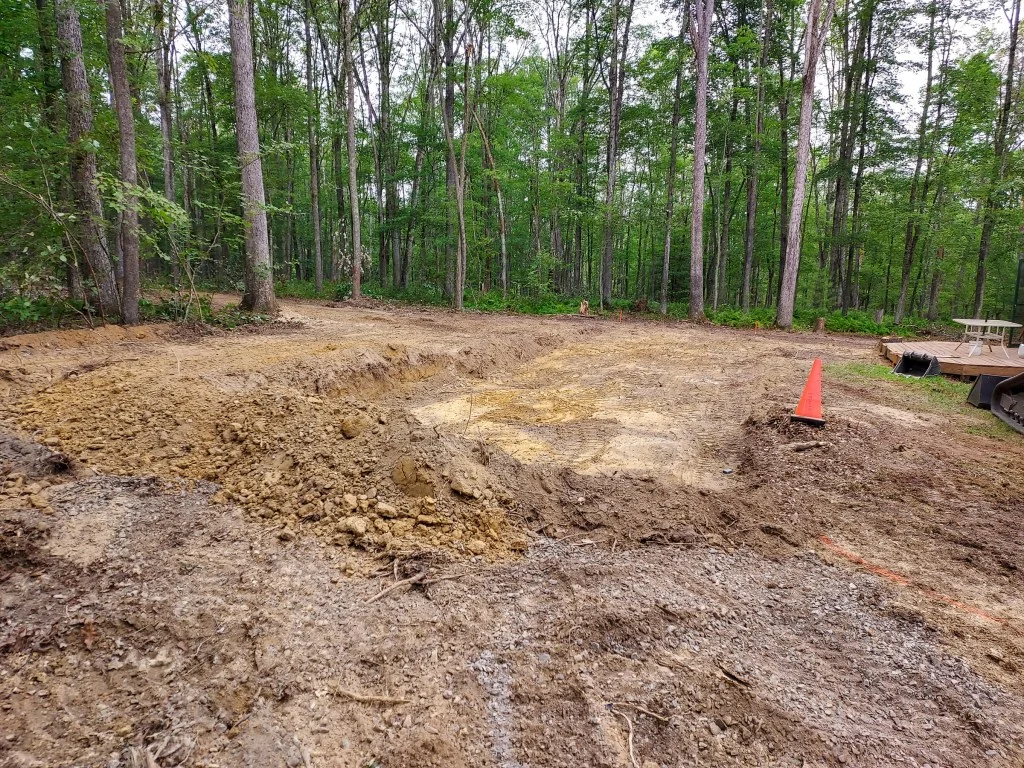
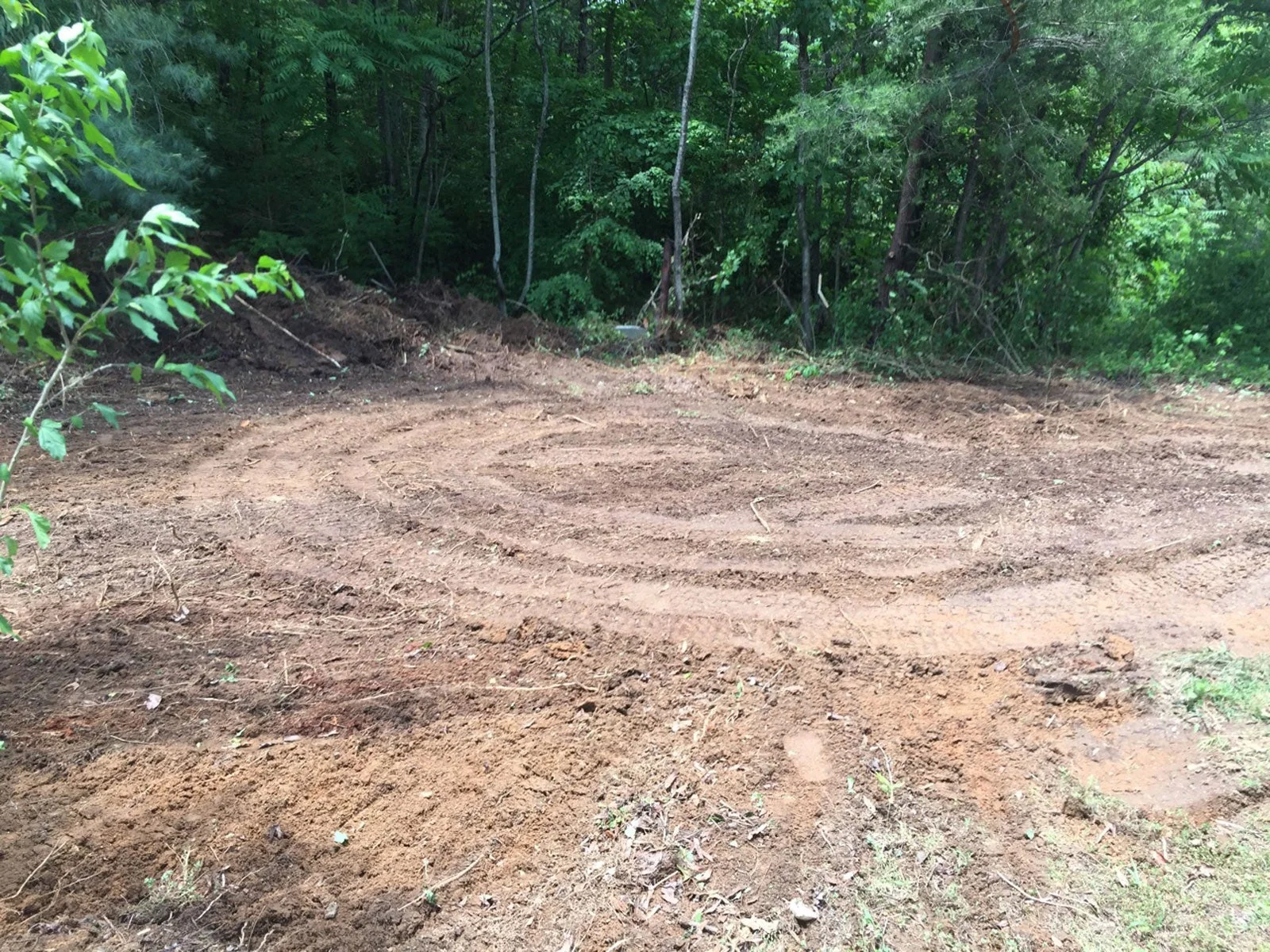
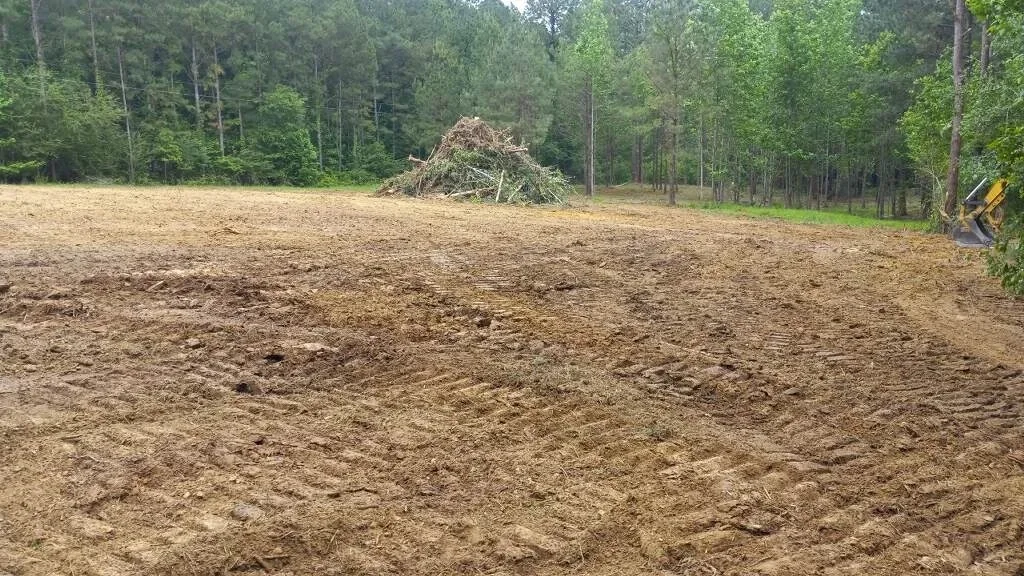
Regrading a wooded lot is a different operation than leveling a suburban tract lawn. The equipment has to work around root systems you want to keep, mature trees you cannot simply scrape past, and grades that already move more than most flatland yards ever do. Practical rules for this town: keep soil loose and uncompacted near tree roots rather than piling fill against trunks; blend new grade into the existing rolls of the lot over several feet rather than creating a hard shelf; and send water to a defined exit, which under North Carolina residential practice means away from the foundation and off the property through a swale, a dry creek bed, or a buried drain line where the lot allows it.
Three things change the price: how much soil has to be brought in or moved out, whether a buried outlet is required because the lot has no natural daylight point, and whether an existing swale is simply clogged and needs clearing instead of rebuilding. That last one is the pleasant surprise — a surprising share of soft yards in Biltmore Forest need a channel reopened and the ground re-tied to it, not a full regrade.
The real price picture for leveling in Biltmore Forest
Numbers below are typical Buncombe County ranges; Biltmore Forest lots often climb toward the upper end of each row because parcel size, tree protection, and drainage outlets add work. The complete town-by-town table lives on the Buncombe County grading cost page, and the service-level detail is on our yard leveling guide.
| Scope | Typical range |
|---|---|
| Spot leveling and re-tie of a low area under 500 sq ft, soil moved on site | $1,800–$3,200 |
| Full lawn regrade with imported topsoil, modest parcel | $2,500–$6,000 |
| Regrade with swale rebuild or buried drain outlet | $4,500–$7,500 |
| Large lot with restrictive tree canopy, engineered outlet, and haul-off | $6,500–$9,500 |
| Drainage-only work (clearing existing swales, extending downspouts) | $900–$2,400 |
Anything quoted without a stated destination for the water is incomplete, not cheap. Grading is regulated work: on larger scopes the state licensing threshold through the NC Licensing Board for General Contractors applies, and any yard where the plan touches stormwater quantity or neighboring properties should be checked against local requirements before the first bucket moves.
Trees, soil, and what mountain-weather years do to a grade
Buncombe County's federal disaster record is long — 19 declarations across 1973-2026 — and most of that history is storm and flood family weather. Every heavy season is a test: a grade that was marginal in a dry August fails visibly in a wet September. The National Weather Service's rainfall outlook for this region (see weather.gov) is a fair reminder that mountain storms drop a month of rain in a morning, and a yard graded for gentle rain will pond under that.
Clay-heavy soils common on these slopes hold water instead of absorbing it, so the grade has to shed, not just smooth. Tree roots keep working on any surface grade you apply — heaving pavement, re-routing shallow swales, and reopening channels over a decade. Budget for maintenance the way you budget for gutter cleaning; it is the same category of chore, and skipping it is how a $2,800 leveling job becomes a $7,000 redo.
Choosing a crew that knows these lots
Ask three things. First: how will they protect the trees that define these parcels? Second: what is the water's exit point, on paper, before work starts? Third: do they coordinate drainage scope with a licensed plumber when a line has to tie into an existing system — plumbing work here is licensed separately through the NC State Board of Examiners of Plumbing, Heating and Fire Sprinkler Contractors. When a yard's problem is bigger than grading alone, our Biltmore Forest grading contractors page explains how the scopes fit together.