Read what's already there before you regrade
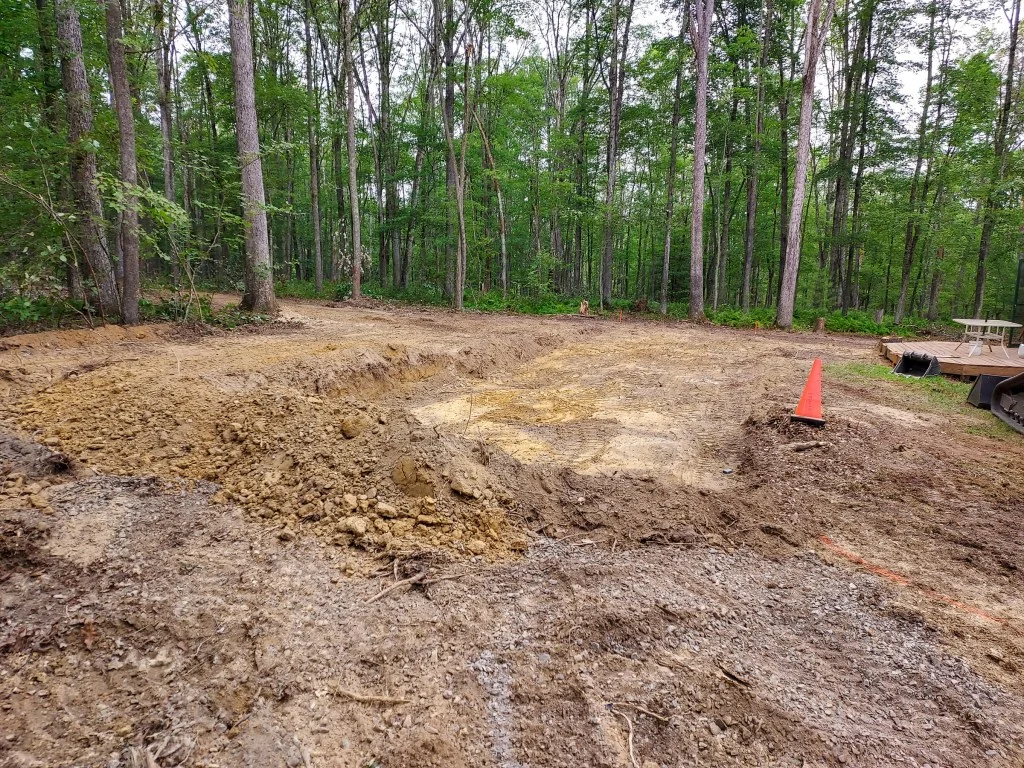
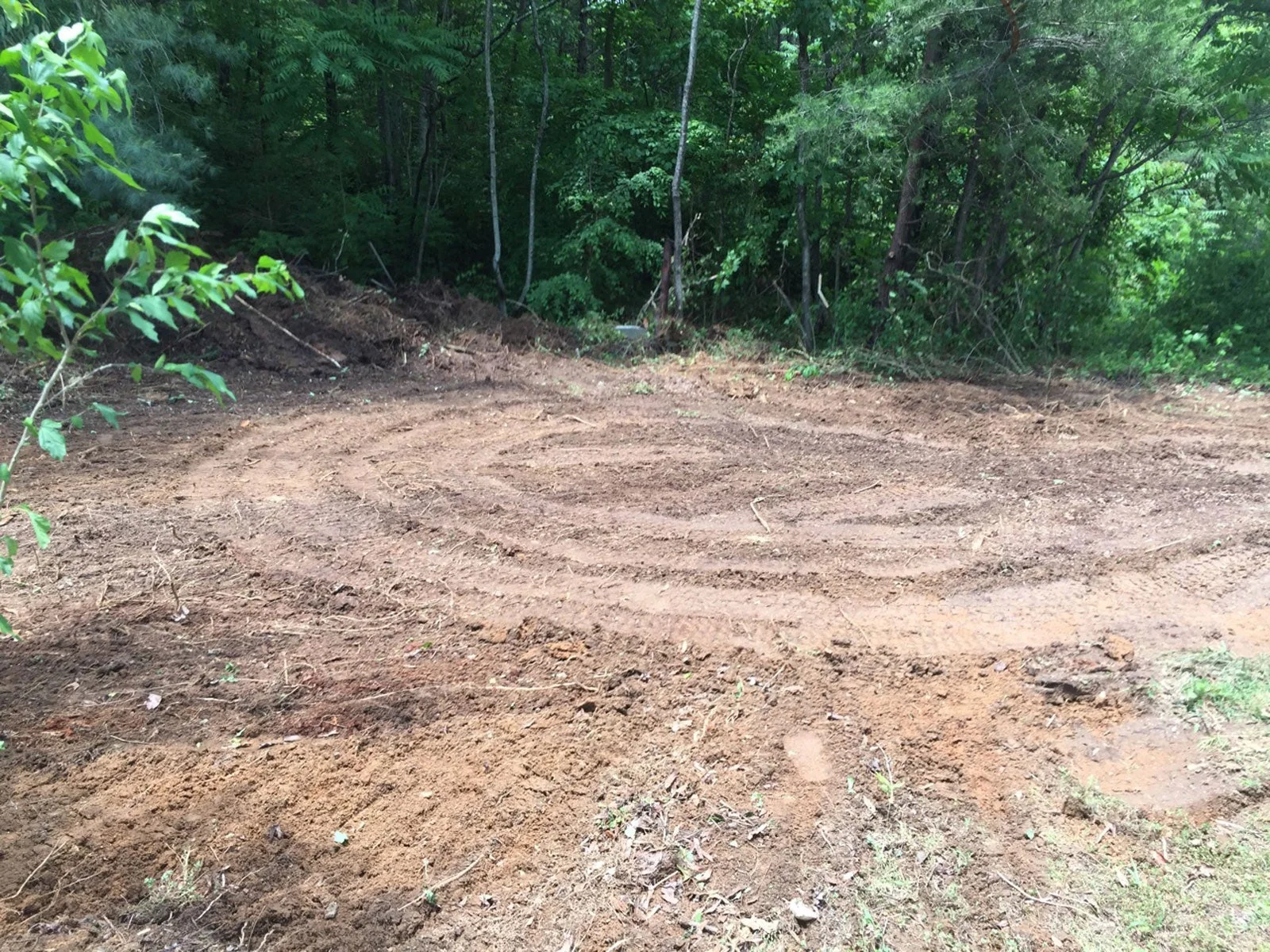
Waynesville is the Haywood County seat, and a large share of its housing sits on ground that was shaped long before anyone quoted a grading job: gravel drives cut into the slope off Russ Avenue and Howell Mill Road, older pads behind houses on the hill streets, and drainage that has been quietly failing for years. When a homeowner calls about a rutted drive or a washed pad, the useful first move is not a new price for a new drive. It is a read of what the current one is telling you — where water enters, where it stalls, and whether the base was ever built for the grade it sits on.
Three things worth checking before you spend a dollar on new material: the outfall (where does the water actually leave your property), the crown or fall of the existing surface, and whether the uphill side has any intercept. A driveway that ruts every spring is usually a drainage problem wearing a paving costume. The grading and excavation overview covers how that read turns into a real scope.
In Waynesville specifically, the housing pattern matters. A lot of the older homes sit on narrow benches cut into the hillside, so the uphill side of a drive is often a raw cut bank with nothing catching sheet flow before it hits the gravel. Newer subdivisions off Ratcliffe Cove Road and similar ridge roads were built to a different era of storm intensity, and the outfalls that looked fine on a site plan may now discharge onto a neighbor's slope or into a low spot that never dries. None of that shows up in a phone estimate. It shows up when someone walks the lot with a shovel and a level and watches where the water has already been.
One practical tell: look at the low shoulder of the drive after a heavy rain. If the ruts hold water and the mud fans out at the bottom instead of running off in a defined channel, the grade is fighting the outfall, not serving it. That is the condition that turns a $1,500 touch-up into a $5,000 rebuild if you keep adding stone to it.
What grading actually costs in Haywood County
Pricing here follows the work, not the address. A flat-ish town lot with an easy outfall is a different job from a drive climbing a 20 percent grade with rock in the cut. The table below is the working picture for residential scope, and the full line-item version lives in the Haywood County grading cost breakdown.
| Scope | Typical range |
|---|---|
| Light regrade of an existing pad or yard | $1,200 – $1,800 |
| Standard residential lot grading (most homes) | $2,200 – $3,600 |
| Driveway reshape with new base and crown | $3,000 – $5,000 |
| Steep mountain lot with rock or heavy fill | $5,500 – past $8,000 |
Anything quoted without a stated outfall and a note on subsurface rock is an incomplete bid, not a bargain. In this county, rock and haul-off are the two line items that quietly turn a $2,800 job into an $8,000 one.
Haul-off is the one people underestimate most. On a tight Waynesville lot with no room to spread spoil, every yard of unsuitable material has to leave by truck, and disposal plus trucking can rival the grading line itself. Rock is the other wildcard: the same terrain that makes the views also makes the cut, and a ledge that starts six inches below the surface can double machine time. A bid that says "rock extra, if encountered" is telling you it did not probe the cut.
Where a job lands inside its range comes down to access as much as acreage. A wide, straight approach lets a larger machine work efficiently; a narrow shared drive with a tight turn means smaller equipment and more handling, and that shows up in the hourly count, not the square footage. If you want the scope and price to line up before anyone puts a machine on your property, the read-it-first approach is the cheapest step in the whole process.
Why mountain water history drives the scope
Haywood County's federal disaster record is the context for most grading calls here: 19 declared events touch this county across 1973-2026, and the pattern is storms, flooding, and the slope failures that follow saturated ground. That history is not a sales hook. It is a design input. Grading that assumes a drier year is grading that gets reworked after the next wet one, and the fix is almost always more expensive than doing the outfall and intercept correctly the first time.
That is also why the National Weather Service's local outlook and warning products at weather.gov matter to scheduling — cutting and exposing bare slopes right before a heavy rain window is how you pay twice for the same dirt.
Living on a slope in Haywood County changes what "done" means. Water that leaves your property still has to go somewhere on the neighbor's slope, and the county's terrain does not give it many gentle options. An intercept ditch that looks tidy in July can become the concentrated channel that cuts a gully through the next property during a tropical rain. The honest approach is to slow water down and spread it out where the slope allows, rather than concentrating it and hoping the pipe handles a storm it was never sized for.
Spring and late winter are the worst windows for exposed ground here. Saturated clay does not compact, so base placed on wet subgrade settles and pumps the moment traffic hits it. Freeze-thaw cycles then heave what looked flat in October. The practical takeaway: schedule grading for a dry stretch, and treat any forecast of several inches of rain as a hard stop on fresh cuts, not a minor inconvenience.
Permits, licensing, and where the line sits
Simple regrading and driveway work often does not cross the state's general contractor threshold, but land disturbance, fill placement, and anything tied to a structure can. The North Carolina Licensing Board for General Contractors at nclbgc.org publishes the current dollar threshold and the rules on who can contract for what — worth a look before you sign anything that mixes grading with a build.
Two related trades show up on these jobs and each has its own board: septic and water-line work tied to a pad falls under the plumbing and heating licensing board at nclicensing.org, and any burn or open-burning component sits with the Office of State Fire Marshal at ncdoi.com/OSFM. A grading crew that knows when to hand off to those trades is a crew that has done this in Haywood County before.
Erosion and sediment control is the other piece that catches homeowners off guard. Any time you expose ground and move soil, you are potentially creating a sediment problem for the storm system below you, and that is regulated for good reason in a county this steep. A short-term control like silt fence or a stabilized construction entrance is cheap next to the cost of a failed inspection or a downstream complaint. If your project is large enough to disturb a meaningful area, ask where the disturbed-area threshold falls and whether a plan is triggered before dirt moves.
It also pays to know what touches the building code and what does not. Regrading that affects drainage around a foundation can change how a house sheds water, and a cut that undermines a footing is a structural issue, not a landscaping one. When in doubt, a quick check with the licensing board's published guidance is faster than untangling a problem after the fact.
Sequencing a fix-versus-redo decision
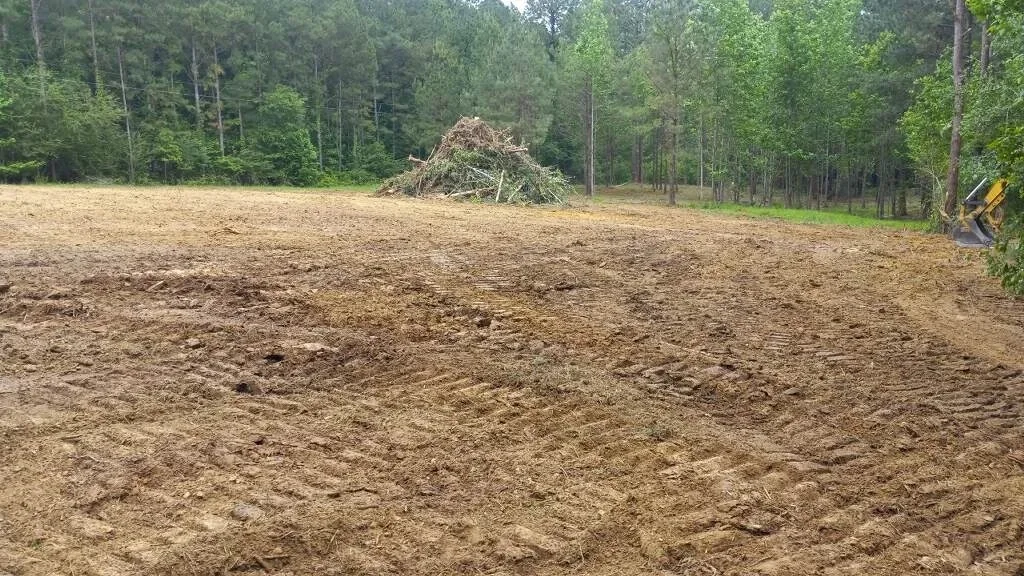
The honest order of operations on most Waynesville properties: clear what has to be cleared, read the water, correct the grade and outfall, then place and compact base material, then finish. If your project starts with trees and brush, the clearing scope belongs in the same conversation — see land clearing in Waynesville for how that pairs with grading rather than preceding it by months.
The redo trap is spending on surface material before the drainage is right. New gravel over a failing outfall is money on top of a problem. Ask any crew you talk to which step they would do first on your specific lot, and listen for whether they mention water before stone.
There is a difference between a fix and a redo, and it is usually visible at the edges. A fix corrects the source: the ditch gets a real grade and a defined outfall, the drive gets a crown and a shoulder that sheds, the pad gets fall away from the foundation. A redo just dresses the surface. You can often date a bad redo on sight, because the new gravel is there but the old water stains on the downhill edge have not moved. When you walk your own lot, look for those stains first, then decide what you are actually buying.
If you want a second opinion before committing to either path, the useful thing to ask for is not a number. It is a description of where the water goes now and where it will go after the work. If a proposal cannot answer that in plain language, it has not read the lot closely enough to price it honestly.