What the ground under Weaverville driveways actually is
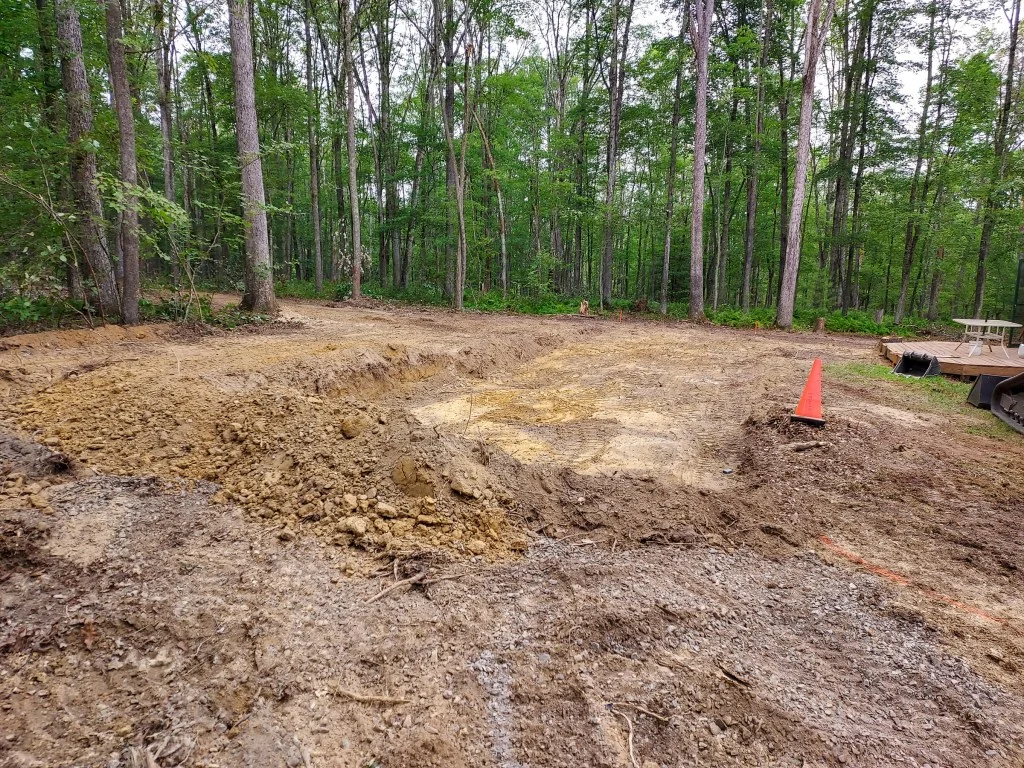
Dig into a yard in this part of Buncombe County and you rarely get just one answer. In the flat pocket near the town core, the red clay is deep, sticky, and plastic — it holds water like a shallow bowl and turns a driveway job into a drainage job first. Closer to the ridges on the way up toward the parkway, you hit rock at three feet, wedges of broken shale, and old fill from earlier pushes that never really compacted. Out toward the county line, the mix changes lot by lot, and the smart money goes into a few test holes before anyone quotes a number.
What matters isn't which problem is worse. It's that clay swells, rock runs water somewhere, and unconsolidated fill settles under a truck tire. A driveway that lasts through a Weaverville freeze-thaw spring starts with the subgrade being read correctly, not with the gravel. The top stone is the visible part; the expensive decisions were made before it ever showed up.
Red clay in particular punishes shortcuts. It expands when saturated, contracts when it dries, and pumps upward under repeated wheel loads. That pumping is why a driveway that looked perfect in October can show ruts by March. The fix isn't more stone on top — it's holding the clay down with separation fabric and building the base in compacted lifts so the stone itself carries the load, not the soil beneath it.
Old fill is the other common surprise. Plenty of lots around Weaverville were leveled years ago with whatever was on site, and that material varies wildly in density. One section may be almost rock-hard while ten feet away the probe sinks freely. A contractor who has graded this county will probe several points before pricing, because a bid based on one hole is a coin flip.
What Weaverville driveway installation costs
Prices track what the ground does, not how the drawing looks. The table below is a working guide — your number moves with length, slope, drainage, and whether a culvert is needed.
| Scope | Typical installed range |
|---|---|
| Short, gentle, clear lot — strip, grade, compact, two lifts of stone | $1,800–$2,800 |
| Average residential drive with one grade change and a culvert | $2,800–$4,500 |
| Long or tight lot with retaining and drainage work | $4,500–$5,500 |
| Steep or extended mountain drive with significant cut and haul | $8,000–$12,000 |
The Buncombe County grading cost breakdown runs the same lines as any cut-and-fill project: excavation, haul-off, stabilization, and stone. If a quote shows a per-yard price with no cut-and-fill math, it's a guess dressed as a bid.
Length is the easy variable to see, but slope costs more per foot. A drive climbing steadily needs more stone to hold grade, more attention to water bars or a crowned surface, and often a culvert at the bottom to keep the roadbed from acting like a streambed. Two hundred feet of flat drive and two hundred feet of climbing drive are not the same job, even though the stone count looks similar on paper.
Haul-off is the line item homeowners forget. If the cut produces more spoil than the lot can absorb, it leaves by truck: loaded, weighed, and dumped somewhere permitted. On a tight Weaverville lot with a steep approach, that alone can swing a bid by thousands before a single yard of gravel arrives.
Why water and frost decide most of these jobs
Federal disaster records reach into this county repeatedly — 19 declared events across 1973-2026, mostly storm and flood family — and each one put water against ground that was already marginal. A driveway has to shed water without carrying it downhill into the house. That's why the drainage plan comes before the gravel order: a crowned surface, a positive fall away from the slab, and a culvert sized for the upslope acreage above.
The cold half of the year matters just as much. We get enough freeze-thaw cycles that a soft, saturated subgrade heaves and potholes within a season. Proper compaction in lifts, not one dump-and-spread, is what stops it. The state's cold-weather and site-drainage expectations for residential work are worth reading at the NC Licensing Board for General Contractors, and if you're tying a new drive into a private well line or septic area, the NC board that licenses plumbing and heating contractors is the enforcement body when that work crosses a trenched utility.
Mountain storms here tend to arrive fast and drop a lot of water in a short window. When that sheet flow hits a drive with no crown and no outlet, it cuts a channel, and the channel widens every storm. The National Weather Service's guidance at weather.gov is worth watching during the wet season for the same reason: knowing when heavy rain is coming tells you when your drainage has to be ready, not after the ruts appear.
One more local detail: shaded drives on north-facing slopes hold moisture far longer than sun-exposed ones. That shade keeps the subgrade softer through winter, which means those drives benefit most from separation fabric and generous base depth. A contractor who knows the property will ask which way the drive faces before deciding how much stone to spec.
Where this sits among other driveway services
Not every Weaverville drive needs the full build. A re-grade and fresh surface on an existing drive can be a fraction of new construction, and repairs like pothole patching or edge rebuilding are often a service call. If you're deciding between starting over and refreshing, the driveway grading and gravel guide walks through both paths. For a full rebuild — clearing, grading, base, and stone — the sequence below is what a proper scope should show, and the contractors who do it well live in the Weaverville grading contractor directory.
A realistic build: stake the drive and check fall. Strip topsoil and roots. Cut and fill to a compacted subgrade. Build up in lifts with a geotextile separation fabric where clay is bad. Crown it. Then place graded aggregate and a durable surface stone. Anything missing from that list is a shortcut someone will pay for later.
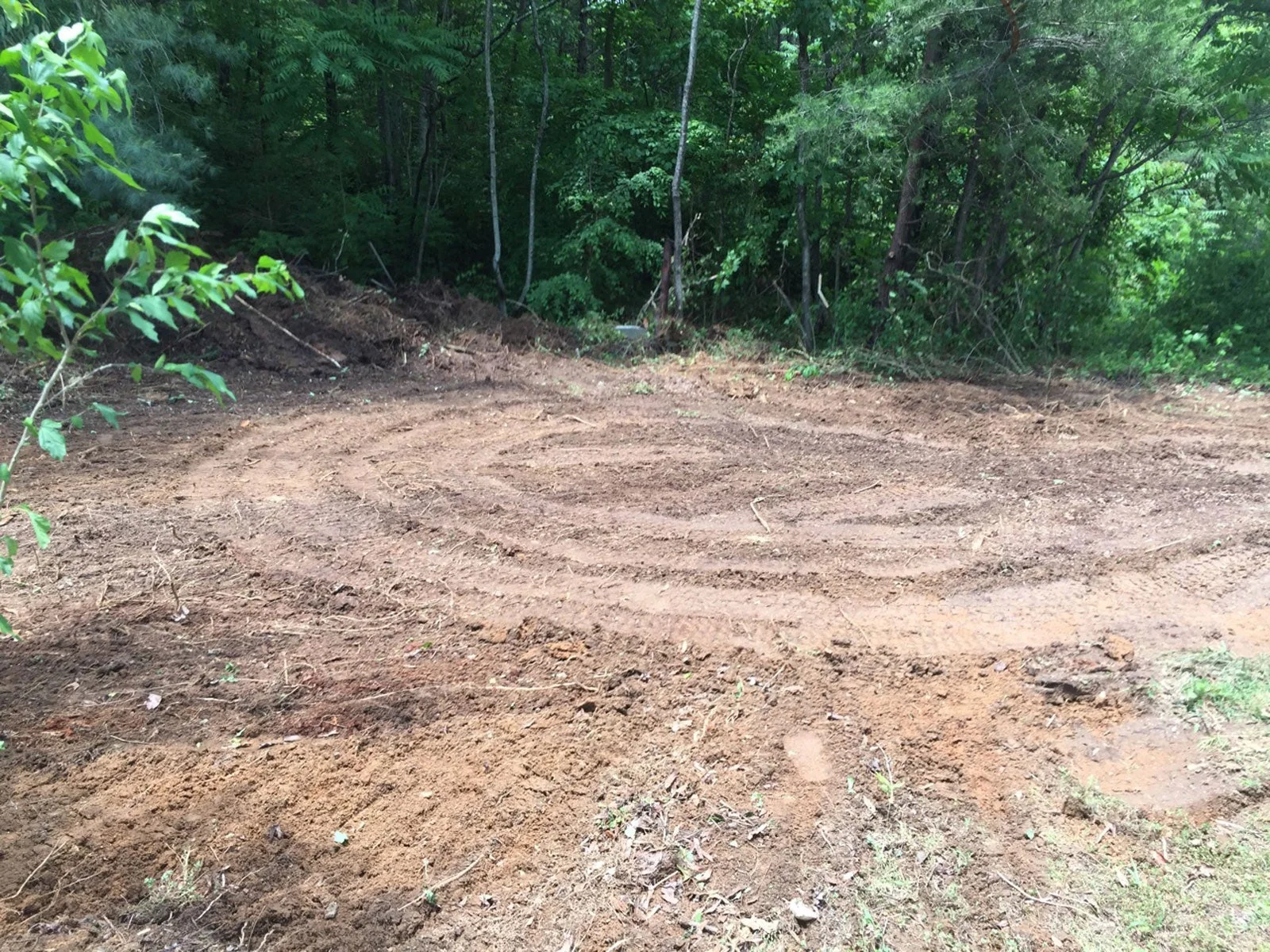
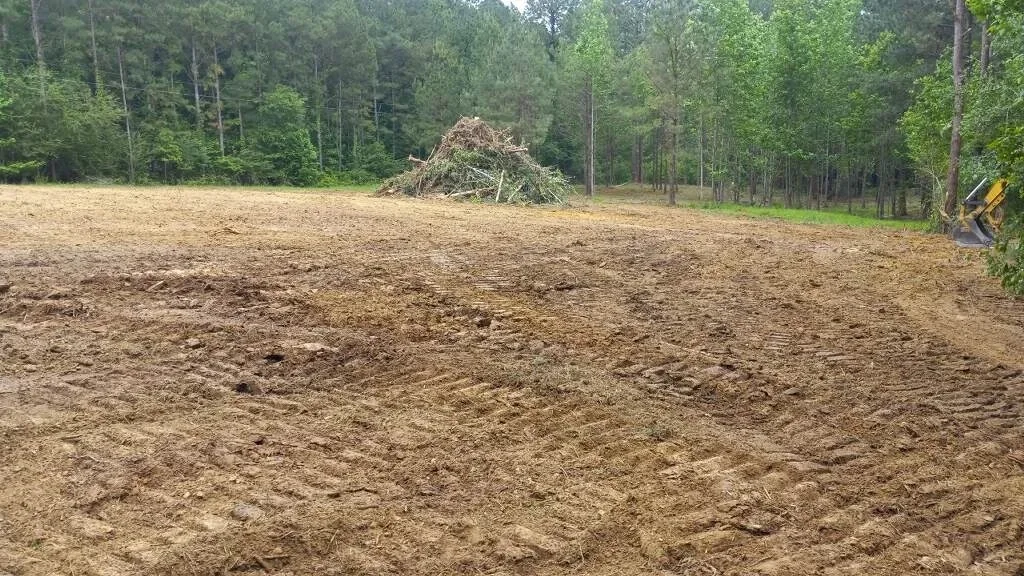
Clearing deserves a mention on its own. Weaverville lots often carry mature hardwoods near the house, and root systems extend well beyond the trunk. Grinding a stump is not the same as removing the root mass under a future driveway — if that wood is left in place, it decays, voids open, and the surface above settles. Any bid that skips root removal on a wooded approach is understating the work.
Drainage placement is similarly easy to get wrong. A culvert undersized for the upslope watershed will back up in the first big storm, and a driveway that dumps water onto a neighbor's property invites a problem no one wants. The plan should show where water enters, where it crosses, and where it exits — in writing, before the excavator shows up.
Before you hire in Weaverville
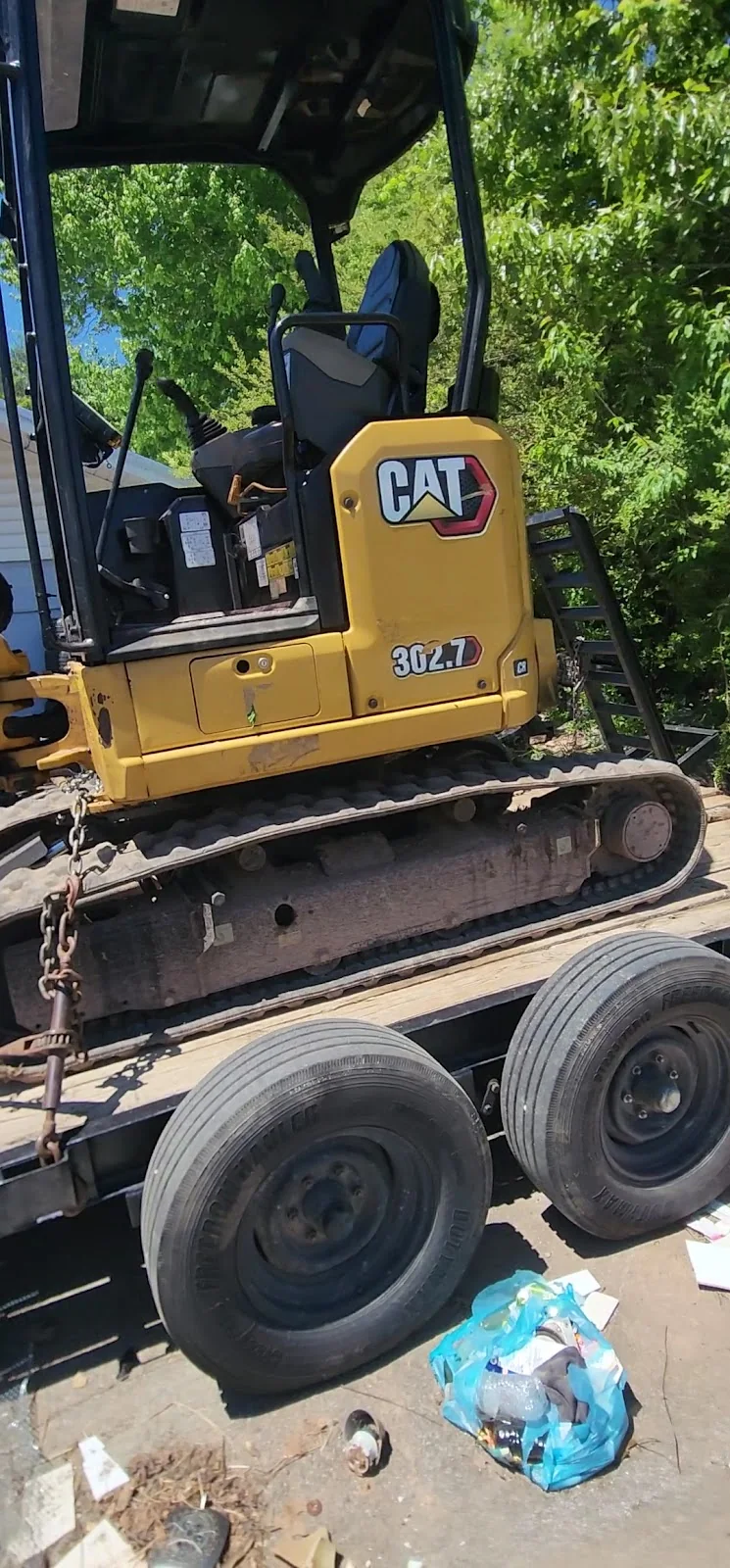
Ask three questions that separate a driveway builder from a guy with a skid steer: How many lift thicknesses will the base be placed in? Where does the water leave the property? What's under the first foot of subgrade at each end of the drive? A crew that has worked this terrain will answer all three without hesitating, and will want to see the ground before pricing.
Also be honest about use. A passenger car and a loaded dump truck don't need the same base. If the drive may serve a camper, a log truck, or a future garage slab, say so up front — the design change is cheap now and expensive later.
Get the scope in writing, including stone type and depth, fabric or no fabric, and how spoil will be handled. And check that the contractor is properly licensed for the work where state law requires it, which the NC Licensing Board for General Contractors explains directly. A clear written scope plus a licensed, local crew is the difference between a drive you forget about and one you fight every season.