The order of work on an Etowah drive
Etowah's ground rarely cooperates with a one-pass install. The community sits in Henderson County's Blue Ridge foothills south of Asheville, where lots off Brevard Road and the back roads toward the French Broad tend to be either flat pasture with heavy clay or a slope cut up into oak and rhododendron. Those two ground conditions get two different sequences, and the order matters more than the speed.
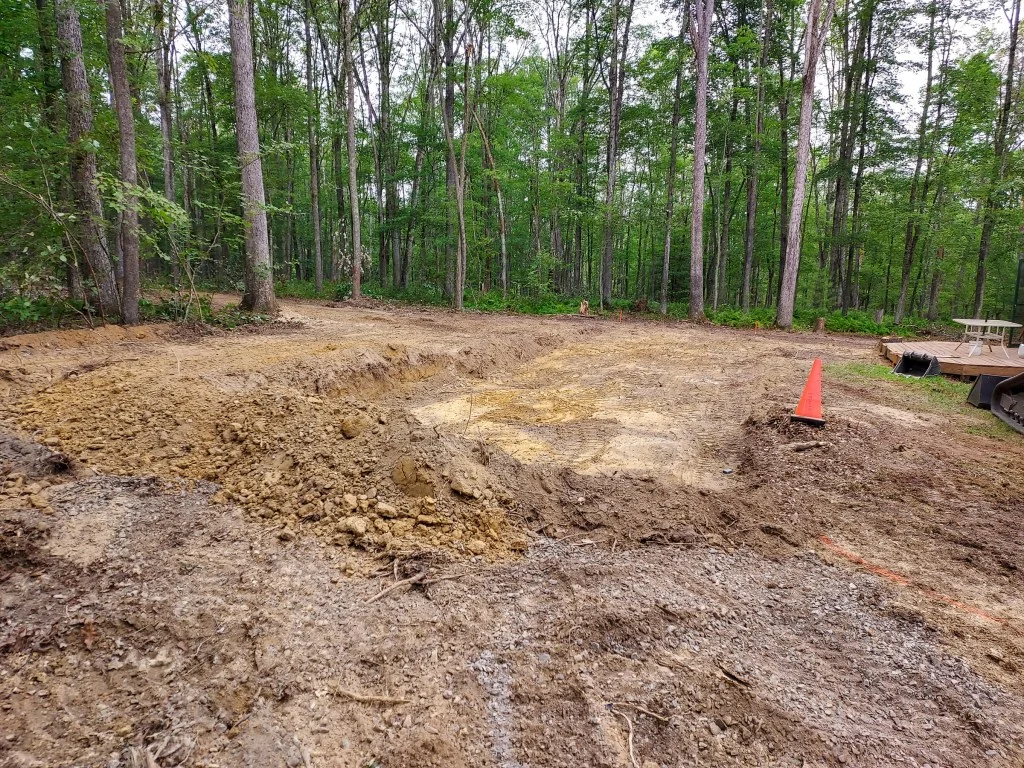
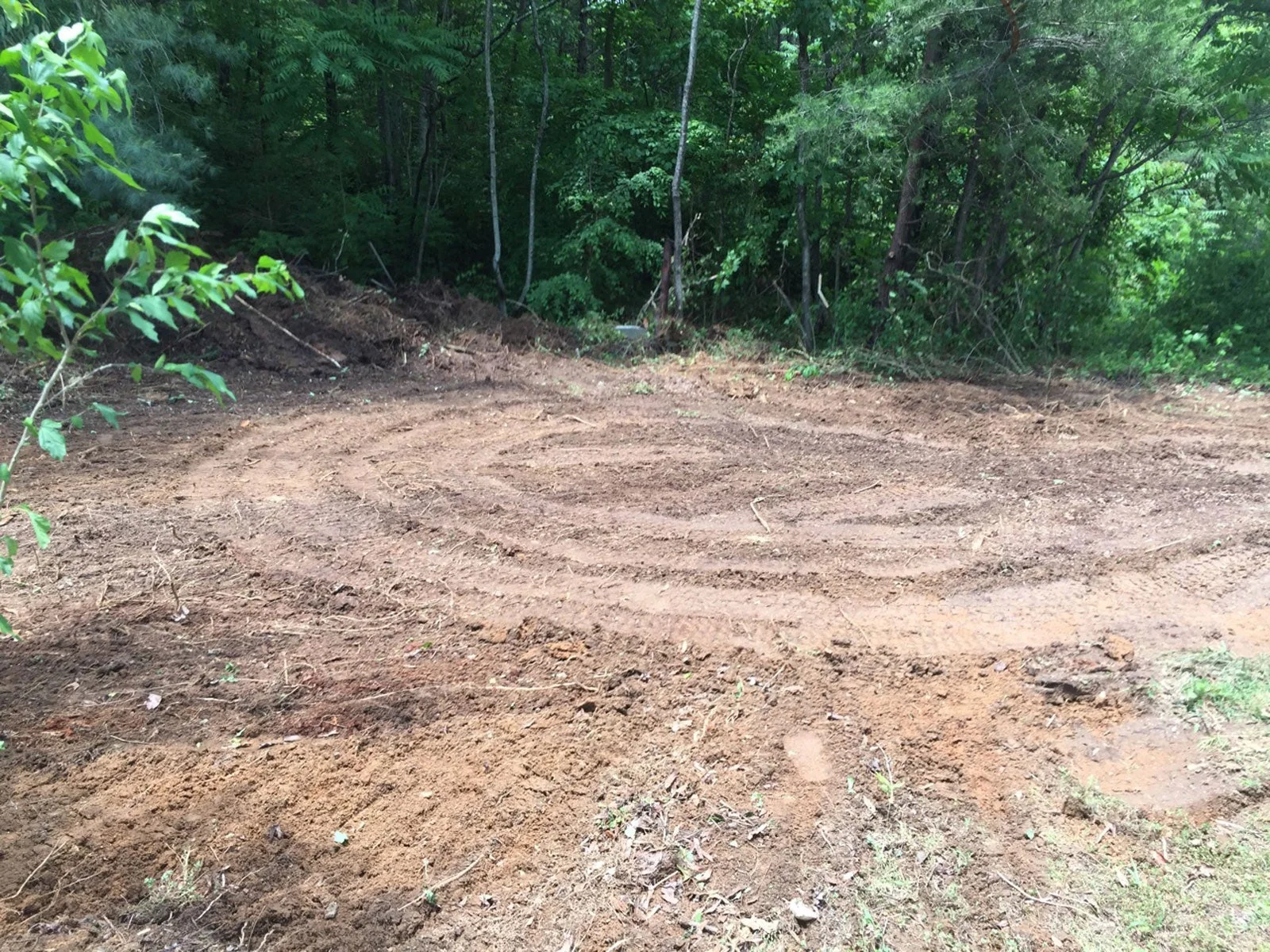
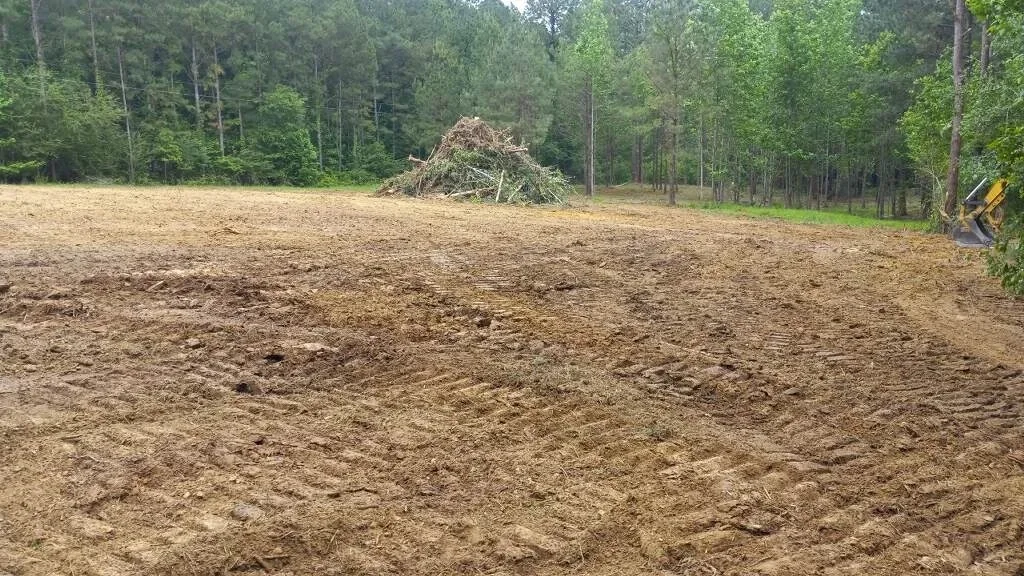
On flat clay ground the crew walks the route first and marks the crown and ditch lines. Then: clear and grub the strip, strip and stockpile the topsoil, cut the ditch on the uphill side, shape the roadbed to a crown, compact in lifts, and only then bring stone. On a slope lot the uphill ditch moves forward in the sequence, because the cut has to drain somewhere before stone goes down or the first storm moves it. A typical 300-foot Etowah drive is a two-day job when weather holds; a 600-foot slope drive with culverts and a turn-around pad is closer to four or five days. A gravel driveway installation in Etowah NC is mostly a grading project with rock on top, which is why the driveway grading and gravel order of operations is the right place to start.
What drives the price up or down here
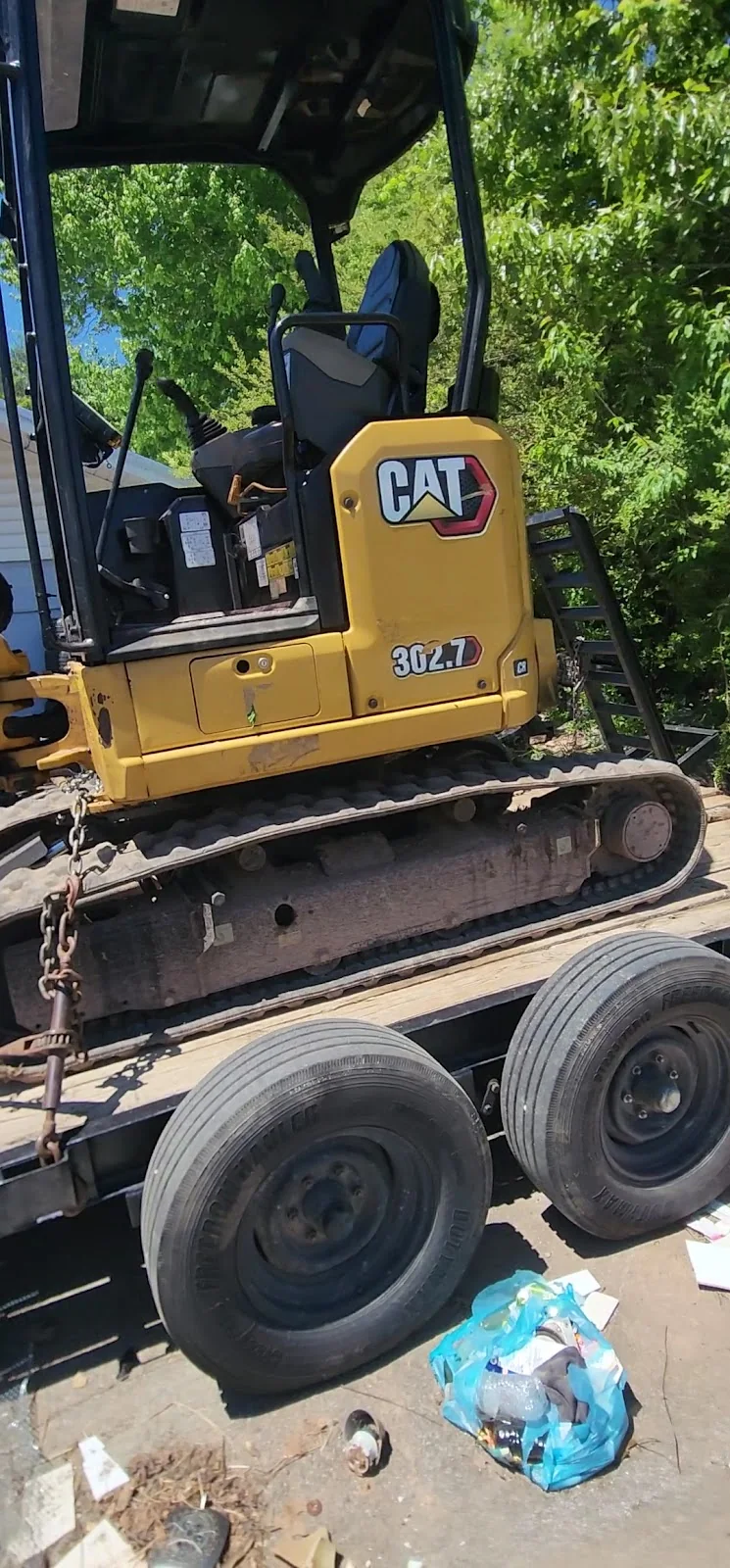
Two Etowah-specific cost movers. First, how much of the job is earthmoving before any stone: pasture clay shapes quickly, but a slope cut through stumps, rock, and old logging debris can double the equipment hours. Second, stone logistics. A tri-axle has to reach the site, and on narrow gravel roads off the main drag the crew may need a smaller tandem load or to stage stone at the mouth of the drive and walk it in. That is labor, not markup. The Henderson County grading cost table carries the working ranges of all of it.
Scope and price, line by line
Ranges below are installed cost for a Henderson County property, base prep and one gravel type included. Ranges sit inside the sitewide band; the top of it is reserved for long or steep drives.
| Scope | Typical installed range |
|---|---|
| Short residential drive, 150–250 ft, flat clay, reshape existing base | $1,800–$2,600 |
| Typical 300–400 ft drive, new base, crown and ditch, 3–4 in. of crushed stone | $2,800–$4,200 |
| Drive with culvert, turn-around, or 500–700 ft of new roadbed | $4,500–$5,500 |
| Long or steep mountain drive, 800+ ft, cut into slope, drainage structures | $8,000–$12,000 |
| Reshape and add stone to an existing drive (no new base) | $900–$1,700 |
The top row exists because grade is the expensive part, not gravel. A steep Etowah drive may need switchback shaping, a water bar pattern, and a ditch that discharges to a daylight point instead of over your neighbor's fence line. Those are storm-survival items, not upgrades.
Water is what kills a gravel drive
Henderson County's federal disaster record tells the story: 16 declared events touch this county across 1978-2026, dominantly storm and flood family. Etowah's clay holds water and its slopes shed it fast, so a gravel drive that is not crowned, ditched, and daylighted is a drive the next heavy rain re-grades for free. The National Weather Service mountain forecasts are worth watching when you are deciding when to place stone: fresh gravel laid into a saturated subgrade pumps and sinks, while the same stone on a dry, compacted base locks in. If your drive already sheds water onto the road or a neighbor's property, drainage corrections carry their own line item and should never be value-engineered out to hit a lower bid.
Stone choices and what they're for
The layers have jobs. A 2–4 inch clean crushed base builds up the roadbed and drains. A finer 3/4-inch crush locks in as the driving surface. If your drive pitches more than roughly eight percent or climbs in segments, a washed angular surface stone grips better than a smooth river gravel that rolls. Recycled asphalt millings are an option many mountain owners use for a lower-dust, firmer surface, and they cost about the same as mid-grade crushed stone but behave differently in summer heat. Ask what the crew plans on the steepest segment; a bid that names one stone type for the whole drive, top to bottom, is not reading your grade.
Hiring and permits
In North Carolina, driveway work that is purely grading and gravel is generally not treated as building construction, but jobs priced past the state general contractor threshold fall under the NC Licensing Board for General Contractors, and anyone who says otherwise should be shown the door. If your Etowah drive enters a state-maintained road, the entrance apron and culvert may need to meet NCDOT's standards for the road, which is a separate conversation from the private 600 feet. And if any earthmoving crosses a creek, stream, or designated buffer, federal rules through the EPA govern what can be disturbed. When you're ready for a bid, the grading contractors in Etowah page covers what a competent site visit includes.