Read the existing grade before you break ground
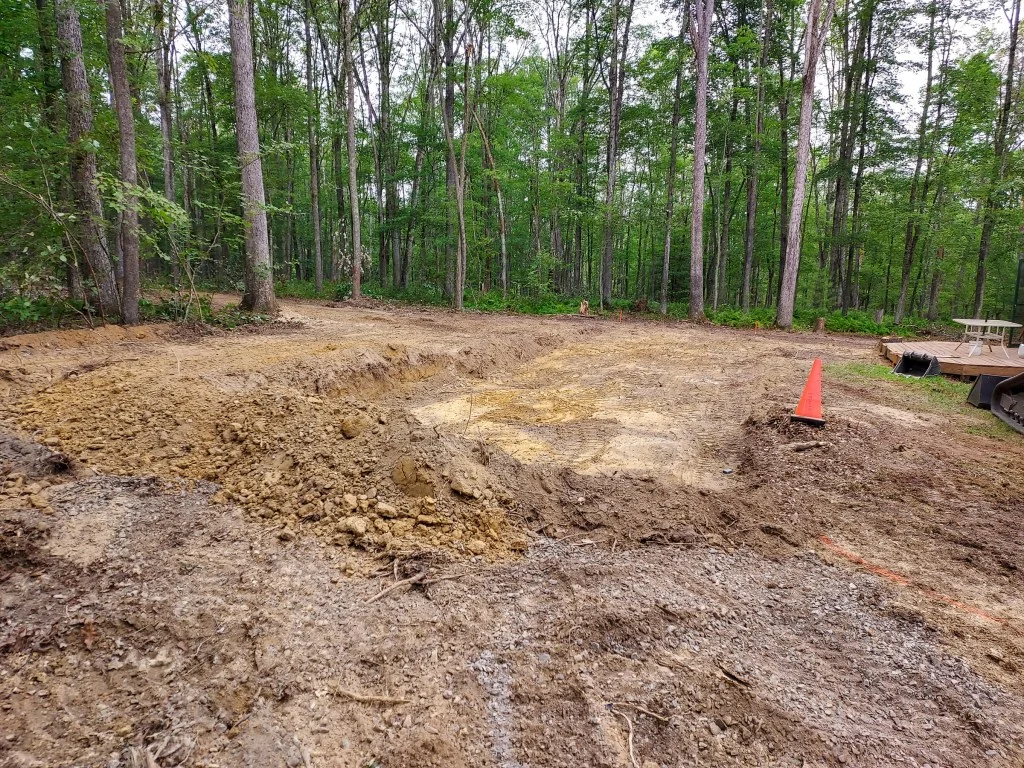
In Hendersonville, the ground usually tells you what it wants before the excavator shows up. A sloping driveway that sheds toward the house, a backyard pad that ponds after every storm, a French drain that daylights uphill — these are not separate problems from the excavation. They are the reason the pit will not stay dry and the footings will not stay stable. Henderson County sits at the edge of the Blue Ridge, so most homes here were carved into ground that was never flat. Fixing or redoing what the last cut already did is often cheaper than digging deeper, and it is almost always cheaper than digging twice. The order that works: read the water, fix the fall, then excavate. If you skip the first two steps, the third one just relocates the problem.
Consider a typical lot off Kanuga Road or up toward Flat Rock: the driveway was cut in decades ago at a fall that made sense for a gravel truck, not for a slab. Water sheets off that drive, crosses the future footing line, and disappears into the same clay the excavator is about to open. You can dig the pit to perfect depth and still pour footings into a bathtub. The fix is rarely the excavator's job alone. It is a grading decision — re-crowning the drive, adding a swale above the cut, or daylighting a drain to a lower point on the property — made before the machine arrives. That sequencing is the whole point of reading first.
On the hillside lots above downtown, the read is different but the principle holds. The old cut bank is still shedding water toward the house pad. The soil behind it is a mix of weathered rock, saprolite, and clay that holds moisture long after the rain stops. If the cut bank has no ditch at its toe, that water arrives at the excavation from uphill and from behind. No pump fixes a missing swale. The honest conversation happens before the quote, not after the first wet week.
Where the price forms on a Henderson County dig
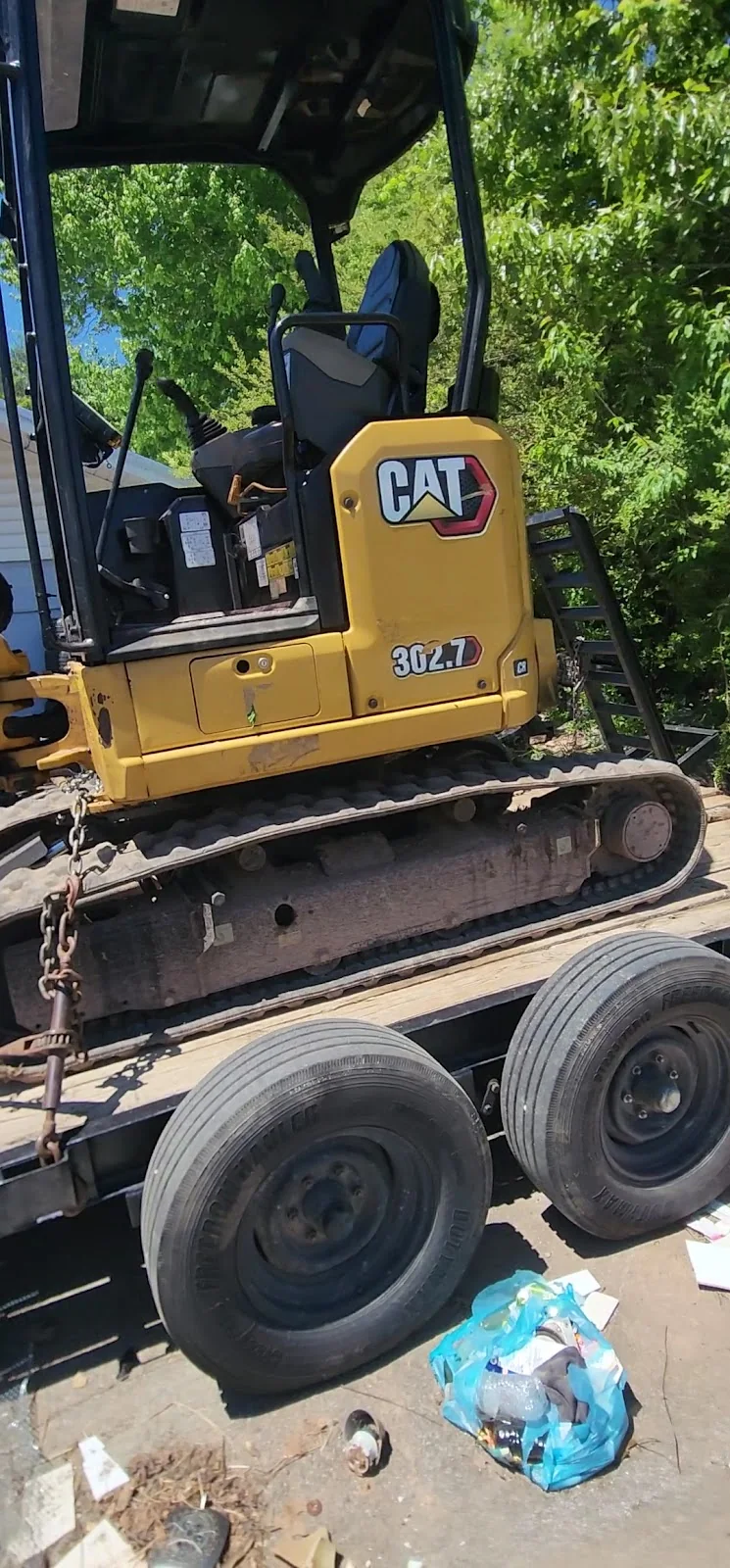
Excavation quotes in this county swing mostly on depth, spoil removal, and how tight the machine can get to the wall. A walkout basement pinched between a retaining wall and a driveway costs more to cut than the same square footage on open ground. Footings alone land much lower because the scope is smaller and the machine time is shorter. Use the table as a working estimate, then read the full foundation excavation guide for what belongs in a complete scope, including shoring, spoil, and backfill. Any bid missing those three lines is incomplete, not cheap.
| Scope | Typical range | What moves the number |
|---|---|---|
| Footing only (strip or pad, shallow) | $1,200–$4,500 | Linear feet, spoil haul-off, hand-work near utilities |
| Crawl or partial basement dig | $3,500–$9,500 | Depth, soil, machine access, shoring |
| Full basement or walkout on slope | $9,000–$18,000 | Vertical cut, retaining, dewatering, truck count |
Slope and access sit on top of the line-item total. A tight lot on a hill above town can push a job toward the top of the band without changing the square footage at all. Spoil is its own line. In the red clay and weathered rock common across the county, what comes out of the hole does not always compact back the way it went in, so some of it leaves on a truck. Truck count is the quiet driver on a lot where the machine can only reach one side of the cut. When the driveway is narrow, the truck stages farther from the pit, the cycle time doubles, and the haul-off line grows. None of that shows up in a per-square-foot number.
Hand-work near utilities is the other common adder. Many Henderson County homes sit on private wells and septic, and the lines between them do not always live where the county drawing says. A footing that grazes a septic line or a water service becomes an afternoon of careful digging instead of an hour of machine time. A bid that ignores that possibility is guessing. A bid that prices it in is being honest about what this county's older lots actually contain.
Permits, codes, and who can legally dig
In North Carolina, excavation that touches a building's foundation support or a cut with retained earth sits inside the state's contractor licensing threshold. The NC Licensing Board for General Contractors sets when a project needs a licensed general contractor, and Henderson County inspects footings as a required stage in most residential builds. The International Code Council publishes the model code language the county adopts for footings, bearing soil, and foundation drainage, which is the technical reason a footing inspection exists. Practically: ask who holds the license, ask which inspections apply, and ask who signs the footing sign-off. Confirm the permit list before anyone cuts.
Two safety rules bite harder in this county than in flatland NC. First, any cut with retained earth — a vertical face taller than a few feet, or a bank next to a structure or a driveway — gets engineered attention, because the same clay that holds well when dry can slump after a week of rain. Second, excavation near a septic field or a private well needs those locations identified before the machine moves, not after. The EPA publishes guidance on protecting water sources during construction that is worth a read if the lot has a well or a stream buffer. A general contractor's license and a footing inspection are the floor, not the ceiling, on a permitted Henderson County job.
Paperwork order matters. Get the permit issue before the dig, because the footing inspection cannot happen until the county has an approved plan on file. A crew that starts cutting before the permit issues is a crew that will make you redo the inspection. That is not a schedule problem you want to discover at the bottom of a fresh pit.
Water history shapes what gets dug here
The federal record keeps Henderson County in the storm and flood family: 16 declared events touch this county across 1978-2026. That matters because the soil in the county's older valleys and hollows has been reworked by water more than most of the state's flatland counties. Excavations that open a cut in saturated ground need dewatering and backfill planned into the scope, not added later. The National Weather Service outlook for the region is also worth watching before scheduling a dig, since a single rain event can reshape a pit overnight. The good crews build the weather forecast into the schedule. The expensive crews don't.
What that looks like on the ground: the flat ground along the French Broad bottoms and the creeks that feed it drains slowly after a big rain, and a pit opened there can collect water for days. On the slopes, a storm sends water downhill into the cut from above, which is why the swale and ditch conversation upstream of the pit is not optional. The dewatering line in a bid is not padding. It is what keeps a footing subgrade firm and lets the inspector sign off on a dry bearing surface. If the hole fills, everything downstream waits. A crew that prices dewatering before the rain arrives is buying you schedule, not just dry dirt.
Sequencing site work with the rest of the job
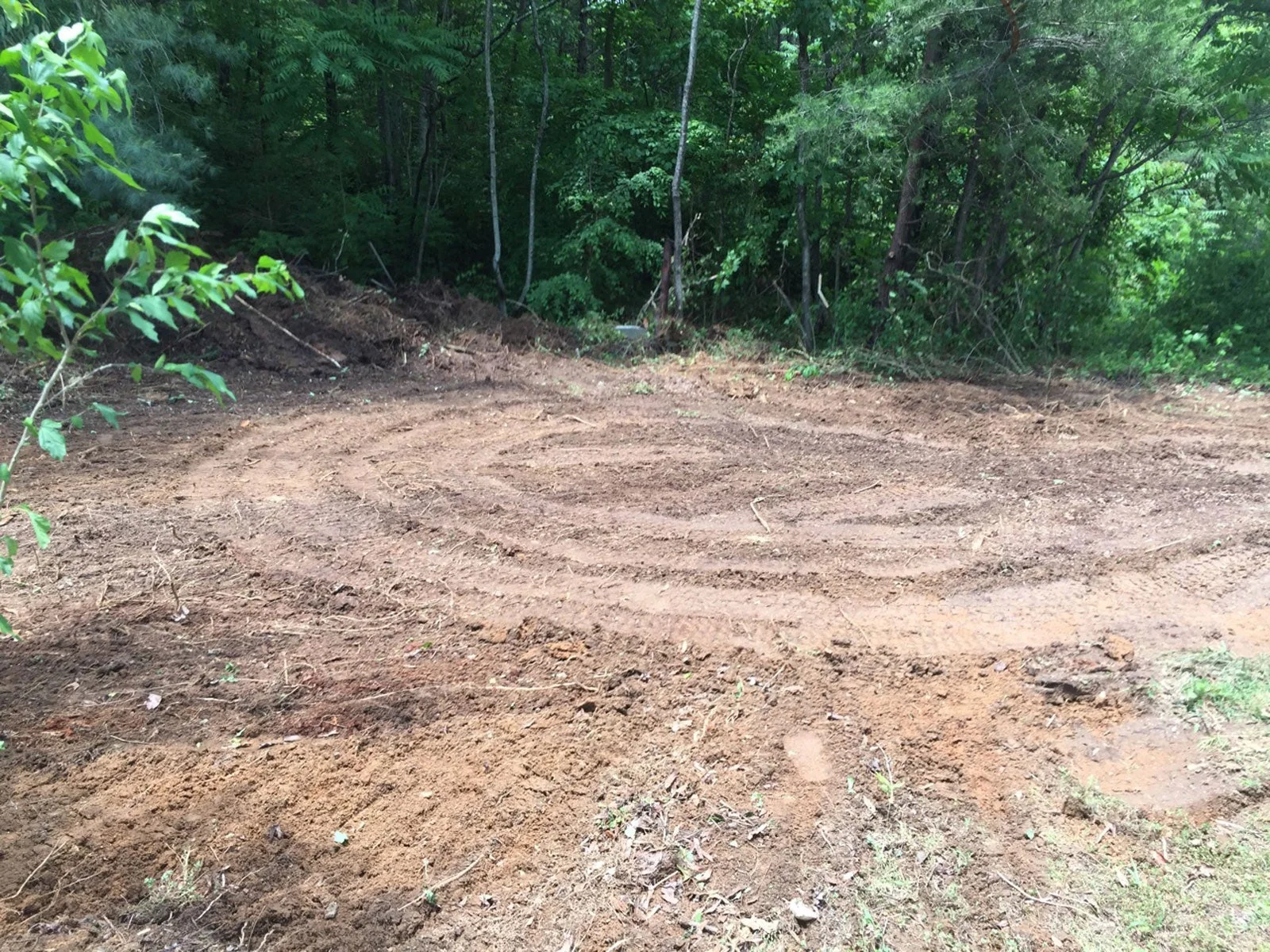
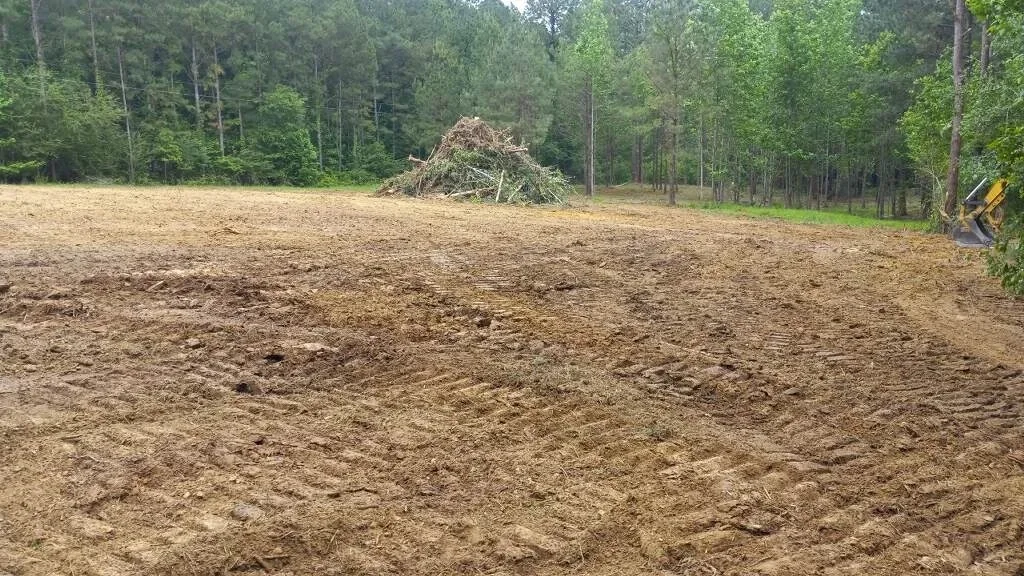
Excavation is never the first decision on a Hendersonville lot. It is downstream of grading, drainage, and the shape of the driveway or pad the previous owner left behind. The full Henderson County grading cost table shows how site prep and excavation sit side by side in the same budget, and the Hendersonville grading contractor page covers what a competent site-work crew checks before breaking ground. Moving dirt without reading the pad is how you end up pouring footings in a low spot that fills every spring. Read first. Dig once.
The sequencing that works on most county lots: confirm the permit, read the driveway fall and pad drainage, plan the erosion control and any swale or ditch, then schedule the cut with a weather window. Erosion control is not just a courtesy to the neighbor downhill; it is a plan requirement on permitted work in North Carolina, and silt fence and inlet protection go in before the first machine bucket. After the cut, the footing inspection happens on a dry, clean subgrade with the engineer's bearing depth confirmed. Only then does concrete enter the picture. Every one of those steps has a cost and a reason. A bid that books them all is not padded. It is the honest shape of building on ground that was never flat.