Two kinds of Weaverville lot, two kinds of water problem
Weaverville is really two towns stacked on the same map. Down around Main Street, Weaverville Elementary, and the old depot blocks, you get bungalows and small commercial buildings on lots carved in the 1920s and 1930s. Those lots were graded by hand and horse scoop for a smaller storm assumption, and the shallow rear swales that drained them have silted in twice over the last century. Up off Reems Creek and Flat Creek, the road climbs faster than most of the lots were ever graded for, and a house on a true hollow slope sends water downhill at something like a half inch per foot before it ever reaches the grass.
Neither lot is a flat-lot problem. A bigger box-store catch basin solves neither. On the village lots you are usually chasing an outlet that no longer works and a neighbor's gutter that dumps onto your side of the fence. On the hollow lots you are chasing velocity: water that arrives fast, cuts a new channel each spring, and carries your gravel driveway downhill a few feet at a time. Knowing which of the two you own decides the entire scope, and it is the first thing a good site visit should settle.
The tells worth acting on: a wet stripe that reappears in the same place after every storm, mulch floating down to the driveway, standing water within ten feet of the foundation, a retaining wall that bulges after a soaked week, or a gravel drive that has grown a fresh gully each March. Water that only shows up in heavy rain is a capacity problem. Water that stays wet for days afterward is a soil and outlet problem, and it usually costs more to fix.
What drainage work costs across Buncombe County
Buncombe County pricing tracks the county seat, and the county grading cost page holds the working table. For drainage specifically, the scope drives the number far more than lot size does. A quarter-acre village lot with one bad outlet can cost less to fix than a half-acre hollow lot that needs two runs and a stabilized discharge point.
| Scope | Typical range | Notes |
|---|---|---|
| Single French drain run (30–80 ft) | $3,000–$9,000 | Trench, gravel, pipe, fabric, and a daylight outlet |
| Multiple runs with catch basins | $6,000–$12,000 | Common on Reems Creek and Flat Creek slope lots |
| Dry creek bed and swale work | $4,000–$10,000 | Often paired with foundation-adjacent regrading |
| Whole-yard regrade and re-slope | $15,000 and up | Resets the entire lot's fall to a legal daylight point |
Steep hollows above the Reems Creek valley routinely carry erosion-control and outlet-placement line items that flatland quotes never show: riprap at the discharge, a level spreader to kill velocity, silt fence during construction, and seed-and-mat stabilization after. Treat any bid without those lines as incomplete rather than cheap. The drainage and erosion control guide walks through how those pieces fit together on a single lot.
Tracing the source before anyone sells you a trench
The federal disaster record explains a lot of Weaverville drainage calls: 19 declared events touch this county (1973-2026), overwhelmingly in the storm and flood family. Each of those pushed water at yards built for a drier assumption, and the older village lots near downtown took the worst of it because their outlets were sized for a much smaller storm than any of those events delivered. Before anyone sells you a trench, the source has to be answered honestly: where the gutters discharge, whether an uphill neighbor's runoff crosses your line, which way the driveway actually falls, and where the lot was originally cut and filled.
That last one matters more than homeowners expect. A lot cut into a slope has a raw uphill bank that seeps for days after rain, and a lot built up on fill has a compacted layer that perch water near the surface. Both look like "bad drainage" but neither is fixed by a French drain alone. The National Weather Service publishes the local rainfall frequency data a crew should be sizing against, and a good scope will name the storm it was designed for rather than hand-waving about "heavy rain."
Water first, structure second. A drainage plan that ignores the uphill contributor is really just a collection system for someone else's problem, and it will not hold through the next wet spring.
Permits, licensing, and the paperwork nobody mentions
Most simple residential yard drainage in Buncombe County does not require a building permit, but grading that moves significant soil, alters a stream buffer, or touches a mapped stormwater easement can trigger review, and whole-yard regrades often cross that line. The NC Licensing Board for General Contractors threshold applies once a job exceeds the state dollar figure, which most regrades do, so ask which license the crew is working under and ask to see it. On the erosion side, the EPA maintains the stormwater guidance local inspectors reference when a discharge leaves your property, particularly if the outlet reaches a creek or a county ditch.
If your project also includes a new outdoor water line, an irrigation tie-in, or a yard hydrant, the plumber or irrigation contractor must be licensed through the NC State Board of Examiners of Plumbing, Heating and Fire Sprinkler Contractors. That is a separate license from grading, and mixing them up is a common owner mistake. Ask upfront which of these apply to your job and get the answer in writing on the estimate, not verbally at the tailgate.
Choosing a crew that reads the slope, not just the pipe
Three Weaverville-specific checks before you sign anything. First, ask whether the crew has actually worked the hollow roads off Reems Creek and Flat Creek, where outlet placement is the whole job rather than an afterthought. Second, ask how they size the pipe: a run that handles a two-year storm will not handle a ten-year one, and the difference is pipe diameter and slope, not marketing. Third, ask who they call when a job crosses into engineered grading with a stamped plan, because that answer separates crews that fix drainage from crews that just dig trenches and hope.
One more local detail worth asking about: what happens at the outlet in February. Weaverville gets freeze-thaw cycles that push a poorly bedded discharge pipe out of alignment and crack the first ten feet of a shallow run. A crew that has been through a few winters here will talk about bedding, frost depth, and riprap without being prompted. For how the bigger grading picture fits, the Weaverville grading contractor page shows how drainage and grading overlap on the same lot.
What a fix actually looks like on a Weaverville lot
On a village lot near Main Street, the typical job is smaller and more surgical than owners expect: re-cut the silted rear swale, add a shallow French drain along the foundation's uphill side, daylight it to the street ditch or a pop-up emitter at the property line, and re-slope the first six feet of yard away from the house. That is often a one-day scope, and it is why the lower end of the price band exists. The hard part is finding a legal daylight point, not digging the trench.
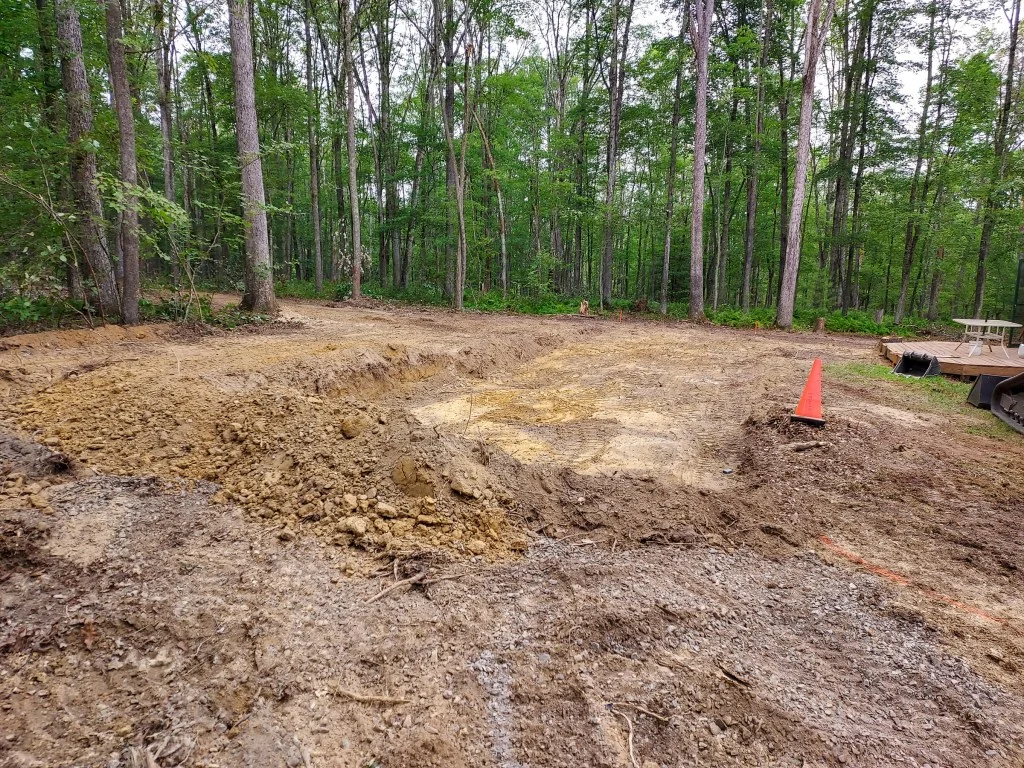
On a Reems Creek or Flat Creek hollow lot, the job is bigger and more about managing energy. You usually see a dry creek bed to slow the water, one or two French drain runs feeding catch basins, a level spreader or riprap apron at the discharge, and stabilization seed with matting before the next rain. That is the scope where bids drift toward the top of the band, and where the erosion-control line items are doing real work rather than padding.
In both cases the honest advice is the same: fix the water before it reaches the foundation, spend the money on the outlet, and do not accept a quote that skips the uphill question. Water that is managed at the source costs a fraction of water that is managed after it has already crossed the yard.