How a Candler driveway job actually runs, hour by hour
A driveway in Candler rarely fails in the middle of the drive. It fails where the water enters and where it leaves. That ordering matters, because it dictates the sequence a competent crew follows — and the timeline you should expect when you book one.
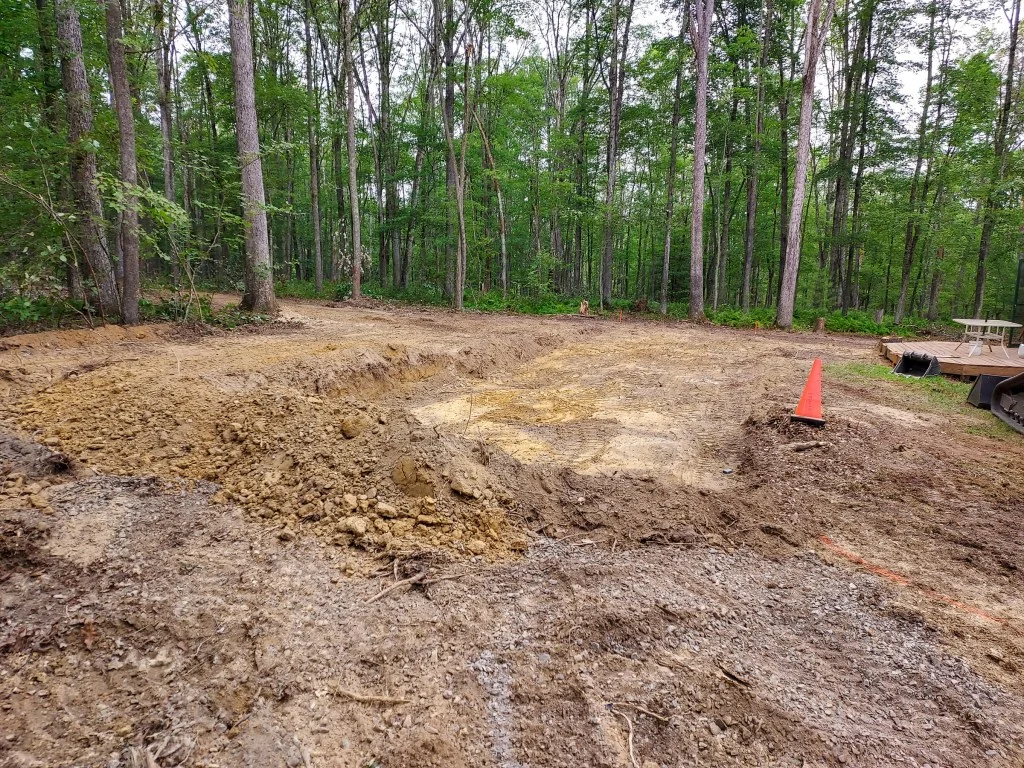
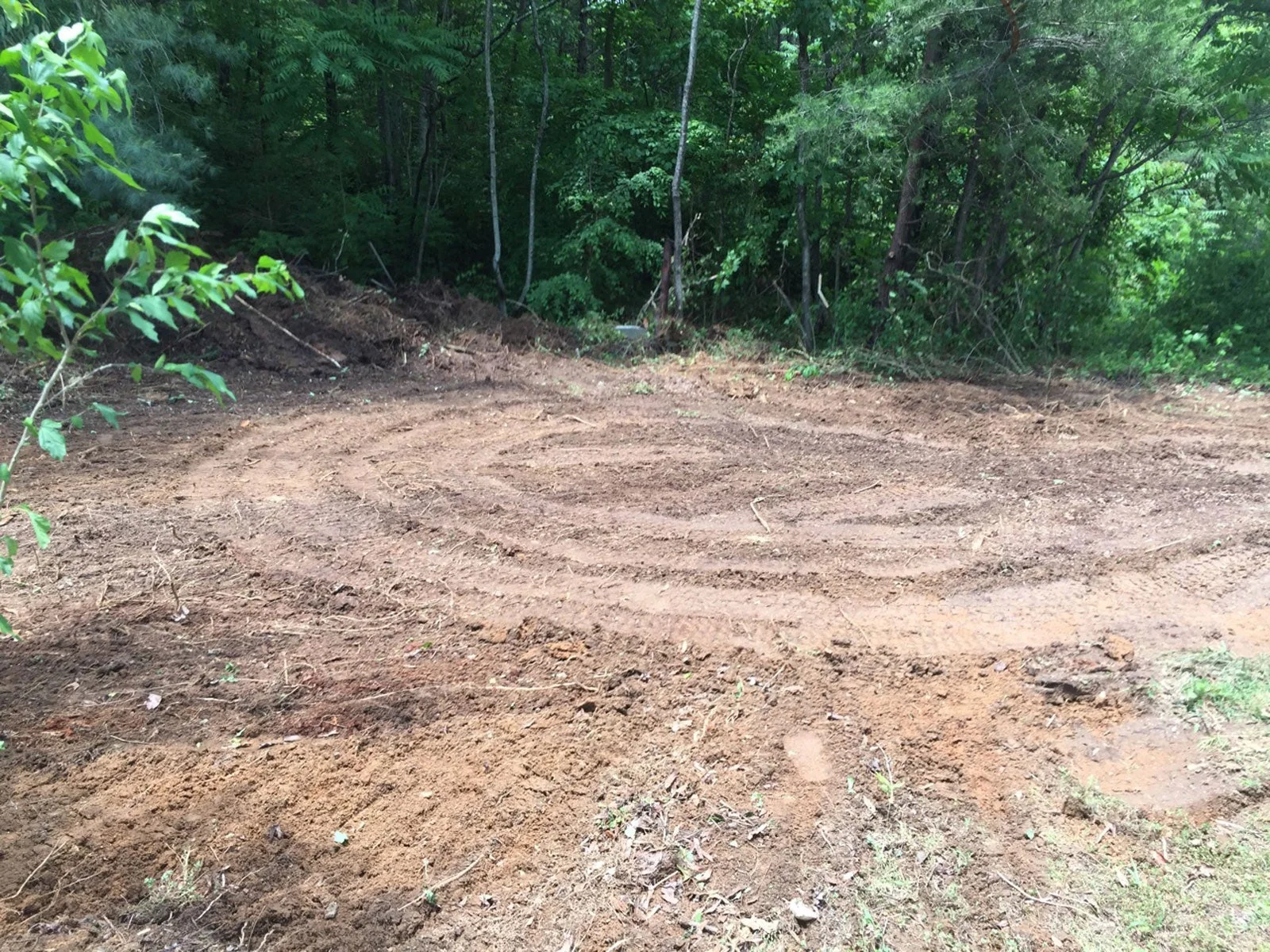
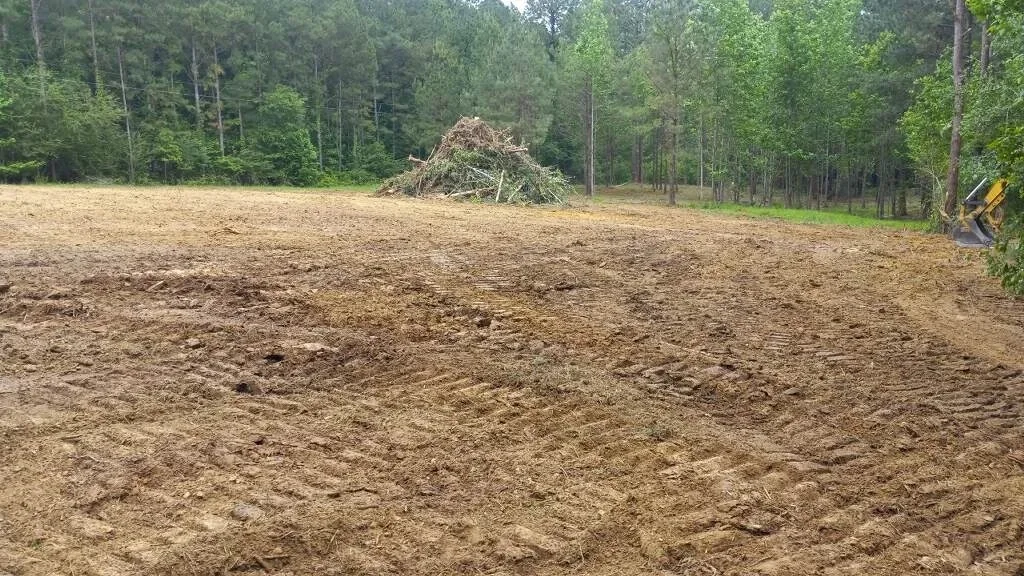
Day one starts uphill. The crew walks the grade above the drive, finds where the runoff from the slope or the neighboring property crosses the gravel, and cuts a shallow swale or ditch to intercept it before it ever reaches the surface. That work happens before a single load of stone is spread, because stone laid on an unaddressed water path is stone you will buy again next spring. Once the interception is in, the drive itself gets shaped: the crown re-cut on straight runs, the roadbed graded so water sheets off rather than soaking down, and any failed cross-drain replaced. Stone goes down last, compacted in lifts.
A straightforward regrade is a one-day job. A washout with a culvert and ditching typically runs two to three days, and a steep-grade job with engineered drainage can stretch past that once the ditch has to be stabilized and inspected. Anyone promising a steep Candler drive fixed in an afternoon with one dump truck is quoting you a temporary repair.
What the scope table looks like for a Candler drive
Candler's terrain is why flatland quotes mislead here. The community sits west of Asheville in Buncombe County, on ground that rolls from the Hominy Valley floor up toward the ridges, and the drives reflect it: short valley-lot approaches on clay that holds water, long gravel runs climbing to ridgetop houses, and a fair number of older single-lane drives that were cut decades ago with no drainage plan at all. The five-year flood family that dominates this county's federal disaster record (19 declared events across 1973-2026) has pushed water at the same cut slopes repeatedly, and each event re-opens the same channels.
| Scope | Typical price range | Time on site |
|---|---|---|
| Regrade existing gravel drive (no new stone, light shaping) | $350–$1,200 | Half day to 1 day |
| Washout repair — regrade plus fresh stone over failed section | $400–$1,500 | 1 day |
| Washout repair with new ditching and culvert | $800–$2,800 | 2–3 days |
| Steep-grade engineered drainage (stabilized ditch, structures, stone sizing) | $2,500–$6,500 | 3 days and up |
Ranges scale with drive length, grade, and how much of the water problem belongs to the uphill land rather than the drive itself. The Buncombe County grading cost breakdown carries the line-item working table if you want to see how the numbers stack before a bid lands.
Reading the damage: three failure patterns that show up again and again
The first pattern is the uphill capture — a drive that acts as a storm channel because the ground above it sheds directly onto the gravel. These jobs never hold with stone alone. The repair is interception: a ditch, a berm, sometimes a flared culvert inlet sized to the flow. The second is the soft spot, a section that pumps and ruts every wet season because the subgrade never drained. That is a dig-out, not a top-dress. The third is the washout channel along the edge of a steep drive, where runoff leaves the surface at grade change and cuts a gully beside the roadbed. Left alone, the gully eventually takes the roadbed with it.
All three are water problems wearing a driveway costume. The National Weather Service's mountain forecast patterns are not a nicety here — freeze-thaw cycles across the valley push water into the same cracks each winter, and Southern Appalachian storm totals arrive in bursts that overwhelm a drive with no designed outlet. Grading rules that govern how disturbed ground and runoff are handled are worth knowing before any crew breaks soil; the International Code Council publishes the model codes most NC grading ordinances draw from.
Sequencing stone, ditch, and culvert so you only pay once
The order of operations is also the cost-control mechanism. Interception ditch first, culvert second, subgrade correction third, shaping fourth, stone last. Skip ahead and you pay for the same stone twice. A crew that leads with stone is often the same crew that leaves without compacting in lifts, which is why some repairs look fine in May and are rutted by October.
Stone choice follows the same logic. A steep Candler drive needs angular, graded crushed aggregate that locks and resists being pushed downhill by tires; rounded river gravel on a grade migrates. Culverts need to be sized to the actual contributing watershed, not to whatever diameter was on sale, because an undersized pipe becomes the washout it was installed to prevent. This is the part of the job where the gravel driveway grading guide earns its keep — it walks through base depth, crown, and outlet protection in plain terms.
Timing your repair around a mountain spring
Late summer and early fall are the practical window for driveway work in Candler. Ground is workable, soil moisture is manageable, and the repair has a few months to settle before the freeze-thaw season and the big winter and spring rain events arrive. Scheduling in the wet months is not impossible, but you are asking a crew to shape ground that is actively receiving water, and the job takes longer and settles worse.
Emergency work gets done when it gets done — a washout that has cut the drive below passable is not something you wait on. But if you have a drive that ruts every year and survives, the smart money books the repair in dry months and treats the following wet season as the test.
Checking the crew before the truck shows up
Grading and driveway work in North Carolina sits under contractor licensing rules that depend on job scope and dollar value, so it is fair to ask a crew straight out whether their work on your job requires a licensed general contractor. The NC Licensing Board for General Contractors is the authority on that threshold and maintains a public license lookup worth thirty seconds of your time. For work that disturbs ground near a waterway or wetland, federal rules can also come into play; the EPA explains when a project crosses into regulated waters and what that means for permitting.
The other three things worth confirming: how they handle the water arriving from neighbors' ground, how they stabilize any ditch they cut so it does not become the next washout, and what your drive should look like a year later. Our Candler grading contractors page covers the vetting questions in more depth when you are lining up bids.