What the dirt in Candler does to a grading job
Candler sits in Buncombe County just west of Asheville, tucked against the Smoky Park Highway corridor and the lower Pigeon River valley. Lots here tend toward three soil realities: heavy red clay that holds water like a bowl, shallow rock that turns a half-day cut into a two-day rock saw job, and old fill — some of it decades old, some of it placed by homeowners with a borrowed tractor and no compaction plan. Each one changes how the job is priced and how long it takes.
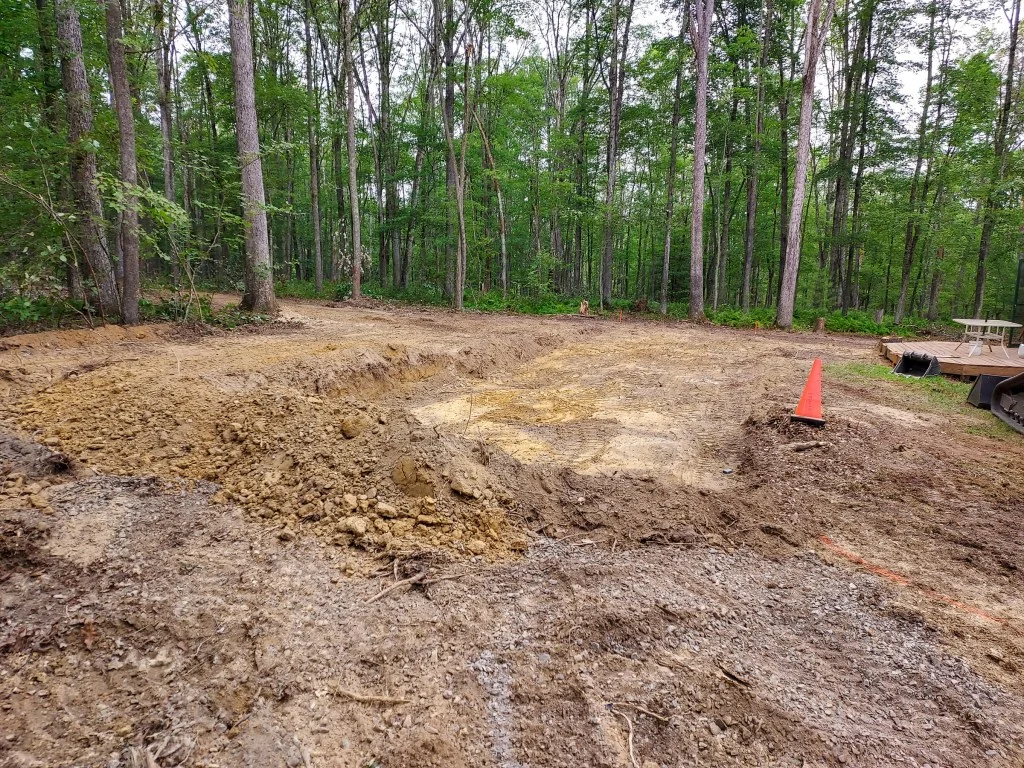
Red clay is the quiet cost driver. It drains slowly, it swells and shrinks with the seasons, and it will not compact well when wet. A yard in Candler that stays muddy three days after a rain is usually telling you the clay layer is doing exactly what clay does. The fix is often a blend of new material, shaping, and drainage — not just pushing dirt around. Rock is the loud driver. In pockets of Candler where the ground goes from red to grey within a few feet, a cut that should take hours can turn into chipping, hammering, and hauling. That's why any honest quote here starts with the dirt, not the equipment list.
Reading the lot before anyone touches a machine
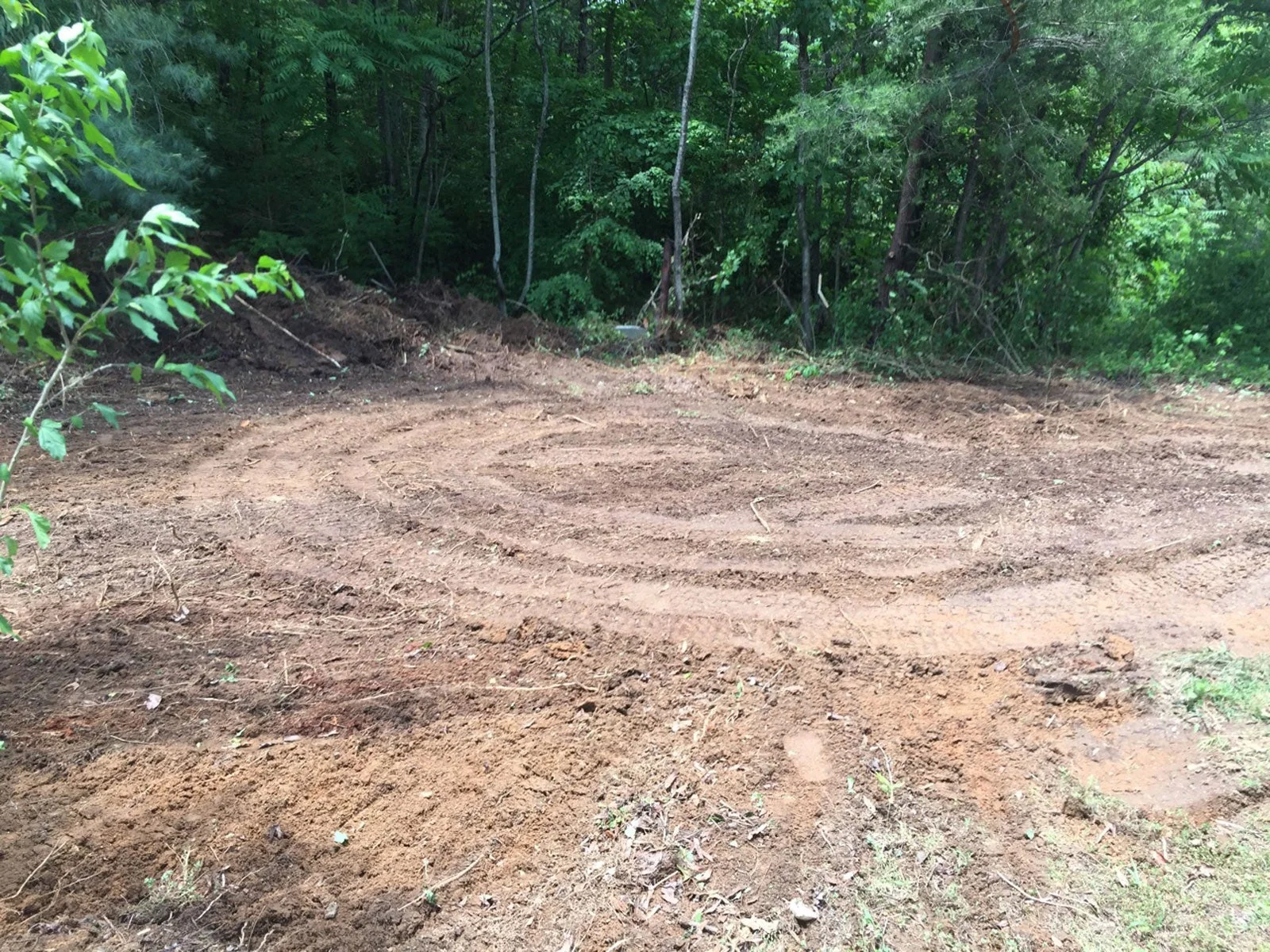
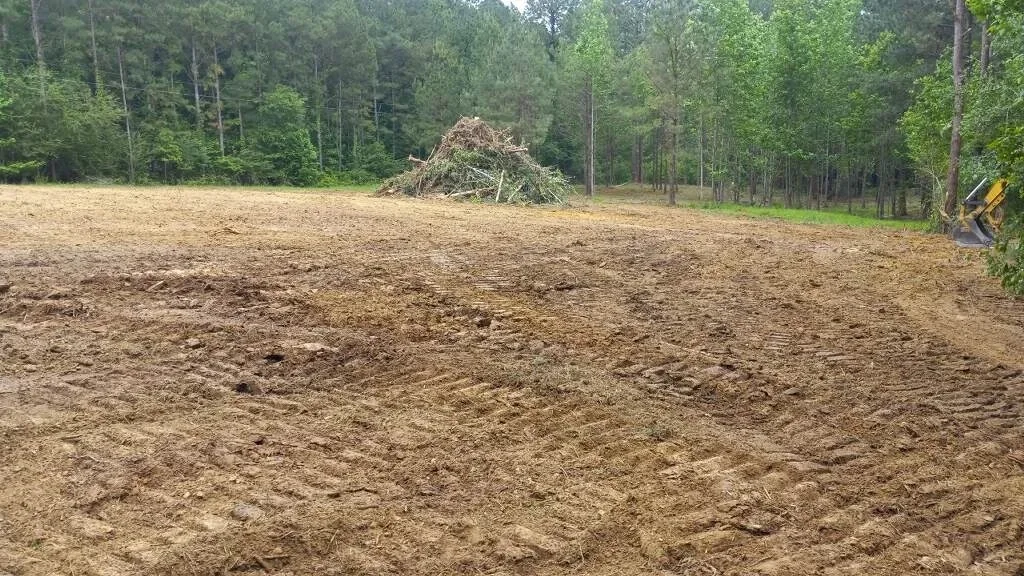
Most Candler properties fall into one of four grading scenarios, and each one has a different scope. A new build on a cleared pad is about finish grade and drainage away from the house. A re-grade of an existing yard is about slope, swales, and fixing where water pools. A driveway cut or extension is about rock, base depth, and how runoff leaves the parking area. And a land-clearing combo job, which is common out here where lots have grown back up, means stumping, rough grade, and hauling before any finish work starts.
The starting point on every one: where does water leave the property? North Carolina's residential code treats surface drainage and foundation water management as a real requirement, not a courtesy — see the NC Department of Insurance, Office of State Fire Marshal for how that's framed locally. If the answer is "into the neighbor's yard" or "into the crawl space," the grading plan is wrong before it begins. The full service picture, including excavation and drainage, is covered on the grading and excavation page.
What grading work typically costs in Candler
Candler prices track the rest of Buncombe County but skew toward the top of the band on any job that touches rock, because the machine time and hauling add up. The Buncombe County cost breakdown has the full working table. The short version for a Candler lot:
| Scope | Typical range |
|---|---|
| Small yard re-grade (under 1/4 acre, no rock) | $1,200-$3,500 |
| Full lot rough + finish grade (1/2 acre, mixed soil) | $3,500-$6,500 |
| Driveway cut or extension (rock possible) | $2,500-$5,500 |
| Clearing + grading combo (overgrown lot) | $4,500-$8,000 |
| Rock removal line item (where hit) | Often $1,500-$6,000 added |
Rock is the line item that turns a comfortable mid-range quote into a hard conversation. Any bid that doesn't address what happens if rock is hit is a bid that's planning to come back with a change order.
Water, storms, and why grade matters more here than flatlanders think
Candler's federal disaster record is the reason grading here is not a cosmetic exercise: 19 declared events have touched this county across 1973-2026, overwhelmingly storm and flood family. The Pigeon River valley and the mountain runoff patterns that feed it mean a lot graded flat and left flat will pond in a heavy summer storm. The National Weather Service at weather.gov tracks the pattern; the grading plan has to answer it.
The practical rule: every surface that touches the house should slope away at a measurable pitch, and every low spot on the lot needs a defined outlet. That's not a premium add-on in Candler. It's the difference between a yard that works and a foundation that starts taking water in year two.
Clearing first, or grading first?
On a lot that's grown back up, clearing is a prerequisite, not a separate project. Stumps, roots, and debris have to come out before a machine can grade anything honestly — grading over root mass or buried debris is a guaranteed sinkhole in two years. Candler has plenty of lots that were cleared once in the 1970s and have quietly returned to forest. The land clearing in Candler page covers that part of the sequence. The rule of thumb: clear, stump, rough grade, then finish grade — never combine the last two, because you lose the ability to compact properly.
Choosing a crew for Candler dirt
Three local checks worth making. First, ask how they handle rock — if the answer doesn't include either a hammer, a saw, or a clear change-order policy, the quote is fiction. Second, ask about compaction and whether they'll bring a sheepsfoot or plate compactor to any area that will carry a slab, driveway, or structure. Third, ask whether the job needs a licensed general contractor. North Carolina's Licensing Board for General Contractors sets the dollar threshold where a project crosses from handyman work into licensed-contractor territory, and Candler jobs involving new structures or major site work frequently cross it. When in doubt, ask before you sign — not after.